Nashville Weather by Month: A Complete Guide for Travelers
Nashville, Tennessee, experiences four distinct seasons, offering a wide variety of weather conditions throughout the year. From chilly winter days with occasional snowfall to hot and humid summers, the city’s climate changes noticeably from month to month. Spring and fall are particularly popular among visitors thanks to their comfortable temperatures, colorful scenery, and numerous outdoor events.
Whether you’re planning a vacation, relocating to the area, or simply curious about Nashville’s climate, understanding the weather patterns throughout the year can help you choose the best time to visit. Average temperatures range from winter lows near freezing to summer highs around 90°F (32°C), while rainfall is fairly evenly distributed across the seasons. Snowfall is generally light and occurs mainly during the winter months.
Nashville Weather by Month
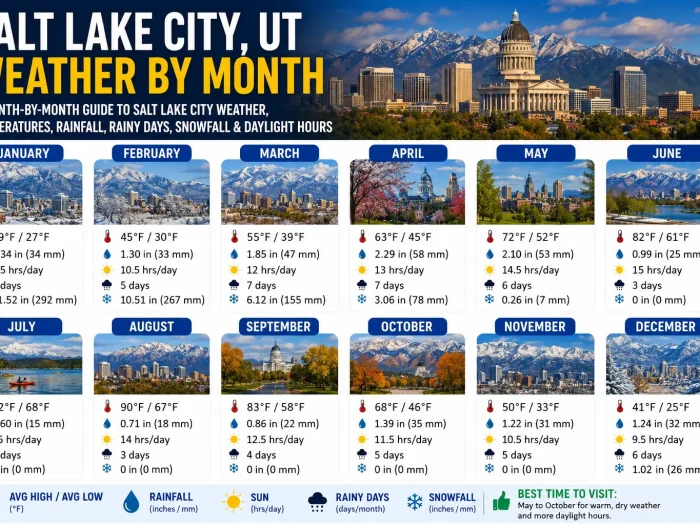
You can click the image below to view the full-size weather chart for Nashville.

January – Cold Winter Days with Occasional Snow
Average low: 28°F (-2°C)
Average high: 48°F (9°C)
Rainfall: 3.4 inches (87.4 mm)
Daylight: 10 hours
Snowfall: 2.8 inches (71.7 mm)
January is the coldest month in Nashville. While temperatures are generally above freezing during the day, chilly mornings and occasional snowfall are common. Despite the winter weather, many days remain sunny and pleasant for sightseeing.
Best for:
- Winter city breaks
- Museum visits
- Indoor attractions
- Seasonal events
February – Late Winter with Milder Temperatures
Average low: 32°F (0°C)
Average high: 54°F (12°C)
Rainfall: 4.8 inches (123 mm)
Daylight: 11 hours
Snowfall: 0.9 inches (22.7 mm)
February brings slightly warmer weather, although winter conditions can still occur. Rainfall increases compared to January, and occasional snow remains possible. The longer daylight hours make exploring the city more enjoyable.
Best for:
- Budget-friendly travel
- Exploring downtown Nashville
- Live music venues
- Historical attractions
March – Spring Begins to Arrive
Average low: 39°F (4°C)
Average high: 63°F (17°C)
Rainfall: 4.2 inches (106.3 mm)
Daylight: 12 hours
Snowfall: 0.4 inches (10 mm)
March marks the start of spring in Nashville. Temperatures rise noticeably, flowers begin blooming, and outdoor activities become more appealing. Rain showers are common but usually short-lived.
Best for:
- Spring sightseeing
- Walking tours
- Visiting parks and gardens
- Photography
April – Pleasant Spring Weather
Average low: 46°F (8°C)
Average high: 72°F (22°C)
Rainfall: 4.3 inches (109.7 mm)
Daylight: 13 hours
April offers some of Nashville’s most comfortable weather. Warm afternoons, blooming landscapes, and longer days create ideal conditions for outdoor adventures and festivals.
Best for:
- Outdoor dining
- Music festivals
- Nature walks
- Family vacations
May – Warm Days and Vibrant Scenery
Average low: 57°F (14°C)
Average high: 79°F (26°C)
Rainfall: 3.6 inches (91 mm)
Daylight: 14 hours
May is one of the best months to visit Nashville. Temperatures are warm without being overly hot, and the city comes alive with outdoor events and lush greenery.
Best for:
- Outdoor concerts
- Hiking
- Scenic drives
- Weekend getaways
June – Start of Summer
Average low: 64°F (18°C)
Average high: 88°F (31°C)
Rainfall: 3.5 inches (89.8 mm)
Daylight: 14.5 hours
June ushers in summer with hot afternoons and long sunny days. While humidity begins to increase, conditions remain favorable for outdoor attractions and evening entertainment.
Best for:
- Riverfront activities
- Rooftop dining
- Outdoor festivals
- Summer vacations
July – Hottest Month of the Year
Average low: 68°F (20°C)
Average high: 90°F (32°C)
Rainfall: 4.2 inches (105.7 mm)
Daylight: 14.5 hours
July is typically the hottest month in Nashville. High humidity can make temperatures feel even warmer, but plenty of sunshine and lively events attract many visitors.
Best for:
- Summer festivals
- Water activities
- Nightlife
- Independence Day celebrations
August – Hot and Humid Summer Weather
Average low: 66°F (19°C)
Average high: 88°F (31°C)
Rainfall: 3.4 inches (86.2 mm)
Daylight: 13.5 hours
August remains hot and humid, though rainfall is relatively moderate. Visitors often plan outdoor activities during the morning and evening to avoid peak afternoon heat.
Best for:
- Live music events
- Water parks
- Evening entertainment
- Food festivals
September – Comfortable Early Fall Conditions
Average low: 61°F (16°C)
Average high: 82°F (28°C)
Rainfall: 3.6 inches (91.7 mm)
Daylight: 12.5 hours
September brings a welcome break from the summer heat. Warm days, lower humidity, and comfortable evenings make it one of the most enjoyable months of the year.
Best for:
- Outdoor sightseeing
- Hiking trails
- Weekend trips
- Local festivals
October – Beautiful Fall Colors
Average low: 48°F (9°C)
Average high: 73°F (23°C)
Rainfall: 3.5 inches (90.1 mm)
Daylight: 11.5 hours
October is widely considered one of the best months to visit Nashville. Pleasant temperatures and colorful autumn foliage create stunning scenery throughout the region.
Best for:
- Fall foliage viewing
- Scenic drives
- Photography
- Outdoor events
November – Cool and Crisp Autumn Weather
Average low: 36°F (2°C)
Average high: 61°F (16°C)
Rainfall: 2.7 inches (68.1 mm)
Daylight: 10.5 hours
November is cooler and noticeably quieter than the peak travel months. The remaining autumn colors and relatively dry weather make it a great time for exploring the city.
Best for:
- Sightseeing
- Cultural attractions
- Thanksgiving travel
- Walking tours
December – Winter Returns
Average low: 32°F (0°C)
Average high: 52°F (11°C)
Rainfall: 3.5 inches (90 mm)
Daylight: 10 hours
Snowfall: 0.3 inches (8.2 mm)
December brings the return of winter conditions. While heavy snowfall is rare, occasional flurries can occur. Holiday lights and festive events give Nashville a charming seasonal atmosphere.
Best for:
- Holiday celebrations
- Christmas markets
- Indoor entertainment
- Winter city escapes
Nashville Weather by Month Table
| Month | Avg High °F (°C) | Avg Low °F (°C) | Rainfall (inches) | Sun (hrs/day) | Snowfall (inches) |
|---|---|---|---|---|---|
| January | 48°F (9°C) | 28°F (-2°C) | 3.44 | 10.0 | 2.82 |
| February | 54°F (12°C) | 32°F (0°C) | 4.84 | 11.0 | 0.89 |
| March | 63°F (17°C) | 39°F (4°C) | 4.19 | 12.0 | 0.39 |
| April | 72°F (22°C) | 46°F (8°C) | 4.32 | 13.0 | 0.00 |
| May | 79°F (26°C) | 57°F (14°C) | 3.58 | 14.0 | 0.00 |
| June | 88°F (31°C) | 64°F (18°C) | 3.54 | 14.5 | 0.00 |
| July | 90°F (32°C) | 68°F (20°C) | 4.16 | 14.5 | 0.00 |
| August | 88°F (31°C) | 66°F (19°C) | 3.39 | 13.5 | 0.00 |
| September | 82°F (28°C) | 61°F (16°C) | 3.61 | 12.5 | 0.00 |
| October | 73°F (23°C) | 48°F (9°C) | 3.55 | 11.5 | 0.00 |
| November | 61°F (16°C) | 36°F (2°C) | 2.68 | 10.5 | 0.00 |
| December | 52°F (11°C) | 32°F (0°C) | 3.54 | 10.0 | 0.32 |
Nashville Weather Overview
Nashville has a humid subtropical climate characterized by four distinct seasons, ranging from cool winters to hot, humid summers. The city experiences relatively mild weather compared to many northern U.S. destinations, making it a year-round travel destination.
Winter (December to February) is generally cool, with average daytime temperatures ranging from 48°F to 54°F (9°C to 12°C). Snowfall occurs occasionally but is usually light and short-lived. Spring (March to May) brings rapidly warming temperatures, blooming flowers, and longer daylight hours, making it one of the most popular seasons to visit.
Summer (June to August) is hot and humid, with average highs reaching 88°F to 90°F (31°C to 32°C). Afternoon thunderstorms are common, although they are often brief and followed by sunshine. Fall (September to November) offers comfortable temperatures, lower humidity, and vibrant autumn foliage, creating ideal conditions for outdoor activities and sightseeing.
Rainfall is fairly consistent throughout the year, averaging around 3 to 5 inches per month, with no true dry season. Nashville receives approximately 10 to 14.5 hours of daylight depending on the season, with the longest days occurring during June and July.
When Is the Best Time to Visit Nashville?
For the most comfortable weather, April, May, September, and October are generally the best months to visit Nashville. These months offer mild temperatures, lower humidity, and excellent conditions for outdoor activities, sightseeing, and festivals. Travelers who enjoy summer events and lively nightlife may prefer June through August, while those seeking fewer crowds and lower accommodation prices may find January through March and November through December more appealing.
Frequently Asked Questions About Nashville Weather
1. What is the best month to visit Nashville?
April, May, September, and October are generally considered the best months to visit Nashville due to their pleasant temperatures, lower humidity, and comfortable outdoor conditions.
2. Does Nashville have four distinct seasons?
Yes. Nashville experiences four distinct seasons, including a cool winter, warm spring, hot summer, and colorful fall.
3. What is the hottest month in Nashville?
July is typically the hottest month, with average high temperatures around 90°F (32°C).
4. What is the coldest month in Nashville?
January is usually the coldest month, with average lows near 28°F (-2°C).
5. Does it snow in Nashville?
Yes, Nashville receives occasional snowfall during winter, mainly between December and February, although heavy snow is uncommon.
6. How much snow does Nashville get each year?
Nashville averages around 4–6 inches (10–15 cm) of snow annually, though totals vary from year to year.
7. Is Nashville humid?
Yes. Nashville can be quite humid, especially during the summer months from June through August.
8. What is the rainiest month in Nashville?
February is typically one of the wettest months, receiving nearly 5 inches (123 mm) of rainfall on average.
9. Does Nashville have a dry season?
No. Rainfall is fairly evenly distributed throughout the year, and Nashville does not experience a true dry season.
10. How hot does Nashville get in summer?
Summer highs commonly reach 88°F to 90°F (31°C to 32°C), with occasional heat waves pushing temperatures above 95°F (35°C).
11. Is Nashville weather good for outdoor activities?
Yes. Spring and fall offer excellent conditions for hiking, sightseeing, festivals, and other outdoor activities.
12. What is spring weather like in Nashville?
Spring is mild and pleasant, with temperatures gradually warming from the 60s°F (15–20°C) in March to the upper 70s°F (26°C) by May.
13. What is fall weather like in Nashville?
Fall features warm days, cool nights, lower humidity, and colorful foliage, making it one of the most popular seasons for visitors.
14. Are tornadoes common in Nashville?
Nashville is located in a region where tornadoes can occur, particularly during spring. However, direct impacts on the city are relatively infrequent.
15. Does Nashville experience severe thunderstorms?
Yes. Thunderstorms are most common during spring and summer and can occasionally bring heavy rain, lightning, and strong winds.
16. How many hours of daylight does Nashville get?
Daylight ranges from about 10 hours per day in winter to approximately 14.5 hours per day during the summer months.
17. Is Nashville warmer than Chicago?
Yes. Nashville generally experiences milder winters and warmer temperatures throughout the year compared to Chicago.
18. What should I pack for a trip to Nashville?
Pack light clothing for summer, layers for spring and fall, and a warm jacket for winter. Comfortable walking shoes are recommended year-round.
19. Can you visit Nashville year-round?
Yes. Nashville is a year-round destination, with each season offering unique attractions, events, and weather conditions.
20. When is hurricane season in Nashville?
Nashville is inland and not directly affected by hurricanes. However, remnants of tropical systems can occasionally bring heavy rain between June and November.
Final Thoughts
Nashville’s weather offers something for everyone—blooming springs, lively summers, crisp autumns, and mild winters. By planning around the monthly climate, you’ll get the most out of your Music City adventure, no matter when you go.
Read more: