Branson MO Weather by Month
Branson, Missouri experiences four distinct seasons, with cold winters, warm and humid summers, and comfortable spring and fall months. Based on the weather data provided, temperatures range from an average low of 21°F in January to an average high of 91°F in July. Rainfall occurs throughout the year, while snowfall is concentrated mainly from December through March.
Branson MO Weather by Month
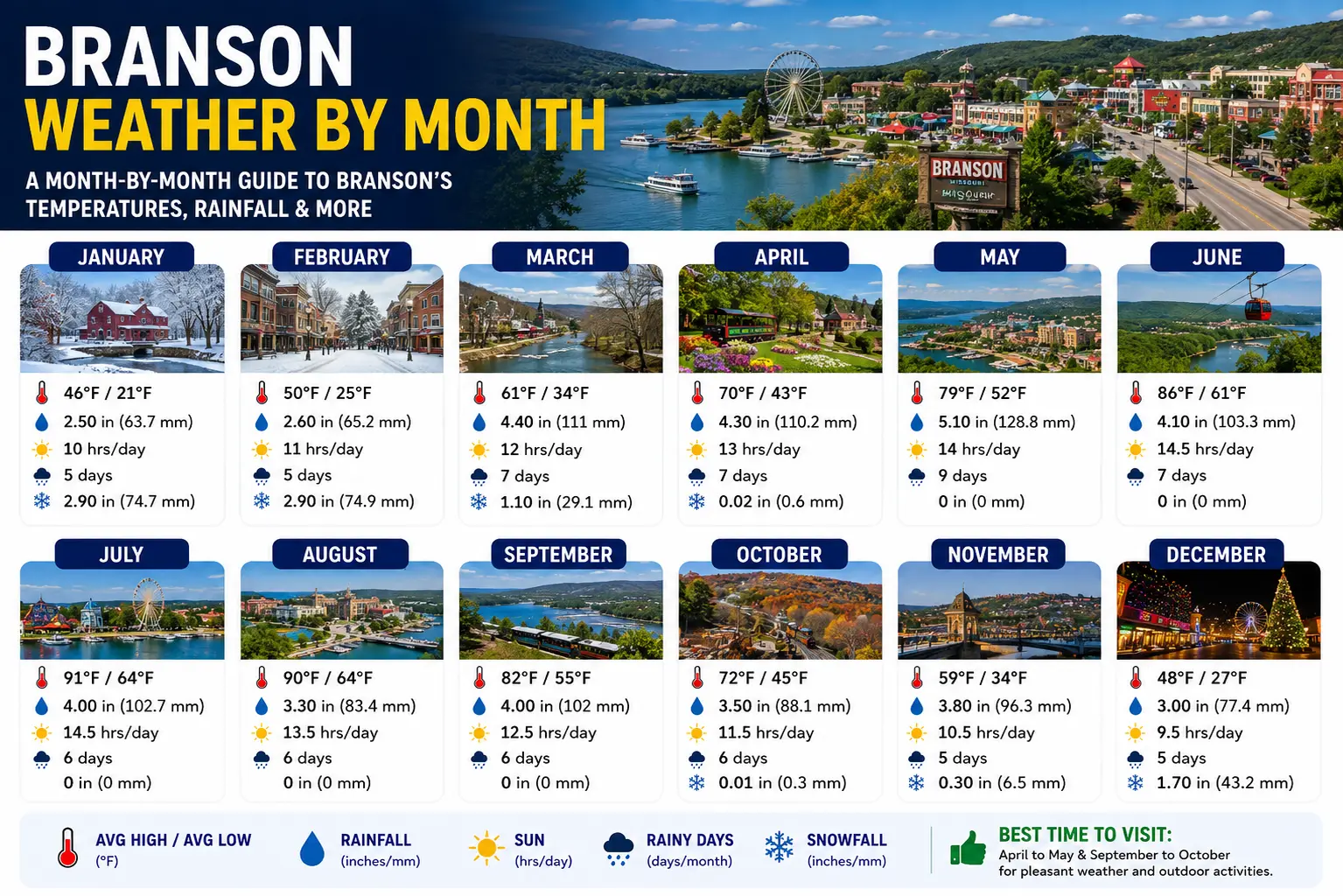
You can click the image below to view the full-size weather chart for Branson, MO.
January – Cold Winter Days and Quiet Attractions
Average low: 21°F (-6°C)
Average high: 46°F (8°C)
Rainfall: 2.5 inches (63.7 mm)
Rainy days: 5 days
Snowfall: 2.9 inches (74.7 mm)
Daylight: 10 hours
January is one of the coldest months in Branson, with average temperatures ranging from 21°F at night to 46°F during the day. Snowfall is possible, although accumulation is generally modest compared with colder parts of the United States. With shorter daylight hours and chilly conditions, January is a quieter time to visit.
Indoor attractions, restaurants, museums, and entertainment venues are particularly appealing during this month. Visitors who don’t mind cold weather can also enjoy peaceful scenery around the Ozark Mountains.
Best for:
- Indoor entertainment and attractions
- Quiet winter getaways
- Scenic winter photography
- Travelers looking for fewer crowds
February – Chilly Weather and Occasional Snow
Average low: 25°F (-4°C)
Average high: 50°F (10°C)
Rainfall: 2.6 inches (65.2 mm)
Rainy days: 5 days
Snowfall: 2.9 inches (74.9 mm)
Daylight: 11 hours
February remains cold in Branson, but temperatures begin to climb slightly compared with January. Average highs reach around 50°F, while nighttime temperatures can fall to 25°F. Snowfall remains possible, making it one of the better months for experiencing a winter atmosphere.
The gradually increasing daylight provides more time for sightseeing. Visitors should still pack warm layers and prepare for changing weather conditions.
Best for:
- Winter weekend trips
- Indoor attractions and shows
- Occasional snow experiences
- Quiet sightseeing
March – Early Spring and Changing Weather
Average low: 34°F (1°C)
Average high: 61°F (16°C)
Rainfall: 4.4 inches (111 mm)
Rainy days: 7 days
Snowfall: 1.1 inches (29.1 mm)
Daylight: 12 hours
March marks the transition from winter to spring in Branson. Average daytime temperatures rise to around 61°F, while nights remain cool at about 34°F. Snowfall decreases significantly, but rain becomes more frequent, with around 4.4 inches of precipitation.
The combination of mild afternoons and cool mornings makes March a good month for exploring the outdoors, although visitors should bring a waterproof jacket and layers.
Best for:
- Early spring sightseeing
- Scenic drives through the Ozarks
- Hiking on mild days
- Exploring Branson before the busiest season
April – Pleasant Spring Weather and Outdoor Exploration
Average low: 43°F (6°C)
Average high: 70°F (21°C)
Rainfall: 4.3 inches (110.2 mm)
Rainy days: 7 days
Snowfall: 0.02 inches (0.6 mm)
Daylight: 13 hours
April brings much more comfortable weather to Branson. Average highs reach 70°F, while lows remain cool at around 43°F. Snow is virtually absent, and the longer 13-hour days provide plenty of time for outdoor activities.
Rainfall is relatively high, so occasional wet days are possible. Nevertheless, April is an excellent month for enjoying the area’s natural scenery, parks, and outdoor attractions.
Best for:
- Hiking and outdoor activities
- Spring scenery
- Scenic drives
- Family vacations
May – Warm Weather and Lush Ozark Scenery
Average low: 52°F (11°C)
Average high: 79°F (26°C)
Rainfall: 5.1 inches (128.8 mm)
Rainy days: 9 days
Snowfall: 0 inches
Daylight: 14 hours
May is one of the wettest months in Branson, receiving about 5.1 inches of rainfall across approximately nine rainy days. Despite the frequent showers, temperatures are very pleasant, with average highs around 79°F and lows near 52°F.
The warm temperatures and long daylight hours make May an excellent time for outdoor exploration. The Ozark landscape is typically lush and green, creating beautiful conditions for scenic drives and nature activities.
Best for:
- Hiking and nature activities
- Exploring the Ozark Mountains
- Scenic drives
- Outdoor family activities
June – Hot Summer Weather and Long Days
Average low: 61°F (16°C)
Average high: 86°F (30°C)
Rainfall: 4.1 inches (103.3 mm)
Rainy days: 7 days
Snowfall: 0 inches
Daylight: 14.5 hours
June marks the beginning of hot summer weather in Branson. Average highs reach 86°F, while nighttime temperatures remain relatively comfortable at around 61°F. The month also provides approximately 14.5 hours of daylight.
Rainfall remains moderate, so visitors can generally enjoy plenty of outdoor time between showers. June is a popular period for vacations, outdoor attractions, and exploring the area’s lakes and natural scenery.
Best for:
- Summer vacations
- Lake and water activities
- Hiking and outdoor recreation
- Long days of sightseeing
July – Hot and Sunny Summer Weather
Average low: 64°F (18°C)
Average high: 91°F (33°C)
Rainfall: 4.0 inches (102.7 mm)
Rainy days: 6 days
Snowfall: 0 inches
Daylight: 14.5 hours
July is the hottest month of the year in Branson, with an average high of approximately 91°F and a low around 64°F. The combination of high temperatures and long daylight hours creates classic summer conditions.
Rainfall is moderate, with around four inches during the month. Because afternoon temperatures can become quite hot, visitors planning outdoor activities should consider starting early in the morning or later in the afternoon and staying hydrated.
Best for:
- Summer vacations
- Swimming and water activities
- Family attractions
- Evening entertainment
August – Hot Summer Days and Outdoor Adventures
Average low: 64°F (18°C)
Average high: 90°F (32°C)
Rainfall: 3.3 inches (83.4 mm)
Rainy days: 6 days
Snowfall: 0 inches
Daylight: 13.5 hours
August remains hot in Branson, with average daytime temperatures around 90°F and nighttime lows near 64°F. Rainfall decreases compared with May and June, averaging about 3.3 inches.
With 13.5 hours of daylight, visitors have plenty of time to enjoy attractions, outdoor recreation, and evening entertainment. The heat can be intense during the afternoon, so planning activities around the hottest part of the day can make a summer trip more comfortable.
Best for:
- Summer family trips
- Water activities
- Outdoor attractions
- Evening shows and entertainment
September – Warm Early Fall Weather
Average low: 55°F (13°C)
Average high: 82°F (28°C)
Rainfall: 4.0 inches (102 mm)
Rainy days: 6 days
Snowfall: 0 inches
Daylight: 12.5 hours
September brings a gradual transition toward fall. Average highs drop to around 82°F, while nighttime temperatures fall to about 55°F. The weather is still warm enough for outdoor activities but generally more comfortable than the peak summer months.
With six rainy days and 12.5 hours of daylight, September offers a good balance of sunshine, comfortable temperatures, and relatively manageable rainfall.
Best for:
- Early fall vacations
- Hiking and outdoor activities
- Scenic drives
- Exploring Branson with comfortable temperatures
October – Cool Fall Weather and Beautiful Scenery
Average low: 45°F (7°C)
Average high: 72°F (22°C)
Rainfall: 3.5 inches (88.1 mm)
Rainy days: 6 days
Snowfall: 0.01 inches (0.3 mm)
Daylight: 11.5 hours
October is one of the most pleasant months for visiting Branson. Average highs are around 72°F, while lows fall to approximately 45°F. Rainfall decreases to about 3.5 inches, and snowfall is virtually nonexistent.
The cooler temperatures make October particularly attractive for hiking, sightseeing, and exploring the Ozarks. Fall colors can also add beautiful scenery to drives and outdoor excursions.
Best for:
- Fall foliage viewing
- Hiking
- Scenic drives
- Outdoor sightseeing
- Photography
November – Cool Late-Fall Weather and Fewer Crowds
Average low: 34°F (1°C)
Average high: 59°F (15°C)
Rainfall: 3.8 inches (96.3 mm)
Rainy days: 5 days
Snowfall: 0.3 inches (6.5 mm)
Daylight: 10.5 hours
November brings noticeably cooler weather to Branson. Average daytime temperatures reach about 59°F, while nighttime lows drop to 34°F. Snowfall is still limited, although occasional winter weather can occur toward the end of the month.
With fewer rainy days than many spring and summer months, November can be a comfortable time for sightseeing. Visitors should bring warm layers, particularly for mornings and evenings.
Best for:
- Quiet weekend getaways
- Indoor attractions
- Late-fall scenery
- Scenic drives
December – Cold Winter Weather and Holiday Attractions
Average low: 27°F (-3°C)
Average high: 48°F (9°C)
Rainfall: 3.0 inches (77.4 mm)
Rainy days: 5 days
Snowfall: 1.7 inches (43.2 mm)
Daylight: 9.5 hours
December marks the return of colder winter conditions in Branson. Average highs are around 48°F, while nighttime temperatures average 27°F. Snowfall increases to approximately 1.7 inches, although the amount can vary from year to year.
The shorter 9.5-hour days and cold temperatures make December well suited to indoor attractions and seasonal entertainment. The holiday season can also make Branson especially lively, with festive events and decorations throughout the city.
Best for:
- Holiday vacations
- Christmas shows and events
- Indoor entertainment
- Winter photography
- Cozy weekend getaways
Branson Weather Overview
Branson has a humid continental/subtropical transition climate with hot summers, cool to cold winters, and precipitation throughout the year. Summer is the hottest period, with July averaging 91°F, while January is the coldest month, with an average low of 21°F.
Spring and fall generally offer the most comfortable temperatures for outdoor activities. April, May, September, and October are particularly attractive for hiking, sightseeing, and exploring the Ozarks. Summer is best for visitors who enjoy warm weather and water activities, while winter offers a quieter atmosphere and occasional snowfall.
Branson Weather by Month Table
| Month | Avg High | Avg Low | Rainfall | Rainy Days | Snowfall | Daylight |
|---|---|---|---|---|---|---|
| January | 46°F (8°C) | 21°F (-6°C) | 2.5 in | 5 | 2.9 in | 10 hrs |
| February | 50°F (10°C) | 25°F (-4°C) | 2.6 in | 5 | 2.9 in | 11 hrs |
| March | 61°F (16°C) | 34°F (1°C) | 4.4 in | 7 | 1.1 in | 12 hrs |
| April | 70°F (21°C) | 43°F (6°C) | 4.3 in | 7 | 0.02 in | 13 hrs |
| May | 79°F (26°C) | 52°F (11°C) | 5.1 in | 9 | 0 in | 14 hrs |
| June | 86°F (30°C) | 61°F (16°C) | 4.1 in | 7 | 0 in | 14.5 hrs |
| July | 91°F (33°C) | 64°F (18°C) | 4.0 in | 6 | 0 in | 14.5 hrs |
| August | 90°F (32°C) | 64°F (18°C) | 3.3 in | 6 | 0 in | 13.5 hrs |
| September | 82°F (28°C) | 55°F (13°C) | 4.0 in | 6 | 0 in | 12.5 hrs |
| October | 72°F (22°C) | 45°F (7°C) | 3.5 in | 6 | 0.01 in | 11.5 hrs |
| November | 59°F (15°C) | 34°F (1°C) | 3.8 in | 5 | 0.3 in | 10.5 hrs |
| December | 48°F (9°C) | 27°F (-3°C) | 3.0 in | 5 | 1.7 in | 9.5 hrs |
Overall, the best months to visit Branson for comfortable weather are April, May, September, and October. Summer is ideal for warm-weather and water activities, while December through February are better suited to travelers who enjoy winter conditions and fewer crowds.
20 FAQs About Branson Weather
1. What is the weather like in Branson, Missouri?
Branson has four distinct seasons, with cold winters, warm springs and falls, and hot, humid summers. Average temperatures range from about 46°F in January to around 91°F in July.
2. What is the best month to visit Branson for good weather?
April, May, September, and October generally offer some of the most comfortable weather for sightseeing and outdoor activities. Temperatures are milder than during the peak summer months.
3. What is the hottest month in Branson?
July is the hottest month, with an average high of about 91°F and an average low of around 64°F.
4. What is the coldest month in Branson?
January is the coldest month, with an average low of approximately 21°F and an average high of 46°F.
5. Does it snow in Branson?
Yes. Branson can receive snow during winter. Based on the provided averages, January and February each receive about 2.9 inches of snowfall, while December averages around 1.7 inches.
6. When does it snow in Branson?
Snow is most likely from December through March, although occasional snowfall can occur outside this period. January and February typically have the highest average snowfall.
7. What is Branson weather like in January?
January is cold, with an average high of 46°F and a low of 21°F. It receives about 2.5 inches of rainfall and 2.9 inches of snowfall, making it one of the coldest months of the year.
8. What is Branson weather like in spring?
Spring temperatures gradually become warmer. Average highs increase from 61°F in March to 70°F in April and 79°F in May. Spring also tends to be relatively wet, with May receiving about 5.1 inches of rainfall.
9. Is May a good time to visit Branson?
Yes. May is a great month for visiting Branson, with an average high of 79°F, around 14 hours of daylight, and no average snowfall. However, May is also one of the wetter months, with about 5.1 inches of rainfall.
10. What is Branson weather like in summer?
Summers in Branson are hot and generally humid. Average highs are around 86°F in June, 91°F in July, and 90°F in August. Summer also provides long daylight hours, making it popular for outdoor activities and vacations.
11. Is July a good time to visit Branson?
July is a good choice for travelers who enjoy hot summer weather. It is ideal for water activities, outdoor attractions, and long days of sightseeing, although temperatures can reach around 91°F.
12. Does Branson get a lot of rain?
Branson receives rainfall throughout the year. May is the wettest month in the provided data, averaging about 5.1 inches and approximately 9 rainy days.
13. What month has the most rainy days in Branson?
May has the most rainy days, with an average of about 9 days. March, April, and June average around 7 rainy days each.
14. What is Branson weather like in September?
September is warm but more comfortable than the peak summer months. The average high is about 82°F, while the average low is 55°F. It also provides approximately 12.5 hours of daylight.
15. Is October a good time to visit Branson?
Yes. October is one of the best months for comfortable weather. Average temperatures range from about 45°F to 72°F, and the cooler conditions are excellent for hiking, sightseeing, scenic drives, and enjoying fall scenery.
16. What is Branson weather like in November?
November is cool, with an average high of 59°F and a low of 34°F. Rainfall averages around 3.8 inches, while snowfall is relatively low at approximately 0.3 inches.
17. What is Branson weather like in December?
December is cold, with an average high of 48°F and a low of 27°F. It receives approximately 3.0 inches of rainfall and 1.7 inches of snowfall, while daylight averages about 9.5 hours.
18. How much daylight does Branson get?
Daylight varies considerably throughout the year. Branson averages about 9.5 hours of daylight in December and January, increasing to approximately 14.5 hours in June and July.
19. What should I pack for Branson weather?
Packing depends on the season. Bring warm coats, sweaters, and layers in winter; light layers and rain gear in spring and fall; and lightweight clothing, sunscreen, and comfortable shoes in summer. A rain jacket is useful year-round because rainfall occurs in every season.
20. What is the best time of year to visit Branson?
For the most comfortable combination of temperatures and outdoor conditions, April, May, September, and October are excellent choices. Summer is better for travelers seeking hot weather and water activities, while winter can be appealing for holiday attractions and a quieter atmosphere.
Read more: