Marco Island Weather by Month
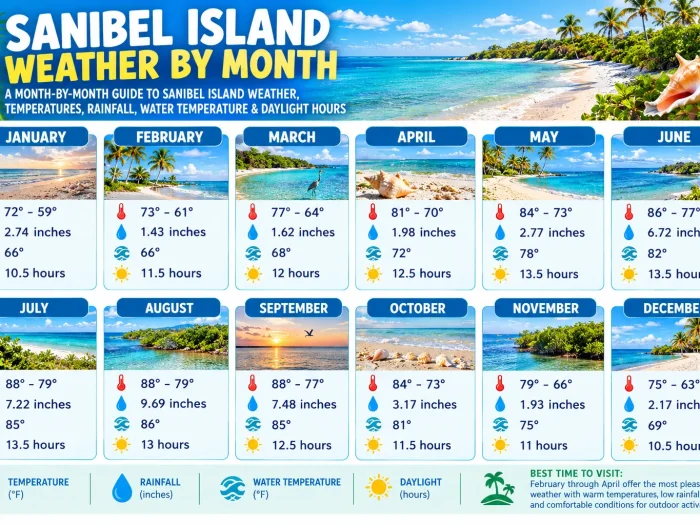
Marco Island, located on Florida’s Gulf Coast, has a warm subtropical climate with mild winters, hot summers, and a distinct rainy season. Winter and spring are generally the driest and most comfortable times to visit, while summer brings higher temperatures, frequent afternoon thunderstorms, and warm Gulf waters.
Marco Island Weather by Month
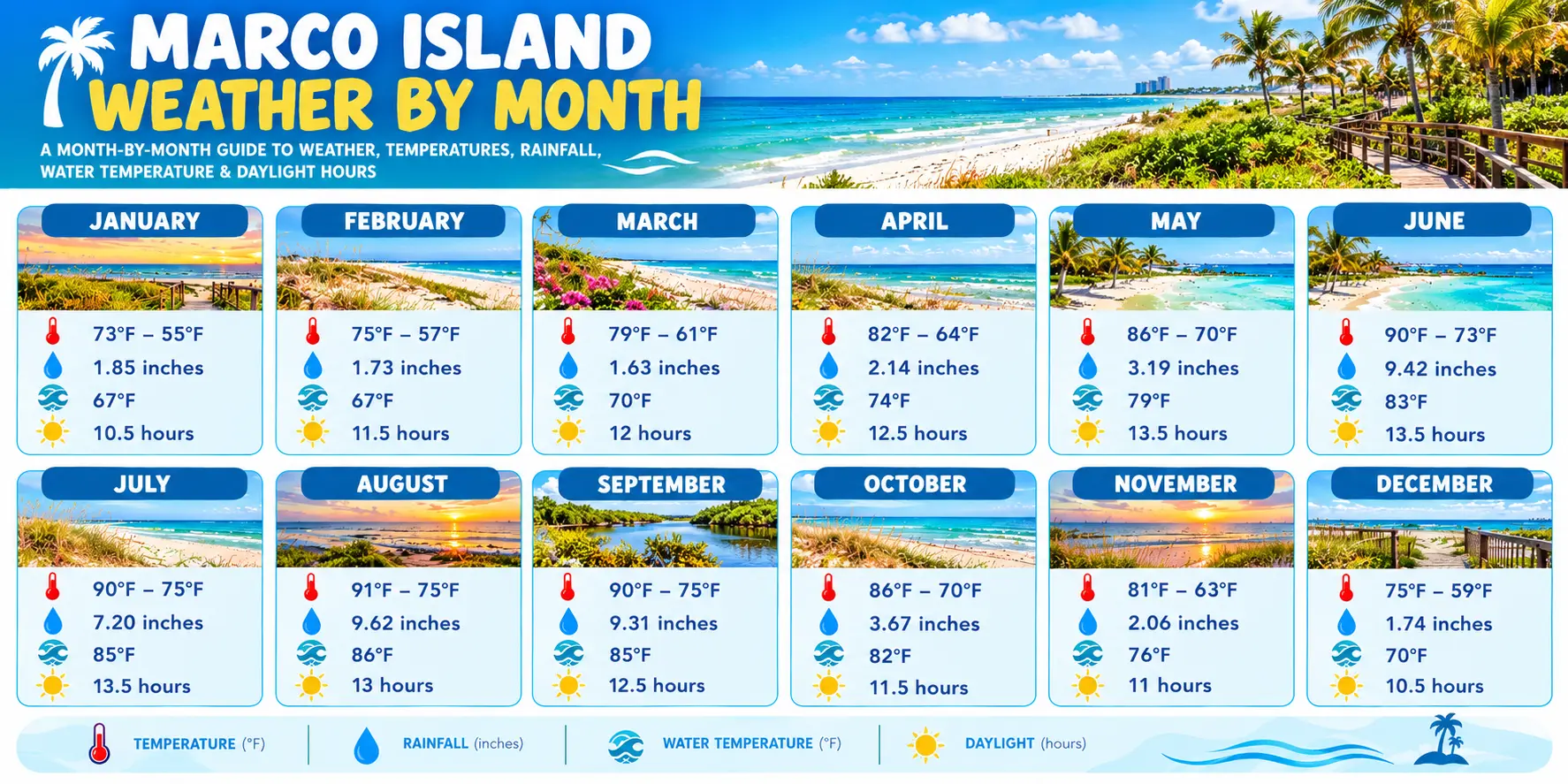
You can click the image below to view the full-size weather chart for Marco Island.
January – Mild, Cool and Relatively Dry
- Average high: 73°F (23°C)
- Average low: 55°F (13°C)
- Rainfall: 1.85 inches (47 mm)
- Water temperature: 67°F (19°C)
- Daylight: 10.5 hours
January is one of the coolest and driest months on Marco Island, but winter temperatures remain comfortable compared with much of the United States. Average daytime temperatures reach around 73°F (23°C), while nighttime temperatures fall to approximately 55°F (13°C). The mild afternoons are ideal for exploring the island, walking along Tigertail Beach, and enjoying outdoor dining.
Rainfall averages just 1.85 inches (47 mm), with approximately three rainy days throughout the month. Gulf water temperatures are around 67°F (19°C), which may feel cool for swimming but can still appeal to visitors who enjoy refreshing dips. A light jacket is useful for cooler mornings and evenings.
Best for:
- Exploring the island’s beaches
- Wildlife watching and nature walks
- Kayaking through coastal waterways
- Escaping colder winter climates
February – Warm, Sunny and Mostly Dry
- Average high: 75°F (24°C)
- Average low: 57°F (14°C)
- Rainfall: 1.73 inches (44 mm)
- Water temperature: 67°F (19°C)
- Daylight: 11.5 hours
February brings slightly warmer temperatures and longer days to Marco Island. Average highs reach 75°F (24°C), while overnight lows remain around 57°F (14°C). The pleasant weather makes this an excellent month for spending time outdoors without the intense heat and humidity of summer.
Rainfall remains low at approximately 1.73 inches (44 mm), with around three rainy days. Although Gulf water temperatures average about 67°F (19°C), the beaches remain attractive for sunbathing, beachcombing, and sunset walks. February is also a popular time to visit for travelers seeking a warm winter getaway.
Best for:
- Beach walks and sunbathing
- Boating and fishing excursions
- Exploring local restaurants and shops
- Enjoying comfortable outdoor activities
March – Warm and Pleasant with Longer Days
- Average high: 79°F (26°C)
- Average low: 61°F (16°C)
- Rainfall: 1.63 inches (41.4 mm)
- Water temperature: 70°F (21°C)
- Daylight: 12 hours
March is one of the most pleasant months to visit Marco Island. Average daytime temperatures rise to 79°F (26°C), and nighttime lows reach approximately 61°F (16°C). The warmer weather and increasing daylight create excellent conditions for exploring the coast, taking boat tours, and enjoying the island’s natural scenery.
Rainfall averages only 1.63 inches (41.4 mm), making March the driest month in the supplied data. Gulf water temperatures rise to around 70°F (21°C), making swimming more appealing, particularly during warm afternoons. Visitors can enjoy outdoor adventures without the frequent heavy showers that characterize the summer months.
Best for:
- Swimming and relaxing on the beach
- Dolphin-watching cruises
- Fishing and kayaking
- Exploring parks and coastal trails
April – Warm, Sunny and Dry
- Average high: 82°F (28°C)
- Average low: 64°F (18°C)
- Rainfall: 2.14 inches (54.3 mm)
- Water temperature: 74°F (23°C)
- Daylight: 12.5 hours
April brings warm afternoons, comfortable evenings, and plenty of sunshine to Marco Island. Average highs reach 82°F (28°C), while nighttime temperatures average 64°F (18°C). These conditions are ideal for enjoying the beaches, exploring nearby nature preserves, and spending long days outdoors.
Rainfall increases slightly to 2.14 inches (54.3 mm), but the month generally remains relatively dry. Gulf water temperatures climb to approximately 74°F (23°C), providing more comfortable conditions for swimming and other water activities. With 12.5 hours of daylight, visitors have plenty of time to enjoy sightseeing, boating, and sunset views.
Best for:
- Swimming in warmer Gulf waters
- Spending full days at the beach
- Paddleboarding and kayaking
- Taking boat tours around the Ten Thousand Islands
May – Hotter Days and Increasing Rainfall
- Average high: 86°F (30°C)
- Average low: 70°F (21°C)
- Rainfall: 3.19 inches (81 mm)
- Water temperature: 79°F (26°C)
- Daylight: 13.5 hours
May marks the transition from the drier season to the hotter, wetter summer period. Average daytime temperatures reach 86°F (30°C), while nighttime lows rise to around 70°F (21°C). The warmer weather is excellent for beach activities, although midday heat can become intense.
Rainfall increases to approximately 3.19 inches (81 mm), with around six rainy days. Showers are becoming more frequent, but there are still many opportunities to enjoy outdoor activities. Gulf water temperatures average about 79°F (26°C), making May a particularly appealing month for swimming, snorkeling, and boating.
Best for:
- Swimming in warm ocean water
- Snorkeling and paddleboarding
- Enjoying quieter beaches before peak summer
- Taking early-morning outdoor excursions
June – Hot, Humid and Rainy
- Average high: 90°F (32°C)
- Average low: 73°F (23°C)
- Rainfall: 9.42 inches (239.3 mm)
- Water temperature: 83°F (28°C)
- Daylight: 13.5 hours
June brings hot, humid weather and a significant increase in rainfall to Marco Island. Average highs reach 90°F (32°C), while nighttime temperatures remain around 73°F (23°C). The heat can feel more intense because of the humidity, so early mornings and late afternoons are generally more comfortable for outdoor activities.
Rainfall rises sharply to 9.42 inches (239.3 mm), with approximately 12 rainy days. Afternoon thunderstorms are common, and visitors should plan for sudden changes in weather. Despite the rain, Gulf water temperatures reach around 83°F (28°C), making swimming enjoyable. June also falls within the Atlantic hurricane season, which runs from June through November.
Best for:
- Swimming in warm Gulf waters
- Enjoying water sports between showers
- Taking early-morning boat trips
- Relaxing at beachfront accommodations
July – Hot, Humid and Frequently Stormy
- Average high: 90°F (32°C)
- Average low: 75°F (24°C)
- Rainfall: 7.20 inches (183 mm)
- Water temperature: 85°F (29°C)
- Daylight: 13.5 hours
July is one of the hottest months on Marco Island. Average daytime temperatures reach 90°F (32°C), while nighttime lows remain around 75°F (24°C). High humidity makes the weather feel warmer, particularly during the afternoon, so visitors should drink plenty of water and take breaks in the shade.
Rainfall averages 7.20 inches (183 mm), with approximately 12 rainy days. Thunderstorms frequently develop during the afternoon, although mornings can offer excellent opportunities for beach visits and boating. Gulf water temperatures rise to approximately 85°F (29°C), creating inviting conditions for swimming. Because July is within hurricane season, travelers should monitor forecasts when planning coastal excursions.
Best for:
- Swimming and relaxing in warm water
- Family beach vacations
- Morning fishing trips
- Enjoying indoor attractions during afternoon storms
August – Very Hot with Heavy Rainfall
- Average high: 91°F (33°C)
- Average low: 75°F (24°C)
- Rainfall: 9.62 inches (244.4 mm)
- Water temperature: 86°F (30°C)
- Daylight: 13 hours
August is the hottest month in the supplied temperature data and one of the wettest months of the year. Average highs reach 91°F (33°C), while nighttime temperatures stay around 75°F (24°C). The combination of heat and humidity can make outdoor activities tiring, especially during the middle of the day.
Rainfall averages approximately 9.62 inches (244.4 mm), the highest monthly total in the supplied data. There are around 15 rainy days, and heavy thunderstorms can interrupt beach plans. However, Gulf water temperatures reach about 86°F (30°C), making the sea very warm for swimming. August also falls during the peak portion of the Atlantic hurricane season, so visitors should remain flexible with their travel plans.
Best for:
- Swimming in exceptionally warm Gulf waters
- Enjoying resort pools and beachfront stays
- Taking short morning excursions
- Exploring indoor attractions during rainy periods
September – Hot, Humid and Very Wet
- Average high: 90°F (32°C)
- Average low: 75°F (24°C)
- Rainfall: 9.31 inches (236.6 mm)
- Water temperature: 85°F (29°C)
- Daylight: 12.5 hours
September remains hot and humid on Marco Island, with average highs around 90°F (32°C) and lows near 75°F (24°C). Temperatures remain suitable for beach vacations, but the combination of humidity and frequent rain can make outdoor sightseeing less predictable.
Rainfall reaches approximately 9.31 inches (236.6 mm), with around 13 rainy days. Afternoon thunderstorms are common, and heavy rain can occasionally disrupt boating or beach activities. Gulf water temperatures remain warm at approximately 85°F (29°C). September is also an important month to watch hurricane forecasts, as tropical systems can affect southwest Florida during this period.
Best for:
- Swimming during favorable weather
- Enjoying warm Gulf water
- Relaxing at hotels and resorts
- Taking advantage of quieter beaches when conditions allow
October – Warm Days and Decreasing Rainfall
- Average high: 86°F (30°C)
- Average low: 70°F (21°C)
- Rainfall: 3.67 inches (93.1 mm)
- Water temperature: 82°F (28°C)
- Daylight: 11.5 hours
October brings some relief from the intense summer heat. Average highs fall to 86°F (30°C), while nighttime lows drop to around 70°F (21°C). The slightly cooler weather makes walking, sightseeing, and spending time outdoors more comfortable.
Rainfall decreases considerably to 3.67 inches (93.1 mm), with approximately six rainy days. Although showers and tropical weather remain possible, conditions generally become more favorable for outdoor activities as the month progresses. Gulf water temperatures average about 82°F (28°C), which is still warm enough for swimming and other water sports.
Best for:
- Swimming and beach relaxation
- Exploring local nature preserves
- Kayaking and boat excursions
- Enjoying warm weather with less summer heat
November – Warm, Comfortable and Mostly Dry
- Average high: 81°F (27°C)
- Average low: 63°F (17°C)
- Rainfall: 2.06 inches (52.3 mm)
- Water temperature: 76°F (24°C)
- Daylight: 11 hours
November is one of the most comfortable months to visit Marco Island. Average daytime temperatures reach 81°F (27°C), while nighttime lows fall to approximately 63°F (17°C). The reduced humidity and pleasant afternoons make it an excellent time for outdoor adventures and relaxing along the coast.
Rainfall averages only 2.06 inches (52.3 mm), with around three rainy days. Gulf water temperatures cool to approximately 76°F (24°C), which remains comfortable for many swimmers. November also marks the end of the Atlantic hurricane season, although tropical weather is still possible before the official season ends on November 30.
Best for:
- Beach walks and outdoor sightseeing
- Fishing and boating
- Wildlife watching
- Enjoying comfortable weather with fewer rainy days
December – Mild, Pleasant and Relatively Dry
- Average high: 75°F (24°C)
- Average low: 59°F (15°C)
- Rainfall: 1.74 inches (44.1 mm)
- Water temperature: 70°F (21°C)
- Daylight: 10.5 hours
December brings mild winter weather to Marco Island, making it an attractive destination for travelers escaping colder climates. Average highs reach 75°F (24°C), while nighttime lows average around 59°F (15°C). Days are generally pleasant for beach walks, sightseeing, and outdoor dining, although evenings can feel cool.
Rainfall remains relatively low at approximately 1.74 inches (44.1 mm), with around three rainy days. Gulf water temperatures average about 70°F (21°C), which may feel cool to some swimmers but remains suitable for visitors who enjoy refreshing water. With 10.5 hours of daylight, it is worth planning outdoor activities earlier in the day.
Best for:
- Enjoying a warm-weather winter getaway
- Walking along the beaches at sunset
- Exploring the island’s restaurants and shops
- Taking boat tours and wildlife excursions
Marco Island Weather by Month: Summary Table
| Month | Avg High °F (°C) | Avg Low °F (°C) | Rainfall (inches) | Water Temp. (°F) | Daylight (hours) |
|---|---|---|---|---|---|
| January | 73 (23) | 55 (13) | 1.85 | 67 | 10.5 |
| February | 75 (24) | 57 (14) | 1.73 | 67 | 11.5 |
| March | 79 (26) | 61 (16) | 1.63 | 70 | 12 |
| April | 82 (28) | 64 (18) | 2.14 | 74 | 12.5 |
| May | 86 (30) | 70 (21) | 3.19 | 79 | 13.5 |
| June | 90 (32) | 73 (23) | 9.42 | 83 | 13.5 |
| July | 90 (32) | 75 (24) | 7.20 | 85 | 13.5 |
| August | 91 (33) | 75 (24) | 9.62 | 86 | 13 |
| September | 90 (32) | 75 (24) | 9.31 | 85 | 12.5 |
| October | 86 (30) | 70 (21) | 3.67 | 82 | 11.5 |
| November | 81 (27) | 63 (17) | 2.06 | 76 | 11 |
| December | 75 (24) | 59 (15) | 1.74 | 70 | 10.5 |
20 FAQs About Marco Island Weather
1. What is the best month to visit Marco Island?
March and April are among the best months to visit Marco Island. Temperatures are warm, rainfall is relatively low, and conditions are excellent for beaches, boating, and outdoor activities. November is another good option for comfortable weather.
2. What is the weather like in Marco Island, Florida?
Marco Island has a warm climate throughout the year, with mild winters and hot, humid summers. Winter and spring are generally drier, while summer and early fall bring frequent rain showers and thunderstorms.
3. What is the hottest month in Marco Island?
August is typically the hottest month, with average high temperatures around 91°F (33°C). July and September are also hot, with daytime temperatures commonly reaching around 90°F (32°C).
4. What is the coldest month in Marco Island?
January is generally the coolest month. Average daytime highs are around 73°F (23°C), while nighttime lows are approximately 55°F (13°C), making winter relatively mild.
5. How hot is Marco Island in summer?
Summer temperatures typically reach 90–91°F (32–33°C) during the day, with nighttime lows around 73–75°F (23–24°C). High humidity can make it feel even hotter, especially in July and August.
6. Does it rain a lot in Marco Island?
Rainfall varies considerably by season. Winter and spring are relatively dry, while summer and early fall are much wetter. Based on your supplied data, August receives approximately 9.62 inches (244.4 mm) of rainfall, compared with 1.63 inches (41.4 mm) in March.
7. What is the rainiest month in Marco Island?
August is the rainiest month in the data you provided, with approximately 9.62 inches (244.4 mm) of rainfall. September and June are also very wet, with rainfall exceeding 9 inches in your monthly figures.
8. What is the driest month in Marco Island?
March is the driest month in your supplied data, receiving approximately 1.63 inches (41.4 mm) of rainfall. February and December are also relatively dry, making them attractive options for outdoor activities.
9. When is the rainy season in Marco Island?
The rainy season generally runs from late May through October, with the wettest conditions typically occurring between June and September. Afternoon showers and thunderstorms are common during this period.
10. When is hurricane season in Marco Island?
The Atlantic hurricane season runs from June 1 through November 30. Visitors traveling during these months should monitor weather forecasts and consider flexible travel arrangements, particularly in August, September, and October.
11. Is Marco Island warm in winter?
Yes. Winter is generally mild, with daytime temperatures often in the low to mid-70s°F (low to mid-20s°C). Evenings can be cooler, so bringing a light jacket or sweater is recommended.
12. Can you swim in Marco Island in January?
Yes, you can swim in January, although the Gulf water may feel cool. Your estimated water temperature is around 67°F (19°C). Visitors who prefer warmer swimming conditions may enjoy April through October more.
13. What is the water temperature in Marco Island by month?
Gulf water temperatures are coolest during winter and warmest in summer. Approximate seasonal temperatures are:
- January: 67°F (19°C)
- March: 70°F (21°C)
- April: 74°F (23°C)
- June: 83°F (28°C)
- August: 86°F (30°C)
- October: 82°F (28°C)
- December: 70°F (21°C)
These are estimates and may vary with weather conditions and the specific location along the coast.
14. When is the best time to visit Marco Island for swimming?
May through October is ideal for visitors who prefer warm Gulf water. Water temperatures generally rise from the upper 70s°F (mid-20s°C) in May to the mid-80s°F (around 30°C) during summer. October offers warm water with less rainfall than the peak summer months.
15. Is Marco Island humid?
Marco Island is generally more humid during summer, particularly from June through September. Winter and spring tend to feel more comfortable because temperatures are lower and rainfall is less frequent.
16. Does Marco Island get hurricanes?
Yes. Marco Island is on Florida’s Gulf Coast and can be affected by tropical storms and hurricanes. These systems can bring strong winds, heavy rainfall, storm surge, and coastal flooding. Travelers should follow official National Hurricane Center and National Weather Service updates during hurricane season.
17. Is October a good time to visit Marco Island?
Yes. October is a good shoulder-season option, with average highs around 86°F (30°C) and lows around 70°F (21°C). Rainfall decreases compared with the peak summer months, and Gulf water remains warm. However, hurricane season is still active.
18. What is the best time to visit Marco Island for fewer crowds?
September and parts of October can be quieter than the busy winter and spring travel season. However, September is also hot, humid, and rainy, so visitors should balance lower crowd levels with the possibility of unsettled weather.
19. How much daylight does Marco Island get throughout the year?
Daylight ranges from approximately 10.5 hours per day in December and January to around 13.5 hours in May, June, and July, based on your supplied data. Longer summer days provide more time for boating, beach visits, and sightseeing.
20. What should I pack for Marco Island based on the weather?
Pack lightweight clothing, swimwear, sandals, sunscreen, sunglasses, and a hat. For winter trips, bring a light jacket for cooler evenings. During the rainy season, include a compact umbrella or rain jacket and quick-drying clothing. If traveling from June through November, monitor hurricane forecasts before and during your visit.
Read more: