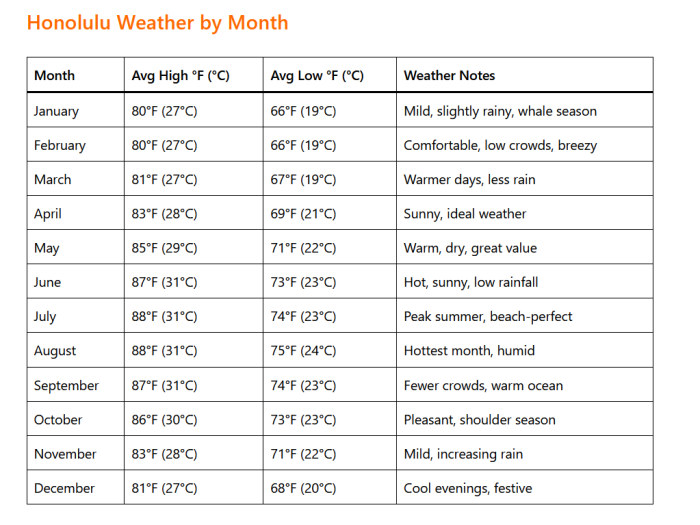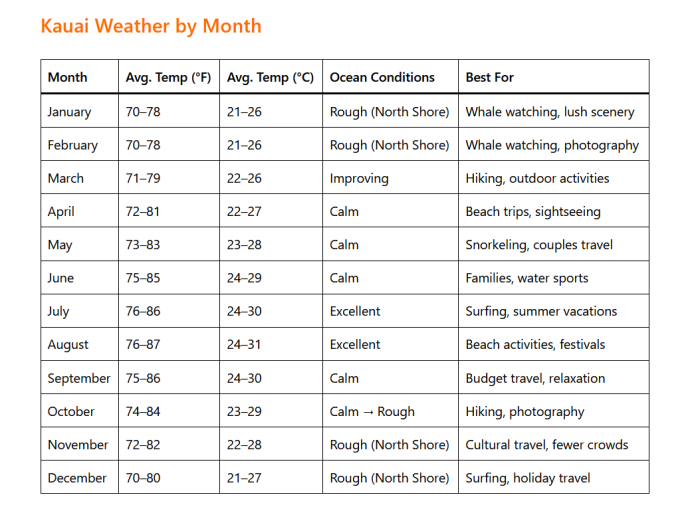
Hawaii Weather by Month: Complete Guide to Hawaii’s Climate Throughout the Year
Hawaii enjoys a warm tropical climate year-round, making it one of the world’s most popular travel destinations. Unlike many places that experience four distinct seasons, Hawaii has two primary seasons: a dry season (May–October) and a rainy season (November–April). Temperatures remain comfortable throughout the year, typically ranging from 65°F to 88°F (18°C to 31°C) depending on location and elevation.
Whether you’re planning a beach vacation, hiking adventure, whale-watching trip, or surfing getaway, understanding Hawaii weather by month can help you choose the perfect time to visit.
Hawaii Weather by Month
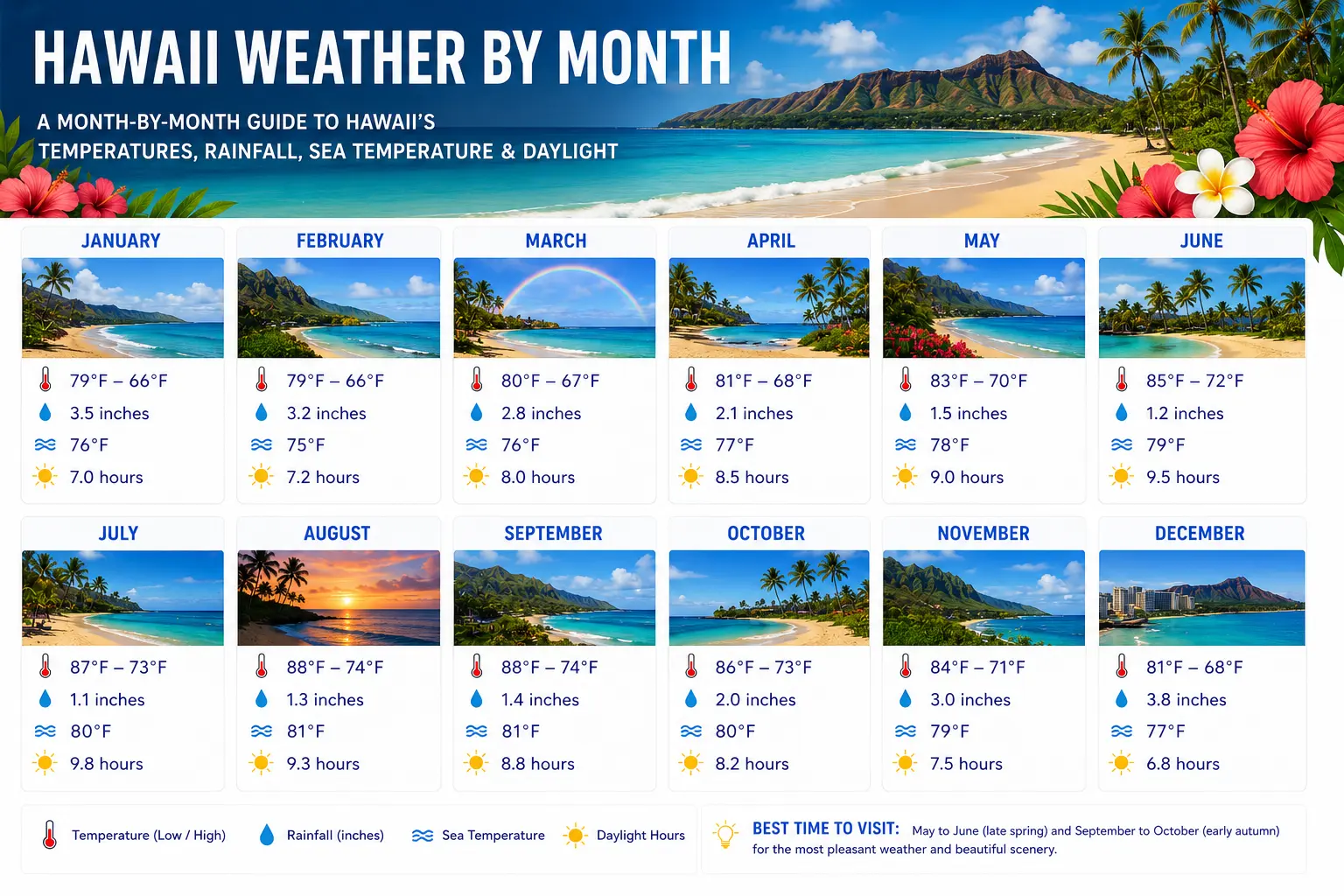
You can click the image below to view the full-size weather chart for Hawaii.
January – Mild Winter Weather
Average low: 66°F (19°C)
Average high: 79°F (26°C)
Rainfall: 3.5 inches
Rainy Days: 10 days
Sea Temperature: 76°F (24°C)
Daylight: 11.0 hours
January is one of Hawaii’s coolest and wettest months. While temperatures remain pleasantly warm compared to most of the United States, occasional rain showers are common, particularly on the windward sides of the islands.
This month is also peak whale-watching season as humpback whales migrate to Hawaiian waters.
Best for:
- Whale watching
- Winter surfing on the North Shore
- Tropical sightseeing
- Avoiding extreme heat
February – Cool and Rainy
Average low: 66°F (19°C)
Average high: 79°F (26°C)
Rainfall: 3.2 inches
Rainy Days: 9 days
Sea Temperature: 75°F (24°C)
Daylight: 11.3 hours
February continues Hawaii’s winter weather pattern with mild temperatures and periodic rainfall. The islands remain lush and green thanks to frequent showers.
Large winter swells attract experienced surfers from around the world, especially to Oahu’s famous North Shore.
Best for:
- Whale watching
- Surf competitions
- Scenic drives
- Rainforest exploration
March – Transition Toward Spring
Average low: 67°F (19°C)
Average high: 80°F (27°C)
Rainfall: 2.8 inches
Rainy Days: 8 days
Sea Temperature: 76°F (24°C)
Daylight: 12.0 hours
March marks the gradual transition from the wetter winter season toward drier conditions. Temperatures begin to rise slightly, while rainfall starts decreasing.
Visitors often enjoy a balance of pleasant weather, green landscapes, and fewer crowds than the summer months.
Best for:
- Hiking
- Whale watching
- Beach walks
- Outdoor sightseeing
April – Warm and Comfortable
Average low: 68°F (20°C)
Average high: 81°F (27°C)
Rainfall: 2.1 inches
Rainy Days: 7 days
Sea Temperature: 77°F (25°C)
Daylight: 12.6 hours
April is one of the most pleasant months to visit Hawaii. Rainfall drops noticeably while temperatures become warmer and more consistent.
The islands are still green from winter rains, creating beautiful scenery across mountains, valleys, and coastlines.
Best for:
- Hiking trails
- Beach vacations
- Snorkeling
- Photography
May – Beginning of the Dry Season
Average low: 70°F (21°C)
Average high: 83°F (28°C)
Rainfall: 1.5 inches
Rainy Days: 5 days
Sea Temperature: 78°F (26°C)
Daylight: 13.1 hours
May signals the start of Hawaii’s dry season. Sunny days become more common, humidity remains comfortable, and beaches enjoy excellent conditions.
Many travelers consider May one of the best months to visit due to ideal weather and relatively moderate crowds.
Best for:
- Beach activities
- Snorkeling
- Family vacations
- Island hopping
June – Warm and Sunny
Average low: 72°F (22°C)
Average high: 85°F (29°C)
Rainfall: 1.2 inches
Rainy Days: 4 days
Sea Temperature: 79°F (26°C)
Daylight: 13.3 hours
June brings long sunny days and consistently warm temperatures. Ocean conditions are generally calm, making it a fantastic month for swimming and water sports.
Summer vacation season begins, so popular attractions can become busier.
Best for:
- Swimming
- Snorkeling
- Paddleboarding
- Family travel
July – Peak Summer Sunshine
Average low: 73°F (23°C)
Average high: 87°F (31°C)
Rainfall: 1.1 inches
Rainy Days: 4 days
Sea Temperature: 80°F (27°C)
Daylight: 13.2 hours
July is among Hawaii’s warmest and sunniest months. Beaches are at their best, and ocean temperatures are perfect for extended swimming and diving.
Despite the warmth, steady trade winds help keep conditions comfortable.
Best for:
- Beach vacations
- Diving
- Boating
- Sunset cruises
August – Hottest Month of the Year
Average low: 74°F (23°C)
Average high: 88°F (31°C)
Rainfall: 1.3 inches
Rainy Days: 4 days
Sea Temperature: 81°F (27°C)
Daylight: 12.8 hours
August is typically Hawaii’s hottest month. The ocean reaches its warmest temperatures, making it ideal for snorkeling, diving, and other marine activities.
Afternoon humidity can occasionally increase, but trade winds often provide relief.
Best for:
- Beach holidays
- Scuba diving
- Snorkeling
- Water sports
September – Warm Seas and Fewer Crowds
Average low: 74°F (23°C)
Average high: 88°F (31°C)
Rainfall: 1.4 inches
Rainy Days: 5 days
Sea Temperature: 81°F (27°C)
Daylight: 12.3 hours
September combines summer warmth with lighter tourist crowds after the peak vacation season ends. Ocean temperatures remain exceptionally warm and conditions are excellent for outdoor activities.
Many travelers regard September as one of Hawaii’s hidden gems.
Best for:
- Snorkeling
- Relaxing beach vacations
- Couples trips
- Water sports
October – Warm and Pleasant
Average low: 73°F (23°C)
Average high: 86°F (30°C)
Rainfall: 2.0 inches
Rainy Days: 6 days
Sea Temperature: 80°F (27°C)
Daylight: 11.8 hours
October remains warm and relatively dry, although rainfall begins increasing slightly as the islands move toward the wetter season.
Crowds are generally lower than during summer, making this an excellent month for sightseeing and outdoor adventures.
Best for:
- Hiking
- Scenic drives
- Beach vacations
- Photography
November – Beginning of the Rainy Season
Average low: 71°F (22°C)
Average high: 84°F (29°C)
Rainfall: 3.0 inches
Rainy Days: 8 days
Sea Temperature: 79°F (26°C)
Daylight: 11.2 hours
November marks the beginning of Hawaii’s wetter season. Rainfall increases, but showers are often brief and followed by sunshine.
Winter surf conditions begin developing on the northern shores of the islands.
Best for:
- Surf watching
- Nature tours
- Waterfalls
- Cultural attractions
December – Tropical Winter
Average low: 68°F (20°C)
Average high: 81°F (27°C)
Rainfall: 3.8 inches
Rainy Days: 10 days
Sea Temperature: 77°F (25°C)
Daylight: 10.9 hours
December brings Hawaii’s wettest weather of the year, although temperatures remain pleasantly warm. Holiday travelers flock to the islands to enjoy sunshine and tropical scenery during winter.
Whale-watching season also begins in earnest toward the end of the month.
Best for:
- Holiday vacations
- Whale watching
- Surf viewing
- Tropical winter escapes
Hawaii Weather by Month Table
| Month | Avg High | Avg Low | Sea Temperature | Rainfall (inches) | Sun (hrs/day) |
|---|---|---|---|---|---|
| January | 79°F (26°C) | 66°F (19°C) | 76°F (24°C) | 3.5 | 7.0 |
| February | 79°F (26°C) | 66°F (19°C) | 75°F (24°C) | 3.2 | 7.2 |
| March | 80°F (27°C) | 67°F (19°C) | 76°F (24°C) | 2.8 | 8.0 |
| April | 81°F (27°C) | 68°F (20°C) | 77°F (25°C) | 2.1 | 8.5 |
| May | 83°F (28°C) | 70°F (21°C) | 78°F (26°C) | 1.5 | 9.0 |
| June | 85°F (29°C) | 72°F (22°C) | 79°F (26°C) | 1.2 | 9.5 |
| July | 87°F (31°C) | 73°F (23°C) | 80°F (27°C) | 1.1 | 9.8 |
| August | 88°F (31°C) | 74°F (23°C) | 81°F (27°C) | 1.3 | 9.3 |
| September | 88°F (31°C) | 74°F (23°C) | 81°F (27°C) | 1.4 | 8.8 |
| October | 86°F (30°C) | 73°F (23°C) | 80°F (27°C) | 2.0 | 8.2 |
| November | 84°F (29°C) | 71°F (22°C) | 79°F (26°C) | 3.0 | 7.5 |
| December | 81°F (27°C) | 68°F (20°C) | 77°F (25°C) | 3.8 | 6.8 |
Hawaii Weather Summary by Season
Dry Season (May–October)
- Warmest temperatures of the year
- Lowest rainfall totals
- Excellent beach conditions
- Best time for snorkeling and swimming
Rainy Season (November–April)
- Slightly cooler temperatures
- More frequent rain showers
- Greener landscapes and waterfalls
- Prime whale-watching season
When Is the Best Time to Visit Hawaii?
For the best combination of sunshine, comfortable temperatures, and fewer crowds, April, May, September, and October are often considered the ideal months to visit Hawaii.
Travelers seeking the warmest ocean temperatures should visit during August and September, while those interested in whale watching should plan a trip between December and March.
No matter when you visit, Hawaii’s tropical climate ensures warm weather, beautiful scenery, and outdoor adventures throughout the year.
20 FAQs About Hawaii Weather
1. What is the best month to visit Hawaii?
Many travelers consider May, June, September, and October the best months to visit Hawaii because they offer warm temperatures, lower rainfall, and fewer crowds than the peak summer and holiday seasons.
2. Does Hawaii have four seasons?
No. Hawaii has two main seasons: a dry season from May to October and a rainy season from November to April.
3. What is the hottest month in Hawaii?
August is typically the hottest month, with average daytime temperatures reaching around 88°F (31°C) in many coastal areas.
4. What is the coldest month in Hawaii?
January and February are usually the coolest months, although temperatures remain mild and comfortable compared to most destinations.
5. Does it rain every day in Hawaii?
No. Rain showers are common, especially during winter, but they are often brief and localized. Many areas receive sunshine even on rainy days.
6. What is the wettest month in Hawaii?
December is generally the wettest month across much of Hawaii, although rainfall varies significantly by island and region.
7. What is the driest month in Hawaii?
July is often the driest month, with very little rainfall and plenty of sunshine.
8. Is Hawaii warm enough for swimming year-round?
Yes. Ocean temperatures usually range from 75°F to 81°F (24°C to 27°C) throughout the year, making swimming comfortable in every season.
9. Which Hawaiian island has the best weather?
Many visitors consider the leeward (west) sides of Maui, Oahu, and the Big Island to have the sunniest and driest weather.
10. Does Hawaii experience hurricanes?
Hurricanes are rare in Hawaii. The hurricane season runs from June through November, but direct impacts are uncommon.
11. Is Hawaii humid?
Hawaii can be humid, particularly during summer, but the trade winds help keep conditions comfortable most of the time.
12. What is Hawaii’s rainy season?
The rainy season generally lasts from November through April, with the greatest chance of rainfall occurring during winter.
13. Can you visit Hawaii during winter?
Absolutely. Winter is one of Hawaii’s most popular travel seasons thanks to warm temperatures, whale watching, and world-famous surf conditions.
14. When is whale-watching season in Hawaii?
The best whale-watching season runs from December through March, when humpback whales migrate to Hawaiian waters.
15. What is the sea temperature in Hawaii during summer?
During summer, sea temperatures usually range from 79°F to 81°F (26°C to 27°C).
16. Which month has the most sunshine in Hawaii?
July and August generally receive the most sunshine and the least rainfall.
17. Does Hawaii ever get cold?
In coastal areas, temperatures rarely feel cold. However, high-elevation locations such as Mauna Kea can experience near-freezing temperatures and even snowfall.
18. Is Hawaii weather the same on every island?
No. Weather varies considerably between islands and even between different sides of the same island due to mountains and trade winds.
19. When are the ocean conditions calmest?
Ocean conditions are typically calmest during the summer months, especially from May through September, making it an excellent time for snorkeling and swimming.
20. What should I pack for Hawaii weather?
Pack lightweight clothing, swimwear, sunscreen, sunglasses, comfortable walking shoes, and a light rain jacket for occasional showers.
Read more: