Costa Rica Weather by Month: A Complete Guide for Travelers
Costa Rica sits just 10 degrees north of the equator, which means it never really gets cold — but that doesn’t mean the weather stays the same all year. More importantly, the country’s dramatic geography — two coastlines, a volcanic mountain spine, and cloud forests — creates wildly different microclimates from region to region.
This guide breaks down the weather month by month, region by region, so you can plan exactly where to go and when.
The Regions
- Pacific Coast – Includes Guanacaste, Manuel Antonio, and the Osa Peninsula. Follows a clear dry/rainy season pattern.
- Caribbean Coast – Puerto Viejo, Tortuguero, Cahuita. Follows its own schedule — almost the inverse of the Pacific.
- Central Valley – San José and surroundings, at 1,000–1,200m elevation. Mild and spring-like year-round.
- Mountains & Volcanoes – Arenal, Monteverde, Chirripó. Cooler, cloudier, and wetter than the coasts.
The Two Seasons (Pacific & Central Valley)
Dry Season (December – April): Sunny skies, low humidity, little to no rain. Peak tourist season.
Rainy Season (May – November): Afternoon showers are the daily rhythm. Mornings are often sunny. Landscapes turn lush green, prices drop, and crowds thin out.
Note: The Caribbean Coast does not follow this pattern — it can rain any month, with its own distinct dry spells in February–March and September–October.
Costa Rica Weather by Month
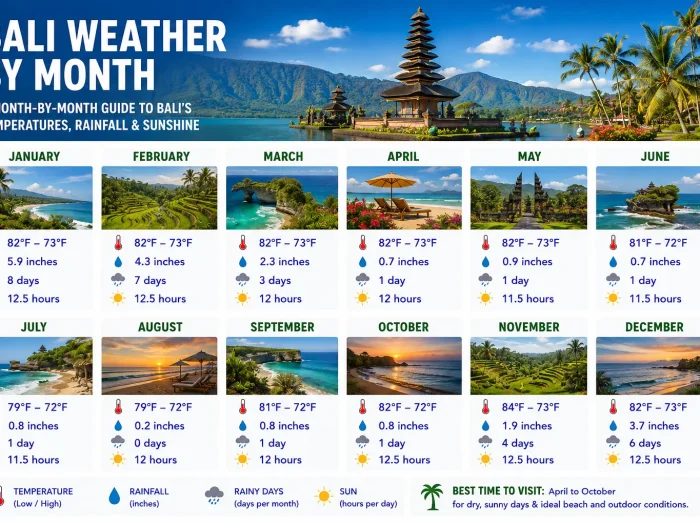
You can click the image below to view the full-size weather chart for Costa Rica.

January
Overall: Peak dry season | High crowds | Best time for Pacific beaches
- Pacific Coast: Brilliant sunshine and blue skies, 30–34°C (86–93°F). One of the best beach months of the year. Guanacaste and Manuel Antonio are stunning. Sea turtle nesting continues in some areas.
- Caribbean Coast: Can still see some rain carried by northeastern trade winds, 26–30°C (79–86°F). Not the driest month here, but conditions are improving. Tortuguero is accessible and lush.
- Central Valley: Pleasant and dry, 20–26°C (68–79°F). San José is comfortable with cool evenings. A great base for day trips.
- Mountains & Volcanoes: Dry season means better volcano views — Arenal is more likely to show its peak in the morning. Cool at elevation, 15–22°C (59–72°F). Bring a light jacket.
February
Overall: Peak dry season | High crowds | Best overall month to visit
- Pacific Coast: Arguably the best month on the Pacific. Sunny, warm, and breezy, 30–34°C (86–93°F). Guanacaste’s dry forests turn golden as trees shed leaves — dramatic and beautiful. Surf is excellent.
- Caribbean Coast: The driest and sunniest stretch of the year begins. 26–30°C (79–86°F). Puerto Viejo and Cahuita are at their most inviting. Coral reefs are clear for snorkeling.
- Central Valley: Warm, dry, and comfortable, 22–27°C (72–81°F). Festivals and fiestas pop up across the region (Palmares, Liberia).
- Mountains & Volcanoes: Clear mornings offer the best volcano views of the year. Cool nights, 14–21°C (57–70°F). Ideal for hiking Chirripó or exploring Monteverde.
March
Overall: Dry season | Moderate–High crowds | Hottest month of the year
- Pacific Coast: The hottest month — Pacific lowlands can hit 35–38°C (95–100°F) by midday. Start activities early. Spring breakers arrive in the second half of the month, making beach towns lively but crowded.
- Caribbean Coast: Still in its dry spell, 27–31°C (81–88°F). One of the best months to visit the Caribbean side. Clear water, good snorkeling, pleasant beaches.
- Central Valley: Warm and dry, 23–28°C (73–82°F). The hottest period for San José, but still very manageable thanks to the elevation.
- Mountains & Volcanoes: Warm days but cool nights persist. Waterfalls are at their lowest — trails are dry and easy. 15–23°C (59–73°F).
April
Overall: Transitional | Moderate crowds | Semana Santa is huge
- Pacific Coast: The dry season begins to crack. Occasional showers appear, especially late in the month, 28–33°C (82–91°F). Semana Santa (Holy Week) brings massive crowds of Costa Rican families to beaches — book early or avoid.
- Caribbean Coast: The brief dry spell ends. Rain starts returning, 26–30°C (79–86°F). Still very visitable, especially early April.
- Central Valley: First afternoon showers of the year begin to appear. Mornings remain dry and pleasant, 21–27°C (70–81°F).
- Mountains & Volcanoes: Early rains begin refreshing the cloud forests. Waterfalls start recovering. Misty and atmospheric, 14–22°C (57–72°F).
May
Overall: Start of rainy season | Low crowds | Great value
- Pacific Coast: Rainy season officially begins. Showers arrive in the afternoon and clear by evening — mornings are typically sunny. 27–32°C (81–90°F). Everything turns bright green overnight. Crowds and prices drop significantly.
- Caribbean Coast: Moderate rain resumes, 25–29°C (77–84°F). Not the best month for the Caribbean, but still pleasant with morning sunshine most days.
- Central Valley: Reliable afternoon showers begin. Evenings feel fresher and cooler, 20–26°C (68–79°F). Waterfalls near San José come alive.
- Mountains & Volcanoes: Rain increases noticeably. Cloud forests are lush and dripping. Arenal Lake fills up. 13–21°C (55–70°F). Pack rain gear.
June
Overall: Rainy season | Low crowds | Caribbean’s best months begin
- Pacific Coast: Heavier afternoon rain than May, but the sunny-morning pattern holds, 26–31°C (79–88°F). White-water rivers are running strong — great for rafting the Pacuare. Good surf developing on Pacific breaks.
- Caribbean Coast: Enters a veranillo (mini dry season) — June and July are surprisingly dry and sunny on the Caribbean side, 26–30°C (79–86°F). Excellent time to visit Puerto Viejo or Tortuguero. Green sea turtles begin nesting.
- Central Valley: Afternoon showers are now regular. Mornings still pleasant, 19–25°C (66–77°F). The valley is lush and green.
- Mountains & Volcanoes: Frequently cloudy and misty. Monteverde’s cloud forest is at its most atmospheric. 12–20°C (54–68°F). Waterfalls are impressive.
July
Overall: Rainy season with veranillo | Moderate crowds | Whale watching begins
- Pacific Coast: The veranillo del buey — a brief dry spell — can arrive mid-July, sometimes giving a week or two of near-dry-season conditions, 27–32°C (81–90°F). Unpredictable in timing, but magical when it appears. Humpback whales arrive from the Northern Hemisphere — whale watching peaks along the South Pacific coast.
- Caribbean Coast: Continues its mini dry season from June. Consistently one of the best months to visit the Caribbean, 26–30°C (79–86°F). Green turtle nesting in full swing at Tortuguero. Caribbean surf peaks — excellent waves for surfers.
- Central Valley: Mixed — some sunny breaks if the veranillo reaches inland, but afternoon showers remain common, 19–25°C (66–77°F).
- Mountains & Volcanoes: Windier than other months, especially around Arenal (trade winds blow strong). Can be rainy and cloudy. 12–20°C (54–68°F).
August
Overall: Rainy season | Moderate crowds | Lush and wild
- Pacific Coast: The veranillo has passed and rain returns in earnest, 26–31°C (79–88°F). One of the wetter months on the Pacific. Rivers are at peak levels — best white-water rafting of the year. Wildlife is extraordinarily active. Leatherback turtles nest on Osa Peninsula beaches.
- Caribbean Coast: The mini dry season ends and rain returns, 25–29°C (77–84°F). Still very green and beautiful. Turtle nesting continues. Humidity increases noticeably.
- Central Valley: Heavy afternoon showers, sometimes all day, 19–25°C (66–77°F). Not the best month to be based in San José if you want day trips — roads can flood.
- Mountains & Volcanoes: Very wet and misty. Waterfalls are thundering. Hiking trails can be muddy and slippery. 12–19°C (54–66°F). Waterproof boots essential.
September
Overall: Wettest month | Very low crowds | Best prices of the year
- Pacific Coast: The rainiest month of the year on the Pacific side, 25–30°C (77–86°F). Some lodges and tour operators close for maintenance. Roads to remote areas (Osa Peninsula) can become impassable. Best avoided for beach trips — but rewarding for adventurous travelers who want solitude and dramatic landscapes.
- Caribbean Coast: One of the driest months on the Caribbean side — almost the opposite of the Pacific, 25–29°C (77–84°F). This is a hidden gem: sunny conditions, low prices, and very few tourists in Puerto Viejo and Cahuita.
- Central Valley: Heavy, frequent rain. Cool and overcast, 18–24°C (64–75°F). San José can feel grey and damp for days at a time.
- Mountains & Volcanoes: Extremely wet and cloudy. Volcano views are rare. Not recommended for those wanting to see Arenal’s peak. 11–18°C (52–64°F). Rivers are at maximum.
October
Overall: Still rainy | Very low crowds | Caribbean is great
- Pacific Coast: Remains very wet, though slightly less intense than September, 25–30°C (77–86°F). Second half of October starts showing signs of improvement. Still rough for beach tourism but spectacular for nature lovers — frogs, insects, and waterbirds are everywhere.
- Caribbean Coast: Continues its dry spell from September, 25–29°C (77–84°F). Puerto Viejo and Cahuita are lovely, uncrowded, and affordable. Some of the best conditions of the year for the Caribbean side.
- Central Valley: Still rainy but improving slightly toward month’s end, 18–24°C (64–75°F). By late October you can sense the dry season approaching.
- Mountains & Volcanoes: Wet but beginning to ease. Cloud forests are impossibly green and full of life. 11–19°C (52–66°F).
November
Overall: Transitional | Low–Moderate crowds | Pacific rebounds
- Pacific Coast: Rain eases noticeably on the Pacific side, 26–31°C (79–88°F). By late November, many days are fully dry and sunny. Surf conditions are excellent. A great shoulder-season month — decent weather at low prices.
- Caribbean Coast: November is one of the rainiest months on the Caribbean side — almost the inverse of the Pacific, 24–28°C (75–82°F). Heavy rain can persist for days. Not the best time for the Caribbean.
- Central Valley: Drying out rapidly. By late November, the dry season rhythm is returning, 19–26°C (66–79°F). Pleasant and green after the rains.
- Mountains & Volcanoes: Cloud cover begins to lift. More frequent clear mornings for volcano views. Still cool and occasionally rainy, 12–21°C (54–70°F).
December
Overall: Dry season returns | Moderate–High crowds | Festive atmosphere
- Pacific Coast: The dry season is back. Beaches are sunny and inviting, 28–33°C (82–91°F). Early December is relaxed; the last two weeks fill up fast with holiday travelers. Humpback whale watching (Southern Hemisphere whales) continues through December. Prices spike at Christmas and New Year’s — book well ahead.
- Caribbean Coast: Still sees some rain early in the month, improving toward Christmas, 25–29°C (77–84°F). A quieter, more affordable alternative to the packed Pacific beaches during the holidays.
- Central Valley: Dry and pleasant with festive energy, 20–26°C (68–79°F). San José dresses up for Las Posadas and Christmas. Cool, comfortable evenings.
- Mountains & Volcanoes: Dry season brings clearer skies — December mornings often offer spectacular volcano views. Nights are cold at elevation, 12–21°C (54–70°F). Pack warm layers for Monteverde or Chirripó.
Costa Rica Weather by Month – Summary Table
| Month | Pacific Coast | Caribbean Coast | Central Valley | Mountains & Volcanoes |
|---|---|---|---|---|
| Jan | 82–91°F | 73–84°F | 61–77°F | 52–70°F |
| Feb | 84–93°F | 73–84°F | 63–79°F | 54–72°F |
| Mar | 86–95°F | 75–86°F | 64–81°F | 55–73°F |
| Apr | 81–91°F | 75–86°F | 64–79°F | 55–72°F |
| May | 77–88°F | 75–84°F | 64–77°F | 54–68°F |
| Jun | 77–86°F | 75–84°F | 63–75°F | 54–66°F |
| Jul | 79–88°F | 75–84°F | 63–75°F | 54–66°F |
| Aug | 77–86°F | 73–82°F | 63–75°F | 54–64°F |
| Sep | 75–84°F | 73–82°F | 63–73°F | 52–63°F |
| Oct | 75–84°F | 73–82°F | 63–73°F | 52–64°F |
| Nov | 77–86°F | 73–82°F | 63–75°F | 52–68°F |
| Dec | 81–90°F | 73–82°F | 61–75°F | 52–70°F |
Quick Comparison: Best Months by Region
| Region | Best Months | Avoid |
|---|---|---|
| Pacific Coast | December–April | September–October |
| Caribbean Coast | February–March, September–October | November, May |
| Central Valley | December–April | September–October |
| Mountains & Volcanoes | December–March | August–October |
When Should You Go?
| Goal | Best Months |
|---|---|
| Best overall weather (Pacific) | December–March |
| Best Caribbean beaches | February–March, September–October |
| Fewest crowds, lowest prices | September–October (go Caribbean!) |
| Humpback whale watching | July–November |
| Sea turtle nesting (Caribbean) | June–October |
| Sea turtle nesting (Pacific) | October–February |
| Surfing — Pacific | April–October |
| Surfing — Caribbean | June–August |
| White-water rafting | June–October |
| Birding | November–April (migratory species) |
| Budget travel, decent weather | May, November (Pacific) |
Packing Tips
- Dry season: Sunscreen, hat, light layers, and a light sweater for elevations above 1,000m.
- Rainy season: A quality rain jacket (not just a poncho), quick-dry clothing, waterproof bags for electronics, and sturdy waterproof hiking shoes.
- Year-round: Insect repellent is essential everywhere. Use biodegradable sunscreen near coral reefs and in national parks.
Final Thought
There is no bad time to visit Costa Rica — only different versions of it. The key insight is this: when one region is wet, another is often dry. The Caribbean and Pacific are frequently in opposite moods. Travel smart, pick the right region for your month, and pura vida is guaranteed.
20 FAQs About Costa Rica Weather by Month
1. What is the best month to visit Costa Rica?
January–March are considered the best months due to sunny, dry weather across most regions.
2. When is the dry season in Costa Rica?
The dry season runs from December to April.
3. When is the rainy season in Costa Rica?
Costa Rica’s rainy (green) season lasts from May to November.
4. Does it rain all day during the rainy season?
No — in most regions, mornings are sunny and rain typically falls in the afternoon or evening.
5. What month has the worst weather in Costa Rica?
September and October are the wettest months on the Pacific coast.
6. What month is the best for Caribbean beaches?
September and October are the driest months on the Caribbean coast.
7. Which month is the hottest in Costa Rica?
March and April are the hottest months, especially in Guanacaste.
8. Is Costa Rica humid?
Yes — humidity is high year-round, especially on the Caribbean and in rainforests.
9. When is hurricane season in Costa Rica?
Costa Rica is rarely hit directly by hurricanes, but the regional season is June–November.
10. Does the weather vary by region?
Yes. The Pacific coast, Caribbean coast, and Central Valley all have distinct weather patterns.
11. Is Costa Rica good to visit in May?
Yes. May is the start of green season—lush, less crowded, with mostly afternoon showers.
12. What is “Veranillo” in Costa Rica?
It’s a short “little summer” dry period that often occurs in July.
13. Is December a good month to visit?
Yes! December marks the return of dry weather and is a popular holiday travel period.
14. Can I visit Costa Rica in the rainy season?
Absolutely. Prices drop, landscapes become greener, and wildlife viewing improves.
15. What is the weather like in Costa Rica in June?
Warm mornings and rainy afternoons — typical mid-green-season weather.
16. What should I pack for Costa Rica’s weather?
Light clothing, rain jacket, quick-dry shirts, sunscreen, and waterproof footwear.
17. Is the Caribbean coast rainy all year?
It rains more consistently but has two drier windows: February–March and September–October.
18. How cold does Costa Rica get?
Lowland areas stay warm, but highlands (Monteverde, Chirripó) can drop to 10°C (50°F) or lower at night.
19. Is March or April better for beaches?
Both are excellent, though April can feel more humid and may see late-month showers.
20. When is whale-watching season?
Best in August–October and January–March, depending on the region.