Mauritius Weather by Month
Mauritius enjoys a tropical maritime climate characterized by warm temperatures, abundant sunshine, and relatively mild weather throughout the year. Located in the Indian Ocean east of Madagascar, the island experiences two main seasons: a hot, humid summer from November to April and a cooler, drier winter from May to October.
Mauritius Weather by Month
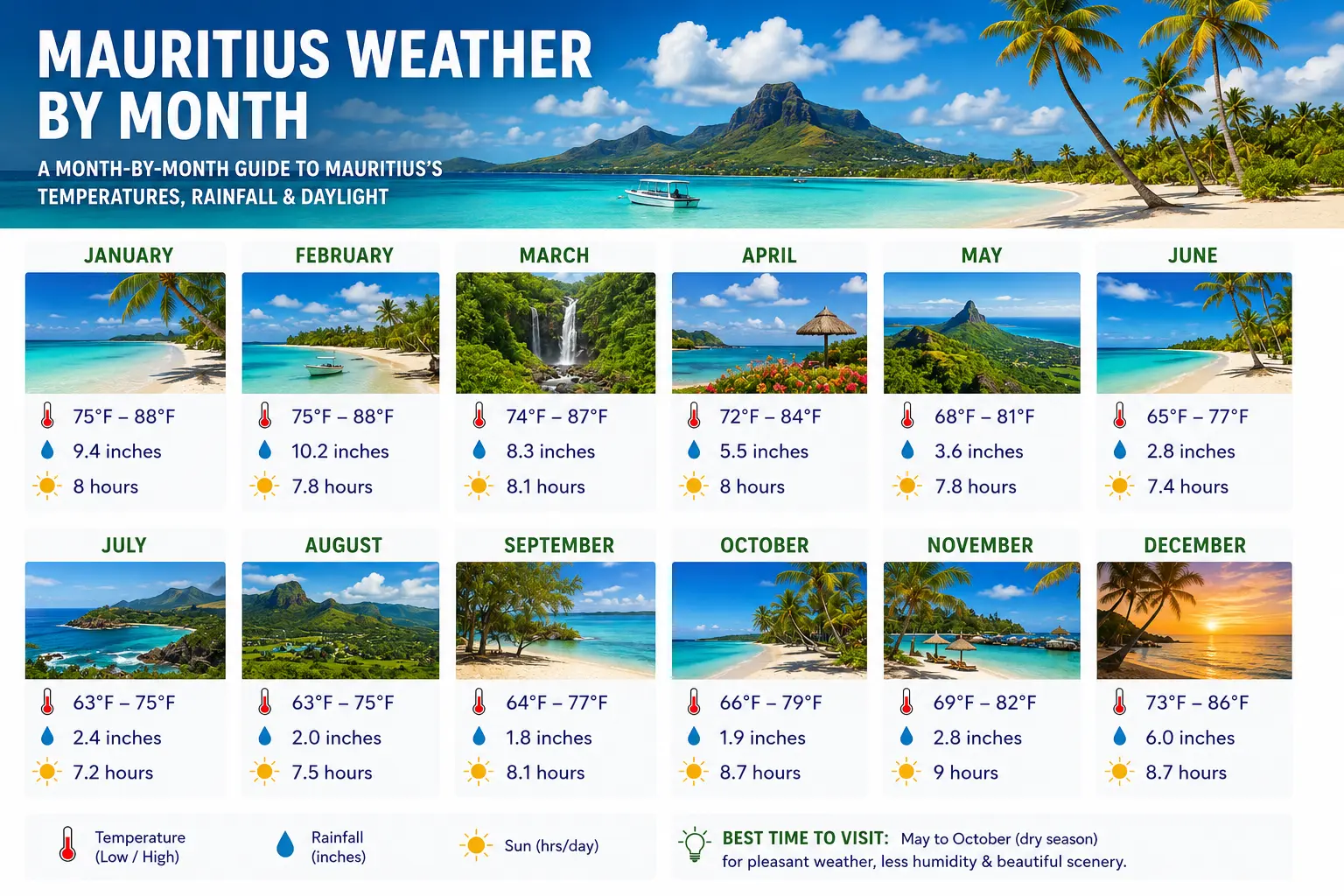
You can click the image below to view the full-size weather chart for Mauritius.
January – Peak Summer and Tropical Showers
Average low: 75°F (24°C)
Average high: 88°F (31°C)
Rainfall: 9.4 inches
Daylight: 13.1 hours
January is one of the hottest and wettest months in Mauritius. The island experiences a tropical summer climate, with warm temperatures, high humidity, and frequent afternoon showers.
Despite the rainfall, sunshine remains abundant, and the warm Indian Ocean creates ideal conditions for swimming, snorkeling, and beach vacations.
Best for:
- Beach holidays
- Swimming and snorkeling
- Tropical scenery
- Water sports
February – Warmest Month of the Year
Average low: 75°F (24°C)
Average high: 88°F (31°C)
Rainfall: 10.2 inches
Daylight: 12.8 hours
February is typically the warmest month in Mauritius and falls within the cyclone season. Short-lived tropical storms can occur, but long periods of sunshine are still common.
The ocean remains exceptionally warm, attracting visitors seeking tropical beach experiences and marine activities.
Best for:
- Beach relaxation
- Scuba diving
- Island resorts
- Warm ocean temperatures
March – Transition Toward Autumn
Average low: 74°F (23°C)
Average high: 87°F (31°C)
Rainfall: 8.3 inches
Daylight: 12.2 hours
March marks the gradual transition from summer to autumn. Temperatures remain high, but humidity begins to decrease slightly compared to January and February.
The lush green landscapes created by the rainy season make this an excellent month for sightseeing and nature photography.
Best for:
- Nature photography
- Tropical gardens
- Beach vacations
- Scenic drives
April – Pleasant Autumn Weather
Average low: 72°F (22°C)
Average high: 84°F (29°C)
Rainfall: 5.5 inches
Daylight: 11.7 hours
April brings more comfortable conditions across Mauritius. Rainfall decreases noticeably, while temperatures remain warm enough for all outdoor activities.
Many travelers consider April one of the best months to visit thanks to its balance of sunshine, warmth, and reduced humidity.
Best for:
- Outdoor adventures
- Hiking
- Beach activities
- Family vacations
May – Beginning of the Dry Season
Average low: 68°F (20°C)
Average high: 81°F (27°C)
Rainfall: 3.6 inches
Daylight: 11.1 hours
May signals the arrival of the dry season. The weather becomes cooler and less humid, creating ideal conditions for exploring the island.
Visitors can enjoy comfortable temperatures while discovering waterfalls, national parks, and coastal attractions.
Best for:
- Sightseeing
- Hiking trails
- Wildlife viewing
- Cultural tours
June – Cool and Comfortable Conditions
Average low: 65°F (18°C)
Average high: 77°F (25°C)
Rainfall: 2.8 inches
Daylight: 10.8 hours
June is one of the coolest months in Mauritius. The weather is generally dry, sunny, and pleasant, especially along the northern and western coasts.
Outdoor activities become more comfortable due to lower humidity and cooler temperatures.
Best for:
- Hiking
- Exploring nature reserves
- Golf
- Scenic coastal drives
July – Mild Winter Weather
Average low: 63°F (17°C)
Average high: 75°F (24°C)
Rainfall: 2.4 inches
Daylight: 10.9 hours
July falls during the Mauritian winter. Although temperatures are cooler, the climate remains mild compared to most destinations worldwide.
Trade winds are stronger along the eastern coast, making the island popular among kite surfers and windsurfers.
Best for:
- Kitesurfing
- Windsurfing
- Outdoor exploration
- Whale watching
August – Coolest Month of the Year
Average low: 63°F (17°C)
Average high: 75°F (24°C)
Rainfall: 2.0 inches
Daylight: 11.3 hours
August is generally the coolest and driest month in Mauritius. Sunny days are frequent, while rainfall remains minimal across much of the island.
The pleasant weather attracts visitors interested in active outdoor adventures.
Best for:
- Hiking
- Cycling
- Nature excursions
- Sightseeing
September – Dry Season Continues
Average low: 64°F (18°C)
Average high: 77°F (25°C)
Rainfall: 1.8 inches
Daylight: 11.9 hours
September offers some of the most reliable weather of the year. Dry conditions and increasing sunshine create excellent opportunities for exploring both inland and coastal attractions.
The ocean gradually begins warming as summer approaches.
Best for:
- Beach walks
- Hiking
- Photography
- Island exploration
October – One of the Best Months to Visit
Average low: 66°F (19°C)
Average high: 79°F (26°C)
Rainfall: 1.9 inches
Daylight: 12.4 hours
October is widely considered one of the best months to visit Mauritius. The weather is warm, dry, and sunny, while tourist crowds remain relatively manageable.
Sea conditions are excellent for swimming, snorkeling, and diving.
Best for:
- Snorkeling
- Scuba diving
- Beach vacations
- Honeymoons
November – Start of the Summer Season
Average low: 69°F (21°C)
Average high: 82°F (28°C)
Rainfall: 2.8 inches
Daylight: 12.9 hours
November marks the beginning of the tropical summer season. Temperatures rise steadily while rainfall remains relatively moderate.
The island’s beaches and lagoons become increasingly attractive as ocean temperatures climb.
Best for:
- Swimming
- Water sports
- Resort stays
- Coastal sightseeing
December – Warm Tropical Holiday Season
Average low: 73°F (23°C)
Average high: 86°F (30°C)
Rainfall: 6.0 inches
Daylight: 13.2 hours
December brings warm temperatures, lush tropical landscapes, and the start of the wetter summer season. Short rain showers are common but are usually followed by sunshine.
The festive atmosphere and excellent beach conditions make December one of the most popular months for visitors.
Best for:
- Christmas holidays
- Family vacations
- Beach resorts
- Tropical island experiences
Mauritius Weather by Month Table
| Month | Avg High °F (°C) | Avg Low °F (°C) | Rainfall (inches) | Rainy Days | Sun (hrs/day) |
|---|---|---|---|---|---|
| January | 88°F (31°C) | 75°F (24°C) | 9.4 | 16 | 8.0 |
| February | 88°F (31°C) | 75°F (24°C) | 10.2 | 15 | 7.8 |
| March | 87°F (31°C) | 74°F (23°C) | 8.3 | 14 | 8.1 |
| April | 84°F (29°C) | 72°F (22°C) | 5.5 | 11 | 8.0 |
| May | 81°F (27°C) | 68°F (20°C) | 3.6 | 9 | 7.8 |
| June | 77°F (25°C) | 65°F (18°C) | 2.8 | 8 | 7.4 |
| July | 75°F (24°C) | 63°F (17°C) | 2.4 | 8 | 7.2 |
| August | 75°F (24°C) | 63°F (17°C) | 2.0 | 7 | 7.5 |
| September | 77°F (25°C) | 64°F (18°C) | 1.8 | 6 | 8.1 |
| October | 79°F (26°C) | 66°F (19°C) | 1.9 | 6 | 8.7 |
| November | 82°F (28°C) | 69°F (21°C) | 2.8 | 7 | 9.0 |
| December | 86°F (30°C) | 73°F (23°C) | 6.0 | 11 | 8.7 |
Summer months bring higher temperatures, increased humidity, and the majority of the island’s annual rainfall. Short tropical showers are common, particularly between January and March, but they are often followed by clear skies and sunshine. Winter is generally dry and pleasant, with cooler temperatures that are ideal for outdoor activities, sightseeing, and hiking.
The coastal regions remain warmer than the central plateau year-round, while the eastern and southeastern coasts are typically windier due to the southeast trade winds. Ocean temperatures stay comfortable in every season, making Mauritius a popular destination for swimming, snorkeling, diving, and other water sports.
Overall, Mauritius is a year-round travel destination. Visitors seeking hot beach weather may prefer the summer months, while travelers looking for comfortable temperatures and lower humidity often choose the dry season between May and October.
20 FAQs About Mauritius Weather
1. What is the weather like in Mauritius year-round?
Mauritius has a tropical climate with warm temperatures throughout the year. Summers are hot and humid, while winters are cooler and drier.
2. What is the best month to visit Mauritius?
Many travelers consider October one of the best months to visit because it offers warm temperatures, low rainfall, and plenty of sunshine.
3. Does Mauritius have distinct seasons?
Yes. Mauritius has two main seasons: a hot, rainy summer from November to April and a cooler, drier winter from May to October.
4. What is the hottest month in Mauritius?
February is typically the hottest month, with average daytime temperatures reaching around 88°F (31°C).
5. What is the coldest month in Mauritius?
July and August are usually the coolest months, with average highs around 75°F (24°C).
6. When is the rainy season in Mauritius?
The rainy season generally runs from November through April, with the heaviest rainfall occurring between January and March.
7. What is the driest month in Mauritius?
September is often the driest month, receiving less than 2 inches of rainfall on average.
8. Does it rain every day in Mauritius?
No. Even during the wet season, rainfall often comes in short tropical showers followed by sunshine.
9. Is Mauritius affected by cyclones?
Yes. Mauritius can experience tropical cyclones during the cyclone season, which typically lasts from November to April.
10. What is the average temperature in Mauritius?
Average temperatures range from about 63°F (17°C) during winter nights to 88°F (31°C) during summer days.
11. Is Mauritius humid?
Humidity is generally highest during the summer months, especially from December through March.
12. Can you swim in Mauritius year-round?
Yes. Ocean temperatures remain warm throughout the year, making swimming possible in every season.
13. Which coast of Mauritius has the best weather?
The west and north coasts are generally warmer, drier, and more sheltered from trade winds than the east coast.
14. Does Mauritius get snow?
No. Snow does not occur in Mauritius because of its tropical climate and consistently warm temperatures.
15. What is winter like in Mauritius?
Winter is mild, sunny, and relatively dry. Daytime temperatures usually range from 75°F to 79°F (24°C to 26°C).
16. Is summer a good time to visit Mauritius?
Yes. Summer offers excellent beach weather and warm ocean temperatures, although rainfall and humidity are higher.
17. How many hours of sunshine does Mauritius receive?
Most areas receive between 7 and 9 hours of sunshine per day on average, depending on the season.
18. What is the best time for snorkeling and diving in Mauritius?
October through December generally offers excellent underwater visibility and calm sea conditions.
19. Are there regional weather differences in Mauritius?
Yes. Coastal areas are usually warmer, while the central plateau is cooler and receives more rainfall.
20. What is the best time to avoid crowds and bad weather in Mauritius?
May, June, September, and October often provide a combination of pleasant weather, fewer tourists, and lower humidity compared to peak holiday periods.
Read more: