Virgin Islands National Park Weather by Month
Located in the Caribbean on the island of St. John, Virgin Islands National Park enjoys warm tropical weather throughout the year. Temperatures stay relatively consistent, but rainfall, humidity, and hurricane season can affect travel conditions depending on the month.
The dry season generally runs from December through April, while the wetter season lasts from May through November. Visitors can expect warm ocean breezes, sunny beaches, and lush green hills in every season.
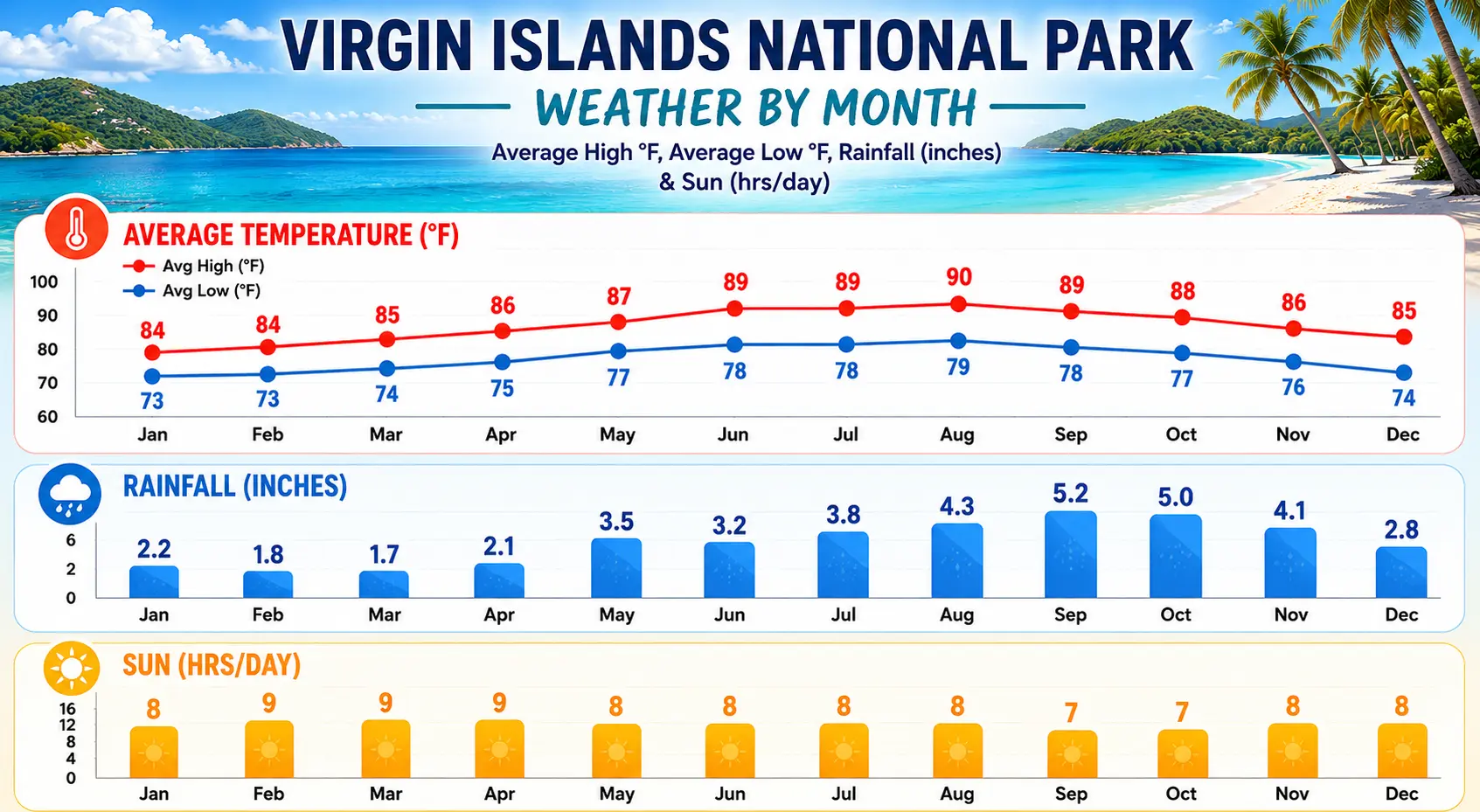
Virgin Islands National Park Weather by Month
Click the image below to view the full-size version.
January – Warm and Breezy
- Average high: 84°F (29°C)
- Average low: 73°F (23°C)
- Rainfall: 2.2 inches (56 mm)
- Daylight: 11 hours
January is one of the most comfortable months to visit Virgin Islands National Park. Temperatures are warm without excessive humidity, and steady trade winds create pleasant conditions for hiking and beach activities.
The ocean remains calm and clear, making this an excellent time for snorkeling around Trunk Bay and Cinnamon Bay. January is also part of the peak tourist season, so beaches and trails are usually busier than in summer.
Best for:
- Snorkeling and swimming
- Hiking scenic trails
- Escaping winter weather
February – Sunny and Comfortable
- Average high: 84°F (29°C)
- Average low: 73°F (23°C)
- Rainfall: 1.8 inches (46 mm)
- Daylight: 11.5 hours
February continues the dry-season pattern with warm temperatures, low humidity, and plenty of sunshine. Rain showers are usually brief and followed by clear skies.
This is one of the best months for outdoor adventures, including kayaking, boating, and exploring coral reefs. Water visibility is often excellent for diving and snorkeling.
Best for:
- Beach vacations
- Scuba diving
- Outdoor exploration
March – Warm Waters and Sunny Days
- Average high: 85°F (29°C)
- Average low: 74°F (23°C)
- Rainfall: 1.7 inches (43 mm)
- Daylight: 12 hours
March offers beautiful tropical weather with warm ocean temperatures and abundant sunshine. Trade winds help keep conditions comfortable even during the afternoon.
Wildflowers and tropical plants become especially vibrant after occasional light showers. Visitor numbers remain high during spring break season.
Best for:
- Snorkeling coral reefs
- Sailing and boating
- Scenic photography
April – Dry and Tropical
- Average high: 86°F (30°C)
- Average low: 75°F (24°C)
- Rainfall: 2.1 inches (53 mm)
- Daylight: 12.5 hours
April is one of the driest and sunniest months in the park. Warm temperatures and low rainfall create ideal conditions for hiking trails such as Reef Bay Trail and Lind Point Trail.
Ocean conditions are typically calm, and underwater visibility remains excellent.
Best for:
- Hiking and sightseeing
- Calm beach conditions
- Family vacations
May – Warmer and More Humid
- Average high: 87°F (31°C)
- Average low: 77°F (25°C)
- Rainfall: 3.5 inches (89 mm)
- Daylight: 13 hours
May marks the beginning of the wetter season. Temperatures rise slightly, and humidity becomes more noticeable, although trade winds still provide relief.
Rain showers are usually short and occur during the afternoon or evening. Vegetation across the island becomes greener and more lush.
Best for:
- Tropical scenery
- Fewer crowds
- Snorkeling in warm water
June – Hot with Passing Showers
- Average high: 89°F (32°C)
- Average low: 78°F (26°C)
- Rainfall: 3.2 inches (81 mm)
- Daylight: 13 hours
June brings hotter temperatures and occasional tropical showers. Mornings are often sunny, while rain showers may develop later in the day.
Sea temperatures become especially warm, making swimming and water sports enjoyable throughout the day.
Best for:
- Swimming and kayaking
- Summer vacations
- Warm ocean temperatures
July – Tropical Heat and Sunshine
- Average high: 89°F (32°C)
- Average low: 78°F (26°C)
- Rainfall: 3.8 inches (97 mm)
- Daylight: 13 hours
July is hot, humid, and tropical. Short rain showers are common but usually do not last long. Beaches remain the main attraction, especially with warm turquoise water and steady breezes.
This month is also popular for boating and island-hopping excursions.
Best for:
- Beach relaxation
- Boating trips
- Summer snorkeling
August – Hot and Humid
- Average high: 90°F (32°C)
- Average low: 79°F (26°C)
- Rainfall: 4.3 inches (109 mm)
- Daylight: 12.5 hours
August is among the hottest months in Virgin Islands National Park. Humidity levels increase, and tropical rain showers become more frequent.
Hurricane season is active during late summer, although many days remain sunny and beautiful.
Best for:
- Warm-water activities
- Tropical beach scenery
- Off-season travel deals
September – Wettest Month of the Year
- Average high: 89°F (32°C)
- Average low: 78°F (26°C)
- Rainfall: 5.2 inches (132 mm)
- Daylight: 12 hours
September is typically the wettest month in the park and falls during the peak of Atlantic hurricane season. Heavy rain showers and tropical storms are possible.
Despite the wetter weather, there are still periods of sunshine between showers, and visitor numbers are usually lower.
Best for:
- Quiet beaches
- Tropical rainforest scenery
- Budget-friendly travel
October – Rainy but Lush
- Average high: 88°F (31°C)
- Average low: 77°F (25°C)
- Rainfall: 5.0 inches (127 mm)
- Daylight: 11.5 hours
October remains warm and humid with regular tropical rainfall. Hillsides and forests appear especially green after months of wet weather.
Travelers should monitor weather forecasts because tropical systems can occasionally affect the Caribbean during this time.
Best for:
- Lush tropical landscapes
- Peaceful hiking trails
- Off-season visits
November – Transition to Dry Season
- Average high: 86°F (30°C)
- Average low: 76°F (24°C)
- Rainfall: 4.1 inches (104 mm)
- Daylight: 11 hours
November marks the gradual return of drier conditions. Rainfall decreases, humidity becomes less intense, and temperatures remain pleasantly warm.
This is a quieter month before the busy winter travel season begins.
Best for:
- Hiking and sightseeing
- Smaller crowds
- Comfortable tropical weather
December – Sunny and Pleasant
- Average high: 85°F (29°C)
- Average low: 74°F (23°C)
- Rainfall: 2.8 inches (71 mm)
- Daylight: 11 hours
December is one of the most popular months to visit Virgin Islands National Park. Sunny skies, comfortable temperatures, and lower humidity create ideal conditions for outdoor adventures.
Holiday travelers arrive throughout the month, especially around Christmas and New Year’s.
Best for:
- Winter sun vacations
- Snorkeling and beaches
- Holiday travel
Virgin Islands National Park Weather by Month Table
| Month | Avg High °F (°C) | Avg Low °F (°C) | Rainfall (inches) | Sun (hrs/day) |
|---|---|---|---|---|
| January | 84°F (29°C) | 73°F (23°C) | 2.2 | 8 |
| February | 84°F (29°C) | 73°F (23°C) | 1.8 | 9 |
| March | 85°F (29°C) | 74°F (23°C) | 1.7 | 9 |
| April | 86°F (30°C) | 75°F (24°C) | 2.1 | 9 |
| May | 87°F (31°C) | 77°F (25°C) | 3.5 | 8 |
| June | 89°F (32°C) | 78°F (26°C) | 3.2 | 8 |
| July | 89°F (32°C) | 78°F (26°C) | 3.8 | 8 |
| August | 90°F (32°C) | 79°F (26°C) | 4.3 | 8 |
| September | 89°F (32°C) | 78°F (26°C) | 5.2 | 7 |
| October | 88°F (31°C) | 77°F (25°C) | 5.0 | 7 |
| November | 86°F (30°C) | 76°F (24°C) | 4.1 | 8 |
| December | 85°F (29°C) | 74°F (23°C) | 2.8 | 8 |
To find more information you visit this page: https://www.nps.gov/viis/learn/nature/weather.htm
Best Time to Visit Virgin Islands National Park
The best time to visit Virgin Islands National Park is from December through April when the weather is drier, cooler, and less humid. These months provide the most comfortable conditions for hiking, snorkeling, and beach activities.
Travelers looking for fewer crowds and lower prices may prefer May through November, although they should be prepared for warmer temperatures, higher humidity, and occasional tropical storms during hurricane season.
20 FAQs About Virgin Islands National Park Weather
1. What is the best month to visit Virgin Islands National Park?
The best time to visit Virgin Islands National Park is from December through April when the weather is drier, sunnier, and less humid.
2. Does Virgin Islands National Park have a rainy season?
Yes. The rainy season typically runs from May through November, with September and October usually being the wettest months.
3. How hot does Virgin Islands National Park get in summer?
Summer temperatures usually range from 78°F to 90°F (26°C to 32°C), with higher humidity during the warmer months.
4. What is the driest month in Virgin Islands National Park?
March is often considered one of the driest months, with relatively low rainfall and plenty of sunshine.
5. Is Virgin Islands National Park warm year-round?
Yes. The park enjoys a tropical climate with warm temperatures throughout the entire year.
6. When is hurricane season in the U.S. Virgin Islands?
Hurricane season officially runs from June through November, with the highest risk generally occurring between August and October.
7. Does it rain every day in Virgin Islands National Park?
No. Even during the rainy season, showers are usually brief and followed by sunshine.
8. What is the water temperature at Virgin Islands National Park?
Ocean temperatures are warm year-round, typically ranging from 78°F to 84°F (26°C to 29°C).
9. Can you swim year-round in Virgin Islands National Park?
Yes. Warm Caribbean waters make swimming comfortable in every season.
10. What is the weather like in Virgin Islands National Park in winter?
Winter weather is warm, sunny, and less humid, making it the most popular season for visitors.
11. Is summer a good time to visit Virgin Islands National Park?
Yes. Summer offers warm ocean temperatures and fewer crowds, although humidity and rainfall are higher.
12. Which month has the most sunshine in Virgin Islands National Park?
February, March, and April usually receive the most sunshine and clearest skies.
13. Are there tropical storms in Virgin Islands National Park?
Yes. Tropical storms can occasionally affect the area during hurricane season.
14. What should I pack for Virgin Islands National Park weather?
Visitors should pack lightweight clothing, sunscreen, swimwear, sunglasses, hiking shoes, and a light rain jacket.
15. Is humidity high in Virgin Islands National Park?
Humidity is moderate to high throughout the year, especially during summer and early fall.
16. What is the coldest month in Virgin Islands National Park?
January is typically the coolest month, although temperatures remain pleasantly warm.
17. Are the beaches crowded during peak season?
Yes. Beaches and resorts are usually busiest between December and April.
18. Is snorkeling good year-round in Virgin Islands National Park?
Yes. Snorkeling conditions are excellent throughout the year, especially during the dry season when water visibility is best.
19. Does Virgin Islands National Park experience cool evenings?
Evenings are generally warm, but trade winds can make nights feel cooler and more comfortable during winter.
20. What are the average temperatures in Virgin Islands National Park by month?
Average temperatures usually range from 73°F to 90°F (23°C to 32°C) depending on the month.