Molokai Weather by Month
Molokai, one of Hawaii’s most peaceful islands, enjoys warm tropical weather throughout the year. Temperatures remain comfortable in every season, with average daytime highs ranging from about 75°F to 84°F (24°C to 29°C) and nighttime lows between 60°F and 70°F (16°C and 21°C). The island generally experiences drier conditions from spring through early fall, while rainfall increases during winter, particularly in December and January.
Ocean temperatures stay warm enough for swimming, snorkeling, and other water activities throughout the year. Daylight ranges from approximately 11 to 13.5 hours, giving visitors plenty of time to explore beaches, hike scenic trails, and discover Molokai’s traditional Hawaiian culture.
Molokai Weather by Month
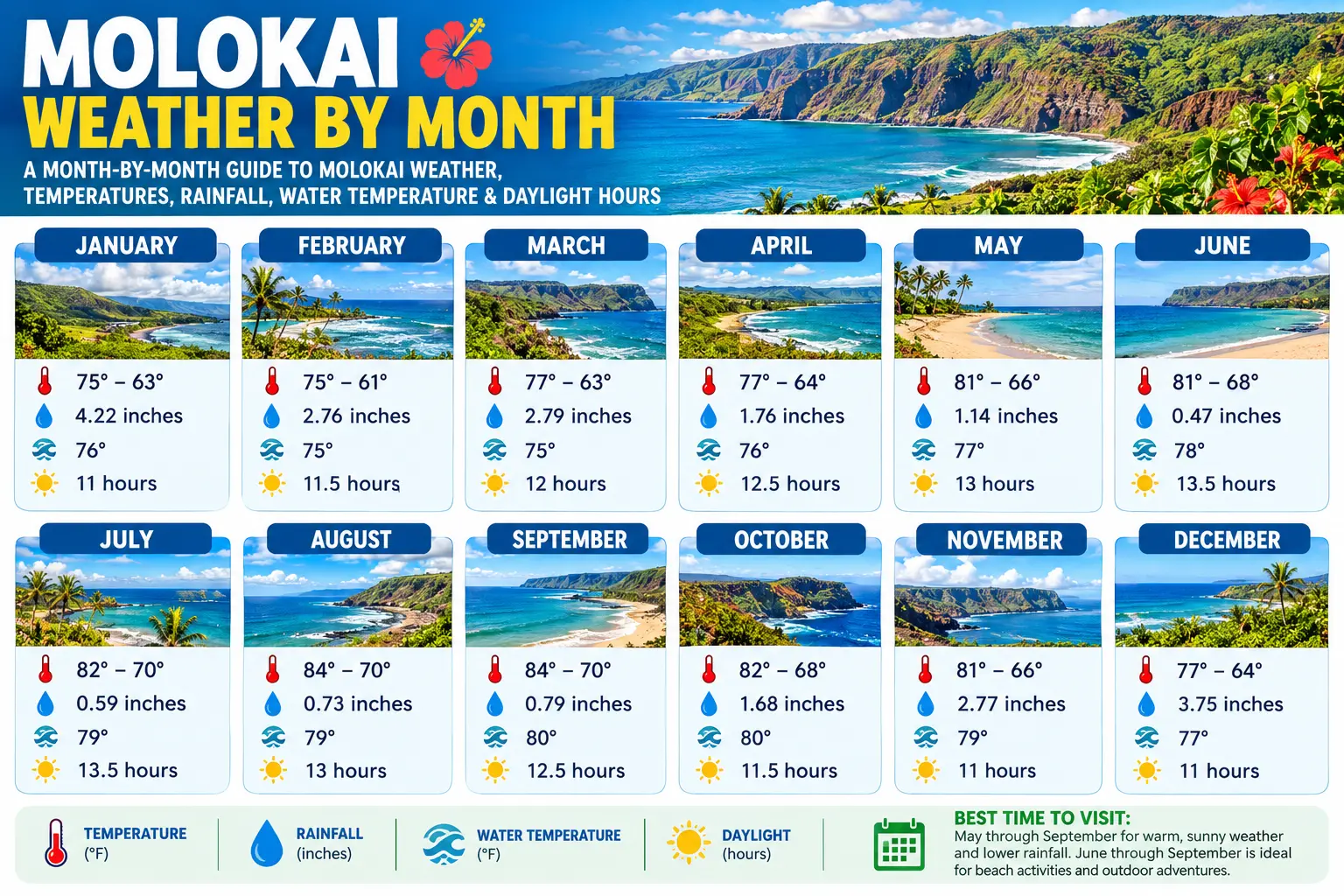
You can click the image below to view the full-size weather chart for Molokai.
January – Mild, Warm and Moderately Wet
- Average high: 75°F (24°C)
- Average low: 63°F (17°C)
- Rainfall: 4.22 inches (107.4 mm)
- Water temperature: 76°F (24°C)
- Daylight: 11 hours
January is one of the cooler months on Molokai, but the weather remains pleasantly warm compared with winter conditions on the mainland United States. Average daytime temperatures reach around 75°F (24°C), while nighttime temperatures fall to approximately 63°F (17°C). The comfortable temperatures are ideal for exploring the island’s beaches, visiting local communities, and enjoying outdoor activities.
Rainfall averages about 4.22 inches (107.4 mm), making January one of the wetter months of the year. Showers may interrupt outdoor plans, but they often pass without lasting all day. Ocean temperatures average around 76°F (24°C), making swimming and snorkeling possible for many visitors. With approximately 11 hours of daylight, there is still plenty of time to explore the island.
Best for:
- Exploring beaches and coastal viewpoints
- Enjoying mild winter weather
- Discovering local Hawaiian culture
- Taking scenic drives between showers
February – Mild, Comfortable and Occasionally Rainy
- Average high: 75°F (24°C)
- Average low: 61°F (16°C)
- Rainfall: 2.76 inches (70.2 mm)
- Water temperature: 75°F (24°C)
- Daylight: 11.5 hours
February brings comfortable tropical weather, with average highs of 75°F (24°C) and lows of 61°F (16°C). Mornings and evenings can feel relatively cool, especially in breezy areas, but afternoons are generally pleasant for outdoor exploration. Visitors can enjoy coastal walks, sightseeing, and relaxing on Molokai’s quieter beaches.
Rainfall decreases to approximately 2.76 inches (70.2 mm), although occasional showers remain possible. The ocean averages around 75°F (24°C), providing reasonable conditions for swimming and other water activities. With 11.5 hours of daylight, February offers a little more time for exploring than January.
Best for:
- Enjoying peaceful beaches
- Taking scenic island drives
- Exploring local towns and cultural sites
- Combining outdoor activities with relaxed sightseeing
March – Warm Days and Gradually Drier Weather
- Average high: 77°F (25°C)
- Average low: 63°F (17°C)
- Rainfall: 2.79 inches (70.8 mm)
- Water temperature: 75°F (24°C)
- Daylight: 12 hours
March brings slightly warmer afternoons and longer days to Molokai. Average high temperatures reach 77°F (25°C), while nighttime lows remain around 63°F (17°C). The weather is generally comfortable for exploring the island’s natural landscapes, walking along the coast, and enjoying outdoor excursions without intense summer heat.
Rainfall averages 2.79 inches (70.8 mm), so visitors should still be prepared for occasional showers. Ocean temperatures remain around 75°F (24°C), making beach visits and swimming appealing. Daylight increases to approximately 12 hours, allowing more flexibility for sightseeing and outdoor adventures.
Best for:
- Exploring coastal scenery
- Taking nature walks and scenic drives
- Enjoying comfortable temperatures
- Spending time on the beach
April – Warm, Pleasant and Relatively Dry
- Average high: 77°F (25°C)
- Average low: 64°F (18°C)
- Rainfall: 1.76 inches (44.6 mm)
- Water temperature: 76°F (24°C)
- Daylight: 12.5 hours
April is a pleasant month to visit Molokai, with warm afternoons, comfortable evenings, and less rainfall than during winter. Average highs reach 77°F (25°C), while nighttime temperatures settle around 64°F (18°C). These conditions are suitable for hiking, sightseeing, and exploring the island’s scenic coastline.
Rainfall drops to approximately 1.76 inches (44.6 mm), providing more opportunities for uninterrupted outdoor activities. The ocean averages around 76°F (24°C), making swimming and snorkeling attractive options. With 12.5 hours of daylight, visitors can comfortably plan longer days of exploration.
Best for:
- Hiking and exploring natural landscapes
- Swimming and snorkeling
- Enjoying quieter coastal areas
- Taking full-day sightseeing trips
May – Warm, Sunny and Mostly Dry
- Average high: 81°F (27°C)
- Average low: 66°F (19°C)
- Rainfall: 1.14 inches (28.9 mm)
- Water temperature: 77°F (25°C)
- Daylight: 13 hours
May marks the beginning of warmer, drier weather on Molokai. Average daytime temperatures climb to around 81°F (27°C), while nighttime lows reach 66°F (19°C). The warm conditions are ideal for beach days, hiking, exploring rural landscapes, and enjoying outdoor activities throughout the island.
Rainfall averages just 1.14 inches (28.9 mm), making May one of the drier months. Ocean temperatures rise to approximately 77°F (25°C), creating inviting conditions for swimming and snorkeling. With 13 hours of daylight, visitors have plenty of time to explore beaches, visit cultural attractions, and enjoy sunset views.
Best for:
- Beach activities and swimming
- Snorkeling in comfortable ocean temperatures
- Hiking and outdoor sightseeing
- Enjoying longer days with relatively little rain
June – Hotter, Drier and Ideal for Outdoor Adventures
- Average high: 81°F (27°C)
- Average low: 68°F (20°C)
- Rainfall: 0.47 inches (11.9 mm)
- Water temperature: 78°F (26°C)
- Daylight: 13.5 hours
June brings warm, generally dry weather to Molokai. Average highs reach 81°F (27°C), while nighttime temperatures remain comfortable at around 68°F (20°C). The combination of warm temperatures and limited rainfall makes this an excellent month for exploring beaches, hiking trails, and scenic coastal areas.
Rainfall falls to approximately 0.47 inches (11.9 mm), making June one of the driest months of the year. The ocean averages around 78°F (26°C), which is comfortable for many swimmers. Daylight reaches approximately 13.5 hours, the longest period of the year, giving visitors ample time for outdoor adventures. Sunscreen, a hat, and plenty of drinking water are important during the strongest afternoon sunshine.
Best for:
- Swimming, snorkeling, and kayaking
- Hiking and exploring scenic landscapes
- Enjoying long days outdoors
- Planning beach-focused vacations
July – Warm, Sunny and Very Dry
- Average high: 82°F (28°C)
- Average low: 70°F (21°C)
- Rainfall: 0.59 inches (14.9 mm)
- Water temperature: 79°F (26°C)
- Daylight: 13.5 hours
July is one of the warmest and driest months on Molokai. Average daytime temperatures reach around 82°F (28°C), while nighttime lows remain near 70°F (21°C). Warm conditions and long days make this a popular time for beach outings, water sports, and exploring the island’s natural scenery.
Rainfall averages only 0.59 inches (14.9 mm), so prolonged wet weather is relatively uncommon. The ocean temperature rises to approximately 79°F (26°C), creating excellent conditions for swimming and snorkeling. With 13.5 hours of daylight, visitors can enjoy extended days outdoors, although the midday sun can be intense.
Best for:
- Swimming and snorkeling in warm water
- Exploring beaches and coastal scenery
- Enjoying kayaking and other water sports
- Taking advantage of long summer days
August – Hot, Sunny and Excellent for Beach Activities
- Average high: 84°F (29°C)
- Average low: 70°F (21°C)
- Rainfall: 0.73 inches (18.5 mm)
- Water temperature: 79°F (26°C)
- Daylight: 13 hours
August is among the warmest months on Molokai, with average highs around 84°F (29°C) and nighttime lows near 70°F (21°C). The weather is generally warm and inviting, making it a great time for beach vacations, swimming, snorkeling, and exploring the island’s outdoor attractions.
Rainfall remains low at approximately 0.73 inches (18.5 mm). Ocean temperatures average around 79°F (26°C), making the water comfortable for extended swimming sessions. Daylight lasts approximately 13 hours, leaving plenty of time for sightseeing and outdoor adventures. Visitors should stay hydrated and use sun protection, particularly during midday activities.
Best for:
- Relaxing on Molokai’s beaches
- Swimming and snorkeling in warm water
- Exploring coastal landscapes
- Enjoying outdoor activities in dry weather
September – Warm, Sunny and Ideal for Swimming
- Average high: 84°F (29°C)
- Average low: 70°F (21°C)
- Rainfall: 0.79 inches (20 mm)
- Water temperature: 80°F (27°C)
- Daylight: 12.5 hours
September maintains the warm conditions of summer while bringing slightly shorter days. Average daytime temperatures reach approximately 84°F (29°C), and nighttime lows stay around 70°F (21°C). The weather is generally excellent for enjoying the coast, exploring hiking trails, and spending time outdoors.
Rainfall averages just 0.79 inches (20 mm), keeping conditions relatively dry. The ocean reaches around 80°F (27°C), making September one of the best months for warm-water activities. With about 12.5 hours of daylight, visitors still have plenty of time for swimming, snorkeling, and sightseeing.
Best for:
- Swimming in particularly warm ocean water
- Snorkeling and other water activities
- Exploring beaches in warm weather
- Enjoying outdoor sightseeing with limited rainfall
October – Warm, Comfortable and Mostly Dry
- Average high: 82°F (28°C)
- Average low: 68°F (20°C)
- Rainfall: 1.68 inches (42.7 mm)
- Water temperature: 80°F (27°C)
- Daylight: 11.5 hours
October offers warm temperatures and generally comfortable conditions for visiting Molokai. Average highs reach around 82°F (28°C), while nighttime lows fall to approximately 68°F (20°C). The weather remains suitable for beach visits, hiking, and exploring the island’s cultural and natural attractions.
Rainfall increases to about 1.68 inches (42.7 mm), although many days remain suitable for outdoor activities. Ocean temperatures stay around 80°F (27°C), providing excellent conditions for swimming and snorkeling. Daylight decreases to approximately 11.5 hours, so planning outdoor excursions earlier in the day can help maximize sightseeing time.
Best for:
- Swimming and snorkeling in warm water
- Exploring the island in comfortable weather
- Hiking and scenic drives
- Enjoying quieter beaches and outdoor attractions
November – Warm Days with Increasing Rainfall
- Average high: 81°F (27°C)
- Average low: 66°F (19°C)
- Rainfall: 2.77 inches (70.4 mm)
- Water temperature: 79°F (26°C)
- Daylight: 11 hours
November brings slightly cooler temperatures and increasing rainfall to Molokai. Average daytime highs reach approximately 81°F (27°C), while nighttime lows fall to around 66°F (19°C). The island remains warm compared with many mainland destinations, making November an appealing option for travelers seeking a tropical escape.
Rainfall averages 2.77 inches (70.4 mm), so occasional showers become more common. The ocean remains pleasantly warm at around 79°F (26°C), allowing visitors to continue enjoying swimming and other water activities when conditions are suitable. With 11 hours of daylight, there is still enough time for sightseeing, coastal walks, and cultural experiences.
Best for:
- Escaping colder weather elsewhere
- Exploring local towns and cultural attractions
- Enjoying warm ocean temperatures
- Taking scenic drives between showers
December – Mild, Tropical and Relatively Wet
- Average high: 77°F (25°C)
- Average low: 64°F (18°C)
- Rainfall: 3.75 inches (95.2 mm)
- Water temperature: 77°F (25°C)
- Daylight: 11 hours
December brings mild tropical weather to Molokai, although it is one of the wetter months of the year. Average daytime temperatures reach around 77°F (25°C), while nighttime lows settle near 64°F (18°C). The weather is generally comfortable for sightseeing, exploring coastal communities, and enjoying a relaxing winter vacation.
Rainfall averages approximately 3.75 inches (95.2 mm), making December one of the wettest months, alongside January. Showers may occur more frequently, so flexible plans and a light rain jacket can be useful. Ocean temperatures average around 77°F (25°C), allowing for swimming and snorkeling when sea conditions are safe. With approximately 11 hours of daylight, visitors can still enjoy plenty of outdoor activities.
Best for:
- Enjoying a tropical winter getaway
- Exploring the island’s cultural attractions
- Taking scenic drives and coastal walks
- Relaxing on the beach between showers
Molokai Weather by Month: Annual Overview
| Month | Avg High °F (°C) | Avg Low °F (°C) | Rainfall (inches) | Water Temperature (°F) | Daylight (hours) |
|---|---|---|---|---|---|
| January | 75 (24) | 63 (17) | 4.22 | 76 | 11 |
| February | 75 (24) | 61 (16) | 2.76 | 75 | 11.5 |
| March | 77 (25) | 63 (17) | 2.79 | 75 | 12 |
| April | 77 (25) | 64 (18) | 1.76 | 76 | 12.5 |
| May | 81 (27) | 66 (19) | 1.14 | 77 | 13 |
| June | 81 (27) | 68 (20) | 0.47 | 78 | 13.5 |
| July | 82 (28) | 70 (21) | 0.59 | 79 | 13.5 |
| August | 84 (29) | 70 (21) | 0.73 | 79 | 13 |
| September | 84 (29) | 70 (21) | 0.79 | 80 | 12.5 |
| October | 82 (28) | 68 (20) | 1.68 | 80 | 11.5 |
| November | 81 (27) | 66 (19) | 2.77 | 79 | 11 |
| December | 77 (25) | 64 (18) | 3.75 | 77 | 11 |
Molokai’s climate remains warm throughout the year, with seasonal differences mainly in rainfall, ocean temperature, and daylight. The following overview summarizes the main patterns shown in your data.
- Warmest months: August and September, with average highs of around 84°F (29°C).
- Coolest months: January, February, and March, with average highs of approximately 75–77°F (24–25°C).
- Driest month: June, with around 0.47 inches (11.9 mm) of rainfall.
- Wettest months: January and December, with approximately 4.22 inches (107.4 mm) and 3.75 inches (95.2 mm) of rainfall, respectively.
- Warmest ocean temperatures: September and October, at approximately 80°F (27°C).
- Longest daylight: June and July, with around 13.5 hours per day.
Monthly ocean temperatures are approximate averages, while the temperature, rainfall, and daylight figures follow the data you provided. Ocean conditions can vary by beach, wind, currents, and weather.
For visitors who prioritize sunny weather and outdoor activities, May through September is an excellent period to consider, with particularly low rainfall from June through September. If you prefer slightly cooler conditions, January through April can also be appealing, although rainfall is generally higher during the winter months.
20 FAQs About Molokai Weather
1. What is the best month to visit Molokai?
May through September is an excellent time to visit Molokai because rainfall is generally low, temperatures are warm, and daylight hours are long. June through September is particularly appealing for beach activities and outdoor adventures.
2. What is the weather like in Molokai year-round?
Molokai has a warm tropical climate throughout the year. Average daytime highs range from approximately 75°F to 84°F (24°C to 29°C), while nighttime lows typically range from 61°F to 70°F (16°C to 21°C).
3. What is the hottest month in Molokai?
August and September are typically the hottest months in the provided data, with average highs of 84°F (29°C). Warm temperatures make these months ideal for swimming, snorkeling, and relaxing on the beach.
4. What is the coldest month in Molokai?
January and February are among the coolest months, with average highs around 75°F (24°C). Temperatures remain mild, although evenings can feel cooler, particularly when the trade winds are blowing.
5. Does it rain a lot in Molokai?
Rainfall varies throughout the year. January is the wettest month in the provided data, with approximately 4.22 inches (107.4 mm), while June is the driest, with only 0.47 inches (11.9 mm).
6. What is the driest month in Molokai?
June is the driest month, receiving approximately 0.47 inches (11.9 mm) of rainfall. July, August, and September are also relatively dry, making summer a good season for outdoor exploration.
7. What is the rainiest month in Molokai?
January is the rainiest month in the provided data, with around 4.22 inches (107.4 mm) of rainfall. December is also relatively wet, averaging 3.75 inches (95.2 mm).
8. Is Molokai warm in winter?
Yes. Winter in Molokai is generally mild and warm compared with most mainland U.S. destinations. January daytime temperatures average around 75°F (24°C), making the island suitable for sightseeing, beach walks, and outdoor activities.
9. Can you swim in Molokai in January?
Yes, swimming is possible in January. Average ocean temperatures are approximately 76°F (24°C), although the water may feel cool to some visitors. Always check local surf, current, and weather conditions before entering the ocean.
10. What is the water temperature in Molokai?
Ocean temperatures generally range from approximately 75°F to 80°F (24°C to 27°C) throughout the year. The warmest water typically occurs in September and October, when temperatures average around 80°F (27°C).
11. What is the best month for snorkeling in Molokai?
May through September is a good period to consider for snorkeling because rainfall is relatively low and ocean temperatures are warm. However, visibility and safety depend on local swell, currents, wind, and conditions at individual beaches.
12. Is Molokai windy?
Molokai frequently experiences trade winds, which can make warm temperatures feel more comfortable. Wind conditions vary by location and season, and exposed beaches and coastal areas can be breezier than sheltered spots.
13. How much daylight does Molokai get?
Molokai receives approximately 11 to 13.5 hours of daylight throughout the year. June and July have the longest days, with about 13.5 hours, while January, November, and December have around 11 hours.
14. What is the best season for hiking in Molokai?
Late spring and summer are often good choices for hiking because rainfall is generally lower. Hikers should still prepare for heat, sun exposure, muddy trails after showers, and changing conditions in higher elevations.
15. Is Molokai humid?
Yes. Molokai has a tropical climate, so humidity is generally noticeable throughout the year. Trade winds can help make conditions feel more comfortable, although humid weather may feel warmer during sunny afternoons.
16. What should I pack for Molokai?
Pack lightweight clothing, swimwear, comfortable walking shoes, sunscreen, sunglasses, a hat, and insect repellent. A light rain jacket is useful during the wetter months, while a light layer can be comfortable on breezy evenings.
17. Is October a good time to visit Molokai?
Yes. October offers average highs of around 82°F (28°C), ocean temperatures near 80°F (27°C), and approximately 1.68 inches (42.7 mm) of rainfall. It is a good month for swimming, sightseeing, and enjoying warm tropical weather.
18. Is December a good time to visit Molokai?
December can be a good time to visit if you want a warm-weather winter getaway. Average highs are around 77°F (25°C), and ocean temperatures average approximately 77°F (25°C). However, rainfall increases, so flexible outdoor plans are recommended.
19. When is the cheapest time to visit Molokai?
Travel costs depend on airfare, accommodation availability, holidays, and demand. Comparing prices during late spring and fall may help you find deals, but it is best to check actual travel dates rather than assume a particular month will always be cheapest.
20. What is the best month to visit Molokai for beach activities?
June through September is an excellent period for beach activities because rainfall is low, daytime highs range from approximately 81°F to 84°F (27°C to 29°C), and ocean temperatures are warm. Always check beach conditions before swimming, snorkeling, or kayaking.
Read more: