Theodore Roosevelt National Park Weather by Month
Located in western North Dakota, Theodore Roosevelt National Park experiences four distinct seasons with cold winters, warm summers, and dramatic prairie weather throughout the year. The park’s climate ranges from snowy winter landscapes to sunny summer days perfect for hiking, wildlife viewing, and scenic drives.
Here’s a complete month-by-month guide to Theodore Roosevelt National Park weather to help you plan the best time to visit.
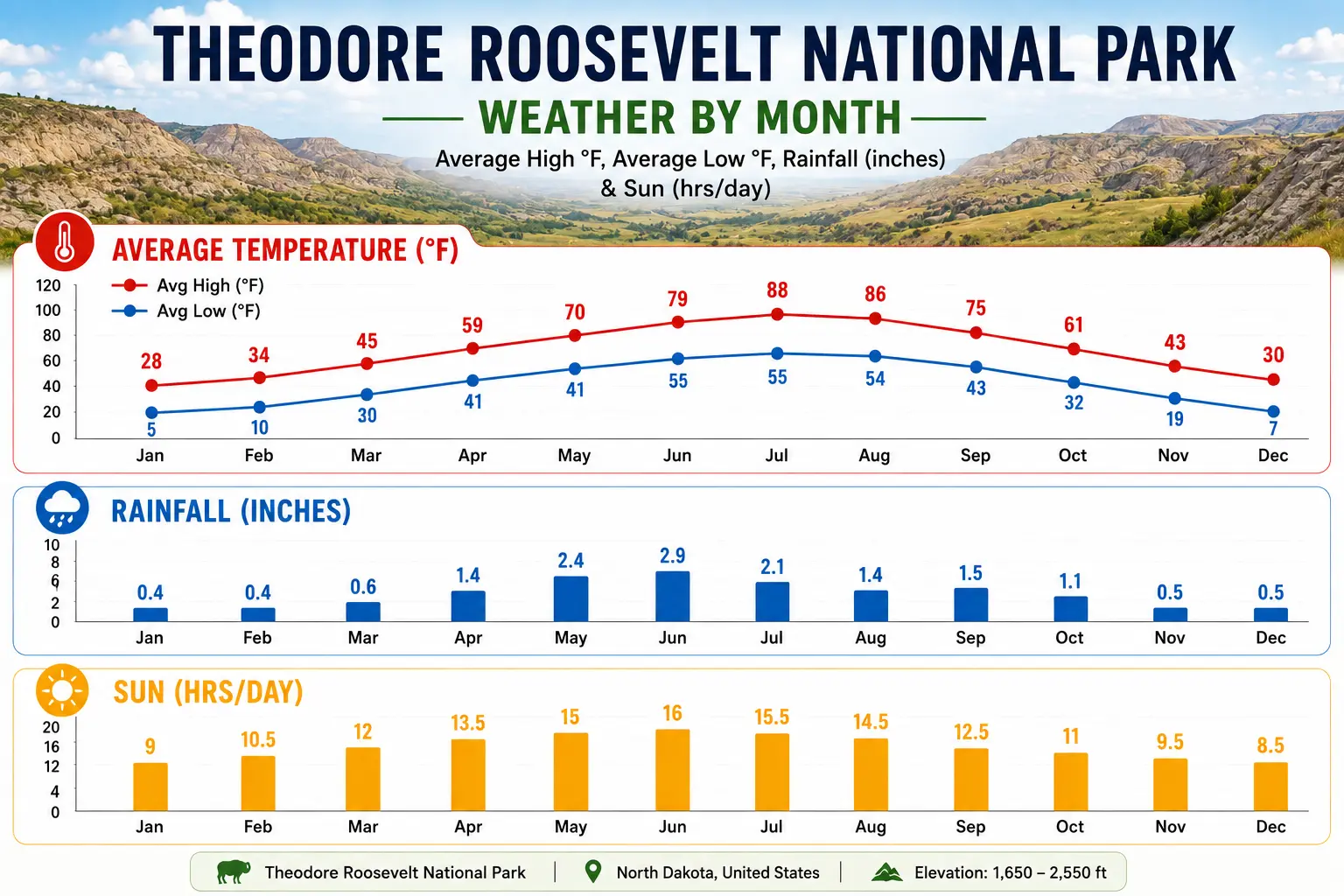
Theodore Roosevelt National Park Weather by Month
Click the image below to view the full-size version.
January – Freezing and Snowy
- Average high: 28°F (-2°C)
- Average low: 5°F (-15°C)
- Rainfall: 0.4 inches (9.8 mm)
- Snowfall: 5.7 inches (145.6 mm)
- Daylight: 9 hours
January is the coldest month in Theodore Roosevelt National Park. Snow and ice frequently cover the badlands, creating a rugged winter landscape with very few visitors. Temperatures often drop below zero, especially at night, and strong prairie winds can make conditions feel even colder.
Many park roads remain open, but winter storms can temporarily affect travel conditions. Wildlife such as bison, elk, and wild horses are still active and easier to spot against the snowy terrain.
Best for:
- Winter photography
- Snow-covered badlands scenery
- Peaceful wildlife viewing
February – Cold with Lingering Snow
- Average high: 34°F (1°C)
- Average low: 10°F (-12°C)
- Rainfall: 0.4 inches (9.3 mm)
- Snowfall: 4.9 inches (124.6 mm)
- Daylight: 10.5 hours
February remains very cold, although daylight slowly increases. Snow continues to blanket much of the park, while frozen rivers and frosty grasslands create beautiful winter scenery.
Visitors should prepare for icy trails and sudden weather changes. Despite the cold, clear sunny days are common across the North Dakota badlands.
Best for:
- Quiet scenic drives
- Winter wildlife photography
- Solitude and peaceful landscapes
March – Early Signs of Spring
- Average high: 45°F (7°C)
- Average low: 19°F (-7°C)
- Rainfall: 0.6 inches (15.6 mm)
- Snowfall: 4.8 inches (121.3 mm)
- Daylight: 12 hours
March brings changing conditions as winter slowly transitions into spring. Snowstorms are still possible, but warmer afternoons begin melting snow across the prairies and canyons.
Mud becomes common on trails during thaw periods, and weather conditions can vary dramatically from day to day.
Best for:
- Early spring scenery
- Wildlife activity
- Fewer crowds
April – Cool and Windy
- Average high: 59°F (15°C)
- Average low: 30°F (-1°C)
- Rainfall: 1.4 inches (36.3 mm)
- Snowfall: 3.2 inches (81.5 mm)
- Daylight: 13.5 hours
April marks the arrival of spring in Theodore Roosevelt National Park. Prairie grasslands begin turning green, wildflowers start appearing, and wildlife becomes more active throughout the park.
Windy conditions are common during spring, and temperatures can shift quickly between warm afternoons and chilly mornings.
Best for:
- Spring hiking
- Scenic drives
- Wildflower photography
May – Mild and Pleasant
- Average high: 70°F (21°C)
- Average low: 41°F (5°C)
- Rainfall: 2.4 inches (62.1 mm)
- Snowfall: 0.4 inches (10 mm)
- Daylight: 15 hours
May is one of the most enjoyable months to visit Theodore Roosevelt National Park. Comfortable temperatures, blooming prairie landscapes, and active wildlife make this an excellent time for outdoor activities.
Rain showers become more frequent, but the park is especially beautiful with green hills and colorful wildflowers.
Best for:
- Hiking and camping
- Wildlife viewing
- Wildflower season
June – Warm and Green
- Average high: 79°F (26°C)
- Average low: 50°F (10°C)
- Rainfall: 2.9 inches (72.9 mm)
- Snowfall: 0 inches (0 mm)
- Daylight: 16 hours
June brings warm weather and the longest days of the year. The park’s grasslands are lush, and wildlife activity peaks during early mornings and evenings.
Thunderstorms occasionally develop during afternoons, especially later in the month, but most days remain sunny and pleasant.
Best for:
- Long hikes
- Camping
- Scenic photography
July – Hot and Sunny
- Average high: 88°F (31°C)
- Average low: 55°F (13°C)
- Rainfall: 2.1 inches (53.2 mm)
- Snowfall: 0 inches (0 mm)
- Daylight: 15.5 hours
July is the hottest month in Theodore Roosevelt National Park. Warm temperatures and sunny skies attract the largest number of visitors during summer vacation season.
Afternoon heat can be intense on exposed trails, so hikers should carry plenty of water and avoid midday activity.
Best for:
- Summer road trips
- Wildlife viewing at sunrise and sunset
- Family vacations
August – Warm with Dry Conditions
- Average high: 86°F (30°C)
- Average low: 54°F (12°C)
- Rainfall: 1.4 inches (35.4 mm)
- Snowfall: 0 inches (0 mm)
- Daylight: 14.5 hours
August remains warm but slightly drier than July. The prairie landscape begins transitioning from bright green to golden late-summer colors.
Late summer sunsets across the badlands can be especially dramatic due to clear skies and wide-open views.
Best for:
- Scenic drives
- Sunset photography
- Stargazing
September – Cool and Comfortable
- Average high: 75°F (24°C)
- Average low: 43°F (6°C)
- Rainfall: 1.5 inches (37.6 mm)
- Snowfall: 0.2 inches (5.8 mm)
- Daylight: 12.5 hours
September offers some of the most comfortable weather of the year. Cooler temperatures make hiking easier, while smaller crowds create a more relaxed atmosphere throughout the park.
Early fall colors begin appearing across cottonwood trees and prairie grasses.
Best for:
- Hiking
- Wildlife watching
- Fall photography
October – Crisp and Colorful
- Average high: 61°F (16°C)
- Average low: 32°F (0°C)
- Rainfall: 1.1 inches (27.2 mm)
- Snowfall: 1.3 inches (33.2 mm)
- Daylight: 11 hours
October brings cool autumn weather and colorful prairie landscapes. Frosty mornings become common, and occasional snowfall may occur later in the month.
This is a beautiful season for scenic drives through the park’s colorful badlands and river valleys.
Best for:
- Fall colors
- Cool-weather hiking
- Scenic photography
November – Cold and Quiet
- Average high: 43°F (6°C)
- Average low: 19°F (-7°C)
- Rainfall: 0.5 inches (13.6 mm)
- Snowfall: 4 inches (101.2 mm)
- Daylight: 9.5 hours
November marks the return of winter conditions. Snow becomes more frequent, temperatures drop quickly, and visitor numbers decline sharply.
The park feels peaceful and remote during late autumn, especially after fresh snowfall.
Best for:
- Quiet park experiences
- Wildlife spotting
- Early winter scenery
December – Snowy Winter Landscapes
- Average high: 30°F (-1°C)
- Average low: 7°F (-14°C)
- Rainfall: 0.5 inches (11.8 mm)
- Snowfall: 6.2 inches (157.5 mm)
- Daylight: 8.5 hours
December transforms Theodore Roosevelt National Park into a frozen badlands wilderness. Snow-covered rock formations and grasslands create dramatic winter scenery throughout the park.
Cold temperatures and icy roads require careful planning, but winter visitors are rewarded with solitude and beautiful seasonal landscapes.
Best for:
- Winter landscapes
- Snow photography
- Peaceful scenic drives
| Month | Avg High °F (°C) | Avg Low °F (°C) | Rainfall (inches) | Sun (hrs/day) | Snowfall (inches) |
|---|---|---|---|---|---|
| January | 28°F (-2°C) | 5°F (-15°C) | 0.39 | 9 | 5.7 |
| February | 34°F (1°C) | 10°F (-12°C) | 0.37 | 10.5 | 4.9 |
| March | 45°F (7°C) | 19°F (-7°C) | 0.61 | 12 | 4.8 |
| April | 59°F (15°C) | 30°F (-1°C) | 1.43 | 13.5 | 3.2 |
| May | 70°F (21°C) | 41°F (5°C) | 2.44 | 15 | 0.4 |
| June | 79°F (26°C) | 50°F (10°C) | 2.87 | 16 | 0 |
| July | 88°F (31°C) | 55°F (13°C) | 2.09 | 15.5 | 0 |
| August | 86°F (30°C) | 54°F (12°C) | 1.39 | 14.5 | 0 |
| September | 75°F (24°C) | 43°F (6°C) | 1.48 | 12.5 | 0.2 |
| October | 61°F (16°C) | 32°F (0°C) | 1.07 | 11 | 1.3 |
| November | 43°F (6°C) | 19°F (-7°C) | 0.54 | 9.5 | 4.0 |
| December | 30°F (-1°C) | 7°F (-14°C) | 0.46 | 8.5 | 6.2 |
To find more information you can visit: https://www.nps.gov/thro/planyourvisit/weather.htm
Best Time to Visit Theodore Roosevelt National Park
The best time to visit Theodore Roosevelt National Park depends on the activities you enjoy most:
- May to September offers the warmest weather for hiking, camping, and wildlife viewing.
- June and September provide excellent temperatures with fewer crowds.
- Winter months are ideal for peaceful scenery and snowy landscapes.
- Spring and fall bring beautiful colors and comfortable temperatures for outdoor exploration.
Theodore Roosevelt National Park Weather FAQs
1. What is the best time to visit Theodore Roosevelt National Park?
The best time to visit is from May through September when temperatures are warm, trails are accessible, and wildlife is highly active.
2. How hot does Theodore Roosevelt National Park get in summer?
Summer temperatures often reach 85–90°F (29–32°C) during July and August, especially in the afternoons.
3. How cold is Theodore Roosevelt National Park in winter?
Winter temperatures commonly fall below 10°F (-12°C), with nighttime lows sometimes dropping below 0°F (-18°C).
4. Does Theodore Roosevelt National Park get snow?
Yes. Snow is common from November through March, with the heaviest snowfall usually occurring during December and January.
5. What is the rainiest month in Theodore Roosevelt National Park?
June is typically the wettest month, receiving nearly 3 inches of rainfall on average.
6. Can you visit Theodore Roosevelt National Park in winter?
Yes. The park remains open year-round, although snow and icy roads may occasionally affect travel conditions.
7. What is the hottest month in Theodore Roosevelt National Park?
July is generally the hottest month, with average highs around 88°F (31°C).
8. Are thunderstorms common in Theodore Roosevelt National Park?
Yes. Thunderstorms are most common during late spring and summer, especially in June and July.
9. What should I pack for Theodore Roosevelt National Park weather?
Bring layered clothing, sun protection, sturdy hiking shoes, and rain gear since weather conditions can change quickly.
10. Is spring a good time to visit Theodore Roosevelt National Park?
Yes. Spring offers green landscapes, blooming wildflowers, and active wildlife, although conditions can sometimes be muddy or windy.
11. What is the weather like in Theodore Roosevelt National Park in September?
September usually brings mild temperatures, comfortable hiking conditions, and fewer crowds compared to summer.
12. Does Theodore Roosevelt National Park experience strong winds?
Yes. The North Dakota badlands can be windy throughout the year, especially during spring and winter.
13. Are summers humid in Theodore Roosevelt National Park?
No. Summers are generally warm and relatively dry compared to many other parts of the United States.
14. What is the best season for hiking in Theodore Roosevelt National Park?
Late spring and early fall are ideal for hiking because temperatures are cooler and trails are more comfortable.
15. Does the park have fall colors?
Yes. Fall colors typically peak in late September and October, especially near cottonwood trees and river valleys.
16. How much daylight does Theodore Roosevelt National Park get in summer?
The park receives up to 16 hours of daylight in June, providing long days for outdoor activities.
17. Is Theodore Roosevelt National Park crowded in summer?
Yes. June through August is the busiest season due to warm weather and school vacations.
18. What animals can you see during different seasons?
Visitors may see bison, wild horses, prairie dogs, elk, mule deer, and various bird species throughout the year.
19. Can weather conditions affect hiking trails?
Yes. Heavy rain, snow, mud, or ice can temporarily make some trails difficult or unsafe.
20. What is the driest time of year in Theodore Roosevelt National Park?
Winter is generally the driest season, although snowfall still occurs regularly.