Sequoia National Park vs. Redwood National Park: Which Should You Visit?
Sequoia National Park vs. Redwood National Park is a common comparison for travelers planning a trip to California who want to experience the state’s famous giant trees. Although both parks protect spectacular forests, they offer different landscapes, outdoor activities, and travel experiences.
Sequoia National Park is famous for its enormous giant sequoia trees, including the General Sherman Tree, one of the largest trees in the world by volume. Redwood National and State Parks are known for their towering coast redwoods, lush coastal forests, and scenic Pacific Ocean views.
So, which national park should you visit? The best choice depends on whether you prefer mountain scenery and massive tree trunks or misty forests and rugged coastal landscapes.
You can click the image below to view the full-size.
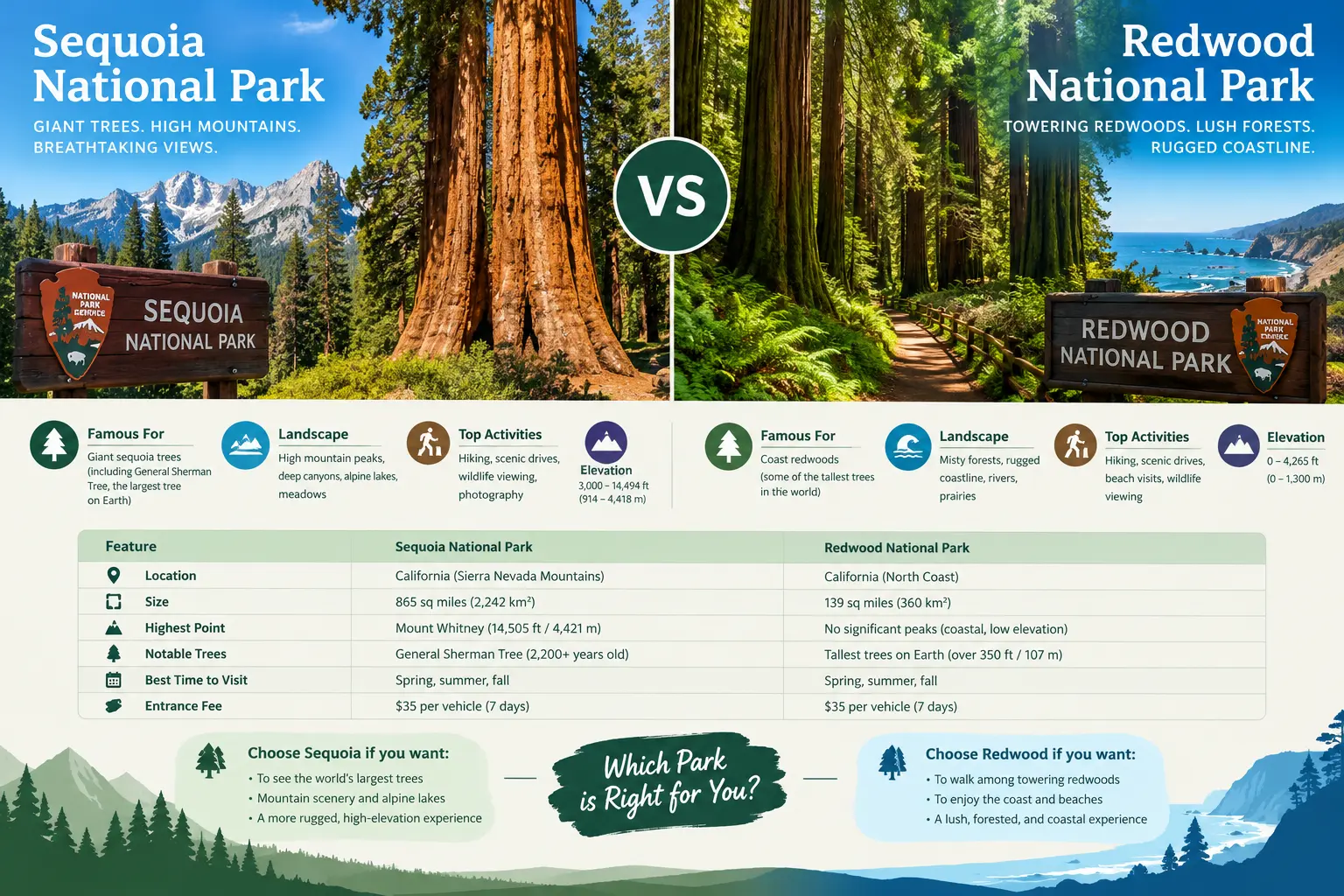
1. Sequoia National Park vs. Redwood National Park: Quick Comparison
| Feature | Sequoia National Park | Redwood National and State Parks |
|---|---|---|
| Location | Sierra Nevada, central California | Northern California coast |
| Famous trees | Giant sequoias | Coast redwoods |
| Most famous tree | General Sherman Tree | Tall Tree Grove’s famous tall redwoods |
| Landscape | Mountains, granite peaks, forests | Coastal forests, beaches, rivers |
| Highest elevation | Mount Whitney, 14,505 feet in the broader region; the park’s eastern boundary includes high Sierra terrain | Approximately 3,000 feet at the highest elevations |
| Best-known attraction | General Sherman Tree | Tall Tree Grove and scenic redwood forests |
| Popular activities | Hiking, sightseeing, camping, photography | Hiking, scenic drives, beach walks, wildlife viewing |
| Ocean access | No | Yes |
| Snow in winter | Common at higher elevations | Possible, but generally uncommon in coastal lowlands |
| Best time to visit | Late spring through fall, depending on snow conditions | Spring through fall; coastal visits are possible year-round |
| Ideal for | Mountain scenery and giant trees | Coastal scenery and exceptionally tall trees |
One important distinction is that Redwood National and State Parks is a collection of federally and state-protected lands, rather than a single national park operating independently of the neighboring state parks.
2. Giant Sequoias vs. Coast Redwoods: What’s the Difference?
The biggest difference between these destinations is the type of redwood-family tree you will see.
Sequoia National Park: The World’s Most Massive Trees
Sequoia National Park protects giant sequoias (Sequoiadendron giganteum), famous for their immense trunks and extraordinary volume. These trees grow naturally on the western slopes of the Sierra Nevada, generally at elevations of approximately 4,000 to 8,000 feet.
The park’s most famous attraction is the General Sherman Tree. Its enormous trunk makes it one of the most impressive trees visitors can see anywhere in the world.
Other highlights include:
- Giant Forest: A spectacular grove containing thousands of giant sequoias.
- Congress Trail: A popular walking route through some of the park’s most impressive trees.
- Moro Rock: A granite dome offering expansive views of the surrounding mountains.
- Tunnel Log: A fallen giant sequoia that visitors can drive through when the road is open.
- Crescent Meadow: A beautiful meadow surrounded by giant sequoias and forest.
Sequoia National Park is an excellent choice if you want to stand beside enormous tree trunks and experience the dramatic scenery of California’s Sierra Nevada mountains.
Redwood National and State Parks: The Tallest Trees on Earth
Redwood National and State Parks protects coast redwoods (Sequoia sempervirens), which can grow taller than 350 feet. These trees are recognized as the tallest tree species on Earth.
Coast redwoods thrive in the cool, moist conditions created by the Pacific Coast’s fog and mild climate. Their tall, straight trunks create a cathedral-like atmosphere, especially in shaded forest groves.
Popular places to explore include:
- Tall Trees Grove: A remarkable grove of exceptionally tall redwoods, accessible under specific visitor and trail conditions.
- Jedediah Smith Redwoods State Park: Home to magnificent old-growth redwood forests and scenic drives.
- Prairie Creek Redwoods State Park: Known for lush forests, wildlife, and Fern Canyon.
- Newton B. Drury Scenic Parkway: A beautiful route through an old-growth redwood forest.
- Gold Bluffs Beach: A scenic coastal area near forest trails and Fern Canyon.
Redwood National and State Parks is the better choice if you want to walk among incredibly tall trees, explore lush coastal forests, and combine forest adventures with visits to the Pacific Ocean.
3. Which National Park Has Bigger Trees?
The answer depends on what you mean by bigger.
Giant sequoias are generally larger in trunk volume and circumference, while coast redwoods grow taller.
| Tree characteristic | Giant sequoia | Coast redwood |
|---|---|---|
| Greatest strength | Massive trunk and overall volume | Exceptional height |
| Typical environment | Sierra Nevada mountain forests | Cool, moist coastal forests |
| Famous example | General Sherman Tree | Hyperion, the tallest known living tree |
| Visitor access | Many famous trees are accessible on established trails | Many groves are accessible, but some exceptional trees are protected or difficult to reach |
Hyperion is located in Redwood National Park and is widely recognized as the tallest known living tree. Its exact location is not publicly promoted to help protect it from damage.
If you want to see trees with enormous trunks, choose Sequoia National Park. If your goal is to stand beneath trees that seem to disappear into the sky, Redwood National and State Parks is the better option.
4. Scenery: Mountains vs. Coastal Forests
What Is the Scenery Like in Sequoia National Park?
Sequoia National Park combines giant forests with dramatic mountain scenery. Visitors can experience granite formations, deep valleys, high-elevation landscapes, and panoramic views of the Sierra Nevada.
The scenery changes with elevation and season. Lower forest areas may be accessible when higher roads and trails remain snow-covered.
This park is especially appealing to travelers who enjoy mountain landscapes, scenic overlooks, and hiking through forests far from the coast.
What Is the Scenery Like in Redwood National and State Parks?
Redwood National and State Parks offers a very different atmosphere. Instead of towering mountain vistas as the main attraction, visitors encounter dense green forests, moss-covered branches, fern-filled ravines, wild rivers, and rugged beaches.
Fog frequently drifts through the coastal redwoods, creating atmospheric conditions for photography. In some locations, you can walk from a shaded forest trail to a beach overlooking the Pacific Ocean.
Choose Sequoia for dramatic mountain scenery and Redwood for a combination of ancient forests and coastal landscapes.
5. Best Things to Do in Each Park
Best Things to Do in Sequoia National Park
Sequoia National Park is ideal for visitors who want to see famous giant trees and explore the mountains.
- Visit the General Sherman Tree. Walk along the established trail to see one of the world’s most massive trees.
- Explore the Giant Forest. Follow forest trails through impressive groves of giant sequoias.
- Climb Moro Rock. Take the stairway to a spectacular viewpoint when conditions permit.
- Walk the Congress Trail. Enjoy a relatively accessible route through a remarkable concentration of giant trees.
- See Tunnel Log. Photograph the famous fallen sequoia when the road is open.
- Enjoy mountain hiking. Explore trails suited to your experience and the current season.
Best Things to Do in Redwood National and State Parks
Redwood National and State Parks is perfect for visitors who enjoy forests, wildlife, scenic drives, and coastal adventures.
- Walk through old-growth redwood forests. Explore trails beneath towering coast redwoods.
- Drive Newton B. Drury Scenic Parkway. Enjoy a scenic route through magnificent forest landscapes.
- Visit Fern Canyon. See steep canyon walls covered with ferns, subject to seasonal access requirements.
- Explore Gold Bluffs Beach. Enjoy coastal scenery and the sound of the Pacific Ocean.
- Look for Roosevelt elk. These large animals are often seen in suitable meadows and open areas.
- Visit Jedediah Smith Redwoods State Park. Discover impressive old-growth forests and scenic river areas.
Both destinations offer outstanding photography opportunities, but the subjects differ: Sequoia emphasizes massive trunks and mountain scenery, while Redwood combines great height, forest textures, fog, rivers, and coastal views.
6. Hiking in Sequoia vs. Redwood National Park
Both parks have hiking opportunities for different fitness levels.
Sequoia National Park includes relatively easy walks among giant sequoias as well as demanding mountain hikes. Moro Rock involves a steep stairway, and high-elevation routes can require substantial preparation.
Redwood National and State Parks has many forest trails that are relatively gentle, although some routes include muddy surfaces, steep sections, or uneven terrain. Coastal hikes may also involve changing weather and challenging conditions.
Choose Sequoia if: You want mountain hiking, elevation changes, granite formations, and trails through giant sequoia groves.
Choose Redwood if: You prefer shaded forest walks, fern-filled canyons, river scenery, and hikes near the coast.
Before setting out, check official park alerts for trail closures, road conditions, seasonal restrictions, and any required permits.
7. Weather and the Best Time to Visit
Sequoia National Park Weather
Sequoia’s weather varies significantly with elevation. Summer is generally the most convenient season for visiting the Giant Forest and other popular high-elevation attractions, although afternoon thunderstorms and changing mountain conditions are possible.
Winter brings snow to many higher areas. Some roads and facilities may close or require winter equipment, while lower-elevation areas can remain more accessible.
Late spring and early fall can be excellent times to visit, but snow conditions may affect access in spring and early winter.
Redwood National and State Parks Weather
Redwood National and State Parks has a mild coastal climate. Summers are generally cool to comfortable, and fog can occur even when inland California is hot.
Winters are wetter, with frequent rain and muddy trails. Spring and fall can offer beautiful forest conditions, but rain and fog remain possible throughout the year.
For a summer trip focused on giant trees and mountain viewpoints, Sequoia is an excellent choice. For comfortable forest walks and coastal scenery, Redwood is appealing during much of the year.
8. How Many Days Do You Need?
The time needed depends on how much hiking you plan to do and whether you want to explore nearby attractions.
| Trip length | Sequoia National Park | Redwood National and State Parks |
|---|---|---|
| 1 day | Visit the Giant Forest, General Sherman Tree, and one or two nearby viewpoints | Explore one major redwood grove and a scenic drive |
| 2 days | See the major giant sequoia attractions and add hiking | Visit several redwood groves and explore the coast |
| 3 days | Enjoy a more relaxed visit with additional hiking and scenic stops | Combine old-growth forests, Fern Canyon, beaches, and wildlife viewing |
| 4+ days | Add more hiking or combine with Kings Canyon National Park | Explore more state park areas, coastal communities, and hiking routes |
For most first-time visitors, two days is a reasonable starting point for either destination. Three days or more allows greater flexibility and time for additional trails.
9. Where to Stay Near Each Park
Hotels Near Sequoia National Park
Visitors can stay inside the park where lodging is available or choose accommodations in nearby communities.
Popular areas to consider include:
- Three Rivers: A convenient gateway community near the Ash Mountain entrance.
- Lodgepole area: Useful for accessing popular attractions in the Giant Forest region when seasonal lodging is available.
- Wuksachi area: A convenient base for exploring the Giant Forest and nearby mountain attractions.
- Visalia: A larger town with additional hotel, restaurant, and shopping options.
Travel times can vary significantly depending on road conditions, seasonal closures, and where you plan to explore.
Hotels Near Redwood National and State Parks
Redwood National and State Parks covers a large region, so choosing the right base is important.
Consider these locations:
- Crescent City: A convenient base for exploring Jedediah Smith Redwoods State Park and northern coastal attractions.
- Klamath: Useful for exploring parts of the central redwood coast.
- Orick: A small community near Prairie Creek Redwoods State Park and coastal forest attractions.
- Arcata: Offers more dining and accommodation options and provides access to southern portions of the redwood region.
If you want to visit multiple redwood groves, staying in different communities during a longer trip can reduce driving time.
10. Can You Visit Sequoia and Redwood National Parks on the Same Trip?
Yes, but they are far apart, so you should plan for substantial driving time.
Sequoia National Park is in the Sierra Nevada of central California, while Redwood National and State Parks are in the far northwestern part of the state. Driving between the main visitor areas can take much of a day, depending on your route, road conditions, and stops.
For a combined trip, consider allowing at least five to seven days if you want time to explore both parks without rushing.
A practical itinerary might include:
- Days 1–2: Explore Sequoia National Park, including the Giant Forest and General Sherman Tree.
- Day 3: Travel toward northern California, allowing time for breaks and an overnight stop.
- Days 4–5: Explore Redwood National and State Parks, including a redwood grove, a scenic drive, and coastal attractions.
- Days 6–7: Add extra hikes, beaches, or nearby destinations if time allows.
Check your route carefully before departure, as mountain roads, seasonal closures, and long distances can affect travel plans.
11. Which Is Better for Families?
Both parks can be excellent family destinations.
Sequoia is a strong choice for families who want to see famous giant trees, enjoy accessible forest walks, and visit scenic viewpoints. Some attractions involve steep paths or stairs, so check trail details before visiting with young children or anyone with mobility limitations.
Redwood is a great option for families who enjoy exploring forests, spotting wildlife, and visiting beaches. Many short trails are suitable for a relaxed outing, although muddy ground, uneven surfaces, and coastal conditions require attention.
For families planning a first national park trip centered on iconic trees, Sequoia may be the simpler choice. For families who want trees and ocean scenery in the same vacation, Redwood offers more coastal variety.
12. Which Park Is Better for Photography?
The best park depends on the images you want to capture.
Sequoia National Park is best for:
- Enormous tree trunks and dramatic scale.
- Sunlight filtering through giant sequoia groves.
- Mountain landscapes and granite viewpoints.
- Forest trails surrounded by massive trees.
Redwood National and State Parks is best for:
- Extremely tall trees disappearing into the canopy.
- Foggy forests and lush green vegetation.
- Fern-covered canyon walls.
- Pacific coastline, rivers, and wildlife.
For forest photography, overcast conditions can be useful because they reduce harsh sunlight and preserve detail. In both destinations, follow park rules and stay on designated trails to protect fragile ecosystems.
13. Frequently Asked Questions
Is Sequoia National Park better than Redwood National Park?
Sequoia National Park is better for visitors who want to see massive giant sequoias, explore mountain scenery, and visit famous attractions such as the General Sherman Tree. Redwood National and State Parks is ideal for travelers who want to see the world’s tallest trees, explore lush forests, and enjoy Pacific Ocean beaches. Both parks offer unique experiences.
Are Sequoia and Redwood National Parks the same?
No. Sequoia National Park and Redwood National and State Parks are two separate destinations in California. Sequoia is located in the Sierra Nevada mountains, while Redwood is situated along the northern California coast.
Which park has the tallest trees?
Redwood National and State Parks has the tallest trees in the world. Its coast redwoods can grow more than 350 feet tall, making them taller than any other tree species.
Which park has the biggest trees?
Sequoia National Park is famous for its giant sequoias, which are generally larger in trunk volume than coast redwoods. The General Sherman Tree is a well-known example and is recognized as one of the largest trees in the world by volume.
Can you see giant sequoias in Redwood National Park?
Redwood National and State Parks primarily protects coast redwoods rather than giant sequoias. To see giant sequoias in their natural habitat, visit Sequoia National Park or other giant sequoia groves in California.
Can you visit Sequoia and Redwood National Parks on the same trip?
Yes. However, the parks are far apart, and driving between them can take much of a day. Plan approximately five to seven days if you want to explore both destinations without rushing.
Which park is better for hiking?
Both parks offer excellent hiking opportunities. Sequoia is ideal for mountain hikes, granite viewpoints, and trails through giant sequoia groves. Redwood offers shaded forest walks, coastal trails, and scenic routes through fern-filled canyons.
Which park is better for families with children?
Both parks are excellent family destinations. Sequoia offers impressive giant trees and accessible walking trails, while Redwood combines forest adventures, wildlife viewing, and coastal scenery. Families should check trail lengths and accessibility before choosing their activities.
Does Redwood National Park have beaches?
Yes. Redwood National and State Parks includes several coastal areas, including Gold Bluffs Beach and Enderts Beach. Visitors can enjoy ocean views, beach walks, and nearby forest trails, although access and conditions may vary by season.
Does Sequoia National Park have snow?
Yes. Snow is common at higher elevations during winter and can continue into spring. Snow and ice may affect roads, hiking trails, and access to popular attractions, so check current park conditions before traveling.
Is Redwood National Park worth visiting in winter?
Yes. Redwood National and State Parks can be visited throughout the year because of its relatively mild coastal climate. Winter is generally wetter, however, and visitors should prepare for rain, muddy trails, and possible road or trail closures.
How long should you spend in Sequoia National Park?
One day is enough to visit several major attractions, including the General Sherman Tree and parts of the Giant Forest. However, two or three days allow more time for hiking, sightseeing, and exploring the park at a relaxed pace.
How long should you spend in Redwood National and State Parks?
Plan at least one or two days to visit major redwood groves and scenic drives. Three days or more is ideal if you also want to explore coastal beaches, hike through Fern Canyon, and look for wildlife.
Which park is less crowded?
Crowds vary depending on the season, day of the week, and specific attraction. Both parks can be busy during summer and holidays. Visiting early in the morning or exploring less-visited trails can help you enjoy a quieter experience.
Do you need reservations to enter Sequoia National Park?
Sequoia National Park generally does not require an advance reservation simply to enter. However, lodging, camping, and certain activities may require reservations, and temporary entry requirements can change. Check the official National Park Service website before your trip.
Do you need reservations to visit Redwood National Park?
General park entry typically does not require a reservation. However, certain locations and activities, including Tall Trees Grove access and seasonal access to Fern Canyon and Gold Bluffs Beach, may require permits or reservations. Confirm current requirements on the official park website.
Which park is better for photography?
Sequoia National Park is ideal for photographing enormous tree trunks, mountain scenery, and granite formations. Redwood National and State Parks is excellent for capturing towering tree canopies, foggy forests, lush ferns, rivers, and dramatic coastal landscapes.
Which park is better for seeing wildlife?
Both destinations support diverse wildlife. Sequoia offers opportunities to see black bears, mule deer, and various bird species. Redwood National and State Parks is particularly known for Roosevelt elk, black bears, deer, and coastal birdlife. Wildlife sightings are never guaranteed, and visitors should maintain a safe distance from animals.
What is the best time to visit Sequoia National Park?
Late spring through fall is generally the most convenient period to visit Sequoia National Park, especially for exploring the Giant Forest and higher-elevation attractions. Summer offers easier access to many popular areas, while spring and fall may provide fewer crowds. Snow can affect access outside the main summer season.
What is the best time to visit Redwood National and State Parks?
Late spring through early fall is a popular time to visit Redwood National and State Parks because conditions are often suitable for hiking, scenic drives, and beach visits. The parks remain beautiful in winter, but visitors should be prepared for rain, fog, and muddy trails.
Conclusion: Sequoia National Park vs. Redwood National Park
Choosing between Sequoia National Park and Redwood National and State Parks comes down to the type of natural experience you want.
Choose Sequoia National Park if you want to see enormous giant sequoias, visit the General Sherman Tree, explore granite formations, and enjoy the mountains of California’s Sierra Nevada.
Choose Redwood National and State Parks if you want to walk beneath the world’s tallest trees, explore lush old-growth forests, discover fern-covered canyons, and enjoy scenic Pacific Coast beaches.
If you have enough time, visiting both parks is an excellent way to experience two distinct California landscapes. Each destination offers a remarkable perspective on the state’s ancient forests, and neither is a substitute for the other.