Thailand Weather by Month
Thailand is a tropical country with warm weather throughout most of the year, but conditions vary considerably between the northern mountains, central Thailand, and the southern islands. The country generally has three seasons: a hot season from mid-February to mid-May, a rainy season from mid-May to mid-October, and a cooler season from mid-October to mid-February.
Thailand Weather by Month
You can click the image below to view the full-size weather chart for Thailand.

Note: Thailand’s climate varies significantly by region. Monthly conditions in Bangkok, Chiang Mai, Phuket, Koh Samui and other destinations can be quite different, particularly during the rainy season.
January – Cool, Dry and Sunny
Average temperature: 18–32°C (64–90°F)
Rainfall: Low
Humidity: Moderate
Best for: Beaches, temples, sightseeing and national parks
January is one of the best months to visit Thailand. Much of the country experiences dry, sunny weather, with relatively comfortable temperatures compared with the hotter months that follow.
Northern destinations such as Chiang Mai and Chiang Rai can have cool mornings and evenings, while Bangkok and central Thailand remain warm during the day. Southern Thailand is also popular in January, although rainfall patterns differ between the Gulf and Andaman coasts.
January is particularly attractive for outdoor activities, island-hopping and sightseeing.
February – Warm and Mostly Dry
Average temperature: 20–33°C (68–91°F)
Rainfall: Low
Humidity: Moderate
Best for: Beaches, diving, hiking and sightseeing
February is another excellent month for traveling around Thailand. Rainfall is generally limited, while temperatures begin to rise toward the hot season.
The northern and central regions are still relatively comfortable, especially during the morning and evening. Southern beaches remain a major attraction, with generally favorable conditions for swimming, snorkeling and boat trips.
By the end of February, temperatures start increasing noticeably.
March – Hot and Increasingly Humid
Average temperature: 23–35°C (73–95°F)
Rainfall: Low to moderate
Humidity: Increasing
Best for: Beaches, diving and island trips
March marks the beginning of Thailand’s hotter period. Temperatures can become very high during the afternoon, particularly in Bangkok and inland areas.
Thailand’s official climate information identifies March through May as the hottest period, with April normally being the hottest month.
Southern islands can still provide excellent beach conditions, while early mornings and late afternoons are usually more comfortable for outdoor activities.
April – The Hottest Month
Average temperature: 25–36°C (77–97°F)
Rainfall: Moderate
Humidity: High
Best for: Songkran, beaches and water activities
April is generally the hottest month of the year in Thailand. Afternoon temperatures can approach or exceed 40°C (104°F) in some inland locations.
Despite the heat, April is one of Thailand’s most famous travel months because of Songkran, the Thai New Year festival. Water celebrations take place throughout the country and provide a welcome way to cool down.
If you visit Thailand in April, plan outdoor sightseeing for the morning or late afternoon and stay hydrated.
May – Hot With Increasing Rain
Average temperature: 25–35°C (77–95°F)
Rainfall: Moderate to high
Humidity: High
Best for: Fewer crowds, beaches and cultural travel
May is a transition month. The intense heat of April continues, but rainfall becomes increasingly frequent as the southwest monsoon begins to influence Thailand.
Thailand’s rainy season generally starts around mid-May. The southwest monsoon brings moist air from the Indian Ocean, resulting in more clouds and rainfall across the country.
Rain often arrives as heavy showers or thunderstorms rather than continuous rain all day, so May can still be a practical month for travelers who want fewer tourists.
June – Warm, Humid and Rainy
Average temperature: 24–33°C (75–91°F)
Rainfall: High
Humidity: High
Best for: Cultural attractions and budget travel
June falls within Thailand’s rainy season. Temperatures remain high, while humidity increases and tropical showers become more common.
Rainfall varies significantly by region. Northern Thailand generally experiences frequent rain, while southern destinations can have different patterns depending on which coast they are on.
For travelers who do not mind occasional showers, June can offer lower prices and fewer crowds.
July – Frequent Tropical Showers
Average temperature: 24–33°C (75–91°F)
Rainfall: High
Humidity: High
Best for: Cultural trips, shopping and off-season travel
July is firmly within the rainy season. Thailand can experience frequent showers and thunderstorms, particularly during periods when the southwest monsoon becomes stronger.
The official Thai climate service notes that rainfall generally becomes more widespread again from July, with many areas receiving frequent rain.
Rain does not necessarily mean that travel plans have to stop. Many showers are relatively short, leaving plenty of time for sightseeing between periods of rain.
August – Hot, Humid and Wet
Average temperature: 24–33°C (75–91°F)
Rainfall: High
Humidity: Very high
Best for: Budget trips and cultural attractions
August is one of Thailand’s wetter months. Rainfall can be frequent, and some regions can experience heavy downpours.
Northern Thailand can receive particularly substantial rainfall during this period. The combination of the southwest monsoon and monsoon trough can produce periods of heavy rain and localized flooding.
Travelers visiting in August should allow flexibility in their itineraries, particularly for boat trips and outdoor excursions.
September – One of the Wettest Months
Average temperature: 24–32°C (75–90°F)
Rainfall: Very high
Humidity: Very high
Best for: Budget travel, museums and cultural experiences
September is typically one of the wettest months in Thailand. Heavy showers and thunderstorms can occur frequently, and some regions may experience flooding.
Northern and central Thailand can receive substantial rainfall, while southern Thailand has its own regional patterns. If you’re traveling during September, flexible plans and waterproof gear are useful.
The major advantage is that September is outside the main tourist season, so accommodation and activities can sometimes be less expensive.
October – Rainy Season Transition
Average temperature: 24–32°C (75–90°F)
Rainfall: High to moderate
Humidity: High
Best for: Late-month travel and fewer crowds
October is a transition month. Rainfall generally begins decreasing in northern and northeastern Thailand, while temperatures become more comfortable.
However, central Thailand, the east and parts of southern Thailand can continue to receive substantial rainfall. The Thai government notes that northern and northeastern areas begin to see decreasing rainfall around October, while other regions can remain wet.
By the second half of the month, conditions can start improving in many parts of the country.
November – Warm and Increasingly Dry
Average temperature: 22–32°C (72–90°F)
Rainfall: Low to moderate
Humidity: Moderate
Best for: Beaches, temples, hiking and sightseeing
November is one of the most popular months to visit Thailand. Much of the country becomes drier and more comfortable as the southwest monsoon retreats.
Northern Thailand begins its cooler season, making Chiang Mai and other northern destinations especially appealing. Bangkok also becomes more comfortable for walking and sightseeing.
However, the Gulf of Thailand can still experience significant rainfall in November. Thailand’s climate information notes that the southern east coast can continue receiving rain into December.
December – Cool, Dry and Comfortable
Average temperature: 18–32°C (64–90°F)
Rainfall: Low in much of Thailand
Humidity: Moderate
Best for: Beaches, sightseeing, hiking and holidays
December is one of the best months for a Thailand vacation. Much of the country enjoys dry weather, clear skies and comfortable temperatures.
Northern Thailand can be noticeably cool in the mornings, especially in mountainous areas. Bangkok and central Thailand remain warm, while the Andaman coast is generally favorable for beach holidays.
The Gulf coast can still experience rainfall during December, so travelers choosing destinations such as Koh Samui should check the local forecast rather than relying only on Thailand-wide averages.
Thailand Weather by Season
Cool Season: Mid-October to Mid-February
Thailand’s cooler season is generally the most comfortable period for travel. The northeast monsoon brings relatively cool and dry air, particularly to northern and northeastern Thailand.
The coolest period is generally December and January. Northern mountain areas can become surprisingly cold at night, while southern and coastal areas remain warm.
Best months: November, December, January and February
Hot Season: Mid-February to Mid-May
The hot season brings rising temperatures and increasing humidity. March, April and early May can be extremely hot, with April typically being the hottest period.
Best for: Beaches, swimming, water activities and Songkran
Rainy Season: Mid-May to Mid-October
The rainy season is influenced by the southwest monsoon. Rainfall becomes more frequent, although the amount and timing vary considerably from region to region.
Rainy-season travel can still be enjoyable because showers are often intermittent rather than continuous. However, heavy rain can affect boat trips, hiking and transportation.
Wettest period: Generally August through September in many parts of the country.
Thailand Weather by Region
Thailand’s weather is not the same everywhere. This is particularly important when choosing a beach destination.
Northern Thailand
Chiang Mai, Chiang Rai and the surrounding mountains have a stronger seasonal temperature variation. Winters are relatively cool, while March and April can be very hot. The rainy season generally runs from May through October.
Central Thailand
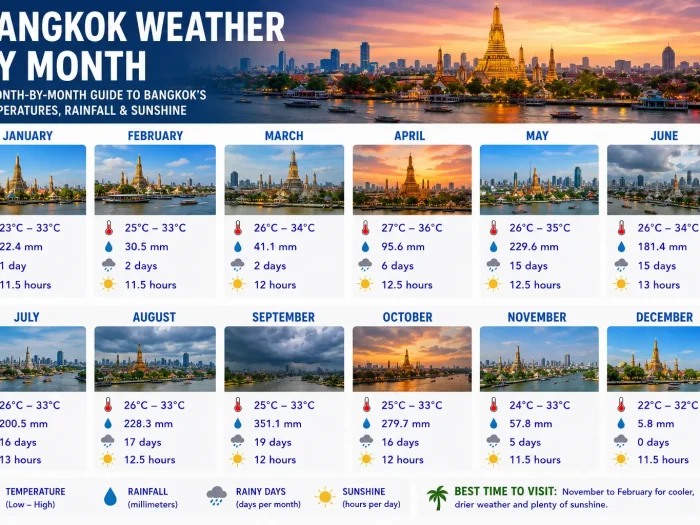
Bangkok and surrounding areas are hot for much of the year. February through April becomes increasingly hot, while May through October brings more frequent rainfall.
Andaman Coast
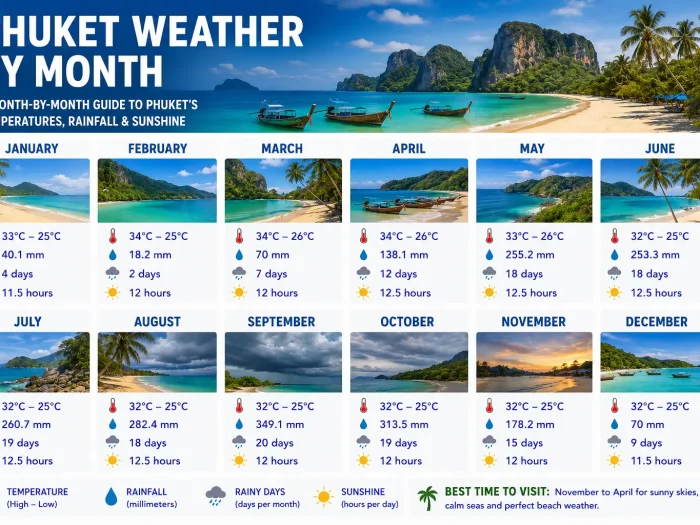
Phuket, Krabi and other destinations on Thailand’s western coast generally have their more favorable beach season during the cooler and drier part of the year. November through April is commonly preferred for beach trips.
Gulf of Thailand
Koh Samui, Koh Phangan and nearby destinations have a different rainfall pattern. The east coast of southern Thailand can continue to receive substantial rain later in the year, particularly around November and December.
Thailand Weather by Month at a Glance
| Month | Typical Weather | Rainfall | Best For |
|---|---|---|---|
| January | Cool, dry and sunny | Low | Beaches, sightseeing |
| February | Warm and mostly dry | Low | Islands and outdoor activities |
| March | Hot and increasingly humid | Low to moderate | Beaches, diving |
| April | Very hot and humid | Moderate | Beaches, Songkran |
| May | Hot with increasing rain | Moderate to high | Fewer crowds |
| June | Warm, humid and rainy | High | Northern Thailand, budget travel |
| July | Warm with frequent showers | High | Cultural trips, fewer crowds |
| August | Hot, humid and wet | High | Budget travel |
| September | Very wet in many areas | Very high | Off-season travel |
| October | Wet, then gradually drier | High to moderate | Late-month travel |
| November | Warm and increasingly dry | Low to moderate | Beaches and sightseeing |
| December | Warm, dry and comfortable | Low | Peak-season travel |
What Is the Best Month to Visit Thailand?
December through February is generally the best period for an all-around Thailand vacation. Temperatures are more comfortable, rainfall is relatively low in many regions, and conditions are favorable for sightseeing, beaches and outdoor activities.
If your priority is the Andaman Coast, November through April is generally a good period to consider.
If you want to visit the Gulf of Thailand, check the local climate carefully because its rainy season differs from the Andaman coast.
For northern Thailand, November through February offers some of the most comfortable temperatures, while March and April can be extremely hot.
For travelers, the best time to visit Thailand is generally November through February, when much of the country is relatively dry and temperatures are more comfortable. However, southern Thailand has important regional differences: the Gulf of Thailand coast can remain rainy into December, while the Andaman coast is generally drier from November through April.
Frequently Asked Questions
What is the best month to visit Thailand?
December, January and February are generally among the best months to visit Thailand because much of the country experiences relatively dry and comfortable weather.
What is the hottest month in Thailand?
April is generally the hottest month of the year. Temperatures in inland areas can approach or exceed 40°C (104°F).
What is the rainy season in Thailand?
The rainy season generally runs from mid-May to mid-October. However, rainfall patterns differ between regions, especially in southern Thailand.
What is the coldest month in Thailand?
January is generally among the coolest months, although northern and mountainous areas can become much colder than Bangkok or southern Thailand.
Does it rain all day during the rainy season in Thailand?
No. Rainy-season weather often consists of heavy showers or thunderstorms followed by periods of dry weather. However, prolonged periods of rain can occur.
Is Thailand worth visiting during the rainy season?
Yes. Rainy-season travel can offer fewer tourists, lower prices and lush landscapes. The main drawback is the possibility of disrupted outdoor and island activities.
When is the best time to visit Phuket?
November through April is generally the most favorable period for Phuket and the Andaman coast, with December through March particularly popular for beach holidays.
When is the best time to visit Koh Samui?
Koh Samui has a different rainfall pattern from Phuket. The Gulf coast can receive substantial rain later in the year, so travelers should consider the local weather pattern when selecting their travel dates.
When is the best time to visit Chiang Mai?
November through February is generally the most comfortable period for Chiang Mai, with cooler temperatures and relatively dry conditions.
Does Thailand get cold?
Yes, particularly in northern and mountainous areas during December and January. Coastal and southern Thailand generally remain warm.
What month has the most rain in Thailand?
September is among the wettest months in many parts of Thailand, although rainfall varies considerably by region.
Is March a good month to visit Thailand?
Yes, but it is hot. March is a good choice for beaches and islands, but travelers should prepare for high daytime temperatures.
Is April a good month to visit Thailand?
April can be very hot, but it is an excellent month for experiencing Songkran, Thailand’s famous New Year celebration.
Is May a good month to visit Thailand?
May can be a good shoulder-season month. Temperatures are high and rainfall starts increasing, but crowds may be smaller than during the peak season.
Is June a good month to visit Thailand?
June is wetter than the peak travel months, but it can be a good option for travelers seeking fewer crowds and potentially lower prices.
Is July a good month to visit Thailand?
July is rainy and humid, but Thailand remains accessible. It can be a good month for cultural travel, shopping and travelers who do not mind occasional showers.
Is August a good month to visit Thailand?
August is wet in many parts of Thailand. It is better suited to flexible travelers who prioritize lower crowds and prices over consistently sunny weather.
Is September a good month to visit Thailand?
September is one of the wettest months, so it is not ideal for a classic beach vacation. However, it can be attractive for budget travelers.
Is October a good month to visit Thailand?
October is a transitional month. Rainfall begins decreasing in northern Thailand, but many other areas can remain wet, particularly early in the month.
Is November a good month to visit Thailand?
Yes. November marks the beginning of the more favorable travel season for much of Thailand, although the Gulf coast can still be rainy.
Final Thoughts
Thailand can be visited throughout the year, but the experience varies significantly depending on the month and destination. November through February generally provides the most comfortable combination of cooler temperatures and lower rainfall, while March through May is hotter and mid-May through October is dominated by the rainy season.
The most important thing to remember is that there is no single weather pattern for the entire country. Northern Thailand, Bangkok, the Andaman coast and the Gulf of Thailand can all experience different conditions during the same month. Planning around the climate of your specific destination can make a major difference to your trip.
Read more: