Savannah Weather by Month
Savannah, Georgia, has a humid subtropical climate with mild winters, hot and humid summers, and rainfall throughout the year. The warmest months are July and August, when average highs reach around 91°F (33°C), while January is the coolest month with an average high of 61°F (16°C).
Rainfall is fairly consistent throughout the year but peaks during summer. August is the wettest month, with about 6.0 inches of rain and 10 rainy days. Snowfall is extremely rare in Savannah, with only tiny amounts recorded in January, February, March, and December.
Savannah Weather by Month
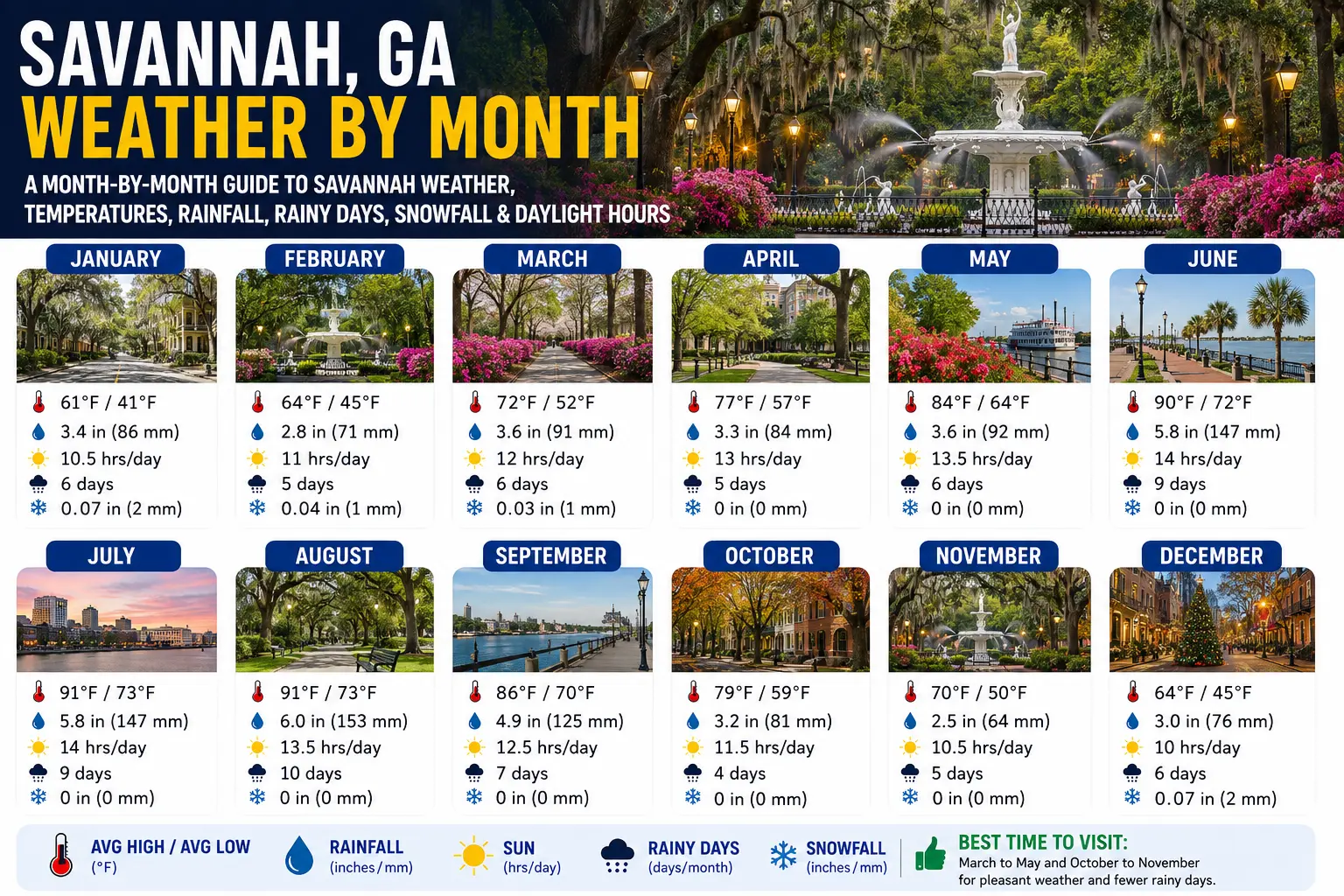
You can click the image below to view the full-size weather chart for Savannah.
January – Cool Winter Days and Moderate Rainfall
Average high: 61°F (16°C)
Average low: 41°F (5°C)
Rainfall: 3.4 inches
Rainy days: 6
Snowfall: 0.07 inches
Daylight: 10.5 hours
January is one of the coolest months in Savannah, but winter weather remains relatively mild compared with much of the United States. Afternoons are comfortable, while mornings and evenings can feel chilly.
Rainfall is moderate, with about 3.4 inches spread across roughly six rainy days. Snowfall is virtually nonexistent, with only about 0.07 inches shown in the supplied climate data.
Tourist crowds are generally lighter than during spring and summer, making January a pleasant time to explore Savannah’s historic squares, architecture, parks, and museums.
Best for:
- Historic sightseeing
- Walking tours
- Museums and indoor attractions
- Quieter travel
February – Mild Temperatures and Comfortable Sightseeing
Average high: 64°F (18°C)
Average low: 45°F (7°C)
Rainfall: 2.8 inches
Rainy days: 5
Snowfall: 0.04 inches
Daylight: 11 hours
February brings slightly warmer temperatures and relatively low rainfall. Days are usually mild, although mornings and evenings can still feel cool.
With only about five rainy days and nearly 11 hours of daylight, February offers good conditions for exploring Savannah on foot. Snowfall is essentially zero, with just 0.04 inches recorded in the supplied data.
Best for:
- Walking tours
- Historic District sightseeing
- Outdoor dining
- Couples’ getaways
March – Mild Spring Weather and Moderate Rainfall
Average high: 72°F (22°C)
Average low: 52°F (11°C)
Rainfall: 3.6 inches
Rainy days: 6
Snowfall: 0.03 inches
Daylight: 12 hours
March marks a noticeable transition into spring. Average daytime temperatures rise to around 72°F, while nighttime temperatures remain pleasantly cool.
Rainfall increases slightly compared with February, but the combination of mild temperatures and longer days makes March one of the more comfortable months for sightseeing. Snowfall is virtually nonexistent at only about 0.03 inches.
Best for:
- Spring sightseeing
- Garden visits
- Walking tours
- Outdoor activities
April – Warm Spring Days and Moderate Rainfall
Average high: 77°F (25°C)
Average low: 57°F (14°C)
Rainfall: 3.3 inches
Rainy days: 5
Snowfall: 0 inches
Daylight: 13 hours
April brings warm but generally comfortable spring weather to Savannah. Afternoon temperatures reach around 77°F, while evenings are mild.
Rainfall remains moderate, with around 3.3 inches during the month and approximately five rainy days. There is no measurable snowfall in the supplied data.
Best for:
- Historic sightseeing
- Gardens and parks
- Outdoor dining
- Walking tours
May – Warm and Increasingly Humid
Average high: 84°F (29°C)
Average low: 64°F (18°C)
Rainfall: 3.6 inches
Rainy days: 6
Snowfall: 0 inches
Daylight: 13.5 hours
May brings noticeably warmer weather, with average highs reaching 84°F. Nights remain comfortable at around 64°F, although humidity begins to become more noticeable.
Rainfall is moderate, while snowfall is completely absent in the supplied data. The long daylight hours make May a good month for outdoor exploration.
Best for:
- Outdoor sightseeing
- Riverfront walks
- Parks and gardens
- Beach day trips
June – Hot, Humid, and Increasingly Wet
Average high: 90°F (32°C)
Average low: 72°F (22°C)
Rainfall: 5.8 inches
Rainy days: 9
Snowfall: 0 inches
Daylight: 14 hours
June marks the beginning of Savannah’s hottest and wetter period. Average highs reach about 90°F, while nighttime temperatures remain warm at around 72°F.
Rainfall increases significantly to approximately 5.8 inches, with about nine rainy days. Snowfall is nonexistent. Summer showers and thunderstorms can occur, but they do not necessarily last all day.
Best for:
- Beach trips
- Summer vacations
- Early-morning sightseeing
- Evening activities
July – Very Hot and Humid with Frequent Rain
Average high: 91°F (33°C)
Average low: 73°F (23°C)
Rainfall: 5.8 inches
Rainy days: 9
Snowfall: 0 inches
Daylight: 14 hours
July is one of the hottest months in Savannah. Average highs reach 91°F, and nighttime temperatures remain around 73°F.
Rainfall is relatively high, with nearly 5.8 inches and about nine rainy days. There is no snowfall during July. Summer thunderstorms are common, particularly during the afternoon and evening.
Best for:
- Beach vacations
- Summer activities
- Early-morning sightseeing
- Evening walks
August – Hottest Month and the Wettest Month
Average high: 91°F (33°C)
Average low: 73°F (23°C)
Rainfall: 6.0 inches
Rainy days: 10
Snowfall: 0 inches
Daylight: 13.5 hours
August is tied with July as the hottest month in Savannah, with average highs of about 91°F and lows around 73°F. It is also the wettest month of the year.
Savannah receives approximately 6.0 inches of rainfall in August, spread across about 10 rainy days. Snowfall is nonexistent. Despite frequent summer rain, showers are often temporary rather than continuous.
Best for:
- Beach trips
- Summer vacations
- Indoor attractions
- Evening activities
September – Warm Weather and Gradually Decreasing Rainfall
Average high: 86°F (30°C)
Average low: 70°F (21°C)
Rainfall: 4.9 inches
Rainy days: 7
Snowfall: 0 inches
Daylight: 12.5 hours
September brings a gradual decrease in temperatures and rainfall, although Savannah remains warm and humid. Average highs fall to around 86°F, while nighttime temperatures remain near 70°F.
Rainfall drops to approximately 4.9 inches, with around seven rainy days. There is no snowfall during September, and the shorter daylight hours are still sufficient for sightseeing and outdoor activities.
Best for:
- Warm-weather sightseeing
- Beach trips
- Outdoor dining
- Late-summer travel
October – Pleasant Fall Weather and Lower Rainfall
Average high: 79°F (26°C)
Average low: 59°F (15°C)
Rainfall: 3.2 inches
Rainy days: 4
Snowfall: 0 inches
Daylight: 11.5 hours
October is one of the most comfortable months of the year in Savannah. Average highs fall to around 79°F, while cooler evenings bring temperatures near 59°F.
Rainfall decreases to about 3.2 inches, and October has only around four rainy days. There is no snowfall, making October an excellent month for exploring Savannah’s historic streets and outdoor attractions.
Best for:
- Walking tours
- Historic sightseeing
- Outdoor dining
- Fall travel
November – Mild Fall Days and Low Rainfall
Average high: 70°F (21°C)
Average low: 50°F (10°C)
Rainfall: 2.5 inches
Rainy days: 5
Snowfall: 0 inches
Daylight: 10.5 hours
November brings cooler but still mild weather to Savannah. Average daytime temperatures reach around 70°F, while nights can become noticeably cooler.
Rainfall is among the lowest of the year at approximately 2.5 inches. Snowfall is nonexistent in the supplied data, while comfortable daytime temperatures make November a good month for walking around the Historic District.
Best for:
- Historic sightseeing
- Walking tours
- Comfortable outdoor activities
- Quieter travel
December – Cool Winter Weather and Moderate Rainfall
Average high: 64°F (18°C)
Average low: 45°F (7°C)
Rainfall: 3.0 inches
Rainy days: 6
Snowfall: 0.07 inches
Daylight: 10 hours
December brings mild winter weather to Savannah, with average highs around 64°F and lows near 45°F. Temperatures are much cooler than in summer but remain relatively comfortable for outdoor exploration.
Rainfall averages about 3.0 inches across six rainy days. Snowfall is virtually nonexistent, with only about 0.07 inches shown in the supplied data.
The cooler weather and holiday atmosphere make December a popular time to explore Savannah’s historic streets, squares, and seasonal attractions.
Best for:
- Holiday sightseeing
- Historic tours
- Walking around the Historic District
- Winter getaways
Best Time to Visit Savannah
The best time to visit Savannah is generally March through May and October through November. Spring and fall offer a good balance of comfortable temperatures, manageable rainfall, and plenty of daylight.
Spring (March–May) is warm and pleasant, with temperatures increasing from the low 70s to the mid-80s. Snowfall is essentially nonexistent.
Summer (June–August) is the hottest and most humid period, with temperatures around 90°F or higher and frequent rainfall. August is the wettest month.
Fall (September–November) gradually becomes cooler and drier. October is particularly comfortable, with an average high of 79°F and only about four rainy days.
Winter (December–February) is mild compared with many U.S. destinations. January is the coolest month, but average highs still reach around 61°F. Snow is extremely rare.
Savannah Weather by Month at a Glance
| Month | Avg High | Avg Low | Rainfall | Rainy Days | Snowfall | Daylight |
|---|---|---|---|---|---|---|
| January | 61°F (16°C) | 41°F (5°C) | 3.4 in | 6 | 0.07 in | 10.5 hrs |
| February | 64°F (18°C) | 45°F (7°C) | 2.8 in | 5 | 0.04 in | 11 hrs |
| March | 72°F (22°C) | 52°F (11°C) | 3.6 in | 6 | 0.03 in | 12 hrs |
| April | 77°F (25°C) | 57°F (14°C) | 3.3 in | 5 | 0 in | 13 hrs |
| May | 84°F (29°C) | 64°F (18°C) | 3.6 in | 6 | 0 in | 13.5 hrs |
| June | 90°F (32°C) | 72°F (22°C) | 5.8 in | 9 | 0 in | 14 hrs |
| July | 91°F (33°C) | 73°F (23°C) | 5.8 in | 9 | 0 in | 14 hrs |
| August | 91°F (33°C) | 73°F (23°C) | 6.0 in | 10 | 0 in | 13.5 hrs |
| September | 86°F (30°C) | 70°F (21°C) | 4.9 in | 7 | 0 in | 12.5 hrs |
| October | 79°F (26°C) | 59°F (15°C) | 3.2 in | 4 | 0 in | 11.5 hrs |
| November | 70°F (21°C) | 50°F (10°C) | 2.5 in | 5 | 0 in | 10.5 hrs |
| December | 64°F (18°C) | 45°F (7°C) | 3.0 in | 6 | 0.07 in | 10 hrs |
20 FAQs About Savannah Weather
1. What is the weather like in Savannah, Georgia?
Savannah has a humid subtropical climate, with mild winters, hot and humid summers, and rainfall throughout the year. Summers are typically the hottest and wettest period, while fall and spring offer more comfortable conditions.
2. What is the best month to visit Savannah?
October is one of the best months to visit Savannah because temperatures are generally comfortable, rainfall is relatively low, and there are fewer rainy days. March through May and October through November are generally good periods for sightseeing.
3. What is the hottest month in Savannah?
July and August are typically the hottest months, with average highs around 91°F (33°C) and average lows around 73°F (23°C).
4. What is the coldest month in Savannah?
January is generally the coolest month, with an average high of about 61°F (16°C) and an average low of around 41°F (5°C). Even during winter, daytime temperatures are usually relatively mild.
5. Does it snow in Savannah?
Snow is extremely rare in Savannah. The climate data you provided shows only trace amounts of snowfall in January, February, March, and December, with no snowfall recorded during most months. Long-term NWS climate records also show that Savannah normally receives essentially no measurable annual snowfall. (National Weather Service)
6. What is Savannah like in January?
January is cool and mild, with average temperatures around 61°F (16°C) during the day and 41°F (5°C) at night. Rainfall is moderate, making it a comfortable month for historic sightseeing and indoor attractions.
7. Is Savannah warm in February?
Yes. February is generally mild, with average highs around 64°F (18°C) and lows around 45°F (7°C). The weather is usually comfortable for walking tours and exploring Savannah’s Historic District.
8. Is March a good time to visit Savannah?
Yes. March brings mild spring weather, with average highs around 72°F (22°C) and approximately 12 hours of daylight. It is a good month for walking tours, gardens, parks, and outdoor sightseeing.
9. How hot is Savannah in May?
May is warm, with an average high of about 84°F (29°C) and an average low around 64°F (18°C). Humidity also begins to become more noticeable as summer approaches.
10. How hot does Savannah get in summer?
Summer can be very hot and humid. Average highs are around 90°F (32°C) in June and 91°F (33°C) in July and August. Actual temperatures can occasionally be considerably higher; Savannah has recorded temperatures above 100°F.
11. Is Savannah rainy in summer?
Yes. Summer is one of the wettest periods of the year. Based on the supplied data, June and July receive about 5.8 inches of rainfall, while August receives approximately 6.0 inches.
12. What is the rainiest month in Savannah?
August is the rainiest month in the supplied data, with approximately 6.0 inches of rainfall and about 10 rainy days.
13. Does Savannah get hurricanes?
Yes. Savannah is located on the Georgia coast and can be affected by tropical storms and hurricanes, particularly during the Atlantic hurricane season. However, the impact varies considerably from year to year, so travelers should check official forecasts when visiting during hurricane season.
14. What is Savannah weather like in September?
September remains warm and humid, with an average high of about 86°F (30°C) and an average low of around 70°F (21°C). Rainfall begins to decline compared with August, but showers and thunderstorms remain possible.
15. Is October a good time to visit Savannah?
Yes. October is one of the most comfortable months for visiting Savannah. Average highs are around 79°F (26°C), average lows are about 59°F (15°C), and the supplied data shows only about four rainy days.
16. What is Savannah weather like in November?
November is mild and relatively dry. Average highs are around 70°F (21°C), while nighttime temperatures fall to approximately 50°F (10°C). It is a good month for walking tours and exploring the city’s historic neighborhoods.
17. Is Savannah cold in December?
December is cool rather than severely cold. Average highs are around 64°F (18°C), with average lows near 45°F (7°C). Snow is extremely unlikely.
18. What month has the most daylight in Savannah?
June and July have the longest daylight periods, at approximately 14 hours per day in the supplied data. This provides plenty of time for sightseeing and outdoor activities.
19. What is the best season for walking around Savannah?
Spring and fall are generally the most comfortable seasons for walking around Savannah. March through May and October through November offer milder temperatures than the hot summer months.
20. What should I pack for Savannah weather?
What you pack depends on the season. In spring and fall, lightweight clothing plus a light jacket or sweater is useful. Summer calls for breathable clothing, sunscreen, sunglasses, and comfortable walking shoes. A compact umbrella or rain jacket is also useful because rain can occur throughout the year.
Read more: