Napa Valley Weather by Month
Napa Valley has a Mediterranean climate with cool, wet winters and warm, dry summers. The wettest months are generally from December through March, while June through August are extremely dry. Summer brings the warmest temperatures, with average highs reaching about 93°F (34°C) in July and August.
Napa Valley Weather by Month
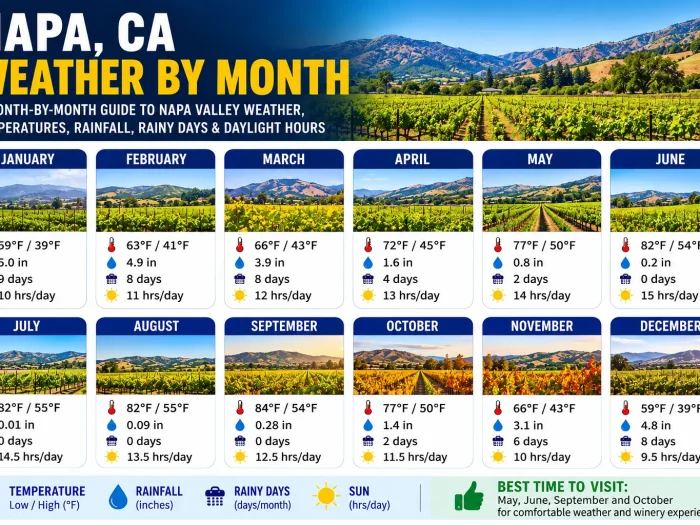
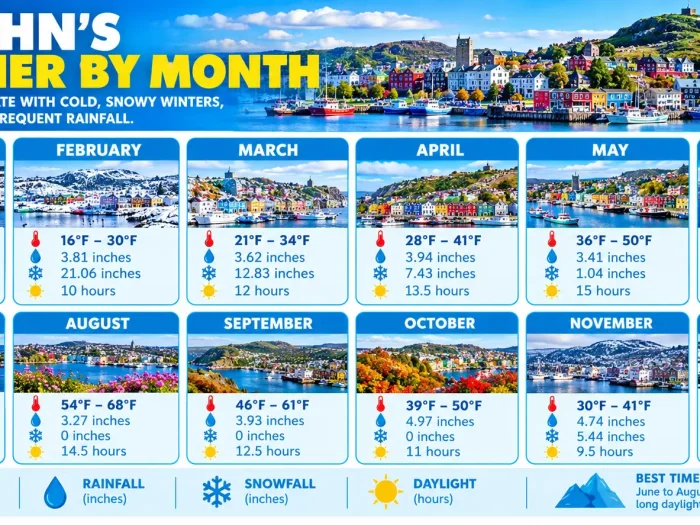
You can click the image below to view the full-size weather chart for Napa Valley.

January – Cool and Wet Winter Weather
Average high: 55°F (13°C)
Average low: 36°F (2°C)
Rainfall: 5.43 inches
Rainy days: 8
Snowfall: None recorded
Daylight: 10 hours
January is one of the coolest and wettest months in Napa Valley. Average daytime temperatures reach about 55°F, while nighttime temperatures can fall to around 36°F.
Rainfall is significant at approximately 5.43 inches, with about 8 rainy days during the month. The relatively short 10 hours of daylight and cool temperatures give January a distinctly winter-like feel.
Best for:
- Wine tasting without summer crowds
- Cozy winery visits
- Scenic winter landscapes
- Quiet Napa Valley getaways
February – Cool, Rainy, and Green
Average high: 61°F (16°C)
Average low: 37°F (3°C)
Rainfall: 5.65 inches
Rainy days: 7
Snowfall: None recorded
Daylight: 11 hours
February remains cool and wet in Napa Valley and is the wettest month in the supplied data. Average highs reach about 61°F, while lows stay around 37°F.
With approximately 5.65 inches of rainfall and 7 rainy days, visitors should expect occasional wet weather. However, the longer daylight hours make February a little more comfortable for exploring the valley.
Best for:
- Wine tasting
- Green vineyard scenery
- Fewer tourists
- Relaxing weekend trips
March – Mild Temperatures and Spring Rain
Average high: 64°F (18°C)
Average low: 39°F (4°C)
Rainfall: 4.39 inches
Rainy days: 8
Snowfall: None recorded
Daylight: 12 hours
March brings noticeably milder weather to Napa Valley. Average daytime temperatures rise to about 64°F, while nighttime temperatures average around 39°F.
Rainfall remains fairly high at 4.39 inches, with about 8 rainy days. At the same time, daylight increases to approximately 12 hours, creating more opportunities for outdoor activities.
Best for:
- Spring vineyard scenery
- Wine tasting
- Scenic drives
- Outdoor walks on warmer days
April – Mild and Increasingly Dry
Average high: 70°F (21°C)
Average low: 43°F (6°C)
Rainfall: 1.54 inches
Rainy days: 4
Snowfall: None recorded
Daylight: 13 hours
April marks a transition toward the warmer and drier part of the year. Average highs reach around 70°F, while lows are about 43°F.
Rainfall drops sharply to approximately 1.54 inches, with only 4 rainy days. With 13 hours of daylight, April is an excellent month for exploring Napa Valley’s wineries, vineyards, and outdoor attractions.
Best for:
- Vineyard visits
- Outdoor dining
- Scenic drives
- Hiking and walking
May – Warm, Comfortable, and Mostly Dry
Average high: 79°F (26°C)
Average low: 48°F (9°C)
Rainfall: 0.81 inches
Rainy days: 2
Snowfall: None recorded
Daylight: 14 hours
May brings warm and comfortable weather to Napa Valley. Average daytime temperatures climb to about 79°F, while nighttime temperatures remain mild at around 48°F.
Rainfall decreases to just 0.81 inches, with approximately 2 rainy days. With 14 hours of daylight, May is one of the best months for enjoying outdoor activities throughout the valley.
Best for:
- Winery tours
- Outdoor dining
- Vineyard photography
- Hiking
- Weekend trips
June – Warm, Sunny, and Very Dry
Average high: 88°F (31°C)
Average low: 54°F (12°C)
Rainfall: 0.15 inches
Rainy days: 0
Snowfall: None recorded
Daylight: 15 hours
June marks the beginning of Napa Valley’s hot, dry summer season. Average highs reach about 88°F, while nighttime temperatures average around 54°F.
Rainfall is almost nonexistent at only 0.15 inches, and the supplied data records no rainy days. With approximately 15 hours of daylight, June offers long, sunny days for exploring the valley.
Best for:
- Winery tours
- Outdoor activities
- Vineyard views
- Long scenic drives
- Outdoor dining
July – Hot and Extremely Dry
Average high: 93°F (34°C)
Average low: 55°F (13°C)
Rainfall: 0.01 inches
Rainy days: 0
Snowfall: None recorded
Daylight: 14.5 hours
July is one of the hottest months in Napa Valley, with average daytime temperatures reaching about 93°F. Nighttime temperatures are considerably cooler at around 55°F.
Rainfall is virtually nonexistent, at just 0.01 inches, and no rainy days are recorded. Despite the heat, approximately 14.5 hours of daylight provide plenty of time for sightseeing and vineyard visits.
Best for:
- Wine tasting
- Vineyard tours
- Early-morning outdoor activities
- Summer vacations
- Poolside relaxation
August – Hot, Dry, and Sunny
Average high: 93°F (34°C)
Average low: 55°F (13°C)
Rainfall: 0.05 inches
Rainy days: 0
Snowfall: None recorded
Daylight: 13.5 hours
August is just as warm as July, with an average high of about 93°F and an average low of 55°F. It is also one of the driest months of the year.
The supplied data shows only 0.05 inches of rainfall and no rainy days. With around 13.5 hours of daylight, August is ideal for summer activities, although the hottest part of the afternoon can be quite warm.
Best for:
- Wine tasting
- Vineyard tours
- Summer events
- Outdoor dining
- Early-morning sightseeing
September – Warm and Dry Early Fall Weather
Average high: 88°F (31°C)
Average low: 52°F (11°C)
Rainfall: 0.25 inches
Rainy days: 1
Snowfall: None recorded
Daylight: 12.5 hours
September brings slightly cooler temperatures while maintaining the dry conditions of summer. Average highs reach about 88°F, with nighttime temperatures around 52°F.
Rainfall remains very low at approximately 0.25 inches, with only 1 rainy day. Daylight decreases to about 12.5 hours, but there is still plenty of sunshine for exploring Napa Valley.
Best for:
- Vineyard visits
- Wine tasting
- Harvest-season experiences
- Outdoor dining
- Scenic drives
October – Warm Days and Cooler Nights
Average high: 79°F (26°C)
Average low: 46°F (8°C)
Rainfall: 1.27 inches
Rainy days: 2
Snowfall: None recorded
Daylight: 11.5 hours
October is a pleasant month in Napa Valley, with warm afternoons and cooler evenings. Average daytime temperatures reach about 79°F, while nighttime temperatures fall to around 46°F.
Rainfall increases to approximately 1.27 inches, but there are only about 2 rainy days. The combination of comfortable temperatures and autumn scenery makes October an attractive time to visit.
Best for:
- Fall vineyard scenery
- Wine tasting
- Harvest experiences
- Scenic drives
- Outdoor activities
November – Cooler and Wetter Fall Weather
Average high: 64°F (18°C)
Average low: 39°F (4°C)
Rainfall: 2.72 inches
Rainy days: 5
Snowfall: None recorded
Daylight: 10 hours
November brings cooler temperatures and a noticeable increase in rainfall. Average highs are around 64°F, while nighttime temperatures average about 39°F.
Rainfall reaches approximately 2.72 inches, with around 5 rainy days. Daylight falls to about 10 hours, so visitors should plan outdoor activities earlier in the day.
Best for:
- Wine tasting
- Fall scenery
- Indoor winery experiences
- Quiet weekend trips
- Scenic drives
December – Cool, Rainy, and Short Winter Days
Average high: 55°F (13°C)
Average low: 36°F (2°C)
Rainfall: 4.99 inches
Rainy days: 8
Snowfall: None recorded
Daylight: 9.5 hours
December marks the return of cool and wet winter weather in Napa Valley. Average highs are around 55°F, while nighttime temperatures drop to about 36°F.
Rainfall is substantial at approximately 4.99 inches, with about 8 rainy days. December also has the shortest daylight of the year, at approximately 9.5 hours.
Snowfall is not recorded in the supplied data, so winter precipitation in Napa Valley generally comes as rain rather than snow.
Best for:
- Winter wine tasting
- Holiday events
- Cozy winery visits
- Quiet getaways
- Scenic winter landscapes
Napa Valley Weather by Month at a Glance
| Month | Avg High | Avg Low | Rainfall | Rainy Days | Daylight |
|---|---|---|---|---|---|
| January | 55°F | 36°F | 5.43 in | 8 | 10 hrs |
| February | 61°F | 37°F | 5.65 in | 7 | 11 hrs |
| March | 64°F | 39°F | 4.39 in | 8 | 12 hrs |
| April | 70°F | 43°F | 1.54 in | 4 | 13 hrs |
| May | 79°F | 48°F | 0.81 in | 2 | 14 hrs |
| June | 88°F | 54°F | 0.15 in | 0 | 15 hrs |
| July | 93°F | 55°F | 0.01 in | 0 | 14.5 hrs |
| August | 93°F | 55°F | 0.05 in | 0 | 13.5 hrs |
| September | 88°F | 52°F | 0.25 in | 1 | 12.5 hrs |
| October | 79°F | 46°F | 1.27 in | 2 | 11.5 hrs |
| November | 64°F | 39°F | 2.72 in | 5 | 10 hrs |
| December | 55°F | 36°F | 4.99 in | 8 | 9.5 hrs |
Best Time to Visit Napa Valley
The best time to visit Napa Valley depends on what you want to do. April through May offers mild temperatures, increasing daylight, and relatively little rainfall. June through September is the warmest and driest period, making it excellent for outdoor activities and vineyard visits, although July and August can be quite hot.
September and October are especially appealing for visitors interested in vineyards and harvest-season experiences. For fewer crowds and a quieter atmosphere, the cooler winter months can also be a good choice, particularly for wine tasting and indoor activities.
20 FAQs About Napa Valley Weather
1. What is the weather like in Napa Valley?
Napa Valley has a Mediterranean climate with cool, wet winters and warm, dry summers. Rain is concentrated mainly between late fall and early spring, while summer is typically sunny and very dry.
2. What is the best month to visit Napa Valley for good weather?
May through October generally offers the best combination of warm temperatures, sunshine, and low rainfall. September and October are particularly popular because of warm weather and the harvest season.
3. What is the hottest month in Napa Valley?
July and August are among the hottest months. Based on the data you provided, average highs reach about 93°F (34°C) in both months.
4. What is the coldest month in Napa Valley?
January and December are among the coolest months. In the supplied data, January has an average high of 55°F (13°C) and an average low of 36°F (2°C).
5. Does it snow in Napa Valley?
Snow is extremely uncommon on the valley floor, and no snowfall is recorded in the supplied data. Higher elevations around Napa Valley can occasionally receive snow or a light dusting.
6. Does it rain a lot in Napa Valley?
Rain is highly seasonal. Most rainfall occurs during the winter months, while summer is extremely dry. The supplied data shows February as the wettest month, with about 5.65 inches of rainfall.
7. What is the rainiest month in Napa Valley?
Based on the data you provided, February is the rainiest month, receiving approximately 5.65 inches of rainfall and around 7 rainy days.
8. What is the driest month in Napa Valley?
July is the driest month in the supplied data, with only 0.01 inches of rainfall and no recorded rainy days. Other summer months are also exceptionally dry.
9. How hot does Napa Valley get in summer?
Summer can be quite hot, particularly in July and August. Average highs in your data reach 93°F (34°C), although actual temperatures can occasionally exceed 100°F during heat events.
10. Is Napa Valley warm in the winter?
Napa Valley winters are relatively mild compared with many parts of the United States. Average daytime temperatures are generally in the 50s and low 60s°F, although nights can fall into the 30s.
11. What is Napa Valley weather like in spring?
Spring is generally mild and increasingly dry. March can still be fairly wet, but rainfall decreases significantly in April and May. Temperatures typically become warmer, making spring a popular time for outdoor activities and vineyard visits.
12. What is Napa Valley weather like in summer?
Summer is warm, sunny, and very dry. June through August have very little rainfall, long daylight hours, and average highs that can reach the upper 80s to low 90s°F.
13. What is Napa Valley weather like in fall?
Fall is warm and mostly dry, especially in September and early October. It is also harvest season, making September and October especially popular times to visit Napa Valley.
14. What is Napa Valley weather like in December?
December is cool and relatively wet. In the supplied data, the average high is 55°F (13°C), the average low is 36°F (2°C), and rainfall is about 4.99 inches.
15. What month has the most sunshine in Napa Valley?
The summer months generally have the clearest skies. July has about 14.5 hours of daylight in the supplied data, while June has approximately 15 hours, the highest monthly daylight figure shown.
16. Are Napa Valley evenings cold?
Evenings can be noticeably cooler than afternoons. Napa Valley can experience substantial day-to-night temperature changes, so bringing layers is recommended even during summer.
17. Is Napa Valley hotter than San Francisco?
Yes, Napa Valley is generally warmer than San Francisco, particularly during summer. San Francisco’s marine influence and frequent fog keep temperatures considerably cooler, while Napa Valley can become quite hot inland.
18. What month is best for wine tasting in Napa Valley?
There is no single best month, but May, September, and October are excellent choices. May offers comfortable spring weather, while September and October combine pleasant temperatures with the excitement of grape harvest.
19. What should I wear in Napa Valley?
Layers are a good choice year-round. Summer visitors should bring light clothing for warm afternoons and a sweater or jacket for cooler evenings. During the rainy season, a rain jacket or umbrella is useful.
20. What is the best time of year to visit Napa Valley?
For a combination of comfortable weather and outdoor activities, spring and fall are excellent choices. Summer is best if you prefer hot, sunny weather, while winter can be attractive for travelers looking for fewer crowds and a quieter wine-country experience.
Read more: