Beyond the Park Boundary: Why Private Texas Land Matters for Wildlife
When people think about wildlife conservation in Texas, places like Big Bend National Park and Guadalupe Mountains National Park naturally come to mind.
They deserve the attention.
Big Bend protects more than 800,000 acres of Chihuahuan Desert, mountains, canyons and Rio Grande habitat. Guadalupe Mountains National Park preserves another remarkable landscape of desert, canyon and high-elevation habitat, including Guadalupe Peak, the highest point in Texas.
But there is an unusual fact about conservation in Texas that becomes obvious as soon as you look beyond the boundaries of its national parks:
Most of Texas is private property.
Texas Parks and Wildlife Department estimates that more than 93 percent of the state is privately owned. That means the fate of wildlife habitat across much of Texas depends not only on national parks, state parks and wildlife refuges, but also on millions of acres of privately owned ranches, farms and rural properties.
For travelers who visit Texas to see its wildlife and wild landscapes, understanding that relationship adds another dimension to the experience.
National Parks Protect Islands Within Much Larger Landscapes
A national park boundary is meaningful to people.
It means a change in ownership, management and legal protection. There may be an entrance station, a sign and a line on a map.
Wildlife does not see that line.
Animals move in response to food, water, temperature, breeding opportunities, drought and seasonal conditions. Birds may cross enormous distances. Mammals move between feeding and shelter areas. Pollinators use connected patches of flowering vegetation. Water flowing through a watershed may cross numerous properties before reaching protected land.
That makes national parks part of a much larger ecological landscape.
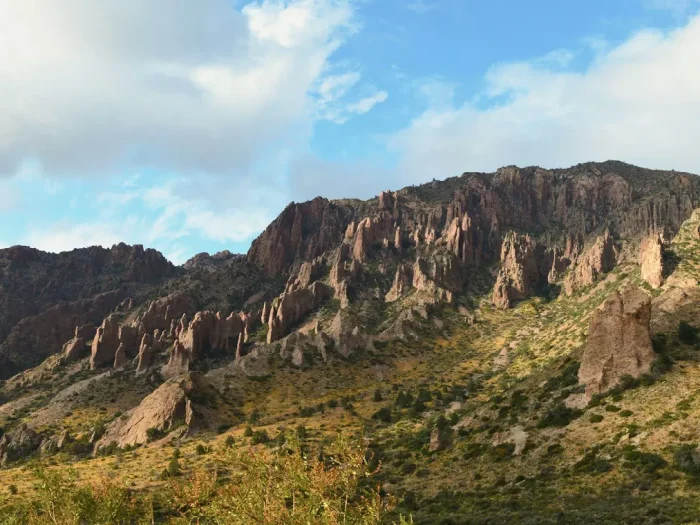
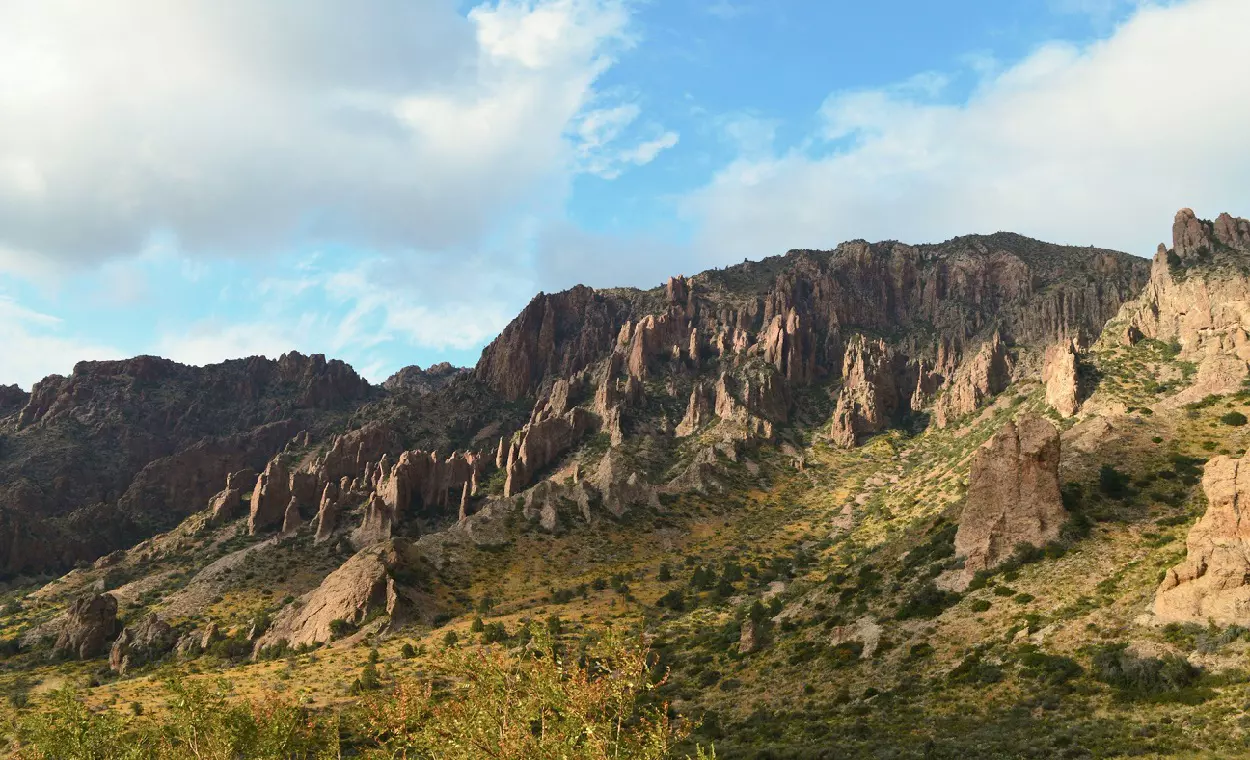
Big Bend is an especially dramatic example. Within the park, visitors can move from desert lowlands to the comparatively lush Chisos Mountains and the ribbon of habitat along the Rio Grande. More than 450 species of birds have been documented in the park, along with dozens of mammal, reptile and amphibian species.
Yet the ecosystems represented inside Big Bend do not suddenly end at the park boundary.
The surrounding Trans-Pecos region contains enormous areas of privately owned ranchland and other working landscapes. What happens on those lands can therefore matter to the broader ecological health of West Texas.
Texas Is Different From Many Western States
Visitors accustomed to traveling through western states sometimes underestimate just how much Texas land is privately owned.
In states with huge areas of federal public land, it is possible to travel for hours through national forests, Bureau of Land Management property and other publicly accessible landscapes.
Texas developed differently.
Most of the state’s countryside is privately held, including enormous areas of rangeland, forest, prairie, brush country and river habitat.
That creates an unusual conservation model.
Instead of relying primarily on governments purchasing and protecting habitat, Texas has long depended heavily on voluntary stewardship by private landowners.
Texas Parks and Wildlife Department provides technical guidance to landowners specifically because private property contains such a large share of the state’s wildlife habitat.
For wildlife conservation at the scale of an entire state, those individual management decisions add up.
What Does Wildlife Management on Private Land Actually Look Like?
The phrase “wildlife management” can sound more complicated than it usually is.
Much of it consists of practical land-management work.
A landowner might selectively remove dense or invasive brush while preserving native plants that provide food and shelter. Another might restore native grasses, stabilize an eroding drainage or improve the condition of a creek corridor.
Water can be particularly important in Texas. Ponds, springs, wildlife water systems and even properly managed livestock troughs can provide dependable water during dry periods.
Other landowners improve nesting or escape cover, manage food resources, conduct prescribed burns, control certain predators where appropriate or simply monitor wildlife populations with cameras and surveys.
The objective is not necessarily to turn working ranchland into untouched wilderness.
Often it is the opposite.
Well-managed working land can simultaneously produce agricultural value and provide useful wildlife habitat.
Texas Even Incorporates Wildlife Management Into Its Agricultural Land System
Texas has an unusual incentive for certain rural landowners who want to manage qualifying land primarily for wildlife.
Land already qualifying for the state’s 1-d-1 open-space agricultural appraisal can, under the applicable requirements, be managed for wildlife while retaining that form of agricultural property-tax appraisal.
This is commonly described as wildlife management valuation in Texas.
The system does not simply reward an owner for having deer or birds on the property. Qualifying land must be actively managed according to the state’s requirements, using recognized practices such as habitat control, erosion control, supplemental water, supplemental food, supplemental shelter, predator management or wildlife population counts.
The broader significance is easy to miss.
Texas has effectively created an economic mechanism that can encourage private landowners to actively maintain habitat on land that might otherwise be managed solely for conventional agricultural production.
In a state dominated by private ownership, incentives like that can operate across landscapes far larger than any individual park.
Private Ranches Can Preserve Habitat Without Becoming Parks
Conservation does not always require public acquisition.
A working cattle ranch can retain large areas of native vegetation.
A hunting property can maintain brush and water specifically because healthy wildlife populations have economic value.
A family property can protect a creek corridor while continuing to graze livestock elsewhere.
Landowners can also use conservation easements, cost-sharing programs and technical assistance to protect or improve habitat while keeping land privately owned.
These approaches are particularly relevant in Texas because converting every environmentally valuable property into public land would be neither realistic nor necessary.
The more practical objective is often to keep large working landscapes intact and encourage management that preserves their ecological value.
Fragmentation May Be as Important as Acreage
One of the greatest challenges facing Texas wildlife is not always the outright disappearance of open land.
It is fragmentation.
A large ranch may eventually be divided into smaller properties. Roads, fencing, housing and other development follow. Native vegetation can be replaced by lawns or heavily cleared acreage. Water patterns change. Continuous habitat becomes a collection of isolated patches.
A single subdivision may seem insignificant when viewed on a statewide map.
Repeated thousands of times, however, the cumulative effect can reshape a landscape.
That makes stewardship increasingly important even on relatively small rural properties.
A 20-acre property will never function like a 20,000-acre ranch. But maintaining native vegetation, protecting drainages, limiting unnecessary clearing and preserving connections with neighboring habitat can still make the property more useful to wildlife.
Travelers See the Results Even If They Never Realize It
This private-land conservation system matters to people who may never own an acre in Texas.
Anyone driving toward Big Bend has experienced it.
The national park may be the destination, but the journey crosses hundreds of miles of ranches, desert, grassland and mountain country before reaching the entrance.
Wildlife seen along the way does not belong exclusively to the park.
The same principle applies elsewhere in Texas. Birds watched from a state park may spend part of the year on private property. Deer routinely use mixed landscapes. Pollinators and migratory species depend on habitat spread across countless ownership boundaries.
Public protected lands provide essential anchors.
Private lands provide much of the landscape connecting them.
The Texas Conservation Model Is Ultimately a Partnership
National parks preserve some of America’s most extraordinary landscapes precisely because certain places deserve exceptional protection.
Texas is fortunate to have Big Bend and Guadalupe Mountains National Park.
But those parks tell only part of the state’s conservation story.
With the overwhelming majority of Texas privately owned, the future of wildlife habitat also depends on farmers, ranchers and rural landowners making thousands of smaller decisions every year:
What gets cleared?
What gets planted?
Where does water remain available?
Which creek corridors are protected?
How is erosion controlled?
Does a large tract remain intact?
None of those decisions is as visually dramatic as establishing a national park.
Collectively, however, they influence millions of acres.
And in Texas, conserving wildlife at meaningful scale requires both: extraordinary protected places such as Big Bend and Guadalupe Mountains, and healthy working landscapes extending far beyond the park boundary.