Salt Lake City Weather by Month
Salt Lake City experiences four distinct seasons, with cold, snowy winters and hot, dry summers. Winter brings the most snowfall, especially from December through February, while July and August are the warmest months. Rainfall is relatively light throughout the year, and daylight hours range from about 9.5 hours in winter to 15 hours in early summer.
Salt Lake City Weather by Month
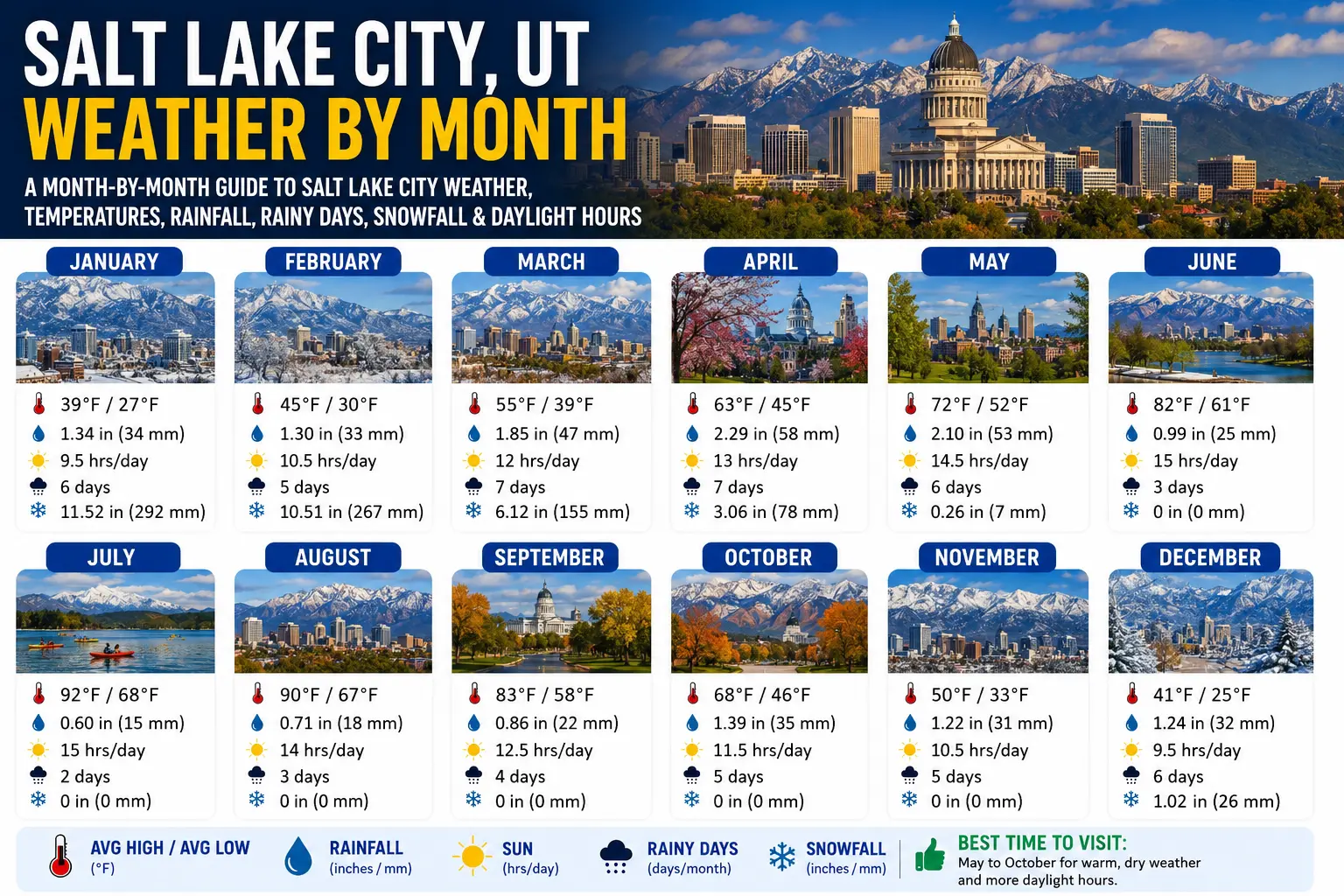
You can click the image below to view the full-size weather chart for Salt Lake City.
January – Cold Winter Days and Heavy Snowfall
Average high: 39°F (4°C)
Average low: 27°F (-3°C)
Rainfall: 1.34 inches
Rainy days: 6
Snowfall: 11.52 inches
Daylight: 9.5 hours
January is one of the coldest months in Salt Lake City, with daytime temperatures averaging around 39°F and nighttime temperatures dropping to about 27°F. Freezing conditions are common, particularly during the morning and overnight hours.
Snowfall is especially significant, averaging about 11.52 inches. With around six days of precipitation, January often brings a combination of snow and occasional rain.
The short daylight hours and snowy conditions make January a good month for winter activities in the nearby mountains.
Best for:
- Skiing and snowboarding
- Winter scenery
- Snow activities
- Indoor attractions
February – Cold Temperatures and Frequent Snow
Average high: 45°F (7°C)
Average low: 30°F (-1°C)
Rainfall: 1.30 inches
Rainy days: 5
Snowfall: 10.51 inches
Daylight: 10.5 hours
February remains firmly in winter, although temperatures begin to rise slightly compared with January. Average highs reach about 45°F, while lows remain near 30°F.
Snowfall remains heavy at approximately 10.51 inches, making February one of the best months for experiencing a snowy Salt Lake City winter. Precipitation occurs on about five days during the month.
Daylight increases to roughly 10.5 hours, giving visitors more time to enjoy outdoor activities.
Best for:
- Ski trips
- Snowboarding
- Winter photography
- Mountain getaways
March – Cool Spring Days and Lingering Snow
Average high: 55°F (13°C)
Average low: 39°F (4°C)
Rainfall: 1.85 inches
Rainy days: 7
Snowfall: 6.12 inches
Daylight: 12 hours
March marks the transition from winter to spring in Salt Lake City. Temperatures become noticeably milder, with average highs around 55°F and lows near 39°F.
Snowfall decreases to about 6.12 inches, but winter conditions can still occur, particularly in the surrounding mountains. March is also one of the wetter months, with about 1.85 inches of rainfall and seven rainy days.
With approximately 12 hours of daylight, outdoor sightseeing becomes increasingly comfortable.
Best for:
- Late-season skiing
- Scenic drives
- Early spring sightseeing
- Mountain photography
April – Mild Spring Weather and Occasional Snow
Average high: 63°F (17°C)
Average low: 45°F (7°C)
Rainfall: 2.29 inches
Rainy days: 7
Snowfall: 3.06 inches
Daylight: 13 hours
April brings noticeably warmer spring weather to Salt Lake City. Average daytime temperatures reach about 63°F, while nighttime temperatures remain cool at around 45°F.
Rainfall increases to approximately 2.29 inches, making April the wettest month in the supplied data. Snowfall falls considerably to about 3.06 inches, although occasional snow remains possible.
Longer days and milder temperatures make April a pleasant time for exploring the city and nearby outdoor attractions.
Best for:
- Spring sightseeing
- Parks and gardens
- Hiking on lower-elevation trails
- City exploration
May – Pleasant Spring Days and Minimal Snow
Average high: 72°F (22°C)
Average low: 52°F (11°C)
Rainfall: 2.10 inches
Rainy days: 6
Snowfall: 0.26 inches
Daylight: 14.5 hours
May is one of the most comfortable months in Salt Lake City. Average highs reach about 72°F, while lows are generally around 52°F.
Snowfall is almost nonexistent, with only about 0.26 inches recorded in the supplied data. Rainfall remains moderate at around 2.10 inches across six rainy days.
With 14.5 hours of daylight, May provides plenty of time for hiking, sightseeing, and exploring the city’s parks and surrounding mountains.
Best for:
- Hiking
- Outdoor sightseeing
- Parks and gardens
- Family trips
June – Warm Summer Weather and Dry Conditions
Average high: 82°F (28°C)
Average low: 61°F (16°C)
Rainfall: 0.99 inches
Rainy days: 3
Snowfall: 0 inches
Daylight: 15 hours
June brings warm summer weather to Salt Lake City, with average highs around 82°F and lows near 61°F. Snowfall disappears completely, and rainfall drops to less than one inch.
Only about three rainy days are recorded, making June one of the drier months of the year. With approximately 15 hours of daylight, visitors have long days for exploring the city and surrounding landscapes.
Best for:
- Hiking
- Outdoor adventures
- Mountain trips
- Long sightseeing days
July – Hot Summer Days and Very Dry Weather
Average high: 90°F (32°C)
Average low: 68°F (20°C)
Rainfall: 0.58 inches
Rainy days: 2
Snowfall: 0 inches
Daylight: 15 hours
July is the hottest month in Salt Lake City, with average daytime temperatures reaching about 90°F. Overnight temperatures remain relatively warm at around 68°F.
Rainfall is very low at only 0.58 inches, with approximately two rainy days. There is no snowfall, and the long 15-hour days provide excellent opportunities for outdoor activities.
Because afternoon temperatures can be hot, early morning and evening are often the most comfortable times for hiking and sightseeing.
Best for:
- Summer vacations
- Mountain activities
- Early-morning hiking
- Evening sightseeing
August – Hot Days and Dry Summer Weather
Average high: 90°F (32°C)
Average low: 68°F (20°C)
Rainfall: 0.57 inches
Rainy days: 2
Snowfall: 0 inches
Daylight: 14 hours
August is just as warm as July, with average highs of about 90°F and lows around 68°F. The month remains extremely dry, with only about 0.57 inches of rainfall and two rainy days.
Snowfall is nonexistent, while daylight remains generous at around 14 hours. The combination of hot temperatures and dry weather makes August ideal for outdoor adventures, although visitors should plan activities around the hottest part of the afternoon.
Best for:
- Hiking
- Mountain sightseeing
- Outdoor recreation
- Evening activities
September – Warm Days and Cooler Evenings
Average high: 79°F (26°C)
Average low: 57°F (14°C)
Rainfall: 1.06 inches
Rainy days: 3
Snowfall: 0.004 inches
Daylight: 12.5 hours
September brings a welcome decrease in temperatures after the heat of summer. Average highs fall to around 79°F, while nighttime temperatures drop to approximately 57°F.
Rainfall increases slightly to about 1.06 inches, but conditions remain relatively dry. Snowfall is virtually nonexistent, at only about 0.004 inches in the supplied data.
With 12.5 hours of daylight, September offers a comfortable balance of warm temperatures and cooler evenings.
Best for:
- Hiking
- Scenic drives
- Fall sightseeing
- Outdoor photography
October – Cool Autumn Weather and Light Snowfall
Average high: 66°F (19°C)
Average low: 46°F (8°C)
Rainfall: 1.34 inches
Rainy days: 4
Snowfall: 0.65 inches
Daylight: 11 hours
October brings classic autumn weather to Salt Lake City. Average highs fall to about 66°F, while lows reach around 46°F.
Rainfall averages approximately 1.34 inches across four rainy days. Snowfall begins to return, although the monthly average remains low at about 0.65 inches.
The cooler temperatures and shorter days make October a pleasant month for exploring the city, enjoying fall scenery, and taking trips into the surrounding mountains.
Best for:
- Fall foliage
- Hiking
- Scenic drives
- Outdoor photography
November – Cool Days and Increasing Snowfall
Average high: 52°F (11°C)
Average low: 36°F (2°C)
Rainfall: 1.48 inches
Rainy days: 5
Snowfall: 6.48 inches
Daylight: 10 hours
November marks the return of more substantial winter conditions. Average highs are around 52°F, while nighttime temperatures fall to approximately 36°F.
Snowfall increases sharply to about 6.48 inches, making winter weather increasingly common. Rainfall is around 1.48 inches across five rainy days.
With only about 10 hours of daylight, November is a good time to enjoy a mix of indoor city attractions and early-season mountain activities.
Best for:
- Early winter trips
- Mountain scenery
- Museums
- Indoor attractions
December – Cold Winter Weather and Heavy Snowfall
Average high: 39°F (4°C)
Average low: 27°F (-3°C)
Rainfall: 1.21 inches
Rainy days: 6
Snowfall: 10.12 inches
Daylight: 9.5 hours
December brings cold winter conditions back to Salt Lake City. Average highs are around 39°F, while lows fall to about 27°F.
Snowfall averages approximately 10.12 inches, making December one of the snowiest months of the year. Rainfall is relatively modest at about 1.21 inches, with precipitation occurring on roughly six days.
Daylight is limited to around 9.5 hours, but the snowy landscape and nearby ski resorts make December a popular month for winter recreation.
Best for:
- Skiing and snowboarding
- Winter scenery
- Holiday travel
- Snow photography
Salt Lake City Weather by Month: Quick Overview
| Month | Avg High | Avg Low | Rainfall | Rainy Days | Snowfall | Daylight |
|---|---|---|---|---|---|---|
| January | 39°F (4°C) | 27°F (-3°C) | 1.34 in | 6 | 11.52 in | 9.5 hrs |
| February | 45°F (7°C) | 30°F (-1°C) | 1.30 in | 5 | 10.51 in | 10.5 hrs |
| March | 55°F (13°C) | 39°F (4°C) | 1.85 in | 7 | 6.12 in | 12 hrs |
| April | 63°F (17°C) | 45°F (7°C) | 2.29 in | 7 | 3.06 in | 13 hrs |
| May | 72°F (22°C) | 52°F (11°C) | 2.10 in | 6 | 0.26 in | 14.5 hrs |
| June | 82°F (28°C) | 61°F (16°C) | 0.99 in | 3 | 0 in | 15 hrs |
| July | 90°F (32°C) | 68°F (20°C) | 0.58 in | 2 | 0 in | 15 hrs |
| August | 90°F (32°C) | 68°F (20°C) | 0.57 in | 2 | 0 in | 14 hrs |
| September | 79°F (26°C) | 57°F (14°C) | 1.06 in | 3 | 0.004 in | 12.5 hrs |
| October | 66°F (19°C) | 46°F (8°C) | 1.34 in | 4 | 0.65 in | 11 hrs |
| November | 52°F (11°C) | 36°F (2°C) | 1.48 in | 5 | 6.48 in | 10 hrs |
| December | 39°F (4°C) | 27°F (-3°C) | 1.21 in | 6 | 10.12 in | 9.5 hrs |
When Is the Best Time to Visit Salt Lake City?
The best time to visit Salt Lake City depends on the type of trip you want. May through June and September through October offer some of the most comfortable temperatures for sightseeing, hiking, and exploring the outdoors.
For skiing and snow activities, December through February are the strongest choices because snowfall is substantially higher during these months. January and February receive the most snow in the supplied data.
If you prefer hot, dry summer weather, July and August are the warmest months, with average highs around 90°F. However, these months have very little rainfall, so visitors planning outdoor activities should be prepared for hot and dry conditions.
20 FAQs About Salt Lake City Weather
1. What is the weather like in Salt Lake City throughout the year?
Salt Lake City has four distinct seasons. Winters are cold and snowy, spring is mild and wetter, summers are hot and dry, and autumn brings cooler temperatures with occasional early snow.
2. What is the coldest month in Salt Lake City?
January is one of the coldest months, with an average high of about 39°F (4°C) and an average low of 27°F (-3°C).
3. What is the hottest month in Salt Lake City?
July and August are the hottest months, with average highs of around 90°F (32°C). Average nighttime lows are approximately 68°F (20°C).
4. Does it snow in Salt Lake City?
Yes. Snow is common during winter. Based on the supplied data, January averages about 11.52 inches of snow, while February averages around 10.51 inches.
5. What month gets the most snow in Salt Lake City?
January receives the most snowfall in the supplied climate data, averaging approximately 11.52 inches.
6. Does it snow in Salt Lake City in December?
Yes. December is one of the snowiest months, with approximately 10.12 inches of average snowfall in the supplied data.
7. When does snow season start in Salt Lake City?
Snowfall typically begins returning in autumn. October has only about 0.65 inches of average snowfall in the supplied data, while November increases significantly to approximately 6.48 inches.
8. Does Salt Lake City get snow in April?
Yes, but snowfall is much less common than during winter. April averages approximately 3.06 inches of snowfall in the supplied data.
9. What is Salt Lake City like in summer?
Summer is generally hot and dry. June has an average high of 82°F, while July and August reach about 90°F. Rainfall is particularly low during July and August.
10. Is Salt Lake City rainy?
Salt Lake City is relatively dry compared with many U.S. cities. Rainfall varies by month, with April receiving about 2.29 inches, the highest monthly rainfall in the supplied data.
11. What is the rainiest month in Salt Lake City?
April is the rainiest month in the supplied data, averaging approximately 2.29 inches of rainfall across about seven rainy days.
12. How much rain does Salt Lake City get in summer?
Summer rainfall is relatively low. June averages about 0.99 inches, July about 0.58 inches, and August about 0.57 inches.
13. What is Salt Lake City weather like in January?
January is cold and snowy, with an average high of 39°F (4°C) and an average low of 27°F (-3°C). It also receives approximately 11.52 inches of snowfall.
14. What is Salt Lake City weather like in July?
July is hot and very dry. Average temperatures range from about 68°F (20°C) at night to 90°F (32°C) during the day. Snowfall is nonexistent, and rainfall averages only about 0.58 inches.
15. What is Salt Lake City weather like in October?
October brings cool autumn weather, with an average high of 66°F (19°C) and a low of 46°F (8°C). Snowfall begins to return, averaging about 0.65 inches.
16. What is the best month to visit Salt Lake City for comfortable weather?
May, June, September, and October are generally among the most comfortable months for sightseeing and outdoor activities, offering milder temperatures than the peak of summer or winter.
17. What is the best month to visit Salt Lake City for skiing?
January and February are excellent choices for skiing because they have some of the highest snowfall totals in the supplied climate data. December is also a strong option for winter activities.
18. When is the best time to hike around Salt Lake City?
Late spring through early autumn is generally best for hiking. May, June, September, and October offer a good balance of comfortable temperatures and longer daylight hours.
19. How much daylight does Salt Lake City get in summer?
Salt Lake City gets very long summer days. June and July have about 15 hours of daylight, while August has around 14 hours.
20. What month has the least rainfall in Salt Lake City?
August has the least rainfall in the supplied data, with approximately 0.57 inches. July is very similar at about 0.58 inches, making both months particularly dry.
Read more: