Maui Weather by Month
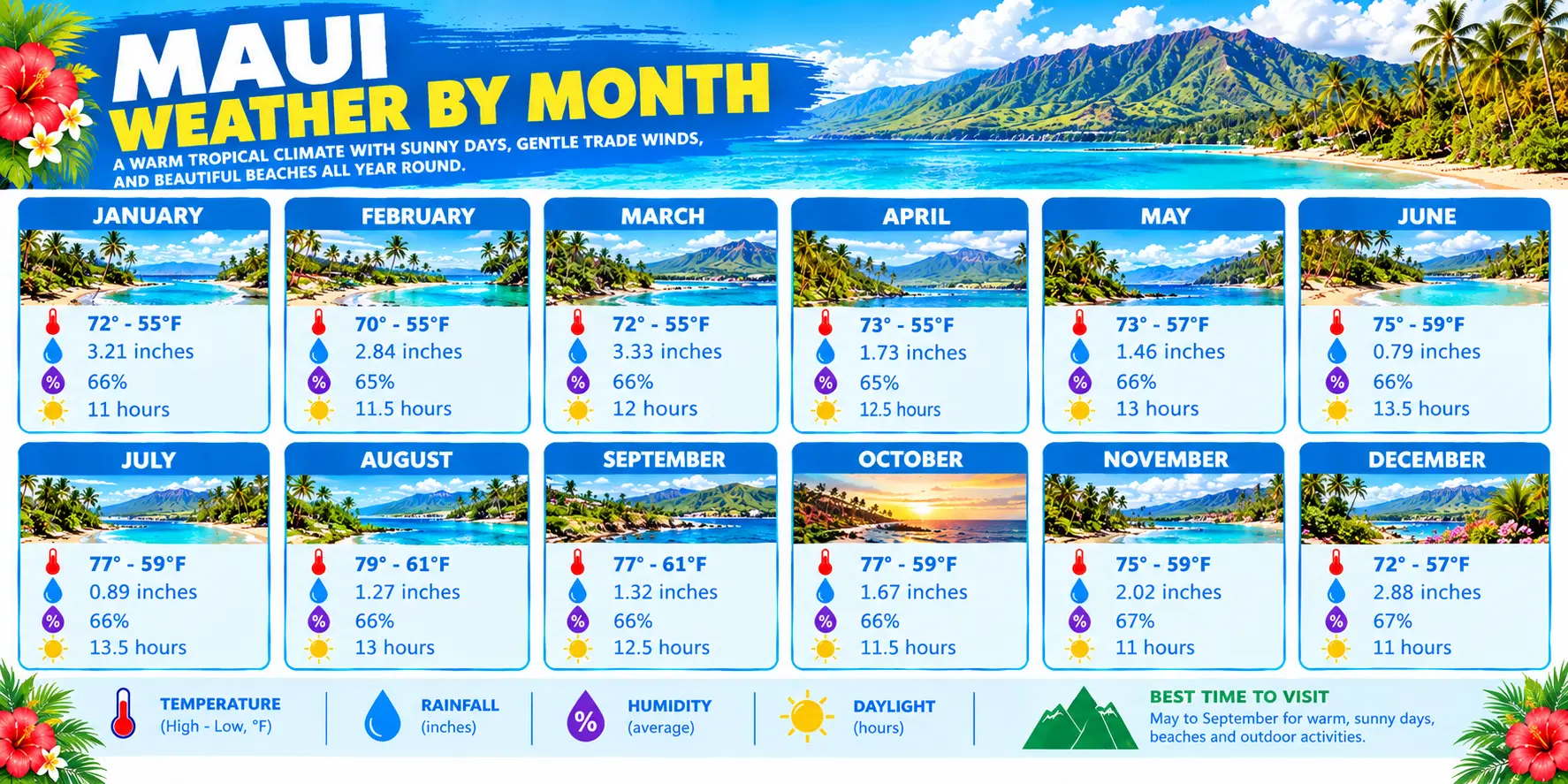
Maui has a warm tropical climate throughout the year, with relatively small seasonal changes in temperature. Average daytime highs range from 70°F to 79°F (21°C to 26°C), while nighttime lows generally stay between 55°F and 61°F (13°C and 16°C).
Humidity remains fairly consistent throughout the year, generally around 65%–67% in the climate data used here. Rainfall varies more noticeably, with wetter conditions from winter into early spring and drier weather during the summer months. Daylight ranges from about 11 hours in winter to 13.5 hours in June and July.
Maui Weather by Month
You can click the image below to view the full-size weather chart for Maui.
January – Warm, Humid and Relatively Wet
Average high: 72°F (22°C)
Average low: 55°F (13°C)
Rainfall: 3.21 inches (81.6 mm)
Humidity: 66%
Daylight: 11 hours
January is a warm and relatively wet month in Maui. Average daytime temperatures reach around 72°F (22°C), while nighttime temperatures stay near 55°F (13°C).
Average humidity is about 66%, giving the air a noticeable tropical feel. Rainfall averages 3.21 inches (81.6 mm), making January one of the wetter months in the provided data.
Despite the occasional rain, January remains suitable for enjoying beaches, waterfalls, scenic drives and Maui’s lush tropical landscapes.
Best for:
- Tropical scenery
- Waterfalls
- Scenic drives
- Beach visits between showers
February – Warm and Mild with Moderate Rain
Average high: 70°F (21°C)
Average low: 55°F (13°C)
Rainfall: 2.84 inches (72.2 mm)
Humidity: 65%
Daylight: 11.5 hours
February is one of the coolest months in Maui, although temperatures remain comfortably warm. Average highs reach about 70°F (21°C), while nighttime lows stay near 55°F (13°C).
Humidity averages around 65%, while rainfall totals about 2.84 inches (72.2 mm). Daylight increases slightly to 11.5 hours, giving visitors more time to explore the island.
Best for:
- Scenic sightseeing
- Beach walks
- Waterfalls
- Outdoor exploration
March – Warm, Humid and Wet
Average high: 72°F (22°C)
Average low: 55°F (13°C)
Rainfall: 3.33 inches (84.5 mm)
Humidity: 66%
Daylight: 12 hours
March is warm and relatively wet in Maui. Average daytime temperatures reach 72°F (22°C), while nighttime temperatures remain around 55°F (13°C).
Humidity averages about 66%, and rainfall reaches 3.33 inches (84.5 mm), the highest monthly rainfall in the provided data. These wetter conditions can keep Maui’s vegetation especially green and lush.
With 12 hours of daylight, there is still plenty of time for sightseeing and outdoor activities between showers.
Best for:
- Lush tropical landscapes
- Waterfalls
- Scenic drives
- Hiking between showers
April – Warm, Drier and Comfortable
Average high: 73°F (23°C)
Average low: 55°F (13°C)
Rainfall: 1.73 inches (44 mm)
Humidity: 65%
Daylight: 12.5 hours
April brings warmer and considerably drier conditions to Maui. Average highs reach around 73°F (23°C), while nighttime temperatures remain near 55°F (13°C).
Humidity averages 65%, and rainfall drops to 1.73 inches (44 mm). Daylight increases to about 12.5 hours, providing more time for beaches, hiking and sightseeing.
Best for:
- Beach activities
- Hiking
- Scenic drives
- Outdoor sightseeing
May – Warm, Relatively Dry and Tropical
Average high: 73°F (23°C)
Average low: 57°F (14°C)
Rainfall: 1.46 inches (37 mm)
Humidity: 66%
Daylight: 13 hours
May is warm and relatively dry in Maui. Average daytime temperatures reach around 73°F (23°C), while nighttime lows rise to about 57°F (14°C).
Humidity averages 66%, while rainfall decreases to just 1.46 inches (37 mm). With 13 hours of daylight, visitors have plenty of time to enjoy Maui’s beaches and outdoor attractions.
Best for:
- Beach days
- Snorkeling
- Hiking
- Outdoor sightseeing
June – Warm, Dry and Long Days
Average high: 75°F (24°C)
Average low: 59°F (15°C)
Rainfall: 0.79 inches (20.1 mm)
Humidity: 66%
Daylight: 13.5 hours
June is one of the driest months in Maui. Average highs reach around 75°F (24°C), while nighttime temperatures stay near 59°F (15°C).
Humidity averages 66%, but the low rainfall of just 0.79 inches (20.1 mm) makes June considerably drier than the winter and early spring months.
With 13.5 hours of daylight, June provides some of the longest days of the year for beaches, hiking and water activities.
Best for:
- Beach activities
- Snorkeling
- Hiking
- Long days outdoors
July – Warm, Dry and Sunny
Average high: 77°F (25°C)
Average low: 59°F (15°C)
Rainfall: 0.89 inches (22.6 mm)
Humidity: 66%
Daylight: 13.5 hours
July remains warm and relatively dry in Maui. Average daytime temperatures reach about 77°F (25°C), while nighttime lows stay around 59°F (15°C).
Humidity averages 66%, and rainfall remains low at just 0.89 inches (22.6 mm). Along with 13.5 hours of daylight, these conditions allow visitors to spend long days enjoying the island outdoors.
Best for:
- Beach vacations
- Swimming
- Snorkeling
- Outdoor adventures
August – Warmest Month with Moderate Humidity
Average high: 79°F (26°C)
Average low: 61°F (16°C)
Rainfall: 1.27 inches (32.3 mm)
Humidity: 66%
Daylight: 13 hours
August is the warmest month in the provided Maui data. Average highs reach around 79°F (26°C), while nighttime temperatures remain comfortably warm at about 61°F (16°C).
Humidity averages 66%, while rainfall remains relatively low at 1.27 inches (32.3 mm). With around 13 hours of daylight, August is well suited to beach activities and water-based adventures.
Best for:
- Beach vacations
- Swimming
- Snorkeling
- Water activities
September – Warm, Humid and Mostly Dry
Average high: 77°F (25°C)
Average low: 61°F (16°C)
Rainfall: 1.32 inches (33.5 mm)
Humidity: 66%
Daylight: 12.5 hours
September remains warm in Maui, with average daytime temperatures around 77°F (25°C) and nighttime lows near 61°F (16°C).
Humidity averages 66%, while rainfall is relatively low at 1.32 inches (33.5 mm). Daylight remains generous at approximately 12.5 hours, allowing plenty of time for outdoor activities.
Best for:
- Beach activities
- Snorkeling
- Hiking
- Coastal sightseeing
October – Warm with Increasing Rainfall
Average high: 77°F (25°C)
Average low: 59°F (15°C)
Rainfall: 1.67 inches (42.3 mm)
Humidity: 66%
Daylight: 11.5 hours
October continues to be warm in Maui, with average highs of around 77°F (25°C) and nighttime lows near 59°F (15°C).
Humidity averages about 66%, while rainfall increases to 1.67 inches (42.3 mm). Daylight decreases to around 11.5 hours as Maui moves toward the wetter part of the year.
Best for:
- Beach visits
- Hiking
- Scenic drives
- Tropical sightseeing
November – Warm, Humid and Wetter
Average high: 75°F (24°C)
Average low: 59°F (15°C)
Rainfall: 2.02 inches (51.4 mm)
Humidity: 67%
Daylight: 11 hours
November brings slightly cooler temperatures and increasing rainfall to Maui. Average daytime temperatures reach around 75°F (24°C), while nighttime lows stay near 59°F (15°C).
Humidity rises slightly to about 67%, and rainfall averages 2.02 inches (51.4 mm). Although wetter than summer, November remains warm enough for hiking, sightseeing and beach activities.
Best for:
- Scenic sightseeing
- Hiking
- Beach walks
- Waterfalls
December – Warm, Humid and Wet
Average high: 72°F (22°C)
Average low: 57°F (14°C)
Rainfall: 2.88 inches (73.2 mm)
Humidity: 67%
Daylight: 11 hours
December remains warm compared with winter destinations in many other parts of the world. Average highs reach around 72°F (22°C), while nighttime temperatures stay near 57°F (14°C).
Humidity averages 67%, the highest level in the provided monthly data alongside November. Rainfall reaches 2.88 inches (73.2 mm), making December one of the wetter months.
Even with more frequent showers, Maui’s warm tropical climate allows visitors to enjoy outdoor activities throughout the month.
Best for:
- Tropical scenery
- Waterfalls
- Beach visits between showers
- Scenic drives
Maui Weather by Month
| Month | Avg High °F (°C) | Avg Low °F (°C) | Rainfall (inches) | Humidity | Daylight (hours) |
|---|---|---|---|---|---|
| January | 72°F (22°C) | 55°F (13°C) | 3.21 | 66% | 11 |
| February | 70°F (21°C) | 55°F (13°C) | 2.84 | 65% | 11.5 |
| March | 72°F (22°C) | 55°F (13°C) | 3.33 | 66% | 12 |
| April | 73°F (23°C) | 55°F (13°C) | 1.73 | 65% | 12.5 |
| May | 73°F (23°C) | 57°F (14°C) | 1.46 | 66% | 13 |
| June | 75°F (24°C) | 59°F (15°C) | 0.79 | 66% | 13.5 |
| July | 77°F (25°C) | 59°F (15°C) | 0.89 | 66% | 13.5 |
| August | 79°F (26°C) | 61°F (16°C) | 1.27 | 66% | 13 |
| September | 77°F (25°C) | 61°F (16°C) | 1.32 | 66% | 12.5 |
| October | 77°F (25°C) | 59°F (15°C) | 1.67 | 66% | 11.5 |
| November | 75°F (24°C) | 59°F (15°C) | 2.02 | 67% | 11 |
| December | 72°F (22°C) | 57°F (14°C) | 2.88 | 67% | 11 |
20 FAQs About Maui Weather
1. What is the weather like in Maui year-round?
Maui has a warm tropical climate throughout the year. Average daytime temperatures generally range from about 70°F to 79°F (21°C to 26°C), while nighttime temperatures are usually between 55°F and 61°F (13°C and 16°C).
2. What is the hottest month in Maui?
August is the warmest month in the provided data, with an average high of 79°F (26°C) and an average low of 61°F (16°C).
3. What is the coldest month in Maui?
February is among the coolest months, with an average high of 70°F (21°C) and an average low of 55°F (13°C).
4. Does Maui get a lot of rain?
Rainfall varies by month. March is the wettest month in the provided data, with about 3.33 inches (84.5 mm) of rainfall, while June is the driest with about 0.79 inches (20.1 mm).
5. What is the rainiest month in Maui?
March is the rainiest month in the provided data, averaging 3.33 inches (84.5 mm) of rainfall.
6. What is the driest month in Maui?
June is the driest month, with average rainfall of only 0.79 inches (20.1 mm).
7. Does it rain every day in Maui?
No. Maui does not generally receive continuous rain every day. Rainfall can occur as short showers, while other parts of the island may remain dry and sunny.
8. What is Maui like in January?
January is warm and relatively wet, with an average high of 72°F (22°C), an average low of 55°F (13°C), and about 3.21 inches (81.6 mm) of rainfall.
9. What is Maui like in February?
February is slightly cooler, with an average high of 70°F (21°C) and an average low of 55°F (13°C). Rainfall averages about 2.84 inches (72.2 mm).
10. What is Maui like in summer?
Summer is warm and relatively dry. From June through August, average highs range from 75°F to 79°F (24°C to 26°C), while rainfall remains relatively low.
11. What is Maui like in winter?
Winter remains warm compared with many destinations. December through February generally has daytime highs around 70°F to 72°F (21°C to 22°C), although rainfall is higher than during the summer.
12. Does Maui have a rainy season?
Maui generally experiences wetter conditions during the winter and early spring months. December through March has some of the highest rainfall totals in the provided data.
13. How much daylight does Maui get?
Daylight ranges from about 11 hours in January, November and December to approximately 13.5 hours in June and July.
14. When does Maui have the longest days?
June and July have the longest daylight in the provided data, with about 13.5 hours of daylight per day.
15. When is Maui’s weather best for beach activities?
Warm and relatively dry conditions occur from late spring through summer, particularly from May through September. During these months, temperatures are generally in the low to upper 70s°F (low to upper 20s°C).
16. Is Maui humid?
Maui has a tropical climate, so humidity can be noticeable, particularly near the coast. However, conditions vary depending on location, elevation and wind exposure.
17. Does Maui get snow?
Maui’s coastal areas do not normally receive snow. The island’s climate is tropical, with temperatures remaining warm throughout the year at lower elevations.
18. What month has the longest daylight in Maui?
June and July have the longest daylight, at approximately 13.5 hours per day.
19. Is October a rainy month in Maui?
October is wetter than the summer months but is not among the wettest months of the year. Average rainfall is about 1.67 inches (42.3 mm), with approximately 11.5 hours of daylight.
20. What is the best time of year to visit Maui for warm and dry weather?
The warmest and relatively driest conditions occur around June through September. During this period, average highs range from 75°F to 79°F (24°C to 26°C), while monthly rainfall remains relatively low.
Read more: