Chichén Itzá Weather by Month
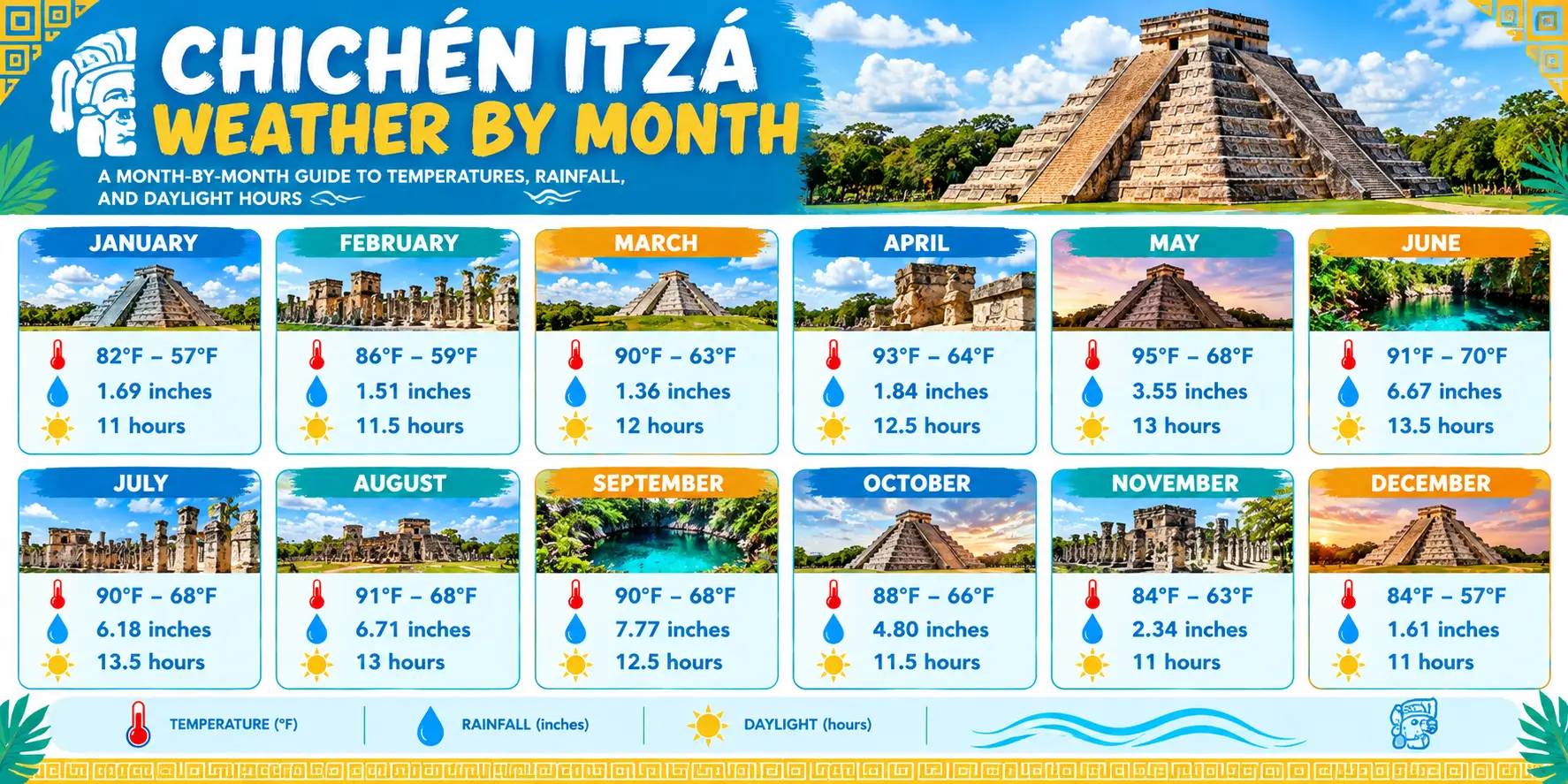
Chichén Itzá, located in Mexico’s Yucatán Peninsula, has a tropical climate with warm temperatures throughout the year. Average daytime highs range from around 82°F (28°C) in January to 95°F (35°C) in May, while nighttime temperatures generally remain warm, between 57°F (14°C) and 70°F (21°C) depending on the month.
The dry season typically extends from November through April, offering favorable conditions for exploring the ancient Maya ruins. May marks the beginning of hotter weather, while June through October brings heavier rainfall, higher humidity, and frequent tropical showers. September is generally the wettest month, making it important to plan outdoor visits around the weather.
Chichén Itzá Weather by Month
January – Warm, Mild and Mostly Dry
- Average high: 82°F (28°C)
- Average low: 57°F (14°C)
- Rainfall: 1.69 inches (42.9 mm)
- Daylight: 11 hours
January is one of the coolest and driest months at Chichén Itzá, making it an excellent time to explore the ancient Maya city. Average daytime temperatures reach around 82°F (28°C), while nighttime temperatures fall to approximately 57°F (14°C). The mornings can feel pleasantly cool, but afternoons are generally warm and comfortable for sightseeing.
Rainfall averages just 1.69 inches (42.9 mm), so extended dry periods are common. Visitors can explore El Castillo, the Great Ball Court, and the Temple of the Warriors without frequently worrying about rain. With approximately 11 hours of daylight, there is plenty of time to discover the archaeological site. Light clothing, comfortable walking shoes, sunscreen, and a light layer for early mornings are recommended.
Best for:
- Exploring the archaeological site in comfortable weather
- Taking photographs of El Castillo
- Enjoying outdoor sightseeing with limited rainfall
- Visiting nearby Valladolid and local Maya communities
February – Warm, Sunny and Dry
- Average high: 86°F (30°C)
- Average low: 59°F (15°C)
- Rainfall: 1.51 inches (38.3 mm)
- Daylight: 11.5 hours
February brings slightly warmer temperatures and relatively dry conditions to Chichén Itzá. Average highs reach 86°F (30°C), while nighttime lows average 59°F (15°C). The pleasant mornings and warm afternoons make this a popular month for exploring the ruins and learning about Maya history.
Rainfall averages only 1.51 inches (38.3 mm), making February one of the driest months of the year. Although occasional showers are possible, wet weather is unlikely to dominate most visits. Daylight increases to approximately 11.5 hours, giving travelers more time to explore the temples, ceremonial platforms, and surrounding jungle landscape. Since midday temperatures can still feel hot, arriving early is a good way to enjoy the site before the strongest afternoon heat.
Best for:
- Visiting the ruins in warm, dry weather
- Exploring the site early in the morning
- Taking guided cultural and historical tours
- Combining Chichén Itzá with a visit to Valladolid
March – Hot, Dry and Ideal for Sightseeing
- Average high: 90°F (32°C)
- Average low: 63°F (17°C)
- Rainfall: 1.36 inches (34.6 mm)
- Daylight: 12 hours
March marks the transition toward hotter weather on the Yucatán Peninsula. Average daytime temperatures climb to around 90°F (32°C), while nighttime lows average 63°F (17°C). The afternoons can be quite hot, especially in open areas where there is little shade, but mornings remain suitable for exploring the archaeological site.
With just 1.36 inches (34.6 mm) of average rainfall, March is the driest month in this climate dataset. Most days are suitable for outdoor activities, although visitors should prepare for strong sunshine and high temperatures. Approximately 12 hours of daylight provide ample time to see the major monuments and walk between different sections of the complex.
Bring plenty of drinking water, wear a hat, and apply sunscreen regularly. Starting your visit early can make a significant difference in comfort.
Best for:
- Exploring the ruins during the dry season
- Photographing the temples in bright daylight
- Taking full-day excursions around the Yucatán Peninsula
- Enjoying outdoor activities with minimal rain disruption
April – Very Hot and Mostly Dry
- Average high: 93°F (34°C)
- Average low: 64°F (18°C)
- Rainfall: 1.84 inches (46.8 mm)
- Daylight: 12.5 hours
April is one of the hottest months at Chichén Itzá, with average daytime temperatures reaching 93°F (34°C). Nighttime temperatures remain relatively warm at around 64°F (18°C). The combination of intense sunshine and limited shade can make afternoon sightseeing tiring, particularly for visitors walking around the extensive archaeological complex.
Rainfall averages 1.84 inches (46.8 mm), so conditions remain predominantly dry. Although occasional showers may occur, rain is generally less of a concern than the heat. With around 12.5 hours of daylight, visitors have a long window for exploring the site, but the most comfortable hours are usually early in the morning.
Lightweight clothing, a wide-brimmed hat, sunscreen, and sufficient water are essential. Taking breaks in shaded areas can also help prevent overheating.
Best for:
- Early-morning visits to the ancient city
- Exploring Maya architecture in dry weather
- Taking photographs of the monuments
- Combining archaeological sightseeing with cenote visits
May – Extremely Hot and Increasingly Wet
- Average high: 95°F (35°C)
- Average low: 68°F (20°C)
- Rainfall: 3.55 inches (90.1 mm)
- Daylight: 13 hours
May is typically the hottest month of the year at Chichén Itzá, with average highs reaching approximately 95°F (35°C). Nighttime temperatures rise to around 68°F (20°C), providing less relief after sunset than during the cooler months. The intense daytime heat can make long walks around the ruins challenging, especially during the middle of the day.
Rainfall increases to 3.55 inches (90.1 mm), signaling the approach of the wetter season. Showers become more likely, although sunny periods remain common. With approximately 13 hours of daylight, there is plenty of time for sightseeing, but visitors should plan outdoor activities around the heat rather than simply maximizing the hours spent outside.
Start early, carry water, and take regular breaks. A lightweight rain jacket may also be useful for occasional showers.
Best for:
- Exploring the site shortly after opening
- Visiting cenotes to cool off after sightseeing
- Experiencing the Yucatán before the peak rainy season
- Enjoying long daylight hours for regional excursions
June – Hot, Humid and Rainy
- Average high: 91°F (33°C)
- Average low: 70°F (21°C)
- Rainfall: 6.67 inches (169.3 mm)
- Daylight: 13.5 hours
June brings hot temperatures, warm nights, and a substantial increase in rainfall. Average daytime highs reach around 91°F (33°C), while nighttime lows average 70°F (21°C). Humidity can make conditions feel hotter and more uncomfortable, particularly when exploring exposed areas of the archaeological site.
Rainfall rises to 6.67 inches (169.3 mm), making June considerably wetter than the first five months of the year. Tropical showers and thunderstorms can interrupt outdoor plans, although they do not necessarily last all day. With approximately 13.5 hours of daylight, the days are long, but it is wise to leave some flexibility in your itinerary.
Morning visits are generally preferable because they allow you to explore before the strongest heat and possible afternoon showers. Carry water, wear breathable clothing, and bring a compact umbrella or rain jacket.
Best for:
- Early-morning archaeological tours
- Visiting nearby cenotes between showers
- Exploring museums and cultural attractions during rainy periods
- Taking advantage of long daylight hours
July – Hot, Humid and Frequently Rainy
- Average high: 90°F (32°C)
- Average low: 68°F (20°C)
- Rainfall: 6.18 inches (156.9 mm)
- Daylight: 13.5 hours
July remains hot at Chichén Itzá, with average highs around 90°F (32°C) and nighttime lows near 68°F (20°C). Although daytime temperatures are slightly lower than in May, the combination of warmth and humidity can still make outdoor sightseeing physically demanding.
Rainfall averages 6.18 inches (156.9 mm), so visitors should expect a greater chance of showers than during the dry season. Rain may arrive suddenly, and thunderstorms can occasionally affect outdoor activities. However, many days still have periods of sunshine, and the archaeological site remains worth visiting with suitable planning.
July offers approximately 13.5 hours of daylight. Arriving early helps you avoid the hottest part of the day, while a flexible itinerary makes it easier to adjust to changing weather. Quick-drying clothes and waterproof protection for electronics are useful additions to your day bag.
Best for:
- Exploring the ruins early in the morning
- Visiting cenotes and swimming during suitable weather
- Combining outdoor sightseeing with indoor attractions
- Planning flexible excursions around rain showers
August – Hot, Humid and Wet
- Average high: 91°F (33°C)
- Average low: 68°F (20°C)
- Rainfall: 6.71 inches (170.5 mm)
- Daylight: 13 hours
August is another hot and rainy month at Chichén Itzá. Average daytime temperatures reach 91°F (33°C), while nighttime temperatures remain around 68°F (20°C). The weather feels tropical, with warm afternoons and high humidity that can make walking between monuments tiring.
Rainfall averages 6.71 inches (170.5 mm), placing August among the wettest months of the year. Showers and thunderstorms are common possibilities, but sunny intervals can still provide opportunities for sightseeing. Visitors should be prepared for slippery paths after rain and occasional changes to outdoor plans.
With around 13 hours of daylight, there is still plenty of time to explore the archaeological complex. An early start, regular water breaks, and lightweight rain protection can help make the visit more comfortable. If you are traveling around the peninsula, allow extra flexibility for weather-related delays.
Best for:
- Early visits to the archaeological site
- Exploring cenotes when weather conditions permit
- Enjoying a tropical landscape after rainfall
- Combining sightseeing with indoor cultural activities
September – Very Wet, Hot and Humid
- Average high: 90°F (32°C)
- Average low: 68°F (20°C)
- Rainfall: 7.77 inches (197.4 mm)
- Daylight: 12.5 hours
September is the wettest month in the supplied weather data for Chichén Itzá. Average highs reach around 90°F (32°C), while nighttime lows remain near 68°F (20°C). Temperatures are still tropical, and high humidity can make outdoor activities feel uncomfortable, especially after rain.
Rainfall averages 7.77 inches (197.4 mm), the highest monthly total of the year in this dataset. Heavy showers and thunderstorms can occur, so travelers should be prepared for wet conditions and possible changes to their plans. September also falls within the Atlantic hurricane season, which can affect parts of the wider Caribbean and Yucatán region, although conditions vary from year to year.
Daylight averages approximately 12.5 hours. If visiting during September, check the forecast before departure and consider arriving early when conditions are favorable. Waterproof footwear, a rain jacket, and flexible scheduling can make the experience easier.
Best for:
- Exploring the ruins during breaks in the rain
- Visiting indoor museums and cultural attractions
- Enjoying the lush tropical scenery
- Traveling with a flexible itinerary
October – Warm and Rainy, with Gradually Shorter Days
- Average high: 88°F (31°C)
- Average low: 66°F (19°C)
- Rainfall: 4.80 inches (122 mm)
- Daylight: 11.5 hours
October brings slightly cooler temperatures to Chichén Itzá, with average daytime highs of 88°F (31°C) and nighttime lows of 66°F (19°C). The weather remains warm enough for outdoor sightseeing, although humidity and occasional heavy showers can still affect comfort.
Rainfall averages 4.80 inches (122 mm), lower than in September but still substantial. Wet weather remains a possibility, and October is still within the Atlantic hurricane season. Checking local forecasts before traveling is especially useful if you plan to visit several destinations across the peninsula.
Daylight decreases to approximately 11.5 hours. The combination of warm weather and gradually declining rainfall can make October appealing for travelers who prefer to avoid the hottest months, provided they are prepared for showers. Morning visits are a practical choice for exploring the temples and ceremonial grounds.
Best for:
- Exploring the ruins in slightly cooler weather
- Taking guided historical and cultural tours
- Visiting nearby towns and cenotes between showers
- Enjoying tropical scenery after rainfall
November – Warm, Pleasant and Drier
- Average high: 84°F (29°C)
- Average low: 63°F (17°C)
- Rainfall: 2.34 inches (59.4 mm)
- Daylight: 11 hours
November marks a return to more comfortable and relatively dry conditions at Chichén Itzá. Average daytime highs reach around 84°F (29°C), while nighttime temperatures fall to approximately 63°F (17°C). The milder weather is generally more comfortable for walking around the archaeological site than the intense heat of spring and summer.
Rainfall drops to 2.34 inches (59.4 mm), a considerable decrease from the peak of the wet season. Showers are still possible, but extended periods of rain are less likely than in September or October. With around 11 hours of daylight, visitors have enough time to explore the principal monuments and enjoy other attractions in the region.
November is a good month for combining Chichén Itzá with Valladolid, local food experiences, and cenote excursions. Pack lightweight clothes for the daytime and a light layer for cooler mornings or evenings.
Best for:
- Comfortable sightseeing in warm weather
- Exploring Maya ruins with less rainfall
- Visiting Valladolid and nearby cultural attractions
- Taking day trips around the Yucatán Peninsula
December – Mild, Warm and Mostly Dry
- Average high: 84°F (29°C)
- Average low: 57°F (14°C)
- Rainfall: 1.61 inches (40.8 mm)
- Daylight: 11 hours
December offers warm afternoons, cooler nights, and relatively low rainfall at Chichén Itzá. Average daytime temperatures reach approximately 84°F (29°C), while nighttime lows fall to around 57°F (14°C). These conditions are generally pleasant for exploring the ruins, particularly during the morning when temperatures are cooler.
Rainfall averages 1.61 inches (40.8 mm), making December one of the drier months of the year. Although occasional showers are possible, most visits can be planned around outdoor activities. Approximately 11 hours of daylight provide enough time to explore the temples, walk through the ceremonial areas, and visit other nearby attractions.
December is also a popular travel period because many people visit Mexico during the winter holidays. Booking accommodation and organized tours in advance is advisable, especially around Christmas and New Year. Bring sun protection for daytime excursions and a light jacket for early mornings.
Best for:
- Exploring the ruins during the dry season
- Enjoying warm winter weather
- Taking cultural and historical tours
- Combining Chichén Itzá with cenotes and nearby colonial towns
Chichén Itzá Weather by Month
| Month | Avg High °F (°C) | Avg Low °F (°C) | Rainfall (inches) | Daylight (hours) |
|---|---|---|---|---|
| January | 82°F (28°C) | 57°F (14°C) | 1.69 | 11 |
| February | 86°F (30°C) | 59°F (15°C) | 1.51 | 11.5 |
| March | 90°F (32°C) | 63°F (17°C) | 1.36 | 12 |
| April | 93°F (34°C) | 64°F (18°C) | 1.84 | 12.5 |
| May | 95°F (35°C) | 68°F (20°C) | 3.55 | 13 |
| June | 91°F (33°C) | 70°F (21°C) | 6.67 | 13.5 |
| July | 90°F (32°C) | 68°F (20°C) | 6.18 | 13.5 |
| August | 91°F (33°C) | 68°F (20°C) | 6.71 | 13 |
| September | 90°F (32°C) | 68°F (20°C) | 7.77 | 12.5 |
| October | 88°F (31°C) | 66°F (19°C) | 4.80 | 11.5 |
| November | 84°F (29°C) | 63°F (17°C) | 2.34 | 11 |
| December | 84°F (29°C) | 57°F (14°C) | 1.61 | 11 |
Best Time to Visit Chichén Itzá
The best time to visit Chichén Itzá is generally November through April, when rainfall is relatively low and temperatures are more comfortable for exploring the archaeological site. January, February, and November are particularly appealing for visitors who want warm weather without the most intense heat.
- Best weather: January through March, when rainfall is low and daytime temperatures are generally comfortable.
- Best for avoiding heavy rain: February and March, which have the lowest average rainfall in the supplied data.
- Hottest period: April and May, when average highs reach 93–95°F (34–35°C).
- Wettest period: June through October, particularly September, which averages 7.77 inches (197.4 mm) of rainfall.
- Best for cooler evenings: January and December, when average lows are around 57°F (14°C).
Regardless of the month, visiting early in the morning is one of the best ways to enjoy Chichén Itzá. The temperatures are usually more comfortable, the light is excellent for photography, and you can explore the major monuments before the hottest part of the day.
20 FAQs About Chichén Itzá Weather
1. What is the best month to visit Chichén Itzá?
February and March are excellent months to visit Chichén Itzá because temperatures are warm and rainfall is relatively low. March has the lowest average rainfall in the supplied data, at 1.36 inches (34.6 mm).
2. What is the weather like in Chichén Itzá year-round?
Chichén Itzá has a tropical climate with warm to hot temperatures throughout the year. Average highs range from 82°F (28°C) in January to 95°F (35°C) in May. The drier months generally occur from November through April, while June through October is wetter.
3. What is the hottest month in Chichén Itzá?
May is the hottest month in the supplied data, with an average high of 95°F (35°C) and an average low of 68°F (20°C). The intense heat can make walking around the archaeological site challenging, especially at midday.
4. What is the coldest month in Chichén Itzá?
January and December have the coolest average nighttime temperatures, with lows of approximately 57°F (14°C). However, daytime temperatures remain warm, reaching around 82°F (28°C) in January and 84°F (29°C) in December.
5. When is the rainy season in Chichén Itzá?
The rainy season generally runs from June through October. During these months, tropical showers and thunderstorms become more frequent, and September typically receives the most rainfall.
6. What is the driest month in Chichén Itzá?
March is the driest month in the supplied data, with average rainfall of just 1.36 inches (34.6 mm). February and January are also relatively dry, making the first part of the year ideal for outdoor sightseeing.
7. What is the wettest month in Chichén Itzá?
September is the wettest month, averaging 7.77 inches (197.4 mm) of rainfall. Visitors during this period should prepare for heavy showers, possible thunderstorms, and changes to outdoor plans.
8. Does it rain a lot in Chichén Itzá?
Rainfall varies considerably by season. The months from January through April are relatively dry, while rainfall increases significantly from June through September. Even during the rainy season, there may be sunny periods between showers.
9. Is Chichén Itzá too hot to visit in summer?
Chichén Itzá can be very hot and humid during summer, with average highs around 90–91°F (32–33°C) from June through August. Visiting early in the morning, drinking plenty of water, wearing breathable clothing, and taking breaks in shaded areas can make sightseeing more comfortable.
10. Is January a good time to visit Chichén Itzá?
Yes. January offers warm daytime temperatures, cooler mornings, and relatively little rain. Average highs reach 82°F (28°C), and rainfall averages 1.69 inches (42.9 mm), making it a good month for exploring the ruins.
11. Is February a good time to visit Chichén Itzá?
February is one of the best months for a visit because it combines warm temperatures with low rainfall. Average highs reach 86°F (30°C), and rainfall averages 1.51 inches (38.3 mm). It is a good time for walking tours and photography.
12. Is March a good time to visit Chichén Itzá?
March is an excellent month for sightseeing because it has the lowest average rainfall in the supplied data. Average highs reach 90°F (32°C), so visitors should plan to explore early and bring sun protection.
13. Is April too hot for Chichén Itzá?
April can feel very hot, with average highs of 93°F (34°C). Although rainfall remains relatively low at 1.84 inches (46.8 mm), the strong sunshine and limited shade can make afternoon visits uncomfortable. Arriving early is recommended.
14. Is May a good time to visit Chichén Itzá?
May can be a good time to visit if you can manage the heat. Average highs reach 95°F (35°C), the highest of the year in the supplied data, and rainfall begins to increase. Plan your visit for the morning and carry plenty of drinking water.
15. Is September a good time to visit Chichén Itzá?
September is less predictable because it is the wettest month, with average rainfall of 7.77 inches (197.4 mm). Visits are still possible, but travelers should check forecasts, bring rain protection, and allow flexibility in their schedules.
16. Does Chichén Itzá get cold at night?
Nights can feel relatively cool compared with daytime temperatures, especially in December and January, when average lows fall to 57°F (14°C). A light jacket may be useful for early-morning excursions, although most afternoons remain warm.
17. How many hours of daylight does Chichén Itzá receive?
Chichén Itzá receives approximately 11 to 13.5 hours of daylight throughout the year. June and July have the longest daylight in the supplied data, at around 13.5 hours, while January, November, and December average about 11 hours.
18. What should I wear when visiting Chichén Itzá?
Wear lightweight, breathable clothing, comfortable walking shoes, and a hat. Sunscreen and sunglasses are essential because much of the archaeological site is exposed to direct sunlight. During the rainy season, bring a compact umbrella or lightweight rain jacket.
19. What is the best time of day to visit Chichén Itzá?
Early morning is generally the best time to visit. Temperatures are usually more comfortable, and you can explore the main monuments before the strongest midday heat. An early arrival can also leave more time for nearby attractions later in the day.
20. Is Chichén Itzá worth visiting during the rainy season?
Yes. Chichén Itzá remains an impressive destination during the rainy season, and showers do not necessarily last all day. The surrounding landscape can look especially lush after rainfall. However, visitors should check the weather forecast, wear suitable footwear, and keep their plans flexible in case of heavy rain or thunderstorms.
Read more: