Easter Island Weather by Month
Easter Island, also known as Rapa Nui, has a mild subtropical climate with comfortable temperatures throughout the year. Located in the southeastern Pacific Ocean, the island experiences warm summers, cooler winters, and rainfall in every month. Unlike many tropical destinations, Easter Island does not have a sharply defined dry season, although rainfall tends to be lower in late spring.
The warmest months are generally January through March, when average highs reach around 79°F (26°C). The coolest period is July through September, when daytime temperatures are around 68°F to 70°F (20°C to 21°C). Ocean temperatures remain relatively mild year-round, making coastal walks and water activities possible, although the sea can be rough at times.
Easter Island Weather by Month
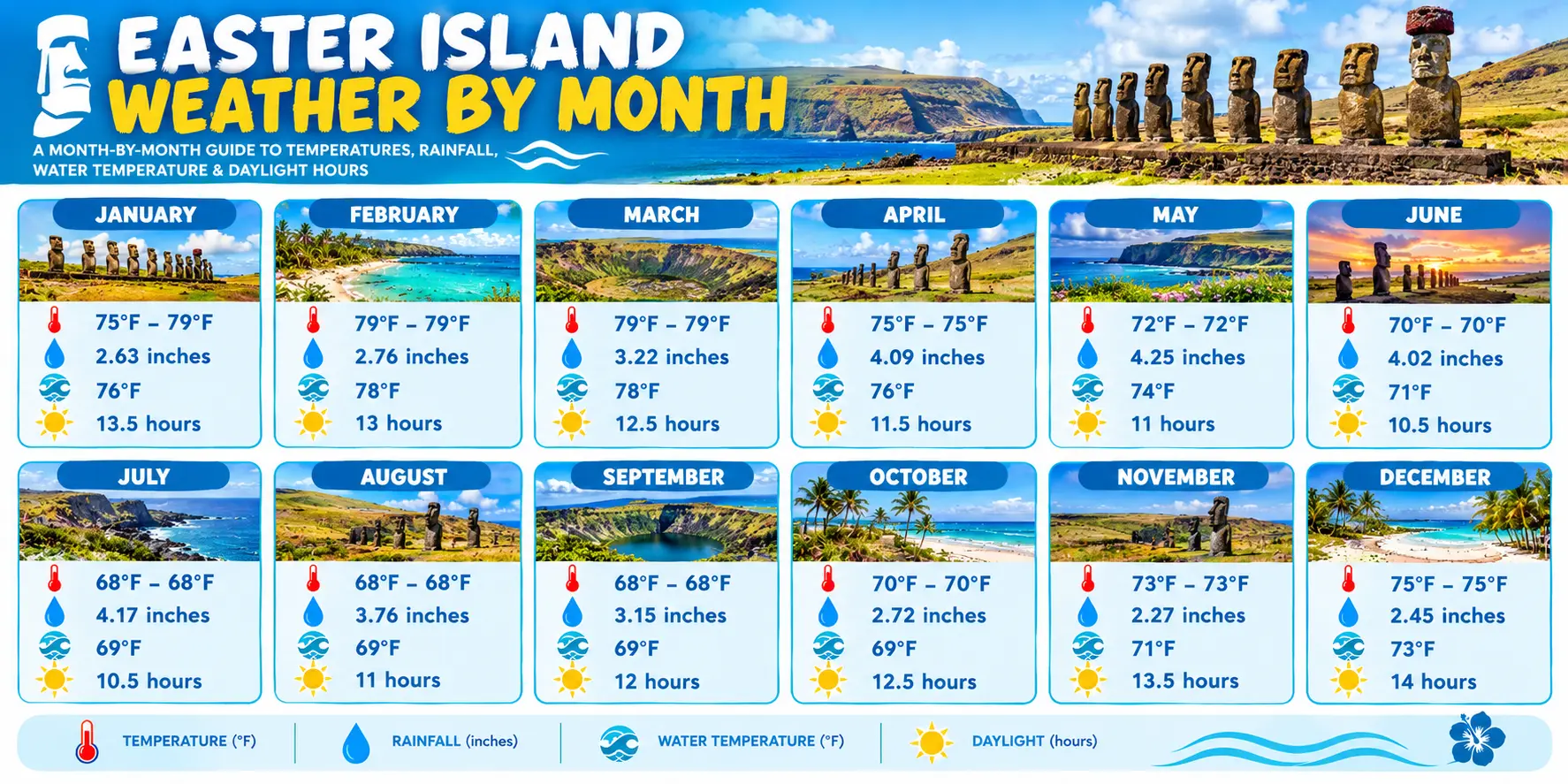
You can click the image below to view the full-size weather chart for Easter Island.
January – Warm, Humid and Moderately Wet
- Average high: 79°F (26°C)
- Average low: 66°F (19°C)
- Rainfall: 2.63 inches (66.7 mm)
- Water temperature: 76°F (24°C)
- Daylight: 13.5 hours
January is one of the warmest months on Easter Island, with pleasant summer temperatures that are ideal for exploring the island’s archaeological sites and dramatic coastline. Average daytime temperatures reach around 79°F (26°C), while nighttime temperatures remain comfortable at approximately 66°F (19°C). The warm weather is excellent for visiting the famous moai statues, hiking across volcanic landscapes, and enjoying panoramic ocean views.
Rainfall averages about 2.63 inches (66.7 mm), so occasional showers are possible throughout the month. The Pacific Ocean is warm, averaging around 76°F (24°C), making swimming and snorkeling appealing when sea conditions are safe. With approximately 13.5 hours of daylight, visitors have plenty of time for sightseeing and outdoor adventures.
Best for:
- Exploring the moai statues at Rano Raraku
- Hiking and scenic coastal drives
- Swimming at Anakena Beach when conditions permit
- Enjoying long summer days outdoors
February – Warm, Sunny and Ideal for Beach Activities
- Average high: 79°F (26°C)
- Average low: 68°F (20°C)
- Rainfall: 2.76 inches (70 mm)
- Water temperature: 78°F (25°C)
- Daylight: 13 hours
February continues the warm summer weather, making it one of the most attractive months for visiting Easter Island. Average highs reach approximately 79°F (26°C), while nighttime temperatures hover around 68°F (20°C). Conditions are generally comfortable for visiting archaeological sites, walking along the coast, and exploring the island’s rolling grasslands.
Rainfall averages 2.76 inches (70 mm), so visitors should be prepared for occasional showers. Ocean temperatures reach around 78°F (25°C), among the warmest of the year, providing inviting conditions for swimming and snorkeling at sheltered locations. With about 13 hours of daylight, there is ample time to explore the island before sunset.
Best for:
- Swimming and relaxing at Anakena Beach
- Exploring Rapa Nui National Park
- Taking guided cultural and archaeological tours
- Enjoying warm ocean temperatures
March – Warm, Comfortable and Moderately Wet
- Average high: 79°F (26°C)
- Average low: 66°F (19°C)
- Rainfall: 3.22 inches (81.9 mm)
- Water temperature: 78°F (25°C)
- Daylight: 12.5 hours
March remains warm, although the island gradually moves away from the peak of summer. Average daytime temperatures reach 79°F (26°C), while nighttime lows settle around 66°F (19°C). The comfortable weather makes this a good month for exploring volcanic craters, ancient ceremonial platforms, and the island’s rugged coastline.
Rainfall increases to approximately 3.22 inches (81.9 mm), so short periods of wet weather may occur during your visit. The ocean remains warm at around 78°F (25°C), making water activities appealing when the waves and currents are suitable. Daylight averages 12.5 hours, leaving plenty of time for outdoor exploration.
Best for:
- Visiting Ahu Tongariki in the morning
- Exploring volcanic landscapes and hiking trails
- Swimming and snorkeling on calmer days
- Discovering the island’s cultural history
April – Mild, Warm and Wetter
- Average high: 75°F (24°C)
- Average low: 64°F (18°C)
- Rainfall: 4.09 inches (103.8 mm)
- Water temperature: 76°F (24°C)
- Daylight: 11.5 hours
April brings slightly cooler temperatures and increased rainfall. Average highs reach around 75°F (24°C), while nighttime temperatures drop to approximately 64°F (18°C). The mild conditions are comfortable for sightseeing, hiking, and visiting the island’s many archaeological landmarks without the strongest summer heat.
Rainfall averages about 4.09 inches (103.8 mm), making April one of the wetter months in the supplied data. Showers can interrupt outdoor plans, so a lightweight waterproof jacket is useful. The ocean remains relatively warm at around 76°F (24°C), although changing sea conditions may affect swimming. With approximately 11.5 hours of daylight, there is still sufficient time to explore the island’s major attractions.
Best for:
- Exploring archaeological sites in mild weather
- Visiting Rano Kau volcanic crater
- Taking scenic drives around the island
- Combining cultural sightseeing with coastal walks
May – Mild, Cloudier and Relatively Wet
- Average high: 72°F (22°C)
- Average low: 63°F (17°C)
- Rainfall: 4.25 inches (108 mm)
- Water temperature: 74°F (23°C)
- Daylight: 11 hours
May marks a transition toward the cooler season on Easter Island. Average daytime temperatures reach around 72°F (22°C), while nighttime lows are approximately 63°F (17°C). The weather is generally mild rather than cold, making it possible to enjoy outdoor sightseeing with a light jacket or extra layer.
Rainfall averages about 4.25 inches (108 mm), the highest monthly total shown in your data. Visitors should expect the possibility of rain and changing cloud cover, particularly when planning longer hikes. Ocean temperatures average around 74°F (23°C), which is still relatively comfortable for water activities, although wind and waves can make conditions less inviting. Daylight averages 11 hours, so planning excursions earlier in the day is helpful.
Best for:
- Exploring museums and cultural attractions
- Visiting the moai statues between showers
- Taking shorter hikes and coastal walks
- Enjoying quieter, cooler-season sightseeing
June – Cool, Mild and Moderately Wet
- Average high: 70°F (21°C)
- Average low: 61°F (16°C)
- Rainfall: 4.02 inches (102.1 mm)
- Water temperature: 71°F (22°C)
- Daylight: 10.5 hours
June brings cooler winter conditions, but Easter Island remains relatively mild compared with many destinations at similar times of year. Average daytime temperatures reach approximately 70°F (21°C), while nighttime temperatures fall to around 61°F (16°C). The cooler weather is comfortable for exploring historical sites and walking across the island’s open landscapes.
Rainfall averages 4.02 inches (102.1 mm), meaning showers remain a regular possibility. A waterproof jacket and layers are useful for outdoor activities, particularly when the wind picks up along the coast. Ocean temperatures average around 71°F (22°C), which may feel cool for extended swimming. With about 10.5 hours of daylight, it is worth scheduling longer excursions for the morning and early afternoon.
Best for:
- Exploring archaeological sites in cooler weather
- Taking scenic drives around Rapa Nui
- Visiting cultural attractions and local communities
- Enjoying walking tours without summer heat
July – Cool, Breezy and Moderately Wet
- Average high: 68°F (20°C)
- Average low: 59°F (15°C)
- Rainfall: 4.17 inches (105.9 mm)
- Water temperature: 69°F (21°C)
- Daylight: 10.5 hours
July is one of the coolest months on Easter Island. Average daytime temperatures reach around 68°F (20°C), while nighttime lows fall to approximately 59°F (15°C). Although the weather is cooler, conditions are still suitable for sightseeing, exploring volcanic terrain, and visiting the island’s iconic stone statues.
Rainfall averages about 4.17 inches (105.9 mm), so showers are common enough to warrant flexible outdoor plans. Windy conditions may make the coast feel cooler than the air temperature suggests. Ocean temperatures average around 69°F (21°C), which can feel chilly for extended swimming without a wetsuit. With approximately 10.5 hours of daylight, visitors should make the most of the available daylight for longer excursions.
Best for:
- Exploring the moai statues and ceremonial platforms
- Taking guided cultural tours
- Hiking in cool weather
- Photographing the island’s dramatic landscapes
August – Cool, Cloudy and Relatively Wet
- Average high: 68°F (20°C)
- Average low: 59°F (15°C)
- Rainfall: 3.76 inches (95.5 mm)
- Water temperature: 69°F (20°C)
- Daylight: 11 hours
August continues the cool winter weather, with average highs of around 68°F (20°C) and lows of approximately 59°F (15°C). The mild temperatures are comfortable for exploring the island on foot, although breezes and passing showers can make outdoor conditions change quickly.
Rainfall averages 3.76 inches (95.5 mm), so a waterproof jacket is useful for sightseeing. The ocean averages around 69°F (20°C), and swimming may be less appealing than during the summer months. However, the island’s archaeological sites and volcanic scenery remain impressive throughout the season. Daylight increases to approximately 11 hours, providing slightly more time for exploring than in June and July.
Best for:
- Visiting Rano Raraku and Ahu Tongariki
- Exploring the island’s volcanic landscapes
- Taking guided historical tours
- Enjoying cooler temperatures for hiking
September – Cool, Mild and Gradually Drier
- Average high: 68°F (20°C)
- Average low: 59°F (15°C)
- Rainfall: 3.15 inches (80 mm)
- Water temperature: 69°F (20°C)
- Daylight: 12 hours
September brings the gradual transition from winter toward spring. Average daytime temperatures remain around 68°F (20°C), while nighttime lows stay near 59°F (15°C). The weather is generally mild, making it a good time to explore Easter Island’s archaeological sites, rolling grasslands, and coastal viewpoints.
Rainfall decreases to approximately 3.15 inches (80 mm), although occasional showers remain possible. Ocean temperatures average around 69°F (20°C), so the water may feel cool for casual swimming. Daylight increases to about 12 hours, creating more opportunities for hiking, photography, and guided tours.
Best for:
- Exploring archaeological sites in mild weather
- Hiking around Rano Kau crater
- Taking scenic coastal walks
- Enjoying the transition into spring
October – Mild, Pleasant and Less Wet
- Average high: 70°F (21°C)
- Average low: 59°F (15°C)
- Rainfall: 2.72 inches (69 mm)
- Water temperature: 69°F (21°C)
- Daylight: 12.5 hours
October brings slightly warmer weather and relatively low rainfall. Average daytime temperatures reach around 70°F (21°C), while nighttime lows remain close to 59°F (15°C). These comfortable conditions are well suited to exploring Easter Island’s famous moai statues, visiting volcanic craters, and walking between archaeological sites.
Rainfall averages 2.72 inches (69 mm), making October one of the drier months in the supplied data. Showers can still occur, but there may be more opportunities for uninterrupted outdoor activities. Ocean temperatures average around 69°F (21°C), which is suitable for some water activities, depending on personal preference and sea conditions. With approximately 12.5 hours of daylight, visitors have plenty of time to explore.
Best for:
- Exploring Rapa Nui National Park
- Photographing the island’s famous stone statues
- Hiking and sightseeing in mild weather
- Enjoying longer days and relatively low rainfall
November – Mild, Comfortable and Relatively Dry
- Average high: 73°F (23°C)
- Average low: 61°F (16°C)
- Rainfall: 2.27 inches (57.6 mm)
- Water temperature: 71°F (22°C)
- Daylight: 13.5 hours
November is a pleasant spring month on Easter Island, with warming temperatures and relatively little rainfall. Average daytime highs reach around 73°F (23°C), while nighttime lows are approximately 61°F (16°C). The mild weather is ideal for exploring the island’s archaeological landmarks, hiking across open landscapes, and enjoying the coastal scenery.
Rainfall averages 2.27 inches (57.6 mm), the lowest monthly total in your supplied data. Although occasional showers remain possible, conditions are generally favorable for outdoor exploration. Ocean temperatures average around 71°F (22°C), making swimming more appealing than during the coolest months. With approximately 13.5 hours of daylight, visitors can comfortably fit several activities into a single day.
Best for:
- Exploring major archaeological attractions
- Hiking and sightseeing in comfortable temperatures
- Visiting Anakena Beach
- Enjoying longer days with relatively low rainfall
December – Warm, Sunny and Ideal for Summer Travel
- Average high: 75°F (24°C)
- Average low: 64°F (18°C)
- Rainfall: 2.45 inches (62.2 mm)
- Water temperature: 73°F (23°C)
- Daylight: 14 hours
December marks the beginning of summer on Easter Island, bringing warmer temperatures and long days. Average daytime highs reach around 75°F (24°C), while nighttime lows remain near 64°F (18°C). The pleasant conditions are excellent for exploring the island’s famous moai statues, visiting coastal viewpoints, and spending time outdoors.
Rainfall averages 2.45 inches (62.2 mm), so December is relatively dry compared with the wetter months of autumn and winter. Ocean temperatures average around 73°F (23°C), making swimming and snorkeling appealing when the sea is calm. With approximately 14 hours of daylight, December offers the longest days of the year in your supplied data, allowing plenty of time for sightseeing and beach visits.
Best for:
- Exploring the island’s major archaeological sites
- Swimming and relaxing at sheltered beaches
- Taking scenic drives and coastal walks
- Enjoying long summer days and warm weather
Best Time to Visit Easter Island
The best time to visit Easter Island depends on your preferred activities and the weather conditions you enjoy.
- Best for warm weather and swimming: January through March, when air and ocean temperatures are highest.
- Best for relatively dry weather: October and November, when rainfall is comparatively low.
- Best for comfortable sightseeing: October through April, when temperatures are generally mild to warm and daylight is plentiful.
- Best for cooler-weather hiking: June through September, when daytime temperatures are lower and comfortable for walking, provided you prepare for rain and wind.
Water temperatures listed above are approximate monthly averages based on published sea-temperature data. Actual conditions vary, and strong waves or currents can make swimming unsafe even when the water is warm.
Easter Island Weather by Month
| Month | Avg High °F (°C) | Avg Low °F (°C) | Rainfall (inches) | Water Temperature (°F) | Daylight (hours) |
|---|---|---|---|---|---|
| January | 79 (26) | 66 (19) | 2.63 | 76 | 13.5 |
| February | 79 (26) | 68 (20) | 2.76 | 78 | 13 |
| March | 79 (26) | 66 (19) | 3.22 | 78 | 12.5 |
| April | 75 (24) | 64 (18) | 4.09 | 76 | 11.5 |
| May | 72 (22) | 63 (17) | 4.25 | 74 | 11 |
| June | 70 (21) | 61 (16) | 4.02 | 71 | 10.5 |
| July | 68 (20) | 59 (15) | 4.17 | 69 | 10.5 |
| August | 68 (20) | 59 (15) | 3.76 | 69 | 11 |
| September | 68 (20) | 59 (15) | 3.15 | 69 | 12 |
| October | 70 (21) | 59 (15) | 2.72 | 69 | 12.5 |
| November | 73 (23) | 61 (16) | 2.27 | 71 | 13.5 |
| December | 75 (24) | 64 (18) | 2.45 | 73 | 14 |
20 FAQs About Easter Island Weather
1. What is the weather like on Easter Island year-round?
Easter Island has a mild subtropical climate with warm summers, cooler winters, and rainfall throughout the year. Average high temperatures range from around 68°F (20°C) in winter to 79°F (26°C) in summer.
2. What is the best month to visit Easter Island?
October and November are excellent months to visit Easter Island because temperatures are comfortable and rainfall is relatively low. January through March are also great choices for travelers who prefer warmer weather and warmer ocean temperatures.
3. What is the hottest month on Easter Island?
January, February, and March are generally the warmest months, with average highs of around 79°F (26°C). These months are ideal for sightseeing, hiking, and enjoying the island’s beaches.
4. What is the coldest month on Easter Island?
July, August, and September are among the coolest months, with average highs of approximately 68°F (20°C) and nighttime lows around 59°F (15°C).
5. Does Easter Island get cold in winter?
Easter Island has relatively mild winters compared with many destinations. Temperatures rarely feel extremely cold, but wind, rain, and cloudy conditions can make it feel cooler. A light jacket and waterproof clothing are recommended.
6. Does it rain a lot on Easter Island?
Rainfall occurs throughout the year, but monthly totals vary. Based on the supplied data, rainfall ranges from approximately 2.27 inches (57.6 mm) in November to 4.25 inches (108 mm) in May.
7. What is the rainiest month on Easter Island?
May is the rainiest month in the supplied data, with approximately 4.25 inches (108 mm) of rainfall. April, June, and July are also relatively wet months.
8. What is the driest month on Easter Island?
November is the driest month in the supplied data, receiving approximately 2.27 inches (57.6 mm) of rainfall. December and January are also relatively dry.
9. When is summer on Easter Island?
Summer runs from December through February. During this period, average high temperatures are approximately 75°F to 79°F (24°C to 26°C), and daylight hours are relatively long.
10. When is winter on Easter Island?
Winter runs from June through August. Average daytime highs are around 68°F to 70°F (20°C to 21°C), while nighttime temperatures typically fall to approximately 59°F to 61°F (15°C to 16°C).
11. What is the average water temperature on Easter Island?
Ocean temperatures vary throughout the year, ranging from approximately 69°F (20°C) during the cooler months to 78°F (26°C) in late summer. The sea is generally warmest around February and March.
12. Can you swim on Easter Island year-round?
Swimming is possible year-round, particularly at sheltered beaches such as Anakena. Summer generally offers warmer water, but ocean conditions can be unpredictable. Always check local advice about waves, currents, and swimming safety.
13. What is the best time to visit Easter Island for swimming?
January through March are excellent months for swimming because ocean temperatures average approximately 76°F to 78°F (24°C to 26°C). February and March typically offer some of the warmest water.
14. Is Easter Island windy?
Yes, Easter Island can be windy throughout the year because of its exposed position in the Pacific Ocean. Wind can make temperatures feel cooler, especially along the coast, so bringing a wind-resistant jacket is a good idea.
15. How much daylight does Easter Island get?
Daylight varies seasonally, ranging from approximately 10.5 hours per day in June and July to around 14 hours in December. Longer summer days provide more time to explore archaeological sites and coastal attractions.
16. What is the sunniest time of year on Easter Island?
The warmer months from November through March are generally attractive for outdoor sightseeing because of their longer days and relatively comfortable temperatures. However, sunshine can vary, and cloudy or rainy weather is possible in any month.
17. Is Easter Island humid?
Easter Island generally has a humid maritime climate because it is surrounded by the Pacific Ocean. Humidity can make the air feel damp, especially during rainy periods, although ocean breezes often help keep conditions comfortable.
18. What should I pack for Easter Island?
Pack lightweight clothing, comfortable walking shoes, sunscreen, sunglasses, and a hat. Include a light jacket or windbreaker and waterproof outerwear, especially if traveling between April and August. Bring swimwear if you plan to visit the beaches.
19. Is Easter Island worth visiting during the rainy season?
Yes. Rainy months can still be rewarding because temperatures remain relatively mild and the island’s archaeological sites are open to exploration in suitable conditions. Plan flexible itineraries, bring rain protection, and allow extra time for outdoor activities.
20. What is the worst month to visit Easter Island for weather?
There is no universally worst month, but May may be less convenient for travelers seeking dry weather because it has the highest rainfall in the supplied data. July can also feel cooler and wetter. If you prefer warmer temperatures and lower rainfall, consider November through March.