Katmai National Park Weather by Month
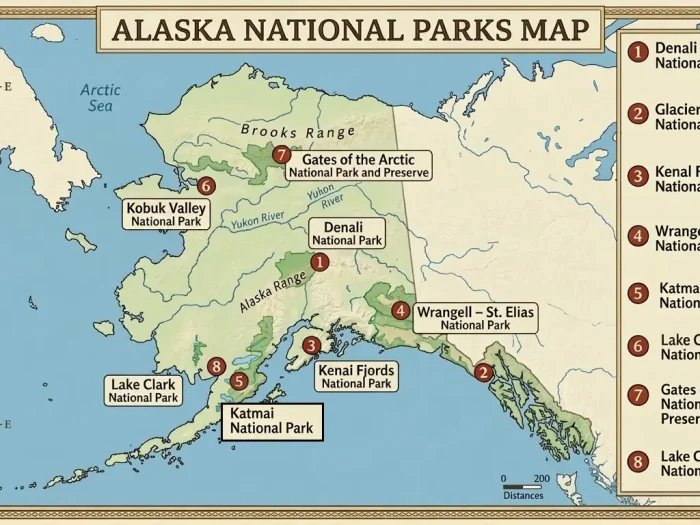
Located on the remote Alaska Peninsula, Katmai National Park is known for its dramatic volcanic landscapes and world-famous brown bears. Its weather is strongly influenced by the nearby Pacific Ocean, resulting in a cool, wet, and often unpredictable climate. If you’re planning a visit, understanding the weather month by month is essential.
Katmai National Park Temperatures by Month
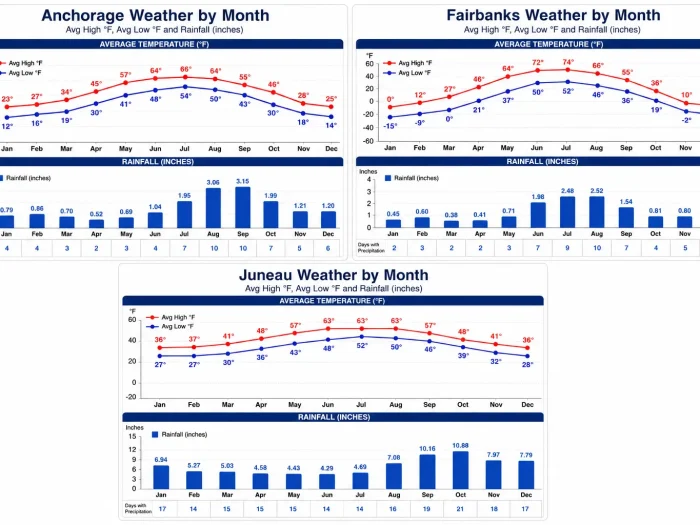
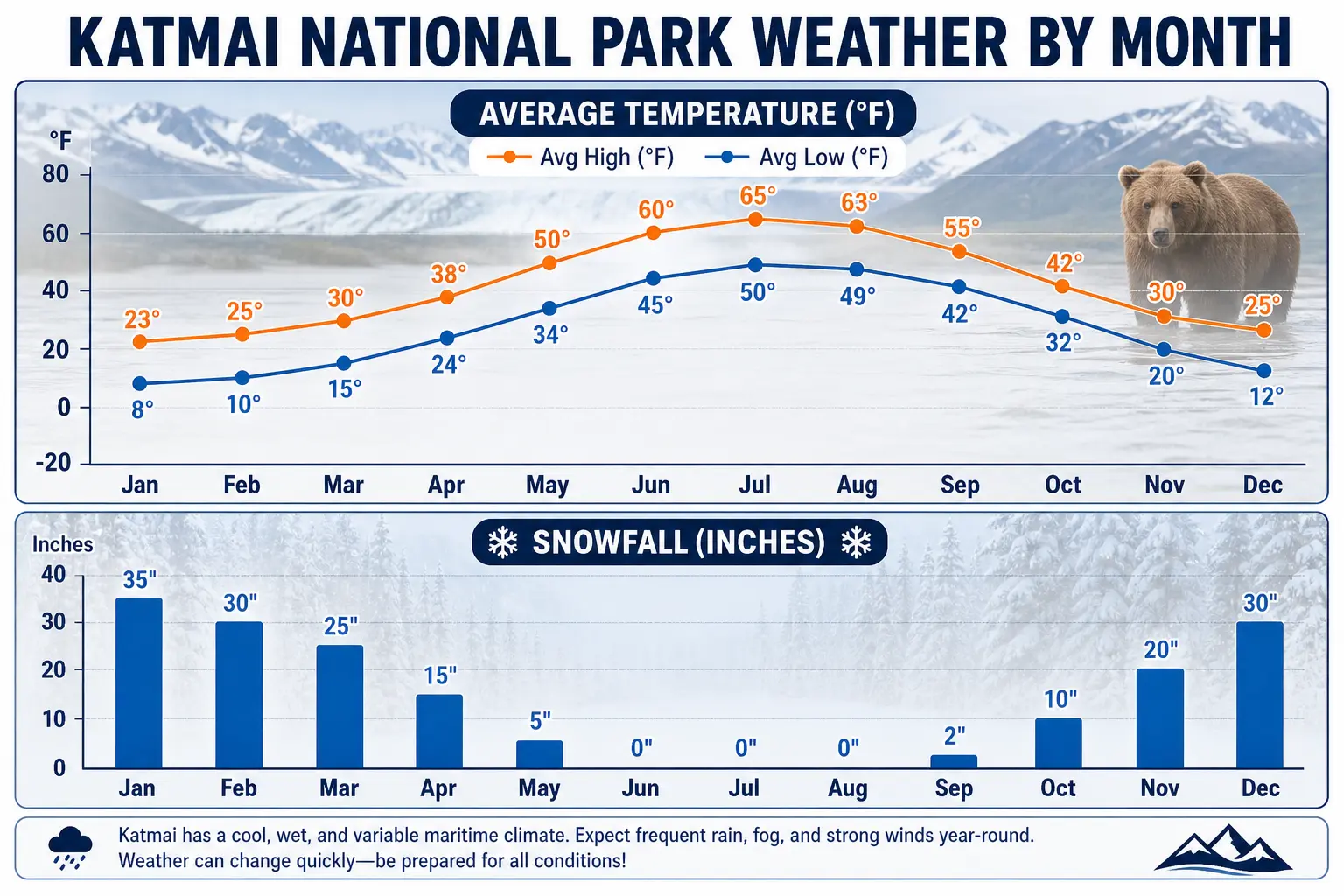
You can click the image below to view the full-size weather chart for Katmai National Park.
January
- Average High: 20–25°F (-6 to -4°C)
- Average Low: 5–10°F (-15 to -12°C)
- Conditions: Deep winter dominates. Heavy snowfall, strong winds, and very limited daylight make access extremely difficult.
- Travel Note: The park is essentially inaccessible to most visitors.
February
- Average High: 20–28°F (-6 to -2°C)
- Average Low: 5–12°F (-15 to -11°C)
- Conditions: Still very cold with frequent snowstorms. Slightly increasing daylight.
- Travel Note: Not a practical time to visit.
March
- Average High: 25–32°F (-4 to 0°C)
- Average Low: 10–18°F (-12 to -8°C)
- Conditions: Late winter continues, though snow begins to stabilize and days grow longer.
- Travel Note: Remote winter travel only (experienced adventurers).
April
- Average High: 35–42°F (2–6°C)
- Average Low: 20–28°F (-6 to -2°C)
- Conditions: Snow starts melting. Mixed precipitation (snow and rain).
- Travel Note: Transition season—still very limited access.
May
- Average High: 45–55°F (7–13°C)
- Average Low: 30–38°F (-1 to 3°C)
- Conditions: Spring arrives. Snow melts rapidly, rivers swell, and wildlife becomes active.
- Travel Note: Early season flights may begin, but conditions remain unpredictable.
June
- Average High: 55–65°F (13–18°C)
- Average Low: 40–48°F (4–9°C)
- Conditions: Start of peak season. Long daylight hours and relatively mild temperatures. Frequent rain and fog.
- Travel Note: Great for wildlife viewing and early bear activity.
July
- Average High: 60–70°F (16–21°C)
- Average Low: 45–52°F (7–11°C)
- Conditions: Warmest month. Still cool by most standards. Rain is common.
- Travel Note: Peak bear viewing season at Brooks Falls—ideal time to visit.
August
- Average High: 58–68°F (14–20°C)
- Average Low: 45–52°F (7–11°C)
- Conditions: Similar to July but wetter. Salmon runs attract large numbers of bears.
- Travel Note: Excellent for photography and wildlife, but expect rain.
September
- Average High: 50–58°F (10–14°C)
- Average Low: 38–45°F (3–7°C)
- Conditions: Fall begins. Cooler temperatures and fewer visitors.
- Travel Note: Beautiful autumn colors; bear activity remains strong early in the month.
October
- Average High: 38–45°F (3–7°C)
- Average Low: 28–35°F (-2 to 2°C)
- Conditions: Increasing storms and early snowfall.
- Travel Note: Most visitor services shut down.
November
- Average High: 25–35°F (-4 to 2°C)
- Average Low: 15–25°F (-9 to -4°C)
- Conditions: Winter returns. Snow accumulates quickly.
- Travel Note: No regular tourist access.
December
- Average High: 20–28°F (-6 to -2°C)
- Average Low: 5–15°F (-15 to -9°C)
- Conditions: Cold, dark, and snowy. Very short days.
- Travel Note: Park is effectively closed to visitors.
| Month | Avg High (°F) | Avg Low (°F) | Rainfall (inches) | Snowfall (inches) |
|---|---|---|---|---|
| January | 23 | 8 | 2.5 | 35 |
| February | 25 | 10 | 2.0 | 30 |
| March | 30 | 15 | 2.0 | 25 |
| April | 38 | 24 | 2.0 | 15 |
| May | 50 | 34 | 2.5 | 5 |
| June | 60 | 45 | 3.5 | 0 |
| July | 65 | 50 | 4.5 | 0 |
| August | 63 | 49 | 5.0 | 0 |
| September | 55 | 42 | 4.5 | 2 |
| October | 42 | 32 | 3.5 | 10 |
| November | 30 | 20 | 3.0 | 20 |
| December | 25 | 12 | 2.5 | 30 |
Best Time to Visit
- June to September is the ideal window
- July and August are best for bear viewing
- September offers fewer crowds and scenic fall colors
Key Weather Characteristics
- Frequent Rain: Even in summer, expect wet conditions
- Cool Summers: Rarely exceeds 70°F (21°C)
- Heavy Snow Winters: Long and harsh
- Coastal Influence: Weather can change quickly, with fog and wind common
Packing Tips
- Waterproof jacket and layers
- Warm clothing even in summer
- Sturdy waterproof boots
- Insect repellent (summer months)
20 FAQs about weather at Katmai National Park and Preserve
1. What is the weather like in Katmai National Park?
Katmai has a cool, wet, and windy maritime climate influenced by the Pacific Ocean, with frequent rain and rapidly changing conditions.
2. What is the best time to visit Katmai for good weather?
The best time is June through September, when temperatures are milder and access is easiest.
3. What is the warmest month in Katmai?
July is typically the warmest month, with average highs around 60–70°F (16–21°C).
4. What is the coldest month in Katmai?
January is usually the coldest, with temperatures often dropping below 10°F (-12°C).
5. Does it rain a lot in Katmai National Park?
Yes, Katmai experiences frequent rainfall year-round, especially in July through September.
6. Does Katmai get snow?
Yes, snowfall is heavy from October through April, with peak accumulation in winter months.
7. How cold does Katmai get in winter?
Winter temperatures can drop to 0°F (-18°C) or lower, especially during cold snaps.
8. Is Katmai windy?
Yes, the park often experiences strong coastal winds, particularly during storms.
9. What is spring weather like in Katmai?
Spring (April–May) is a transition period with melting snow, muddy terrain, and mixed rain and snow.
10. What is summer weather like in Katmai?
Summers are cool and damp, with long daylight hours, temperatures rarely exceeding 70°F (21°C), and frequent fog.
11. What is fall weather like in Katmai?
Fall (September–October) brings cooler temperatures, increased storms, and early snowfall.
12. How much daylight does Katmai get in summer?
In June and July, Katmai experiences up to 18–19 hours of daylight.
13. How much daylight does Katmai get in winter?
Winter days are very short, with only 5–6 hours of daylight in December.
14. Is fog common in Katmai?
Yes, fog is very common, especially in summer, and can affect flights and visibility.
15. Can weather delay travel to Katmai?
Absolutely. Flights are frequently delayed or canceled due to fog, wind, or storms.
16. What should I pack for Katmai weather?
Bring waterproof clothing, warm layers, sturdy boots, and insect repellent for summer.
17. Are temperatures in Katmai extreme in summer?
No, even in peak summer, temperatures remain relatively cool and comfortable.
18. Does Katmai have unpredictable weather?
Yes, weather can change quickly, sometimes within hours.
19. Is Katmai humid?
Yes, due to its coastal location, Katmai often feels damp and humid, especially in summer.
20. How does weather affect wildlife viewing in Katmai?
Weather plays a big role—clear days improve visibility, but bears are active even in rain, especially during salmon runs.
Katmai’s weather may be unpredictable, but that’s part of what makes it such a raw and unforgettable wilderness destination. If you time your visit right, you’ll experience one of the most spectacular wildlife environments in North America.