Tucson Weather by Month
Tucson, Arizona, is known for its sunny desert climate, stunning mountain scenery, and more than 300 days of sunshine each year. Located in the heart of the Sonoran Desert, Tucson experiences hot summers, mild winters, and a distinct monsoon season that brings dramatic thunderstorms during the warmer months.
Understanding Tucson weather by month can help travelers choose the best time to visit, whether they’re planning outdoor adventures, hiking in Saguaro National Park, golfing, or simply escaping colder climates. In this guide, you’ll find average temperatures, rainfall, rainy days, and daylight hours for every month of the year, along with tips on what each season is best suited for.
Tucson Weather by Month
Click the image below to view the full-size version.
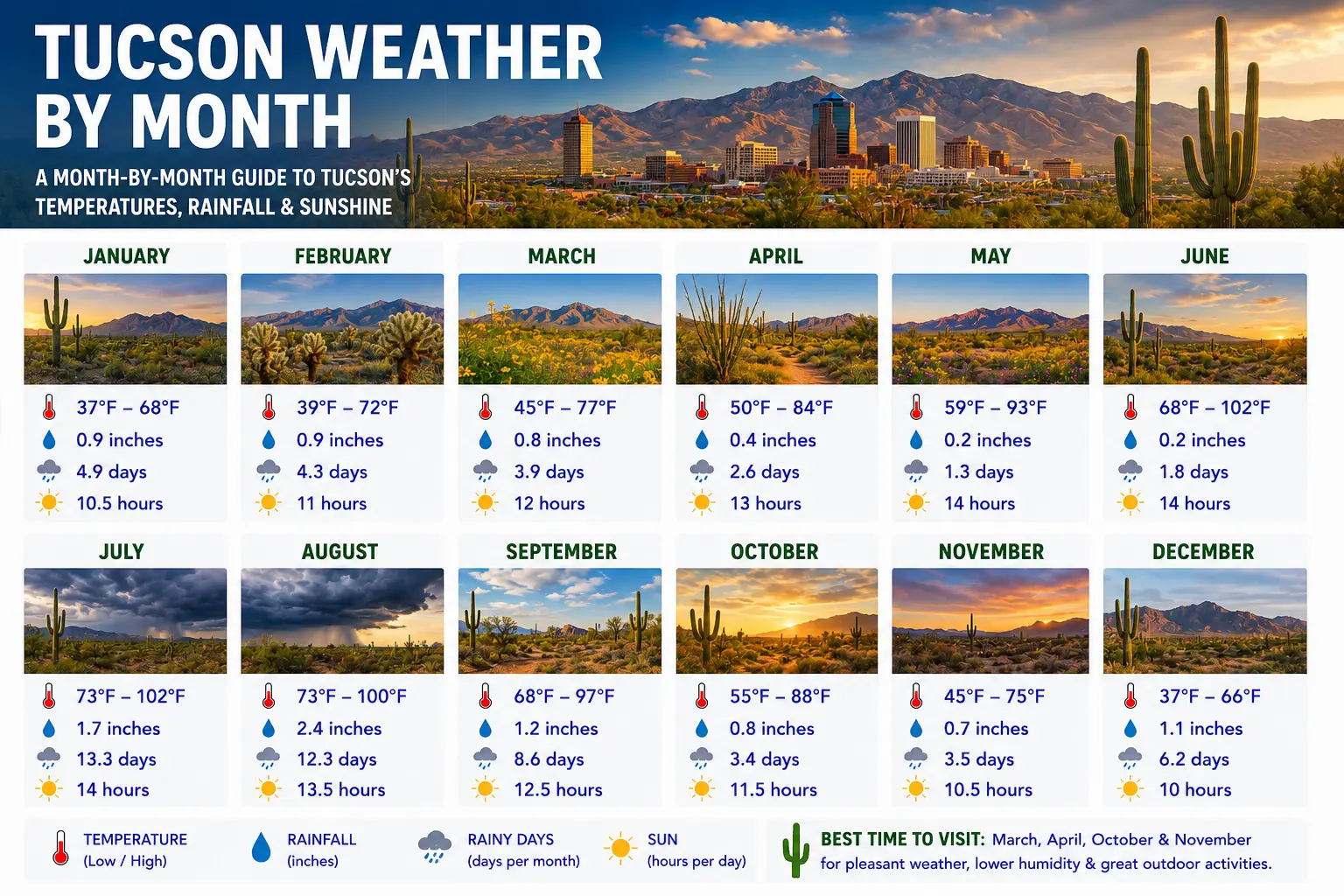
January – Mild Winter Days and Clear Skies
Average low: 37°F (3°C)
Average high: 68°F (20°C)
Rainfall: 0.9 inches (22 mm)
Rainy days: 4.9 days
Daylight: 10.5 hours
January is one of the coolest months in Tucson, but temperatures remain pleasantly mild compared to much of the United States. The combination of sunny skies, low rainfall, and comfortable daytime temperatures makes it an excellent month for outdoor exploration. Visitors can enjoy the Sonoran Desert without worrying about extreme heat.
Best for:
- Hiking in Saguaro National Park
- Desert photography
- Golf vacations
- Scenic drives
February – Comfortable Days and Early Spring Sunshine
Average low: 39°F (4°C)
Average high: 72°F (22°C)
Rainfall: 0.9 inches (23.9 mm)
Rainy days: 4.3 days
Daylight: 11 hours
February brings warmer afternoons and abundant sunshine. The weather is ideal for outdoor activities, and early spring wildflowers may begin appearing across the desert landscape. Rain remains infrequent, allowing visitors to make the most of their time outdoors.
Best for:
- Hiking and cycling
- Wildlife viewing
- Desert sightseeing
- Photography
March – Pleasant Spring Weather
Average low: 45°F (7°C)
Average high: 77°F (25°C)
Rainfall: 0.8 inches (19.7 mm)
Rainy days: 3.9 days
Daylight: 12 hours
March is one of the best months to visit Tucson. Warm afternoons, cool mornings, and minimal rainfall create nearly perfect conditions for outdoor adventures. The desert is especially beautiful as spring vegetation reaches its peak.
Best for:
- Hiking and camping
- Spring vacations
- Botanical gardens
- Outdoor festivals
April – Warm and Sunny Conditions
Average low: 50°F (10°C)
Average high: 84°F (29°C)
Rainfall: 0.4 inches (9.1 mm)
Rainy days: 2.6 days
Daylight: 13 hours
April offers warm temperatures without the intense summer heat. Sunny days dominate the forecast, while rainfall becomes increasingly rare. It is a fantastic month for exploring Tucson’s natural attractions.
Best for:
- Desert hikes
- Golfing
- Scenic drives
- Outdoor recreation
May – Hot, Dry, and Sunny
Average low: 59°F (15°C)
Average high: 93°F (34°C)
Rainfall: 0.2 inches (4.5 mm)
Rainy days: 1.3 days
Daylight: 14 hours
May is typically the driest month of the year. Temperatures climb rapidly, but humidity remains very low. Long sunny days make it a great time for sightseeing, provided outdoor activities are planned during cooler morning hours.
Best for:
- Early-morning hikes
- Resort stays
- Poolside relaxation
- Stargazing
June – Tucson’s Hottest Month
Average low: 68°F (20°C)
Average high: 102°F (39°C)
Rainfall: 0.2 inches (5.2 mm)
Rainy days: 1.8 days
Daylight: 14 hours
June is usually the hottest month in Tucson. The weather is extremely dry, skies are mostly cloudless, and sunshine is abundant. Visitors should schedule outdoor activities early in the day to avoid peak afternoon temperatures.
Best for:
- Resort vacations
- Pool activities
- Nighttime sightseeing
- Indoor attractions
July – Monsoon Season Begins
Average low: 73°F (23°C)
Average high: 102°F (39°C)
Rainfall: 1.7 inches (42.4 mm)
Rainy days: 13.3 days
Daylight: 14 hours
July marks the beginning of Tucson’s famous monsoon season. Afternoon thunderstorms become frequent, bringing dramatic lightning displays and brief periods of heavy rain. Despite the increase in rainfall, temperatures remain very hot.
Best for:
- Storm photography
- Desert landscapes
- Evening activities
- Nature observation
August – The Wettest Month of the Year
Average low: 73°F (23°C)
Average high: 100°F (38°C)
Rainfall: 2.4 inches (60 mm)
Rainy days: 12.3 days
Daylight: 13.5 hours
August is typically Tucson’s wettest month. Frequent monsoon storms bring welcome relief from the summer heat and transform the desert with bursts of greenery. Thunderstorms often occur during the afternoon and evening.
Best for:
- Photography
- Watching monsoon storms
- Wildlife viewing
- Resort vacations
September – Warm Days and Fading Monsoons
Average low: 68°F (20°C)
Average high: 97°F (36°C)
Rainfall: 1.2 inches (30 mm)
Rainy days: 8.6 days
Daylight: 12.5 hours
September remains hot, but temperatures gradually begin to decline. Monsoon activity continues, although storms become less frequent than in July and August. The weather is generally favorable for outdoor exploration.
Best for:
- Morning hikes
- Scenic drives
- Golf vacations
- Outdoor dining
October – Beautiful Fall Weather
Average low: 55°F (13°C)
Average high: 88°F (31°C)
Rainfall: 0.8 inches (19.9 mm)
Rainy days: 3.4 days
Daylight: 11.5 hours
October is one of the most pleasant months in Tucson. Warm daytime temperatures, cool evenings, and low rainfall create ideal conditions for almost any outdoor activity.
Best for:
- Hiking
- Camping
- Cycling
- Exploring the desert
November – Sunny Days and Cool Nights
Average low: 45°F (7°C)
Average high: 75°F (24°C)
Rainfall: 0.7 inches (17.1 mm)
Rainy days: 3.5 days
Daylight: 10.5 hours
November offers comfortable temperatures and mostly sunny weather. The cooler conditions make it one of the best months for sightseeing and outdoor recreation.
Best for:
- Desert hikes
- Photography
- Golf trips
- Road trips
December – A Mild Winter Escape
Average low: 37°F (3°C)
Average high: 66°F (19°C)
Rainfall: 1.1 inches (28.2 mm)
Rainy days: 6.2 days
Daylight: 10 hours
December is a popular time to visit Tucson for travelers seeking warm winter weather. While nights can be chilly, daytime temperatures remain pleasant and ideal for outdoor sightseeing.
Best for:
- Winter vacations
- Outdoor activities
- Holiday travel
- Desert walks
Tucson Weather by Month Table
| Month | Avg High °F (°C) | Avg Low °F (°C) | Rainfall (inches) | Rainy Days | Sun (hrs/day) |
|---|---|---|---|---|---|
| Jan | 68°F (20°C) | 37°F (3°C) | 0.9 | 4.9 | 10.5 |
| Feb | 72°F (22°C) | 39°F (4°C) | 0.9 | 4.3 | 11.0 |
| Mar | 77°F (25°C) | 45°F (7°C) | 0.8 | 3.9 | 12.0 |
| Apr | 84°F (29°C) | 50°F (10°C) | 0.4 | 2.6 | 13.0 |
| May | 93°F (34°C) | 59°F (15°C) | 0.2 | 1.3 | 14.0 |
| Jun | 102°F (39°C) | 68°F (20°C) | 0.2 | 1.8 | 14.0 |
| Jul | 102°F (39°C) | 73°F (23°C) | 1.7 | 13.3 | 14.0 |
| Aug | 100°F (38°C) | 73°F (23°C) | 2.4 | 12.3 | 13.5 |
| Sep | 97°F (36°C) | 68°F (20°C) | 1.2 | 8.6 | 12.5 |
| Oct | 88°F (31°C) | 55°F (13°C) | 0.8 | 3.4 | 11.5 |
| Nov | 75°F (24°C) | 45°F (7°C) | 0.7 | 3.5 | 10.5 |
| Dec | 66°F (19°C) | 37°F (3°C) | 1.1 | 6.2 | 10.0 |
Best Time to Visit Tucson
The best time to visit Tucson is during March, April, October, and November, when temperatures are warm but comfortable and rainfall is minimal. These months offer ideal conditions for hiking, sightseeing, and exploring the Sonoran Desert.
Travelers looking to escape cold winter weather may prefer December through February, while photographers and storm enthusiasts often enjoy the dramatic monsoon season from July through August.
With more than 300 sunny days each year, Tucson is a year-round destination offering outdoor adventures in every season.
20 FAQs About Tucson Weather
1. What is the weather like in Tucson year-round?
Tucson has a desert climate characterized by hot summers, mild winters, low humidity, and abundant sunshine throughout the year.
2. What is the best month to visit Tucson?
March, April, October, and November are generally considered the best months to visit due to their comfortable temperatures and low rainfall.
3. What is the hottest month in Tucson?
June and July are typically the hottest months, with average highs reaching around 102°F (39°C).
4. What is the coldest month in Tucson?
January is usually the coldest month, with average lows around 37°F (3°C).
5. Does Tucson get snow?
Snow is extremely rare in Tucson. Most winters are mild, and snowfall typically occurs only in the surrounding mountains.
6. How much rain does Tucson receive annually?
Tucson receives about 11 inches (280 mm) of rainfall per year, making it one of the drier cities in the United States.
7. What is Tucson’s monsoon season?
The North American Monsoon season in Tucson generally runs from July through September, bringing frequent afternoon thunderstorms.
8. What is the wettest month in Tucson?
August is usually the wettest month, receiving approximately 2.4 inches (60 mm) of rainfall.
9. Which month has the most rainy days in Tucson?
July typically records the most rainy days, averaging about 13 days with measurable precipitation.
10. How many sunny days does Tucson get each year?
Tucson enjoys more than 300 sunny days annually, making it one of the sunniest cities in the United States.
11. Is Tucson humid?
No. Tucson generally has low humidity levels, especially during spring and early summer, although humidity increases during monsoon season.
12. What is the weather like in Tucson during winter?
Winter is mild and sunny, with daytime temperatures often ranging from 65°F to 70°F (18°C to 21°C).
13. Is summer in Tucson unbearable?
Summer temperatures can exceed 100°F (38°C), but the low humidity often makes the heat feel more tolerable than in humid climates.
14. Can you hike in Tucson year-round?
Yes, but summer hikes should be limited to early morning hours due to extreme heat. Spring, fall, and winter offer the best hiking conditions.
15. Does Tucson experience severe weather?
Severe weather is uncommon, but monsoon thunderstorms can bring heavy rain, strong winds, lightning, and occasional flash flooding.
16. What is the driest month in Tucson?
May is typically the driest month, with only about 0.2 inches (4.5 mm) of rainfall.
17. How long are the days in Tucson?
Daylight ranges from about 10 hours in December to 14 hours in June and July.
18. What should I pack for a trip to Tucson?
Pack lightweight clothing, sunscreen, sunglasses, a hat, and comfortable walking shoes. A light jacket may be useful during winter evenings.
19. Is Tucson a good winter destination?
Yes. Many visitors choose Tucson as a winter escape because of its mild temperatures, sunny skies, and outdoor recreation opportunities.
20. When should I avoid visiting Tucson?
Travelers who dislike extreme heat may want to avoid June through August, when daytime temperatures frequently reach or exceed 100°F (38°C).
Read more: