Joshua Tree National Park Weather by Month: A Complete Guide
Joshua Tree National Park is known for its dramatic desert landscapes, iconic twisted trees, and wide-open skies—but its weather can vary significantly throughout the year. Understanding monthly conditions helps you plan the perfect trip, whether you’re hiking, climbing, or stargazing.
Overview of Climate
Joshua Tree sits where the Mojave Desert meets the Colorado Desert. This creates two distinct climate zones:
- Higher elevations (Mojave side): Cooler temperatures
- Lower elevations (Colorado side): Hotter and drier
In general, expect hot summers, mild winters, and low rainfall year-round.
Joshua Tree National Park Temperatures by Month
You can click the image below to view the full-size weather chart for Joshua Tree National Park.
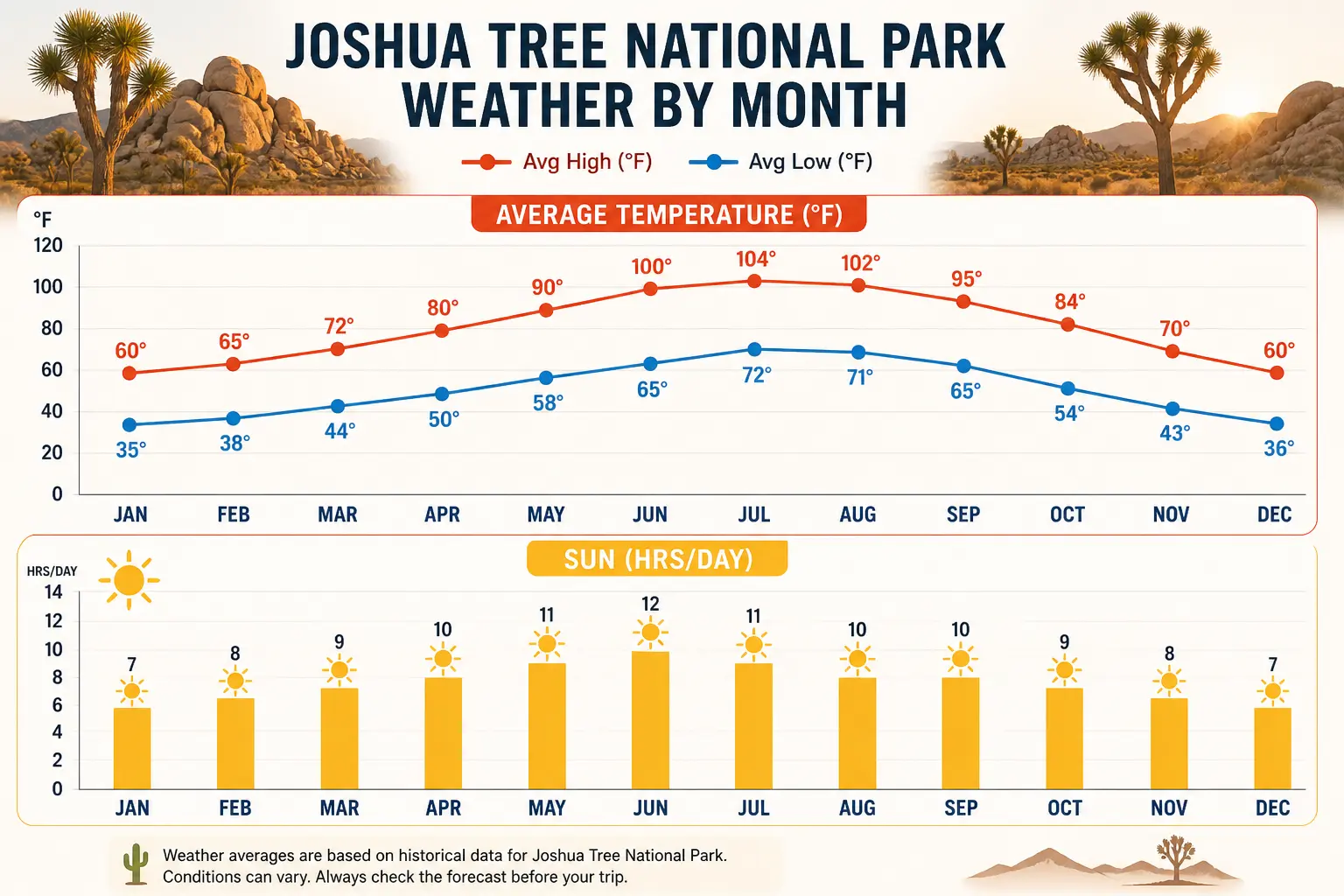
January
- Avg High: 60°F (16°C)
- Avg Low: 35°F (2°C)
- Cool and crisp, with chilly nights
- Occasional frost at higher elevations
- Great for hiking and photography
February
- Avg High: 65°F (18°C)
- Avg Low: 38°F (3°C)
- Slightly warmer, still comfortable
- Wildflowers may begin blooming after rain
March
- Avg High: 72°F (22°C)
- Avg Low: 44°F (7°C)
- One of the best months to visit
- Peak wildflower season in good rainfall years
April
- Avg High: 80°F (27°C)
- Avg Low: 50°F (10°C)
- Warm days, cool nights
- Popular season—expect more visitors
May
- Avg High: 90°F (32°C)
- Avg Low: 58°F (14°C)
- Start of hotter conditions
- Early morning hikes recommended
June
- Avg High: 100°F (38°C)
- Avg Low: 65°F (18°C)
- Very hot and dry
- Heat safety becomes critical
July
- Avg High: 104°F (40°C)
- Avg Low: 72°F (22°C)
- Peak heat
- Possible afternoon thunderstorms
August
- Avg High: 102°F (39°C)
- Avg Low: 71°F (22°C)
- Monsoon season can bring humidity and storms
- Flash flood risk in low areas
September
- Avg High: 95°F (35°C)
- Avg Low: 65°F (18°C)
- Still hot but gradually cooling
- Fewer crowds than spring
October
- Avg High: 84°F (29°C)
- Avg Low: 54°F (12°C)
- Ideal weather returns
- Great for camping and climbing
November
- Avg High: 70°F (21°C)
- Avg Low: 43°F (6°C)
- Mild and pleasant
- Quiet season begins
December
- Avg High: 60°F (16°C)
- Avg Low: 36°F (2°C)
- Cool days, cold nights
- Occasional winter storms
Joshua Tree National Park Weather by Month
| Month | Avg High (°F) | Avg Low (°F) | Rainfall (inches) | Sun (hrs/day) |
|---|---|---|---|---|
| January | 60 | 35 | 0.8 | 7 |
| February | 65 | 38 | 0.9 | 8 |
| March | 72 | 44 | 0.5 | 9 |
| April | 80 | 50 | 0.2 | 10 |
| May | 90 | 58 | 0.1 | 11 |
| June | 100 | 65 | 0.1 | 12 |
| July | 104 | 72 | 0.3 | 11 |
| August | 102 | 71 | 0.6 | 10 |
| September | 95 | 65 | 0.3 | 10 |
| October | 84 | 54 | 0.2 | 9 |
| November | 70 | 43 | 0.3 | 8 |
| December | 60 | 36 | 0.6 | 7 |
Best Time to Visit
- Best overall: March–May and October–November
- Best for avoiding crowds: Late fall (November)
- Best for stargazing: Winter months (clear skies, long nights)
- Avoid if sensitive to heat: June–August
Weather Tips
- Always carry plenty of water—the desert is unforgiving
- Temperatures can swing 30°F (17°C) between day and night
- Check forecasts before visiting—conditions change quickly
- Watch for flash floods during summer storms
20 FAQs about weather in Joshua Tree National Park
1. What is the weather like in Joshua Tree National Park year-round?
Joshua Tree has a desert climate with hot summers, mild winters, and very little rainfall throughout the year.
2. What is the best time to visit Joshua Tree for good weather?
The best weather is typically from March to May and October to November, when temperatures are mild and comfortable.
3. How hot does Joshua Tree get in summer?
Summer temperatures often exceed 100°F (38°C), with July and August being the hottest months.
4. Is Joshua Tree too hot to visit in summer?
It can be dangerously hot during the day, making hiking risky. Early mornings and evenings are safer for outdoor activities.
5. Does it snow in Joshua Tree National Park?
Snow is rare but possible, especially at higher elevations. When it occurs, it’s usually light and short-lived.
6. How cold does Joshua Tree get in winter?
Winter nights can drop to around 35°F (2°C) or lower, while daytime temperatures remain mild.
7. What is the coldest month in Joshua Tree?
January is typically the coldest month, with chilly nights and cool daytime temperatures.
8. What is the hottest month in Joshua Tree?
July is usually the hottest month, with average highs around 104°F (40°C).
9. How much rain does Joshua Tree get?
The park receives very little rainfall, usually less than 5 inches per year.
10. When is the rainy season in Joshua Tree?
Rainfall is slightly higher in winter and during summer monsoon months (July–August), but still minimal overall.
11. Does Joshua Tree have a monsoon season?
Yes, late summer (July–August) can bring brief thunderstorms and increased humidity.
12. Are flash floods common in Joshua Tree?
Flash floods can occur during summer storms, especially in low-lying desert areas.
13. How windy is Joshua Tree National Park?
Windy conditions are common, especially in spring. Gusts can be strong and affect camping or climbing.
14. What is the humidity like in Joshua Tree?
Humidity is generally very low, except during late summer monsoon periods.
15. How many sunny days does Joshua Tree have?
The park enjoys sunshine nearly year-round, with 7–12 hours of sun per day depending on the season.
16. Is Joshua Tree good for stargazing year-round?
Yes, but winter offers the clearest skies and longest nights, making it ideal for stargazing.
17. What should I wear for Joshua Tree weather?
Layered clothing is best. Days can be warm while nights get cold, especially in winter.
18. Is spring a good time for wildflowers in Joshua Tree?
Yes, wildflowers bloom in spring (March–April), especially after a rainy winter.
19. How much does temperature change between day and night?
Temperature swings can be significant, often 20–30°F (11–17°C) between day and night.
20. Is Joshua Tree weather predictable?
Generally yes, but sudden changes like windstorms or summer thunderstorms can occur.
Final Thoughts
Weather in Joshua Tree National Park shapes every experience—from blooming wildflowers in spring to intense summer heat and peaceful winter skies. Picking the right month can make the difference between a comfortable adventure and a challenging one.