Isle Royale National Park Weather by Month
Isle Royale National Park is one of the most remote and rugged parks in the United States, located in the northwest corner of Lake Superior. Its weather is heavily influenced by this massive lake, creating a cool, maritime climate with short summers and long, cold winters. Because the park is only accessible from roughly mid-April through October, understanding the month-by-month weather is essential for planning a trip.
Overview of Isle Royale Climate
- Climate type: Cool continental, lake-influenced
- Best visiting season: June to September
- Coldest months: January–March (park closed)
- Warmest months: July and August
- Wettest period: Late summer into early fall
Lake Superior moderates temperatures, meaning summers are cooler and winters are milder than inland areas—but still very harsh and inaccessible.
Isle Royale National Park Temperatures by Month
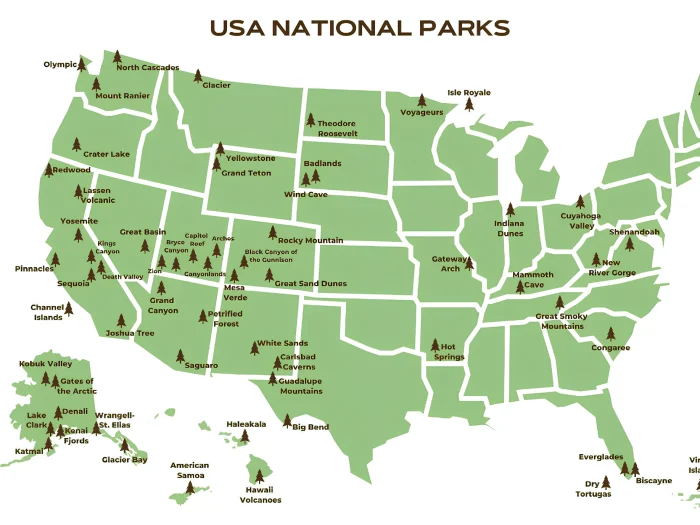
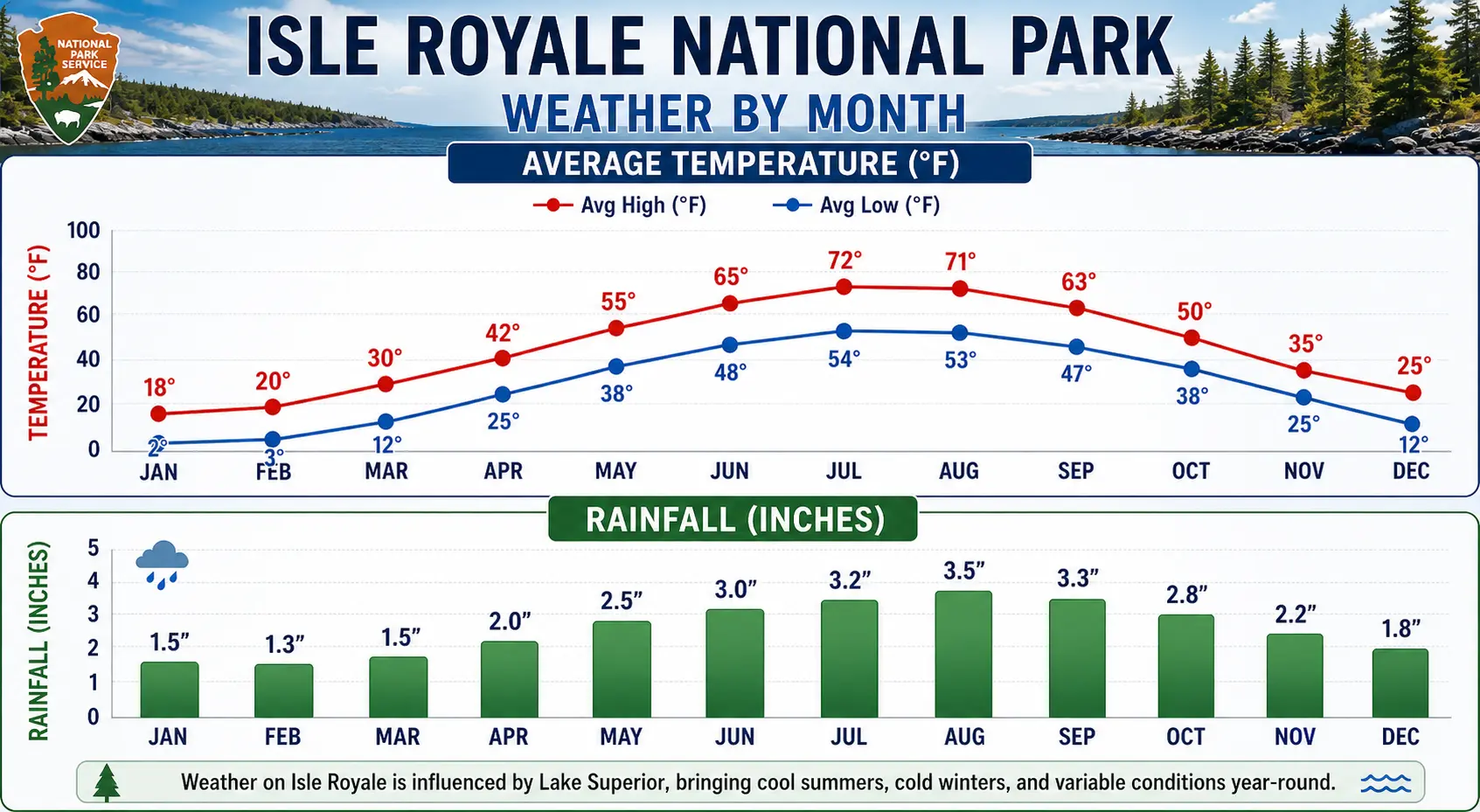
You can click the image below to view the full-size weather chart for Isle Royale NP.
January – March (Deep Winter – Park Closed)
- Avg High: 10–20°F (-12 to -6°C)
- Avg Low: -5 to 5°F (-21 to -15°C)
- Conditions: Heavy snow, frozen landscapes, strong winds
During these months, Isle Royale is completely closed to visitors. Snow accumulates deeply, and Lake Superior often freezes along the shoreline. Only researchers or experienced winter expeditions venture here.
April (Early Spring – Limited Access Begins)
- Avg High: 30–45°F (-1 to 7°C)
- Avg Low: 15–30°F (-9 to -1°C)
- Conditions: Snow melt, icy trails, unpredictable weather
Ferry services may begin late in the month, depending on ice conditions. Expect a mix of snow, rain, and cold winds. Trails are muddy and slippery.
May (Cool Spring Awakening)
- Avg High: 45–60°F (7–16°C)
- Avg Low: 30–45°F (-1 to 7°C)
- Conditions: Fog, light rain, emerging greenery
Wildlife becomes active, and vegetation starts to bloom. However, Lake Superior keeps temperatures cool, and fog is common. It’s quieter than summer, ideal for solitude seekers.
June (Early Summer – Start of Peak Season)
- Avg High: 55–70°F (13–21°C)
- Avg Low: 40–50°F (4–10°C)
- Conditions: Mild days, cool nights, increasing sunshine
June is one of the best times to visit. Trails are open, wildlife is abundant, and temperatures are comfortable. However, mosquitoes can be intense, especially inland.
July (Warmest Month)
- Avg High: 65–75°F (18–24°C)
- Avg Low: 50–55°F (10–13°C)
- Conditions: Pleasant weather, occasional rain, peak bugs
This is the warmest and busiest month. Ideal for hiking, kayaking, and camping. Water temperatures in Lake Superior remain cold, but conditions are generally stable.
August (Warm and Slightly Wetter)
- Avg High: 65–75°F (18–24°C)
- Avg Low: 50–55°F (10–13°C)
- Conditions: Warmer water, more rain, fewer bugs late month
August offers similar temperatures to July but with slightly increased rainfall. Mosquitoes begin to decline toward the end of the month, making it a favorite time for many visitors.
September (Early Fall – Quiet and Scenic)
- Avg High: 55–65°F (13–18°C)
- Avg Low: 40–50°F (4–10°C)
- Conditions: Crisp air, fewer crowds, early fall colors
One of the best months for photography and hiking. The crowds thin out, bugs are mostly gone, and the forest begins to show autumn colors.
October (Late Fall – Season Ends)
- Avg High: 45–55°F (7–13°C)
- Avg Low: 30–40°F (-1 to 4°C)
- Conditions: Cold, windy, increasing storms
Ferry services shut down by late October. Weather becomes unpredictable, with strong winds on Lake Superior and occasional early snowfall.
November – December (Early Winter – Closed Season)
- Avg High: 20–35°F (-6 to 2°C)
- Avg Low: 5–20°F (-15 to -6°C)
- Conditions: Snow returns, lake-effect storms
The park is fully closed again. Snowfall increases rapidly, and isolation becomes extreme.
| Month | Avg High (°F) | Avg Low (°F) | Rainfall (inches) | Snowfall (inches) |
|---|---|---|---|---|
| January | 18 | 2 | 1.5 | 20 |
| February | 20 | 3 | 1.3 | 18 |
| March | 30 | 12 | 1.5 | 15 |
| April | 42 | 25 | 2.0 | 8 |
| May | 55 | 38 | 2.5 | 2 |
| June | 65 | 48 | 3.0 | 0 |
| July | 72 | 54 | 3.2 | 0 |
| August | 71 | 53 | 3.5 | 0 |
| September | 63 | 47 | 3.3 | 0 |
| October | 50 | 38 | 2.8 | 3 |
| November | 35 | 25 | 2.2 | 10 |
| December | 25 | 12 | 1.8 | 18 |
Notes:
- Snowfall is significant from November through April due to lake-effect snow from Lake Superior.
- Rainfall peaks in late summer (July–September).
- Winter values are approximate since the park is closed and data is limited.
Rainfall and Seasonal Patterns
- Driest period: Late winter (but inaccessible)
- Wettest months: August and September
- Annual precipitation: ~30 inches (760 mm)
Rain often comes as light, steady showers rather than heavy storms, though Lake Superior can generate sudden weather changes.
Best Time to Visit Isle Royale
- Best overall: July & August (warmest, full access)
- Best for fewer crowds: June & September
- Best for wildlife: May & June
- Best for fall colors: Mid-September
20 helpful FAQs about weather at Isle Royale National Park
1. What is the weather like in Isle Royale National Park?
The park has a cool, lake-influenced climate with mild summers and very cold, snowy winters.
2. How does Lake Superior affect the weather?
Lake Superior moderates temperatures, making summers cooler and winters slightly less extreme but still harsh.
3. What is the best month to visit Isle Royale for good weather?
July and August offer the warmest temperatures and the most stable conditions.
4. Is Isle Royale open year-round?
No, the park is typically open from mid-April through October due to extreme winter conditions.
5. How cold does Isle Royale get in winter?
Temperatures can drop below 0°F (-18°C), with heavy snowfall and strong winds.
6. What are summers like in Isle Royale?
Summers are mild, with average highs between 65–75°F (18–24°C) and cool nights.
7. Does it rain a lot in Isle Royale National Park?
Rainfall is moderate, with the wettest months usually in late summer (July–September).
8. When is the driest time to visit Isle Royale?
Late winter is driest, but the park is closed; during the open season, spring tends to be relatively drier.
9. Does Isle Royale get snow?
Yes, heavy snowfall occurs from November through April due to lake-effect snow.
10. What is lake-effect snow?
It’s snowfall created when cold air passes over warmer lake water, producing heavy snow bands.
11. Is fog common in Isle Royale?
Yes, especially in spring and early summer due to temperature differences over Lake Superior.
12. Are there mosquitoes in Isle Royale?
Yes, mosquitoes are most active in June and July, particularly inland.
13. What is the weather like in May?
May is cool and damp, with temperatures ranging from about 45–60°F and frequent fog.
14. Is September a good time to visit?
Yes, September offers cooler weather, fewer bugs, and beautiful early fall colors.
15. Can the weather change quickly in Isle Royale?
Yes, conditions can shift rapidly, especially due to Lake Superior’s influence.
16. What should I pack for Isle Royale weather?
Layered clothing, a waterproof jacket, and warm gear—even in summer—are essential.
17. Is Isle Royale windy?
Yes, winds can be strong, especially along the shoreline and on exposed ridges.
18. What is the warmest temperature recorded in Isle Royale?
Temperatures rarely exceed 80°F (27°C), even in peak summer.
19. How cold are the nights in summer?
Even in July and August, nighttime temperatures can drop into the 40s or low 50s °F.
20. Does Isle Royale experience extreme weather?
While not extreme like deserts or mountains, it can have sudden storms, cold snaps, and rough lake conditions.
Final Thoughts
Weather at Isle Royale NP is defined by isolation and the powerful influence of Lake Superior. Even in summer, conditions can change quickly, so preparation is essential. Visitors should always pack layers, rain gear, and be ready for cooler temperatures than expected.
If you’re planning a trip, timing your visit around the short summer window will give you the best experience of this wild and remote national park.