Horseshoe Bend AZ Weather by Month
Horseshoe Bend, near Page, Arizona, has a high-desert climate with cold winters, hot summers, and generally low rainfall. Summer temperatures can rise close to or above 100°F, while winter nights can drop below freezing. The exposed overlook also offers very little shade, so summer heat can feel especially intense during the hike.
Horseshoe Bend AZ Weather by Month
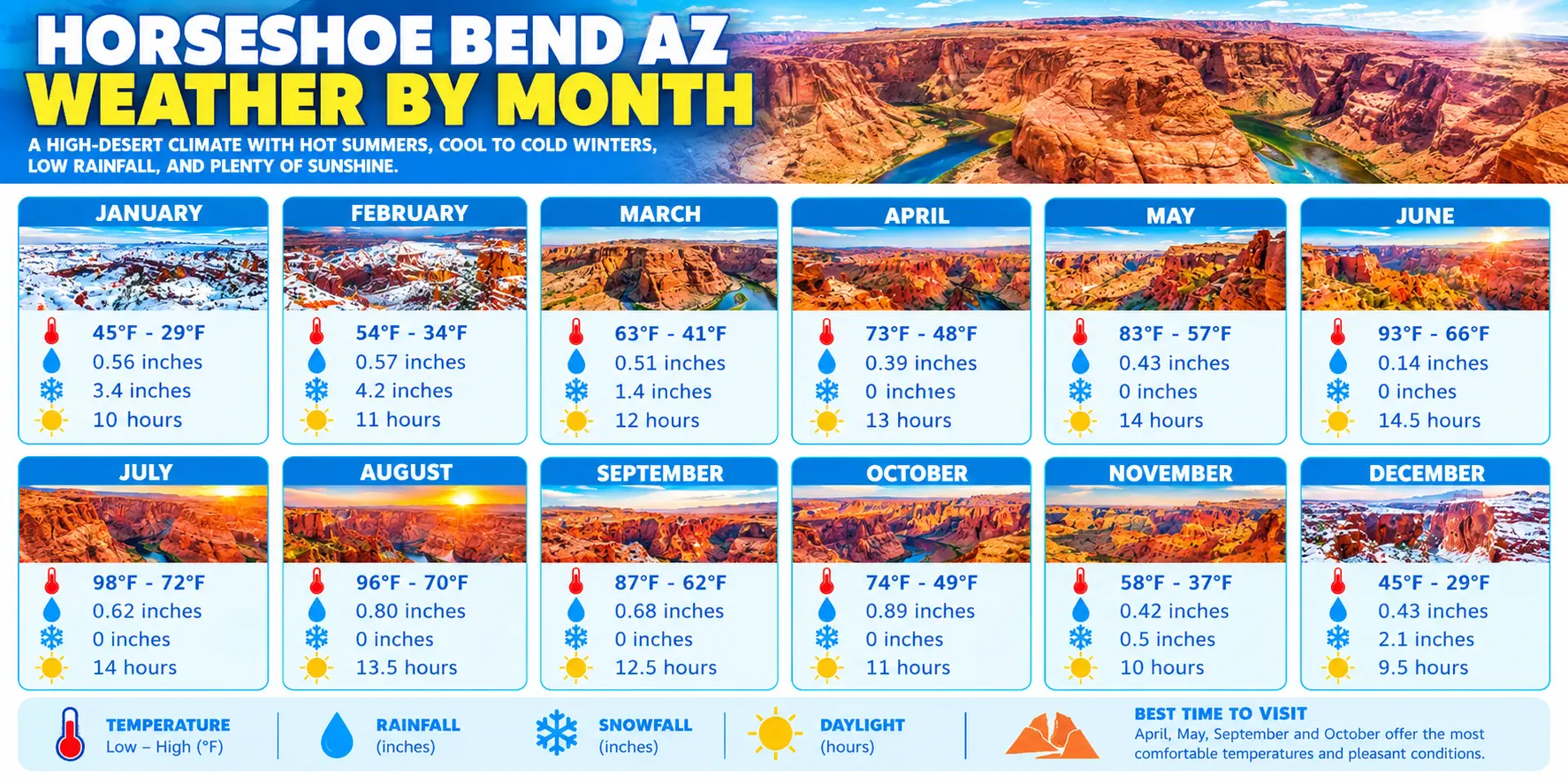
You can click the image below to view the full-size weather chart for Horseshoe Bend AZ.
January – Cool, Dry and Crisp Winter Days
Average high: 45°F (7°C)
Average low: 29°F (-2°C)
Rainfall: 0.56 inches (14.2 mm)
Snowfall: 3.4 inches (8.6 cm)
Daylight: 10 hours
January is one of the coldest months at Horseshoe Bend. Average daytime temperatures reach around 45°F (7°C), while nighttime temperatures can fall to about 29°F (-2°C).
Rainfall remains low at around 0.56 inches (14.2 mm). Snow is possible during winter, although significant accumulation is uncommon around the overlook. With about 10 hours of daylight, visitors have a shorter window for exploring.
Best for:
- Exploring Horseshoe Bend without summer heat
- Photography in crisp winter light
- Quieter visits with fewer visitors
- Enjoying cool hiking conditions
February – Cool with Gradually Warmer Days
Average high: 54°F (12°C)
Average low: 34°F (1°C)
Rainfall: 0.57 inches (14.5 mm)
Snowfall: 4.2 inches (10.7 cm)
Daylight: 11 hours
February brings a gradual increase in temperatures, with average highs reaching 54°F (12°C) and lows around 34°F (1°C). Mornings and evenings can still feel quite cold.
Rainfall remains limited, while February can be one of the snowier months in the surrounding Page area. Around 11 hours of daylight provide more time for sightseeing compared with January.
Best for:
- Cool-weather hiking
- Avoiding extreme summer temperatures
- Photography with softer winter light
- Quieter visits
March – Pleasant Spring Weather
Average high: 63°F (17°C)
Average low: 41°F (5°C)
Rainfall: 0.51 inches (13 mm)
Snowfall: 1.4 inches (3.6 cm)
Daylight: 12 hours
March marks the beginning of more comfortable spring weather at Horseshoe Bend. Afternoon temperatures average around 63°F (17°C), while mornings remain cool at about 41°F (5°C).
Rainfall is still relatively low, and snowfall drops sharply compared with February. With approximately 12 hours of daylight, March offers a good balance between comfortable temperatures and longer days.
Best for:
- Hiking the Horseshoe Bend trail
- Spring sightseeing
- Photography and outdoor activities
- Comfortable daytime temperatures
April – Warm, Dry and Comfortable
Average high: 73°F (23°C)
Average low: 48°F (9°C)
Rainfall: 0.39 inches (9.9 mm)
Snowfall: 0 inches
Daylight: 13 hours
April is one of the most comfortable months to visit Horseshoe Bend. Average highs reach 73°F (23°C), while nighttime temperatures remain pleasantly cool at around 48°F (9°C).
Rainfall is low, and snow is essentially absent. Around 13 hours of daylight provide plenty of time to explore the overlook and surrounding attractions without the intense summer heat.
Best for:
- Hiking in comfortable weather
- Scenic photography
- Exploring Horseshoe Bend and Page
- Longer outdoor days
May – Warm and Mostly Dry
Average high: 83°F (28°C)
Average low: 57°F (14°C)
Rainfall: 0.43 inches (10.9 mm)
Snowfall: 0 inches
Daylight: 14 hours
May brings noticeably warmer weather. Daytime temperatures average 83°F (28°C), while nights are comfortable at around 57°F (14°C).
Rainfall remains low and there is virtually no risk of snow. With roughly 14 hours of daylight, May is an excellent month for exploring Horseshoe Bend and nearby desert attractions.
Best for:
- Early morning and late afternoon hikes
- Photography
- Exploring nearby Page attractions
- Enjoying long daylight hours
June – Hot, Very Dry and Sunny
Average high: 93°F (34°C)
Average low: 66°F (19°C)
Rainfall: 0.14 inches (3.6 mm)
Snowfall: 0 inches
Daylight: 14.5 hours
June marks the beginning of the intense summer heat at Horseshoe Bend. Average highs reach 93°F (34°C), and nighttime temperatures remain relatively warm at around 66°F (19°C).
Rainfall is extremely low, making June one of the driest months of the year. The long daylight period is useful for sightseeing, but the exposed trail can become very hot, so early morning or evening visits are preferable.
Best for:
- Sunrise and early-morning visits
- Long summer days
- Photography
- Exploring before temperatures peak
July – Hottest Month with Summer Monsoon Storms
Average high: 98°F (37°C)
Average low: 72°F (22°C)
Rainfall: 0.62 inches (15.7 mm)
Snowfall: 0 inches
Daylight: 14 hours
July is the hottest month at Horseshoe Bend, with an average high of about 98°F (37°C) and a low around 72°F (22°C).
Although rainfall remains modest overall, summer monsoon storms can become an important weather factor. The exposed Horseshoe Bend overlook has little shade, so afternoon hiking can be extremely uncomfortable during periods of intense heat.
Best for:
- Sunrise photography
- Early-morning visits
- Experiencing the desert in peak summer
- Long daylight sightseeing
August – Very Hot with Monsoon Weather
Average high: 96°F (36°C)
Average low: 70°F (21°C)
Rainfall: 0.80 inches (20.3 mm)
Snowfall: 0 inches
Daylight: 13.5 hours
August remains extremely hot, with average highs around 96°F (36°C) and nighttime lows near 70°F (21°C). It is slightly cooler than July but still challenging for midday hiking.
Rainfall increases compared with June, partly because of summer monsoon activity. Sudden storms can occur, so visitors should pay attention to weather conditions before heading onto the exposed overlook.
Best for:
- Sunrise and sunset photography
- Early-morning sightseeing
- Desert scenery
- Visitors comfortable with extreme summer heat
September – Warm Days and Cooler Evenings
Average high: 87°F (31°C)
Average low: 62°F (17°C)
Rainfall: 0.68 inches (17.3 mm)
Snowfall: 0 inches
Daylight: 12.5 hours
September brings noticeable relief from the peak summer heat. Average daytime temperatures fall to around 87°F (31°C), while nights cool to about 62°F (17°C).
Rainfall remains relatively low, and the shorter days make outdoor activities more comfortable. Early mornings and late afternoons are particularly pleasant for visiting the overlook.
Best for:
- Hiking in more manageable temperatures
- Scenic photography
- Exploring Page and nearby attractions
- Cooler evening activities
October – Comfortable, Mild and Excellent for Hiking
Average high: 74°F (23°C)
Average low: 49°F (9°C)
Rainfall: 0.89 inches (22.6 mm)
Snowfall: 0 inches
Daylight: 11 hours
October is one of the best months for visiting Horseshoe Bend. Average highs fall to a comfortable 74°F (23°C), while nighttime temperatures are around 49°F (9°C).
Rainfall is somewhat higher than during the summer, but overall precipitation remains modest. With about 11 hours of daylight, October provides comfortable conditions for hiking, sightseeing, and photography.
Best for:
- Hiking the Horseshoe Bend trail
- Photography
- Comfortable daytime sightseeing
- Exploring the surrounding desert
November – Cool and Increasingly Quiet
Average high: 58°F (14°C)
Average low: 37°F (3°C)
Rainfall: 0.42 inches (10.7 mm)
Snowfall: 0.5 inches (1.3 cm)
Daylight: 10 hours
November brings cooler conditions, with average highs around 58°F (14°C) and lows near 37°F (3°C). Mornings and evenings can feel chilly, especially around sunrise.
Rainfall remains low, while a small amount of snowfall becomes possible as winter approaches. Around 10 hours of daylight still allow plenty of time for a visit.
Best for:
- Quiet sightseeing
- Hiking in cool weather
- Sunrise photography
- Avoiding summer crowds and heat
December – Cold, Quiet and Short Winter Days
Average high: 45°F (7°C)
Average low: 29°F (-2°C)
Rainfall: 0.43 inches (10.9 mm)
Snowfall: 2.1 inches (5.3 cm)
Daylight: 9.5 hours
December returns to winter conditions, with average daytime temperatures around 45°F (7°C) and nighttime lows near 29°F (-2°C).
Rainfall remains limited, although occasional winter snow is possible. With only about 9.5 hours of daylight, December has the shortest days of the year, so visitors should plan outdoor activities earlier.
Best for:
- Quiet winter visits
- Photography with low winter light
- Cool-weather hiking
- Avoiding the intense summer heat
The Horseshoe Bend temperature figures above follow the data you supplied. The added precipitation and snow figures are based on climate averages for the nearby Page/Horseshoe Bend area; different climate datasets can vary slightly because they use different periods and calculation methods.
Horseshoe Bend AZ Weather by Month
| Month | Avg High °F (°C) | Avg Low °F (°C) | Rainfall (inches) | Snowfall (inches) | Daylight (hours) |
|---|---|---|---|---|---|
| January | 45°F (7°C) | 29°F (-2°C) | 0.56 | 3.4 | 10 |
| February | 54°F (12°C) | 34°F (1°C) | 0.57 | 4.2 | 11 |
| March | 63°F (17°C) | 41°F (5°C) | 0.51 | 1.4 | 12 |
| April | 73°F (23°C) | 48°F (9°C) | 0.39 | 0 | 13 |
| May | 83°F (28°C) | 57°F (14°C) | 0.43 | 0 | 14 |
| June | 93°F (34°C) | 66°F (19°C) | 0.14 | 0 | 14.5 |
| July | 98°F (37°C) | 72°F (22°C) | 0.62 | 0 | 14 |
| August | 96°F (36°C) | 70°F (21°C) | 0.80 | 0 | 13.5 |
| September | 87°F (31°C) | 62°F (17°C) | 0.68 | 0 | 12.5 |
| October | 74°F (23°C) | 49°F (9°C) | 0.89 | 0 | 11 |
| November | 58°F (14°C) | 37°F (3°C) | 0.42 | 0.5 | 10 |
| December | 45°F (7°C) | 29°F (-2°C) | 0.43 | 2.1 | 9.5 |
Horseshoe Bend AZ Weather FAQs
1. What is the weather like at Horseshoe Bend, Arizona?
Horseshoe Bend has a high-desert climate with hot summers, cool to cold winters, low rainfall, and plenty of sunshine. Summer temperatures can approach 100°F, while winter nights can fall below freezing.
2. What is the best month to visit Horseshoe Bend for good weather?
April, May, September, and October are among the best months. These months generally offer comfortable daytime temperatures without the extreme summer heat or winter cold.
3. What is the hottest month at Horseshoe Bend?
July is typically the hottest month, with an average high of about 98°F and an average low of 72°F.
4. How hot does Horseshoe Bend get in summer?
Summer can be extremely hot. Average highs are around 93°F in June, 98°F in July, and 96°F in August. Temperatures can feel even hotter on the exposed trail and overlook.
5. Is Horseshoe Bend too hot in July?
July can be very hot for hiking, especially around midday. If visiting in July, sunrise or early morning is generally more comfortable than the middle of the day.
6. Does it snow at Horseshoe Bend?
Snow is possible during winter, although conditions vary from year to year. January, February, and December have the greatest potential for snowfall, while snow is essentially absent from April through October.
7. What is the coldest month at Horseshoe Bend?
January and December are among the coldest months, with average highs around 45°F and average lows near 29°F.
8. What is the weather like at Horseshoe Bend in January?
January is cool and dry, with an average high of 45°F and a low of 29°F. There are about 10 hours of daylight, and occasional winter snow is possible.
9. What is the weather like at Horseshoe Bend in April?
April is mild and comfortable, with an average high of 73°F and a low of 48°F. Rainfall is low and there is essentially no snowfall, making it a good month for hiking.
10. What is the weather like at Horseshoe Bend in May?
May is warm and mostly dry. Average temperatures range from about 57°F at night to 83°F during the day, with approximately 14 hours of daylight.
11. What is the weather like at Horseshoe Bend in June?
June is hot and very dry, with an average high of 93°F and a low of 66°F. The long daylight hours are excellent for sightseeing, but early morning is preferable for hiking.
12. What is the weather like at Horseshoe Bend in September?
September is warm but more comfortable than the peak summer months. The average high is around 87°F, while the average low is about 62°F.
13. What is the weather like at Horseshoe Bend in October?
October is one of the most comfortable months, with an average high of 74°F and a low of 49°F. The cooler temperatures make hiking and photography much more pleasant.
14. How much rain does Horseshoe Bend get?
Horseshoe Bend receives relatively little rainfall throughout the year. Monthly rainfall generally ranges from about 0.14 to 0.89 inches, with the wettest month in the data being October.
15. Does Horseshoe Bend get monsoon rain?
Yes. Summer monsoon storms can affect the Page and Horseshoe Bend area, particularly during July and August. Storms can develop quickly, so visitors should check the forecast before hiking.
16. How many hours of daylight does Horseshoe Bend get?
Daylight varies from about 9.5 hours in December to around 14.5 hours in June. The longer days of late spring and summer provide more time for sightseeing.
17. What should I wear to Horseshoe Bend in summer?
Lightweight, breathable clothing, comfortable hiking shoes, sunglasses, and a hat are recommended. Sunscreen and plenty of water are also important because much of the trail and overlook is exposed to the sun.
18. What should I wear to Horseshoe Bend in winter?
Winter visitors should bring layers, a warm jacket, and comfortable shoes. Mornings and evenings can be below freezing, even when afternoon temperatures are relatively mild.
19. What is the best time of day to visit Horseshoe Bend in hot weather?
Early morning is generally the best choice during the hottest months. Sunrise visits provide cooler temperatures and softer light, while late afternoon can also be more comfortable than midday.
20. Is Horseshoe Bend worth visiting in winter?
Yes. Winter offers cool temperatures, fewer visitors, and beautiful low-angle sunlight for photography. Although it can be cold, winter can be a pleasant time to visit if you dress appropriately.
Read more: