White Sands National Park Weather by Month
Located in southern New Mexico, White Sands experiences a unique desert climate with hot summers, mild winters, low annual precipitation, and abundant sunshine throughout the year. The park sits within the Tularosa Basin at an elevation of about 4,200 feet (1,280 m), creating weather conditions that can change noticeably between day and night.
While summer brings the warmest temperatures and seasonal thunderstorms, winter offers cool, sunny days perfect for hiking across the dazzling gypsum dunes. Here’s a month-by-month guide to help you plan the best time to visit.
White Sands National Park Weather by Month
Click the image below to view the full-size version.

January – Cool and Sunny
- Average high: 57°F (14°C)
- Average low: 21°F (-6°C)
- Rainfall: 0.5 inches (13.7 mm)
- Daylight: 10 hours
January is one of the coldest months in White Sands National Park, but daytime conditions are often pleasant thanks to abundant sunshine. Early mornings can be chilly, and freezing temperatures are common overnight.
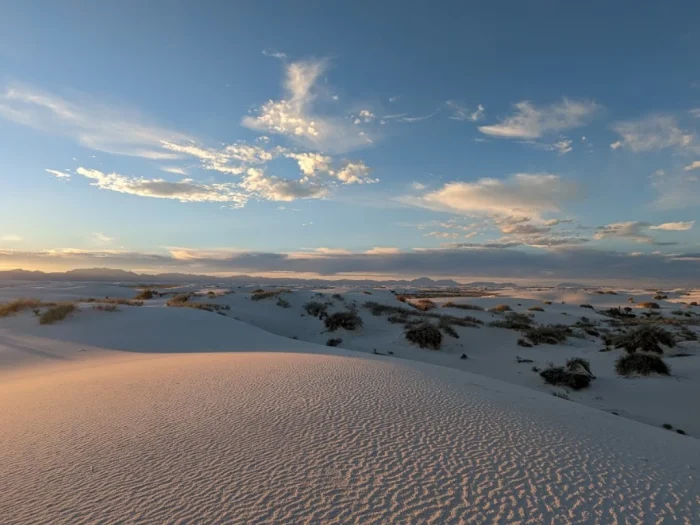
The white gypsum dunes occasionally receive light snowfall, creating a striking contrast between bright white sand and fresh snow. Winter’s clear skies also provide excellent opportunities for photography and stargazing.
Best for:
- Hiking during cool weather
- Photography
- Stargazing
- Avoiding crowds
February – Mild Winter Days
- Average high: 63°F (17°C)
- Average low: 27°F (-3°C)
- Rainfall: 0.4 inches (9.9 mm)
- Daylight: 11 hours
February brings slightly warmer temperatures while maintaining the dry, sunny conditions that make winter a popular season for outdoor exploration.
The dunes are comfortable for daytime walks, and wildlife becomes more active during the warming afternoons.
Best for:
- Scenic drives
- Ranger-led programs
- Wildlife viewing
- Desert hiking
March – Beginning of Spring
- Average high: 72°F (22°C)
- Average low: 32°F (0°C)
- Rainfall: 0.3 inches (6.5 mm)
- Daylight: 12 hours
March marks the arrival of spring, with warmer afternoons and longer daylight hours. Temperatures are ideal for exploring the Alkali Flat Trail and other hiking routes throughout the park.
Spring winds can occasionally become strong, creating dramatic ripples across the dunes and producing excellent photographic opportunities.
Best for:
- Hiking
- Landscape photography
- Family visits
- Outdoor recreation
April – Warm and Pleasant
- Average high: 79°F (26°C)
- Average low: 39°F (4°C)
- Rainfall: 0.3 inches (7.5 mm)
- Daylight: 13 hours
April offers some of the most comfortable weather of the year. Days are warm but rarely hot, while evenings remain cool and pleasant.
According to the National Park Service, spring is one of the busiest visitation periods due to ideal hiking conditions and clear desert skies.
Best for:
- Camping nearby
- Sunset viewing
- Sand sledding
- Long hikes
May – Early Summer Warmth
- Average high: 88°F (31°C)
- Average low: 48°F (9°C)
- Rainfall: 0.4 inches (11.2 mm)
- Daylight: 14 hours
May introduces early summer heat, though mornings and evenings remain comfortable. The dunes begin warming quickly during the afternoon, making early starts recommended for hikers.
The dry air and bright sunshine create exceptional visibility across the vast dune field.
Best for:
- Sunrise photography
- Early morning hikes
- Scenic exploration
- Family adventures
June – Hot and Sunny
- Average high: 97°F (36°C)
- Average low: 59°F (15°C)
- Rainfall: 0.9 inches (22.2 mm)
- Daylight: 14 hours
June is typically one of the hottest months in White Sands National Park. Afternoon temperatures can become intense, especially on the exposed dunes where little natural shade exists.
Visitors are encouraged to carry plenty of water and schedule strenuous activities during the morning hours.
Best for:
- Sunrise visits
- Photography
- Evening walks
- Desert scenery
July – Monsoon Season Begins
- Average high: 97°F (36°C)
- Average low: 64°F (18°C)
- Rainfall: 1.3 inches (31.8 mm)
- Daylight: 14 hours
July marks the beginning of the Southwest monsoon season. Afternoon thunderstorms become more frequent, often producing dramatic cloud formations, lightning displays, and brief heavy downpours.
Despite the heat, the storms create some of the most spectacular landscapes and sunsets of the year.
Best for:
- Storm photography
- Sunset viewing
- Summer vacations
- Scenic drives
August – Wettest Month of the Year
- Average high: 95°F (35°C)
- Average low: 63°F (17°C)
- Rainfall: 2.1 inches (53.1 mm)
- Daylight: 13.5 hours
August is generally the wettest month in White Sands. Afternoon thunderstorms occur regularly, bringing temporary cooling and vibrant desert skies.
Although rainfall increases, storms are usually brief, allowing visitors to continue exploring after conditions improve.
Best for:
- Monsoon photography
- Viewing dramatic skies
- Evening recreation
- Desert landscapes
September – Warm with Fewer Storms
- Average high: 90°F (32°C)
- Average low: 55°F (13°C)
- Rainfall: 1.4 inches (35.2 mm)
- Daylight: 12.5 hours
September offers a pleasant transition from summer to fall. Temperatures gradually cool, and monsoon activity begins decreasing.
The combination of warm days, cooler evenings, and fewer visitors makes September a favorite month among experienced travelers.
Best for:
- Hiking
- Photography
- Scenic drives
- Outdoor recreation
October – Comfortable Fall Weather
- Average high: 79°F (26°C)
- Average low: 41°F (5°C)
- Rainfall: 0.9 inches (23.9 mm)
- Daylight: 11.5 hours
October provides near-perfect conditions for exploring White Sands. Days are warm, nights are cool, and rainfall is relatively low.
The pleasant weather makes it easy to spend extended time on the dunes without the intense heat of summer.
Best for:
- Hiking
- Sand sledding
- Family trips
- Sunset photography
November – Cool and Quiet
- Average high: 66°F (19°C)
- Average low: 28°F (-2°C)
- Rainfall: 0.5 inches (13.2 mm)
- Daylight: 10.5 hours
November brings cooler temperatures and fewer visitors. Crisp mornings and sunny afternoons create excellent conditions for exploring the park’s trails and overlooks.
Fall colors are limited in the desert environment, but the clear skies and golden sunlight provide outstanding photographic opportunities.
Best for:
- Peaceful sightseeing
- Photography
- Wildlife observation
- Hiking
December – Cool Desert Winter
- Average high: 57°F (14°C)
- Average low: 21°F (-6°C)
- Rainfall: 0.7 inches (17.7 mm)
- Daylight: 10 hours
December offers mild winter afternoons and cold nights. Occasional snowfall can dust the dunes, creating one of the park’s most memorable natural spectacles.
Holiday visitors often enjoy the quiet atmosphere, comfortable daytime temperatures, and exceptional visibility across the white landscape.
Best for:
- Winter photography
- Stargazing
- Holiday travel
- Scenic exploration
White Sands National Park Weather by Month Table
| Month | Avg High °F (°C) | Avg Low °F (°C) | Rainfall (inches) | Sun (hrs/day) |
|---|---|---|---|---|
| January | 57°F (14°C) | 21°F (-6°C) | 0.54 | 10.0 |
| February | 63°F (17°C) | 27°F (-3°C) | 0.39 | 11.0 |
| March | 72°F (22°C) | 32°F (0°C) | 0.26 | 12.0 |
| April | 79°F (26°C) | 39°F (4°C) | 0.30 | 13.0 |
| May | 88°F (31°C) | 48°F (9°C) | 0.44 | 14.0 |
| June | 97°F (36°C) | 59°F (15°C) | 0.87 | 14.0 |
| July | 97°F (36°C) | 64°F (18°C) | 1.25 | 14.0 |
| August | 95°F (35°C) | 63°F (17°C) | 2.09 | 13.5 |
| September | 90°F (32°C) | 55°F (13°C) | 1.39 | 12.5 |
| October | 79°F (26°C) | 41°F (5°C) | 0.94 | 11.5 |
| November | 66°F (19°C) | 28°F (-2°C) | 0.52 | 10.5 |
| December | 57°F (14°C) | 21°F (-6°C) | 0.70 | 10.0 |
Best Time to Visit White Sands National Park
The most comfortable weather generally occurs during March through May and September through October, when temperatures are pleasant and ideal for outdoor activities.
For hiking: March, April, October, and November
For photography: July through September (dramatic monsoon skies) and December through February (clear winter light)
For avoiding crowds: January, February, and November
For warm-weather adventures: May through September
No matter the season, White Sands National Park offers stunning desert scenery, brilliant white gypsum dunes, and some of the most unique weather experiences in the American Southwest.
20 FAQs About White Sands National Park Weather
1. What is the best month to visit White Sands National Park?
March, April, October, and November are generally considered the best months to visit due to comfortable temperatures, low rainfall, and excellent conditions for hiking and sightseeing.
2. How hot does White Sands National Park get in summer?
Summer temperatures often reach 95–97°F (35–36°C) from June through August, with the dunes becoming especially hot during the afternoon.
3. Does it snow at White Sands National Park?
Yes. Snowfall is uncommon but does occur during winter, especially in December, January, and February. Snow-covered gypsum dunes create a unique and beautiful landscape.
4. What is the coldest month in White Sands National Park?
January is typically the coldest month, with average lows around 21°F (-6°C) and highs near 57°F (14°C).
5. What is the hottest month in White Sands National Park?
June and July are usually the hottest months, with average daytime highs reaching about 97°F (36°C).
6. When is the rainy season at White Sands National Park?
The rainy season occurs during the Southwest monsoon, typically from July through September, with August being the wettest month.
7. How much rainfall does White Sands National Park receive annually?
The park receives approximately 9–10 inches (230–250 mm) of precipitation annually, making it a relatively dry desert environment.
8. Are thunderstorms common in White Sands National Park?
Yes. Afternoon thunderstorms are common during the monsoon season, especially from July through September.
9. Can lightning be dangerous at White Sands National Park?
Yes. Lightning is a significant hazard during summer storms because the open dunes offer little protection from strikes.
10. How much daylight does White Sands National Park receive?
Daylight ranges from about 10 hours in winter to approximately 14 hours per day during late spring and summer.
11. Is White Sands National Park windy?
Yes. Spring often brings strong winds that can create blowing sand and reduce visibility on the dunes.
12. What should I wear when visiting White Sands National Park?
Wear lightweight, breathable clothing in summer and layered clothing in winter. Sun protection, sunglasses, and a hat are recommended year-round.
13. Is White Sands National Park open year-round?
Yes. The park is open throughout the year, although temporary closures may occur during severe weather or missile testing activities at the nearby range.
14. What time of day is best for visiting during summer?
Early morning and late afternoon are the best times to visit during summer because temperatures are significantly cooler than midday.
15. Can the sand become hot during summer?
Yes. The gypsum surface remains cooler than typical desert sand, but it can still become hot enough to make walking uncomfortable during peak afternoon heat.
16. What is the weather like in spring?
Spring brings mild to warm temperatures, low rainfall, longer days, and occasional strong winds, making it one of the most popular seasons to visit.
17. Is winter a good time to visit White Sands National Park?
Yes. Winter offers sunny days, cool temperatures, fewer crowds, and excellent hiking conditions.
18. How humid is White Sands National Park?
Humidity is generally low throughout the year because of the park’s desert climate, although humidity increases slightly during the summer monsoon season.
19. Does weather affect sand sledding at White Sands?
Sand sledding is possible year-round, but cooler temperatures during fall, winter, and spring provide the most comfortable conditions.
20. Which season offers the best photography opportunities?
Every season has unique photography opportunities. Winter provides clear skies and occasional snow, spring offers dramatic dune patterns, summer features monsoon clouds and colorful sunsets, and fall delivers pleasant weather with excellent visibility.