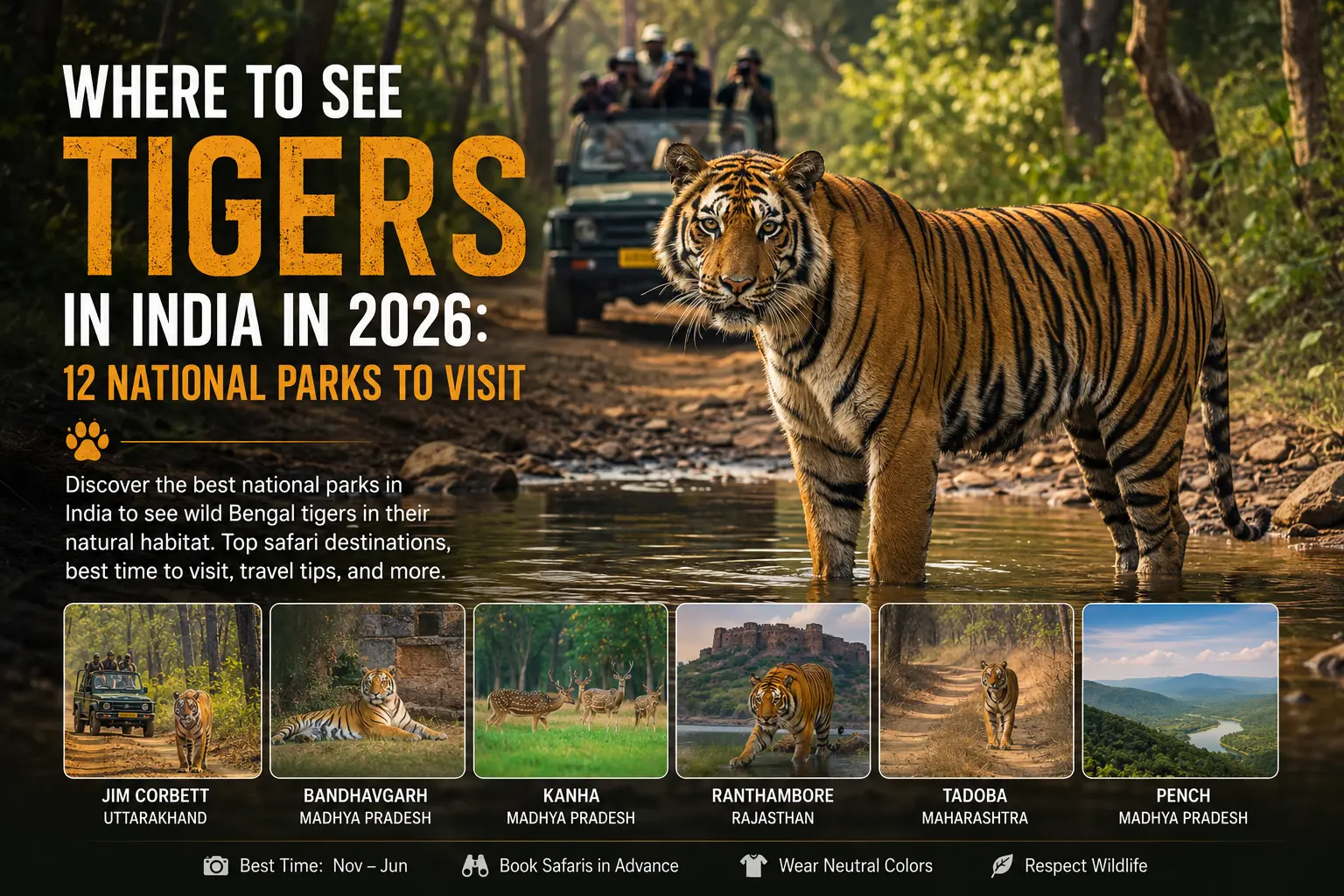
Where to See Tigers in India in 2026: 12 National Parks to Visit
India is home to the largest population of wild Bengal tigers in the world, making it one of the most exciting destinations for wildlife enthusiasts, photographers, and nature lovers. Thanks to decades of conservation efforts, tiger numbers have increased significantly, and many of the country’s national parks now offer excellent opportunities to observe these magnificent predators in their natural habitat.
From the foothills of the Himalayas to the forests of Central India and the grasslands of the northeast, India’s tiger reserves offer a remarkable variety of landscapes and wildlife experiences. Many international visitors choose to explore multiple parks during a single trip, and professionally planned tiger safari tours in India can help travelers experience different habitats while improving their chances of memorable wildlife sightings.
If you are planning a wildlife adventure in 2026, these twelve national parks should be at the top of your list.
Best National Parks in India for Tiger Sightings
| National Park | State | Best Time to Visit | Tiger Sighting Potential |
|---|---|---|---|
| Jim Corbett | Uttarakhand | Nov–Jun | High |
| Bandhavgarh | Madhya Pradesh | Oct–Jun | Very High |
| Kanha | Madhya Pradesh | Oct–Jun | High |
| Ranthambore | Rajasthan | Oct–Jun | High |
| Tadoba | Maharashtra | Oct–Jun | Very High |
| Pench | Madhya Pradesh/Maharashtra | Oct–Jun | High |
| Satpura | Madhya Pradesh | Oct–Jun | Moderate |
| Panna | Madhya Pradesh | Oct–Jun | High |
| Nagarhole | Karnataka | Oct–May | Moderate |
| Bandipur | Karnataka | Oct–May | Moderate |
| Kaziranga | Assam | Nov–Apr | Moderate |
| Dudhwa | Uttar Pradesh | Nov–May | High |
1. Jim Corbett National Park, Uttarakhand
Established in 1936, Jim Corbett National Park is India’s oldest national park and one of the country’s most iconic wildlife destinations. Located in the Himalayan foothills, Corbett offers a unique blend of dense forests, riverine habitats, grasslands, and scenic landscapes.
The park is divided into several safari zones including Dhikala, Bijrani, Jhirna, Dhela, and Durga Devi, each offering distinct wildlife experiences. Apart from tigers, visitors frequently encounter elephants, leopards, crocodiles, deer, and hundreds of bird species.
Why Visit:
- Historic significance as India’s first national park
- Diverse habitats and landscapes
- Rich birdlife
- Excellent wildlife photography opportunities
2. Bandhavgarh National Park, Madhya Pradesh
Bandhavgarh has earned a reputation as one of India’s premier tiger destinations. The park’s relatively compact size combined with a healthy tiger population often results in excellent wildlife sightings.
The landscape consists of forests, rocky hills, grasslands, and ancient ruins surrounding the historic Bandhavgarh Fort. Wildlife photographers from around the world visit Bandhavgarh in search of close tiger encounters.
Why Visit:
- One of India’s highest tiger densities
- Excellent photography conditions
- Historic fort and archaeological sites
- Diverse wildlife population
3. Kanha National Park, Madhya Pradesh
Often associated with Rudyard Kipling’s “The Jungle Book,” Kanha National Park is renowned for its stunning scenery and exceptional conservation success stories.
The park’s vast meadows, sal forests, and bamboo groves create one of India’s most beautiful wildlife landscapes. Kanha is also known for successfully protecting the hard-ground barasingha, a rare swamp deer species.
Why Visit:
- Spectacular landscapes
- Healthy tiger population
- Rich biodiversity
- Conservation success stories
4. Ranthambore National Park, Rajasthan
Ranthambore offers one of the most dramatic safari experiences in India. The combination of ancient ruins, lakes, rocky terrain, and dry forests creates a stunning backdrop for wildlife viewing.
The park’s tigers are known for being relatively visible, making Ranthambore a popular destination for first-time safari travelers.
Why Visit:
- Historic Ranthambore Fort
- Scenic lakes and ruins
- Good tiger sighting opportunities
- Easy accessibility from major cities
5. Tadoba-Andhari Tiger Reserve, Maharashtra
Tadoba has rapidly become one of India’s most sought-after tiger reserves. The reserve is known for frequent tiger sightings and a relatively uncrowded safari experience.
The dry deciduous forests provide excellent visibility, especially during the warmer months when wildlife gathers around water sources.
Why Visit:
- Excellent tiger sightings
- Fewer crowds
- Diverse wildlife
- Productive safari routes
6. Pench National Park, Madhya Pradesh and Maharashtra
Pench is another forest believed to have inspired portions of “The Jungle Book.” Rolling hills, teak forests, and river systems make it one of Central India’s most attractive wildlife destinations.
The park supports a healthy population of tigers, leopards, wild dogs, sloth bears, and numerous bird species.
Why Visit:
- Scenic forest landscapes
- Strong wildlife diversity
- Good tiger habitat
- Excellent birdwatching opportunities
7. Satpura National Park, Madhya Pradesh
Satpura offers a different type of safari experience. Unlike many other parks, visitors can enjoy walking safaris, canoe safaris, and boat excursions alongside traditional jeep safaris.
The park’s rugged terrain and relatively low tourist numbers create a more intimate wildlife experience.
Why Visit:
- Walking safaris
- Canoe and boat safaris
- Fewer tourists
- Unique wildlife experiences
8. Panna National Park, Madhya Pradesh
Panna represents one of India’s most remarkable conservation success stories. After losing its tiger population in the early 2000s, an ambitious relocation program successfully restored the species.
Today, Panna supports a thriving tiger population and offers rewarding safari experiences.
Why Visit:
- Successful tiger reintroduction program
- Beautiful river landscapes
- Good wildlife sightings
- Proximity to Khajuraho
9. Nagarhole National Park, Karnataka
Part of the Nilgiri Biosphere Reserve, Nagarhole is known for its lush forests, rivers, and rich wildlife populations.
While tiger sightings can be less predictable than in some Central Indian parks, the reserve offers outstanding biodiversity and frequent elephant encounters.
Why Visit:
- Dense forest ecosystems
- Large elephant population
- Rich birdlife
- Scenic wilderness
10. Bandipur National Park, Karnataka
Bandipur forms part of one of the most important wildlife landscapes in Asia. Connected to Nagarhole, Mudumalai, and Wayanad, it supports a large and interconnected wildlife population.
Visitors can expect sightings of elephants, deer, gaur, and occasionally tigers.
Why Visit:
- Important wildlife corridor
- Beautiful forest scenery
- Elephant herds
- Strong conservation value
11. Kaziranga National Park, Assam
A UNESCO World Heritage Site, Kaziranga is best known for the greater one-horned rhinoceros. However, the park also supports a significant tiger population and exceptional biodiversity.
Its grasslands, wetlands, and forests create a unique safari environment unlike any other in India.
Why Visit:
- One-horned rhinoceros
- Unique grassland ecosystem
- Rich birdlife
- UNESCO recognition
12. Dudhwa National Park, Uttar Pradesh
Located near the Indo-Nepal border, Dudhwa remains one of India’s most underrated wildlife destinations. The park’s remote location and relatively low visitor numbers create an authentic wilderness experience.
Why Visit:
- Less crowded safaris
- Rich biodiversity
- Swamp deer populations
- Excellent birdwatching
Best Time to See Tigers in India
Tiger sightings are possible throughout the safari season, but March through June is generally considered the best period for viewing wildlife. During these warmer months, animals often gather near water sources, making them easier to locate.
Travelers seeking cooler temperatures may prefer visiting between November and February, when weather conditions are more comfortable and the parks remain lush and scenic.
Tips for First-Time Safari Travelers
- Book safari permits well in advance.
- Choose multiple safari drives rather than a single excursion.
- Wear neutral-colored clothing.
- Carry binoculars and a camera with a zoom lens.
- Follow your guide’s instructions at all times.
- Respect wildlife and maintain a safe distance.
Tiger Conservation Success in India
India’s tiger conservation efforts are often considered one of the world’s great wildlife success stories. Through habitat protection, anti-poaching measures, and community involvement, tiger numbers have increased steadily over the past two decades.
Many of the parks featured in this guide play a crucial role in preserving not only tigers but entire ecosystems that support countless other species.
Conclusion
For wildlife enthusiasts, few experiences compare to seeing a wild Bengal tiger in its natural habitat. Whether you choose the forests of Corbett, the tiger-rich landscapes of Bandhavgarh, the scenic meadows of Kanha, or the historic setting of Ranthambore, India’s national parks offer unforgettable safari experiences.
As conservation efforts continue to strengthen wildlife populations across the country, 2026 promises to be an excellent year to explore India’s remarkable tiger reserves and witness one of nature’s most iconic animals in the wild.
Author Bio
Shishir is the founder of Jungle Revives and specializes in wildlife travel experiences across India’s premier tiger reserves, including Jim Corbett, Bandhavgarh, Kanha, Ranthambore, and Kaziranga. He regularly explores India’s national parks and documents wildlife through photography and video.