Cape Breton Highlands National Park Weather by Month
Cape Breton Highlands National Park experiences a distinctly seasonal climate, with cold, snowy winters and cool to mild summers. Temperatures range from well below freezing in January and February to around 22°C (72°F) in July, the warmest month.
Snowfall is heaviest from December through March, while summer brings snow-free conditions and the longest daylight hours. Rainfall occurs throughout the year and tends to be highest in October, November and December.
The weather can change quickly along the coast and highlands, so visitors should be prepared for cool temperatures, rain and wind even during the warmer months.
Cape Breton Highlands National Park Weather by Month
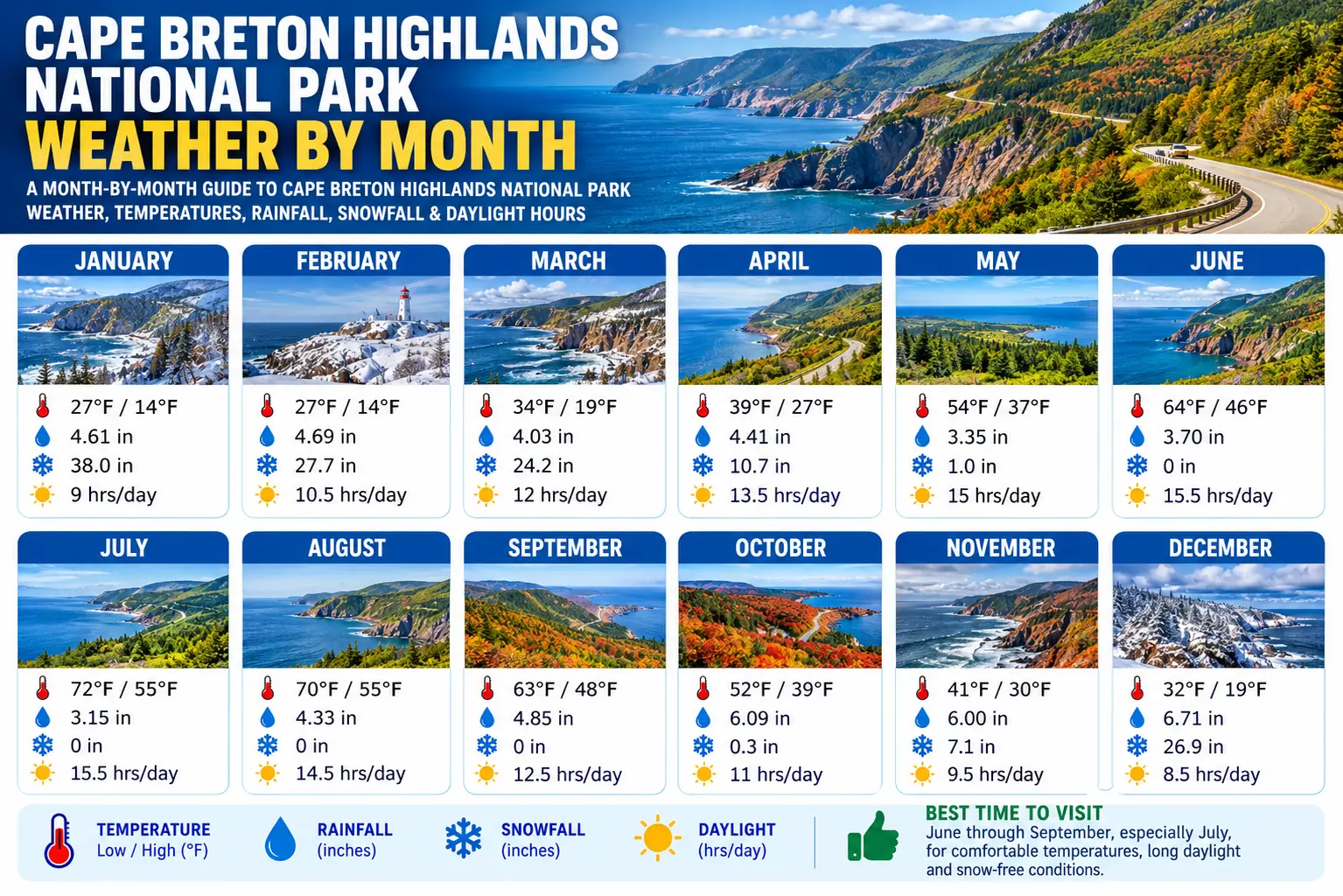
You can click the image below to view the full-size weather chart for Cape Breton Highlands National Park.
January – Cold, Snowy and Short Days
Average high: -3°C (27°F)
Average low: -10°C (14°F)
Rainfall: 4.61 inches
Snowfall: 38.0 inches
Daylight: 9 hours
Best for: Winter scenery, snow activities and quiet landscapes
January is one of the coldest months in Cape Breton Highlands National Park. Average daytime temperatures stay around -3°C (27°F), while nighttime temperatures can fall to -10°C (14°F).
Snow is a major feature of January, with approximately 966 mm (38 inches) of snowfall recorded during the month. The combination of snow and freezing temperatures creates a classic Canadian winter landscape.
With only about 9 hours of daylight, January is better suited to visitors who enjoy winter scenery rather than long days of hiking and sightseeing.
February – Deep Winter and Heavy Snow
Average high: -3°C (27°F)
Average low: -10°C (14°F)
Rainfall: 4.69 inches
Snowfall: 27.7 inches
Daylight: 10.5 hours
Best for: Snowy landscapes, winter photography and peaceful trails
February remains firmly in winter, with temperatures similar to January. Average highs reach only -3°C (27°F), while lows average around -10°C (14°F).
Snowfall remains substantial at about 702.8 mm (27.7 inches). Although this is less than January, snow-covered landscapes are still common throughout the park.
Daylight increases to approximately 10.5 hours, giving visitors a little more time to explore during the day.
March – Cold with Gradually Longer Days
Average high: 1°C (34°F)
Average low: -7°C (19°F)
Rainfall: 4.03 inches
Snowfall: 24.2 inches
Daylight: 12 hours
Best for: Late-winter scenery and quieter visits
March brings the first signs of spring, but conditions can still be very wintry. Average highs rise slightly above freezing to 1°C (34°F), while nighttime temperatures remain around -7°C (19°F).
The park receives approximately 615.7 mm (24.2 inches) of snow, so visitors should still expect snow-covered areas and cold conditions.
With around 12 hours of daylight, March offers considerably more daylight than the middle of winter, although hiking conditions can remain challenging.
April – Cool Spring Weather and Lingering Snow
Average high: 4°C (39°F)
Average low: -3°C (27°F)
Rainfall: 4.41 inches
Snowfall: 10.7 inches
Daylight: 13.5 hours
Best for: Spring scenery, quiet trails and changing landscapes
April marks a clearer transition toward spring. Average daytime temperatures reach 4°C (39°F), while nighttime temperatures remain slightly below freezing.
Snowfall decreases significantly to around 272.2 mm (10.7 inches), although snow can still occur during the month. Rainfall remains moderate at about 4.41 inches.
The increase to 13.5 hours of daylight makes April more suitable for daytime exploration, but visitors should still bring warm and waterproof clothing.
May – Mild Spring and Mostly Snow-Free
Average high: 12°C (54°F)
Average low: 3°C (37°F)
Rainfall: 3.35 inches
Snowfall: 1.0 inch
Daylight: 15 hours
Best for: Hiking, sightseeing and spring landscapes
May brings much milder weather to Cape Breton Highlands National Park. Average highs climb to 12°C (54°F), while lows average 3°C (37°F).
Snowfall drops dramatically to just 25.6 mm (1.0 inch), making snow much less of a concern for visitors. Rainfall also falls to about 3.35 inches.
With approximately 15 hours of daylight, May offers excellent conditions for exploring the Cabot Trail, hiking and enjoying the park’s coastal scenery.
June – Mild, Green and Long Days
Average high: 18°C (64°F)
Average low: 8°C (46°F)
Rainfall: 3.70 inches
Snowfall: None
Daylight: 15.5 hours
Best for: Hiking, coastal views, wildlife watching and sightseeing
June is one of the most comfortable months to visit. Average temperatures reach 18°C (64°F) during the day and fall to around 8°C (46°F) at night.
Snowfall disappears completely, while rainfall averages about 3.70 inches. The park is typically green and vibrant at this time of year.
With approximately 15.5 hours of daylight, June provides plenty of time for hiking, scenic drives and outdoor activities.
July – Warmest Month and Excellent for Outdoor Activities
Average high: 22°C (72°F)
Average low: 13°C (55°F)
Rainfall: 3.15 inches
Snowfall: None
Daylight: 15.5 hours
Best for: Hiking, beaches, scenic drives and outdoor activities
July is the warmest month in Cape Breton Highlands National Park. Average daytime temperatures reach 22°C (72°F), while nighttime temperatures remain comfortable at around 13°C (55°F).
Rainfall is relatively low at about 3.15 inches, and there is no snowfall. The combination of warm temperatures, long daylight hours and snow-free trails makes July one of the best months for outdoor exploration.
This is an excellent time for hiking the park’s trails, driving the Cabot Trail and enjoying the spectacular coastal scenery.
August – Warm, Comfortable and Green
Average high: 21°C (70°F)
Average low: 13°C (55°F)
Rainfall: 4.33 inches
Snowfall: None
Daylight: 14.5 hours
Best for: Hiking, sightseeing, wildlife and scenic drives
August remains warm and pleasant, with average highs of 21°C (70°F) and lows around 13°C (55°F).
Rainfall increases compared with July to approximately 4.33 inches, but there is no snowfall. Visitors should still be prepared for occasional rain, particularly when spending time outdoors.
The park continues to offer long days and excellent conditions for hiking, photography and exploring the coastline.
September – Cool Early Fall Weather
Average high: 17°C (63°F)
Average low: 9°C (48°F)
Rainfall: 4.85 inches
Snowfall: None
Daylight: 12.5 hours
Best for: Fall scenery, hiking and scenic drives
September brings cooler temperatures as summer gradually gives way to fall. Average highs reach 17°C (63°F), while nighttime temperatures average 9°C (48°F).
Rainfall rises to approximately 4.85 inches, making September one of the wetter months of the year. However, snowfall is still absent in the average data.
With about 12.5 hours of daylight, September remains a good month for hiking and scenic drives, particularly for visitors looking for cooler temperatures and fewer summer conditions.
October – Cool, Wet and Colorful
Average high: 11°C (52°F)
Average low: 4°C (39°F)
Rainfall: 6.09 inches
Snowfall: 0.3 inches
Daylight: 11 hours
Best for: Fall foliage, photography and scenic drives
October is considerably cooler and wetter than summer. Average highs fall to 11°C (52°F), with lows around 4°C (39°F).
Rainfall increases sharply to about 6.09 inches, making waterproof clothing particularly useful. Snowfall is still minimal at approximately 7.2 mm (0.3 inches).
October can be an especially attractive month for visitors interested in autumn landscapes and colorful foliage, although weather conditions can change quickly.
November – Cold, Wet and Early Winter Conditions
Average high: 5°C (41°F)
Average low: -1°C (30°F)
Rainfall: 6.00 inches
Snowfall: 7.1 inches
Daylight: 9.5 hours
Best for: Quiet sightseeing, late-fall scenery and winter preparation
November marks the return of colder conditions. Average daytime temperatures reach only 5°C (41°F), while nighttime temperatures drop slightly below freezing.
Rainfall remains high at approximately 6.00 inches, and snowfall increases to 179.3 mm (7.1 inches). Visitors should be prepared for a mixture of rain, snow, cold temperatures and potentially windy conditions.
With only around 9.5 hours of daylight, November is better suited to shorter outdoor activities and scenic drives.
December – Cold, Snowy and Wintery
Average high: 0°C (32°F)
Average low: -7°C (19°F)
Rainfall: 6.71 inches
Snowfall: 26.9 inches
Daylight: 8.5 hours
Best for: Winter landscapes, snow and peaceful scenery
December marks the return of full winter conditions. Average highs hover around freezing at 0°C (32°F), while lows fall to -7°C (19°F).
The month receives approximately 683.1 mm (26.9 inches) of snowfall, making it one of the snowiest months of the year. December also has the highest rainfall total in the provided data, at about 6.71 inches.
With just 8.5 hours of daylight, December offers the shortest days of the year. Visitors should plan outdoor activities carefully and be prepared for snow and freezing conditions.
Cape Breton Highlands National Park Weather by Month: Quick Overview
| Month | Avg High | Avg Low | Rainfall | Snowfall | Daylight |
|---|---|---|---|---|---|
| January | -3°C (27°F) | -10°C (14°F) | 4.61 in | 38.0 in | 9 hrs |
| February | -3°C (27°F) | -10°C (14°F) | 4.69 in | 27.7 in | 10.5 hrs |
| March | 1°C (34°F) | -7°C (19°F) | 4.03 in | 24.2 in | 12 hrs |
| April | 4°C (39°F) | -3°C (27°F) | 4.41 in | 10.7 in | 13.5 hrs |
| May | 12°C (54°F) | 3°C (37°F) | 3.35 in | 1.0 in | 15 hrs |
| June | 18°C (64°F) | 8°C (46°F) | 3.70 in | 0 in | 15.5 hrs |
| July | 22°C (72°F) | 13°C (55°F) | 3.15 in | 0 in | 15.5 hrs |
| August | 21°C (70°F) | 13°C (55°F) | 4.33 in | 0 in | 14.5 hrs |
| September | 17°C (63°F) | 9°C (48°F) | 4.85 in | 0 in | 12.5 hrs |
| October | 11°C (52°F) | 4°C (39°F) | 6.09 in | 0.3 in | 11 hrs |
| November | 5°C (41°F) | -1°C (30°F) | 6.00 in | 7.1 in | 9.5 hrs |
| December | 0°C (32°F) | -7°C (19°F) | 6.71 in | 26.9 in | 8.5 hrs |
Best Time to Visit Cape Breton Highlands National Park
For most visitors, June through September offers the best overall combination of comfortable temperatures, long daylight hours and snow-free conditions. July is the warmest and driest month in the provided data, making it particularly appealing for hiking and outdoor activities.
May and June are good choices for visitors who prefer mild weather and fewer summer-like conditions, while September and October are attractive for cooler temperatures and autumn scenery.
Winter is a very different experience. January, February and December bring substantial snowfall and freezing temperatures, making them best suited to visitors specifically interested in snowy landscapes and winter conditions.
20 FAQs About Cape Breton Highlands National Park Weather
1. What is the weather like in Cape Breton Highlands National Park?
Cape Breton Highlands National Park has a cool, seasonal climate. Winters are cold and snowy, while summers are mild and comfortable. Average summer highs reach around 21–22°C (70–72°F), while winter temperatures can fall well below freezing.
2. What is the best month to visit Cape Breton Highlands National Park?
July and August are among the best months to visit for warm temperatures, long daylight hours and snow-free conditions. June and September are also good choices if you prefer cooler weather.
3. What is the warmest month in Cape Breton Highlands National Park?
July is the warmest month, with an average high of about 22°C (72°F) and an average low of 13°C (55°F).
4. What is the coldest month in Cape Breton Highlands National Park?
January and February are the coldest months. Both have average highs of around -3°C (27°F) and average lows of approximately -10°C (14°F).
5. Does it snow in Cape Breton Highlands National Park?
Yes. Snow is common during winter and can occur from late fall into spring. January receives the most snowfall in the provided data, at approximately 966 mm (38 inches).
6. Which month has the most snowfall?
January has the highest snowfall, with about 966 mm (38 inches). February and March also receive substantial amounts of snow.
7. Does Cape Breton Highlands National Park get snow in December?
Yes. December is one of the snowiest months, with approximately 683.1 mm (26.9 inches) of snowfall.
8. Does it snow in Cape Breton Highlands National Park in summer?
Normally, snowfall is not an issue during summer. The provided weather data shows no snowfall in June, July or August.
9. What is the weather like in Cape Breton Highlands National Park in July?
July is generally warm and comfortable. Average temperatures range from about 13°C (55°F) at night to 22°C (72°F) during the day, with approximately 15.5 hours of daylight.
10. What is the weather like in Cape Breton Highlands National Park in August?
August remains mild to warm, with an average high of 21°C (70°F) and low of 13°C (55°F). It has around 14.5 hours of daylight but receives more rainfall than July.
11. Is Cape Breton Highlands National Park rainy?
Rain can occur throughout the year. The wettest months in the provided data are October, November and December, with December receiving about 6.71 inches of rainfall.
12. Which month has the least rainfall?
July has the lowest rainfall in the provided data, at approximately 3.15 inches.
13. How much daylight does Cape Breton Highlands National Park get in summer?
The park enjoys very long summer days. June and July have approximately 15.5 hours of daylight, while August has around 14.5 hours.
14. What is the weather like in Cape Breton Highlands National Park in June?
June is mild, with an average high of 18°C (64°F) and an average low of 8°C (46°F). There is no snowfall in the provided data, and daylight lasts around 15.5 hours.
15. Is September a good time to visit Cape Breton Highlands National Park?
Yes. September offers cooler temperatures than midsummer, with an average high of 17°C (63°F) and low of 9°C (48°F). It is also a good period for hiking and enjoying early fall scenery.
16. What is the weather like in Cape Breton Highlands National Park in October?
October is cool and relatively wet. Average temperatures range from 4°C (39°F) to 11°C (52°F), while rainfall reaches about 6.09 inches. Small amounts of snowfall may also occur.
17. Is Cape Breton Highlands National Park very cold in winter?
Yes. Winter can be very cold, particularly at night. January and February average around -10°C (14°F) at night, and heavy snowfall is common.
18. What should I wear when visiting Cape Breton Highlands National Park?
Clothing should match the season. In summer, layers, comfortable hiking clothes and a waterproof jacket are useful. In spring and fall, bring warm layers and rain protection. Winter visitors need insulated clothing, waterproof footwear, gloves and other cold-weather gear.
19. What is the best month for hiking in Cape Breton Highlands National Park?
July and August are excellent for hiking because temperatures are mild to warm and trails are generally snow-free. June and September can also be excellent for hikers who prefer cooler conditions.
20. When is the best time to visit Cape Breton Highlands National Park for pleasant weather?
For generally pleasant weather, June through September is the best period. July is the warmest and has the lowest rainfall in the provided data, while June offers the longest daylight and September provides cooler early-fall conditions.
Read more: