Anna Maria Island Weather by Month
Anna Maria Island, located on Florida’s Gulf Coast, enjoys warm weather throughout the year, with mild winters, hot summers, and beautiful beaches. Winter and spring are popular times to visit because temperatures are comfortable for sightseeing, fishing, and outdoor activities. Summer brings hotter weather, warmer Gulf waters, higher humidity, and frequent afternoon thunderstorms.
Sea temperatures also change throughout the year. The Gulf of Mexico is coolest in winter and warmest from summer into early fall, making Anna Maria Island a year-round destination for beach lovers.
Anna Maria Island Weather by Month
You can click the image below to view the full-size weather chart for Anna Maria Island.
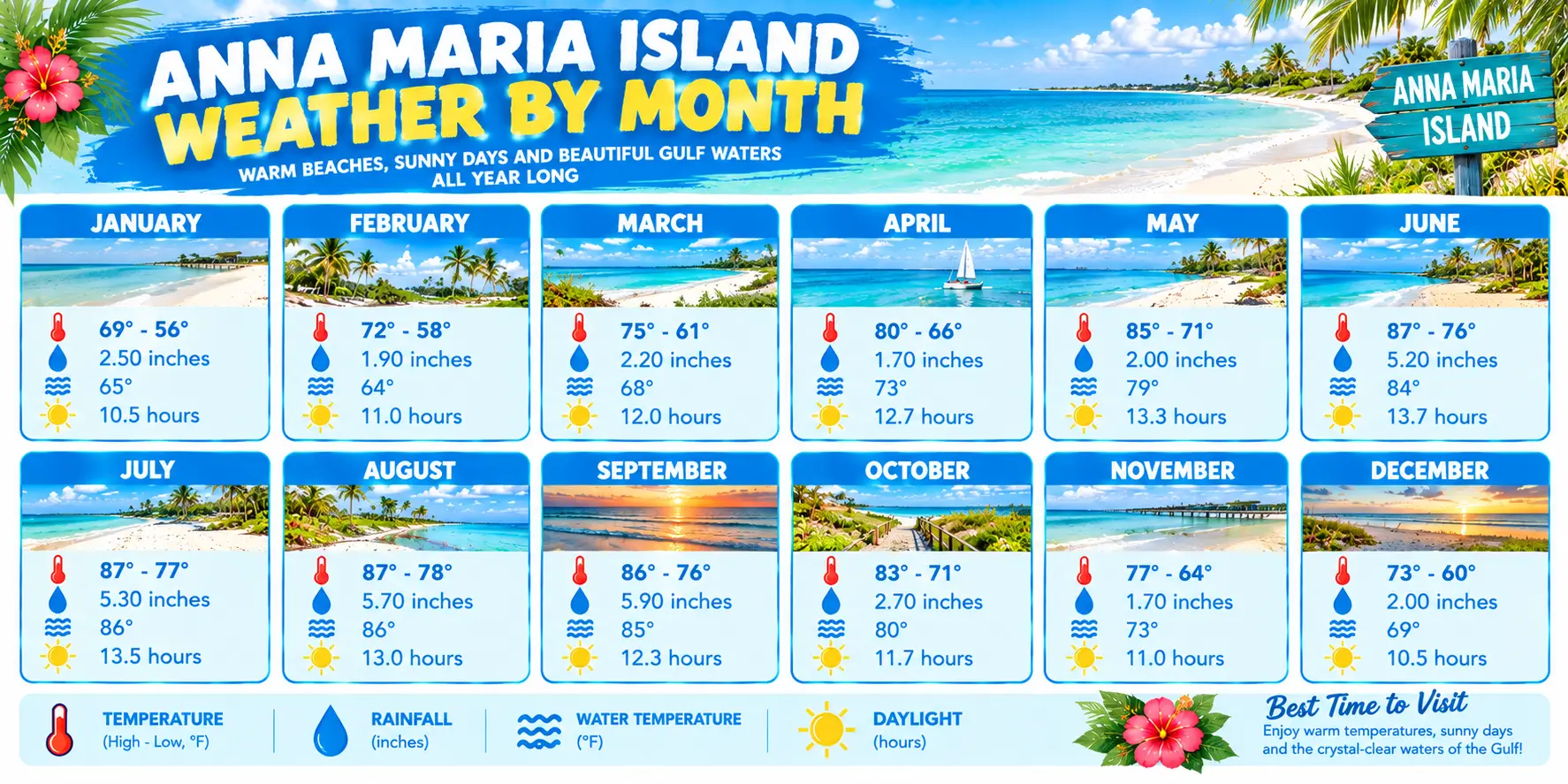
January – Mild, Cool and Mostly Dry
- Average high: 69°F (21°C)
- Average low: 56°F (13°C)
- Rainfall: 2.50 inches (63.5 mm)
- Water temperature: 65°F (18°C)
- Daylight: 10.5 hours
January is one of the coolest months on Anna Maria Island, but winter conditions remain mild compared with much of the United States. Average daytime temperatures reach around 69°F (21°C), while nighttime temperatures drop to approximately 56°F (13°C). The weather is generally pleasant for walking along the beach, exploring local shops, and enjoying outdoor dining.
Rainfall averages about 2.50 inches (63.5 mm), making January relatively dry. The Gulf of Mexico has an average water temperature of around 65°F (18°C), which can feel chilly for swimming. Visitors can still enjoy beach walks, fishing, kayaking, and sightseeing, although a light jacket may be useful during cooler mornings and evenings.
Best for:
- Enjoying peaceful beach walks
- Exploring the island in comfortable weather
- Fishing and outdoor sightseeing
- Escaping colder winter climates
February – Pleasant, Sunny and Relatively Dry
- Average high: 72°F (22°C)
- Average low: 58°F (14°C)
- Rainfall: 1.90 inches (48.3 mm)
- Water temperature: 64°F (18°C)
- Daylight: 11 hours
February brings slightly warmer temperatures and plenty of opportunities to enjoy the outdoors. Average highs reach around 72°F (22°C), while lows remain near 58°F (14°C). Humidity is generally more comfortable than during summer, making this a pleasant month for exploring Anna Maria Island on foot or by bicycle.
Rainfall averages approximately 1.90 inches (48.3 mm), keeping conditions relatively dry. However, Gulf water temperatures remain around 64°F (18°C), so swimming may feel cold for some visitors. February is a good time to enjoy the island’s sandy beaches, local restaurants, and scenic coastal views without the intense summer heat.
Best for:
- Cycling and exploring the island
- Relaxing on the beach in mild weather
- Enjoying outdoor dining
- Taking scenic coastal photographs
March – Warm, Bright and Ideal for Outdoor Activities
- Average high: 75°F (24°C)
- Average low: 61°F (16°C)
- Rainfall: 2.20 inches (55.9 mm)
- Water temperature: 68°F (20°C)
- Daylight: 12 hours
March marks the arrival of warmer spring weather on Anna Maria Island. Average daytime temperatures reach approximately 75°F (24°C), while nighttime temperatures stay near 61°F (16°C). The pleasant conditions are ideal for spending time outdoors, visiting nearby attractions, and enjoying long afternoons along the Gulf Coast.
Rainfall averages around 2.20 inches (55.9 mm), so extended periods of rain are less common than during the summer rainy season. Gulf water temperatures rise to approximately 68°F (20°C), making swimming more appealing as spring progresses, although the water may still feel cool. March is also a popular time for spring vacations, so beaches and restaurants can be busy.
Best for:
- Beach walks and coastal photography
- Kayaking, fishing, and boating
- Exploring local shops and restaurants
- Enjoying spring vacation activities
April – Warm, Sunny and Perfect for Beach Days
- Average high: 80°F (27°C)
- Average low: 66°F (19°C)
- Rainfall: 1.70 inches (43.2 mm)
- Water temperature: 73°F (23°C)
- Daylight: 12.7 hours
April is one of the most appealing months to visit Anna Maria Island. Average highs reach around 80°F (27°C), while nighttime temperatures remain near 66°F (19°C). Warm afternoons, comfortable evenings, and relatively low rainfall create excellent conditions for a beach vacation.
Rainfall averages only 1.70 inches (43.2 mm), making April one of the drier months of the year. The Gulf of Mexico warms to approximately 73°F (23°C), allowing many visitors to enjoy swimming, paddleboarding, and other water activities. Longer daylight hours also provide more time to explore the island’s beaches and coastal scenery.
Best for:
- Swimming and sunbathing
- Paddleboarding and kayaking
- Taking boat tours around the Gulf Coast
- Enjoying outdoor dining and sunset views
May – Hotter Days and Warm Gulf Waters
- Average high: 85°F (30°C)
- Average low: 71°F (22°C)
- Rainfall: 2.00 inches (50.8 mm)
- Water temperature: 79°F (26°C)
- Daylight: 13.3 hours
May brings warmer temperatures and the beginning of the hotter season on Anna Maria Island. Average daytime highs reach around 85°F (30°C), while nighttime temperatures hover near 71°F (22°C). Sunshine is abundant, and the warm conditions make this an excellent month for beach activities and boating.
Rainfall averages approximately 2.00 inches (50.8 mm), although showers gradually become more common as summer approaches. Gulf water temperatures rise to around 79°F (26°C), creating comfortable conditions for swimming and snorkeling. May offers a particularly appealing balance of warm sea temperatures, long days, and generally manageable rainfall before the wetter summer months arrive.
Best for:
- Swimming in warm Gulf waters
- Snorkeling and paddleboarding
- Enjoying long beach days
- Taking boat trips and dolphin-watching excursions
June – Hot, Humid and Increasingly Rainy
- Average high: 87°F (31°C)
- Average low: 76°F (24°C)
- Rainfall: 5.20 inches (132.1 mm)
- Water temperature: 84°F (29°C)
- Daylight: 13.7 hours
June marks the beginning of Anna Maria Island’s summer rainy season. Average highs reach approximately 87°F (31°C), while nighttime temperatures remain around 76°F (24°C). High humidity can make afternoons feel hotter, and brief but intense thunderstorms frequently develop later in the day.
Rainfall increases to about 5.20 inches (132.1 mm), so visitors should plan outdoor activities with some flexibility. The Gulf of Mexico warms to approximately 84°F (29°C), providing excellent conditions for swimming and other water sports. With long daylight hours, mornings are often a good time to explore the beaches before afternoon showers arrive.
Best for:
- Swimming in warm ocean water
- Enjoying early-morning beach activities
- Paddleboarding and kayaking
- Taking advantage of long summer days
July – Hot, Humid and Ideal for Water Activities
- Average high: 87°F (31°C)
- Average low: 77°F (25°C)
- Rainfall: 5.30 inches (134.6 mm)
- Water temperature: 86°F (30°C)
- Daylight: 13.5 hours
July is one of the hottest months on Anna Maria Island. Average daytime temperatures reach around 87°F (31°C), and nighttime lows remain near 77°F (25°C). The combination of heat and humidity creates a distinctly tropical atmosphere, making beaches, swimming pools, and shaded outdoor spaces especially attractive.
Rainfall averages approximately 5.30 inches (134.6 mm), with frequent afternoon and evening thunderstorms. The Gulf of Mexico reaches an average water temperature of around 86°F (30°C), making swimming particularly comfortable for visitors who prefer warm water. However, summer storms can develop quickly, so checking local weather conditions is important before boating or swimming.
Best for:
- Swimming and relaxing in warm water
- Family beach vacations
- Kayaking and paddleboarding in calm conditions
- Enjoying summer activities near the coast
August – Very Hot, Humid and Wet
- Average high: 87°F (31°C)
- Average low: 78°F (26°C)
- Rainfall: 5.70 inches (144.8 mm)
- Water temperature: 86°F (30°C)
- Daylight: 13 hours
August is typically one of the warmest and wettest months on Anna Maria Island. Average highs reach approximately 87°F (31°C), while nighttime temperatures remain around 78°F (26°C). High humidity makes the weather feel muggy, especially during the afternoon, and visitors should stay hydrated when spending time outdoors.
Rainfall averages about 5.70 inches (144.8 mm), with frequent thunderstorms and occasional heavy downpours. August also falls within the Atlantic hurricane season, so tropical weather forecasts deserve attention when planning a trip. The Gulf of Mexico reaches around 86°F (30°C), providing very warm swimming conditions when the sea is safe. Flexible itineraries and early outdoor activities are particularly useful during this month.
Best for:
- Swimming in very warm Gulf waters
- Enjoying relaxed beach vacations
- Planning indoor activities around afternoon storms
- Taking advantage of quieter periods between summer travel peaks
September – Hot, Tropical and Frequently Rainy
- Average high: 86°F (30°C)
- Average low: 76°F (24°C)
- Rainfall: 5.90 inches (149.9 mm)
- Water temperature: 85°F (29°C)
- Daylight: 12.3 hours
September remains hot on Anna Maria Island, with average daytime temperatures around 86°F (30°C) and nighttime lows near 76°F (24°C). Summer humidity persists, and the island continues to experience a tropical weather pattern. Although some days are sunny and beautiful, rain showers and thunderstorms remain common.
Rainfall averages approximately 5.90 inches (149.9 mm), making September one of the wettest months of the year. The Gulf water temperature stays near 85°F (29°C), so swimming remains appealing during suitable weather conditions. September is also within the peak portion of hurricane season, making it important to monitor forecasts and any official advisories before and during a visit.
Best for:
- Swimming when sea conditions are safe
- Enjoying warm coastal water
- Taking advantage of quieter beach periods
- Planning flexible activities around the weather
October – Warm, Pleasant and Less Rainy
- Average high: 83°F (28°C)
- Average low: 71°F (22°C)
- Rainfall: 2.70 inches (68.6 mm)
- Water temperature: 80°F (27°C)
- Daylight: 11.7 hours
October brings a welcome transition toward more comfortable autumn weather. Average highs reach around 83°F (28°C), while nighttime temperatures fall to approximately 71°F (22°C). Humidity gradually decreases, and outdoor activities become more comfortable as the intense summer heat begins to ease.
Rainfall drops to around 2.70 inches (68.6 mm), making October considerably drier than August and September. Gulf water temperatures average approximately 80°F (27°C), which remains comfortable for swimming and other beach activities. Although hurricane season is not yet over, October often offers an attractive combination of warm weather, pleasant sea temperatures, and fewer summer crowds.
Best for:
- Swimming and sunbathing
- Exploring the island by bicycle
- Enjoying fishing and boating excursions
- Taking sunset photographs along the beach
November – Mild, Comfortable and Relatively Dry
- Average high: 77°F (25°C)
- Average low: 64°F (18°C)
- Rainfall: 1.70 inches (43.2 mm)
- Water temperature: 73°F (23°C)
- Daylight: 11 hours
November brings mild temperatures and generally comfortable conditions to Anna Maria Island. Average daytime highs reach around 77°F (25°C), while nighttime temperatures drop to approximately 64°F (18°C). The lower humidity and reduced rainfall make it an excellent month for walking, sightseeing, fishing, and exploring the island’s coastal communities.
Rainfall averages about 1.70 inches (43.2 mm), among the lowest monthly totals of the year. Gulf water temperatures decline to around 73°F (23°C), which many visitors still find suitable for swimming. November is a good choice for travelers who want warm daytime weather without the intense heat and frequent thunderstorms of summer.
Best for:
- Walking along the beach in comfortable weather
- Fishing and boating
- Exploring local restaurants and shops
- Enjoying a quieter autumn getaway
December – Mild Winter Weather and Peaceful Beaches
- Average high: 73°F (23°C)
- Average low: 60°F (16°C)
- Rainfall: 2.00 inches (50.8 mm)
- Water temperature: 69°F (21°C)
- Daylight: 10.5 hours
December brings mild winter weather to Anna Maria Island, making it an appealing escape from colder destinations. Average highs reach around 73°F (23°C), while nighttime lows fall to approximately 60°F (16°C). Days are generally comfortable for beach walks, outdoor dining, sightseeing, and enjoying the island’s festive atmosphere.
Rainfall averages around 2.00 inches (50.8 mm), and the weather is typically drier than during the summer rainy season. The Gulf of Mexico cools to approximately 69°F (21°C), which may feel refreshing rather than warm for swimming. Visitors can still enjoy the shoreline, watch spectacular sunsets, and take part in outdoor activities, although a light jacket may be useful during cooler evenings.
Best for:
- Enjoying a mild winter beach vacation
- Watching Gulf Coast sunsets
- Exploring local shops and restaurants
- Spending the holidays in a relaxed coastal setting
When Is the Best Time to Visit Anna Maria Island?
The best time to visit Anna Maria Island depends on your preferred temperatures, beach activities, and tolerance for rain.
- March to May: Excellent for warm weather, outdoor activities, and increasingly comfortable swimming conditions.
- November to February: Ideal for mild winter temperatures, beach walks, fishing, and escaping colder climates.
- June to September: Best for travelers who love hot weather and very warm Gulf waters, but expect higher humidity, frequent thunderstorms, and greater tropical-storm risk.
- October: A good balance of warm temperatures, pleasant water, and declining rainfall.
The monthly temperatures, rainfall, and sea-water figures above are approximate long-term averages for Anna Maria and the surrounding Gulf Coast. Actual conditions can vary from year to year. Water temperatures are based on regional averages, and conditions at individual beaches may differ.
Anna Maria Island Weather by Month
| Month | Avg High °F (°C) | Avg Low °F (°C) | Rainfall (inches) | Water temperature | Daylight (hours) |
|---|---|---|---|---|---|
| January | 69°F (21°C) | 56°F (13°C) | 2.50 | 65°F | 10.5 |
| February | 72°F (22°C) | 58°F (14°C) | 1.90 | 64°F | 11.0 |
| March | 75°F (24°C) | 61°F (16°C) | 2.20 | 68°F | 12.0 |
| April | 80°F (27°C) | 66°F (19°C) | 1.70 | 73°F | 12.7 |
| May | 85°F (30°C) | 71°F (22°C) | 2.00 | 79°F | 13.3 |
| June | 87°F (31°C) | 76°F (24°C) | 5.20 | 84°F | 13.7 |
| July | 87°F (31°C) | 77°F (25°C) | 5.30 | 86°F | 13.5 |
| August | 87°F (31°C) | 78°F (26°C) | 5.70 | 86°F | 13.0 |
| September | 86°F (30°C) | 76°F (24°C) | 5.90 | 85°F | 12.3 |
| October | 83°F (28°C) | 71°F (22°C) | 2.70 | 80°F | 11.7 |
| November | 77°F (25°C) | 64°F (18°C) | 1.70 | 73°F | 11.0 |
| December | 73°F (23°C) | 60°F (16°C) | 2.00 | 69°F | 10.5 |
20 FAQs About Anna Maria Island Weather
1. What is the best month to visit Anna Maria Island?
April and May are excellent months to visit Anna Maria Island because the weather is warm, rainfall is relatively low, and Gulf water temperatures are comfortable for swimming. October and November are also good choices for pleasant weather and outdoor activities.
2. What is the weather like on Anna Maria Island year-round?
Anna Maria Island has a subtropical climate with mild winters, hot and humid summers, and warm weather for much of the year. Winter is generally drier, while summer brings frequent thunderstorms and heavier rainfall.
3. What is the coldest month on Anna Maria Island?
January is typically one of the coldest months. Average highs are around 69°F (21°C), while average lows are approximately 56°F (13°C).
4. What is the hottest month on Anna Maria Island?
July and August are typically among the hottest months, with average highs around 87°F (31°C). High humidity can make the weather feel even hotter.
5. Does it snow on Anna Maria Island?
Snow is extremely rare on Anna Maria Island because winter temperatures are generally mild. Visitors are much more likely to experience sunny days, cool evenings, and occasional rain than snow.
6. How warm is Anna Maria Island in January?
January brings average daytime highs of approximately 69°F (21°C) and nighttime lows around 56°F (13°C). The weather is comfortable for beach walks, fishing, and sightseeing, although the Gulf water can feel chilly.
7. Is Anna Maria Island warm enough to swim in February?
Air temperatures can be pleasant in February, with average highs around 72°F (22°C). However, Gulf water temperatures average approximately 64°F (18°C), which may feel cold for extended swimming.
8. What is the water temperature on Anna Maria Island in March?
The average Gulf water temperature is approximately 68°F (20°C) in March. The water gradually warms throughout spring, becoming more comfortable for swimming by April and May.
9. What is the water temperature on Anna Maria Island in summer?
Gulf water temperatures are generally very warm during summer, averaging around 84–86°F (29–30°C) from June through August. These conditions are ideal for swimming when surf and weather conditions are safe.
10. What is the rainiest month on Anna Maria Island?
September is typically among the rainiest months, with approximately 5.90 inches (149.9 mm) of rainfall in the monthly averages used in this guide. August and June are also wet months, with frequent afternoon thunderstorms.
11. When is the dry season on Anna Maria Island?
The drier season generally runs from late fall through spring. November, April, and February are relatively dry months, making this period attractive for beach vacations and outdoor sightseeing.
12. Does it rain every day on Anna Maria Island in summer?
No, but summer rainfall is frequent. Thunderstorms often develop in the afternoon or evening, and they may be brief but intense. Mornings are often better for planning beach activities and outdoor excursions.
13. Is Anna Maria Island humid?
Yes. Anna Maria Island is humid throughout the year, with the highest humidity generally occurring during summer. The combination of high temperatures and moisture can make July, August, and September feel particularly muggy.
14. Is October a good time to visit Anna Maria Island?
Yes. October typically brings average highs around 83°F (28°C), lower rainfall than summer, and Gulf water temperatures near 80°F (27°C). It is a good month for swimming, boating, and enjoying the beaches, although hurricane season continues.
15. Is November warm enough for a beach vacation on Anna Maria Island?
Yes. November averages around 77°F (25°C) during the day, with Gulf water temperatures near 73°F (23°C). It is a pleasant month for beach walks, fishing, boating, and relaxing outdoors, although some visitors may find the water cool.
16. Is Anna Maria Island windy?
Anna Maria Island experiences coastal breezes throughout the year. Winds can make beach conditions feel cooler in winter and can affect boating, paddleboarding, and swimming. Wind strength varies with weather systems and seasonal conditions.
17. When is hurricane season on Anna Maria Island?
The Atlantic hurricane season officially runs from June 1 through November 30, with the greatest activity typically occurring from August through October. Travelers visiting during this period should monitor official forecasts and consider flexible accommodation arrangements.
18. How many hours of daylight does Anna Maria Island get?
Daylight varies by season. The island has roughly 10.5 hours of daylight in December and January, increasing to approximately 13–14 hours in June and July. Longer summer days provide more time for beach activities.
19. What should I pack for Anna Maria Island?
Pack lightweight clothing, swimwear, sandals, sunscreen, sunglasses, and a hat for most of the year. During summer, bring breathable clothing and a light rain jacket. In winter, a light sweater or jacket is useful for cooler mornings and evenings.
20. What is the best time to visit Anna Maria Island for swimming and beach activities?
April through October is generally a good period for swimming because Gulf water temperatures are warmer. May and October offer a particularly appealing balance of warm water and more manageable rainfall, while summer provides the warmest water but also higher humidity and more frequent storms.
Read more: