Bar Harbor Weather by Month
Bar Harbor, Maine, experiences four distinct seasons, with cold, snowy winters, mild springs, warm summers, and cool autumns. Located on the coast of Maine near Acadia National Park, Bar Harbor is a popular destination for hiking, scenic drives, whale watching, and coastal sightseeing.
Summer is generally the warmest and most popular season to visit, while fall attracts visitors with colorful foliage. Winter brings freezing temperatures and substantial snowfall, making it a quieter time to explore the area.
Bar Harbor Weather by Month
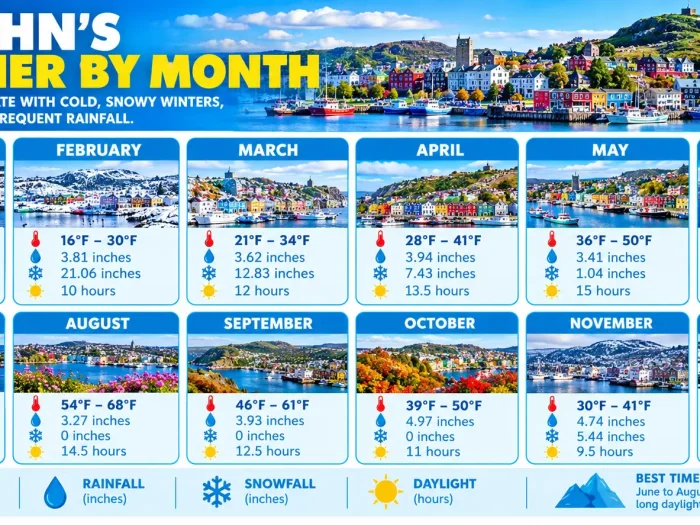
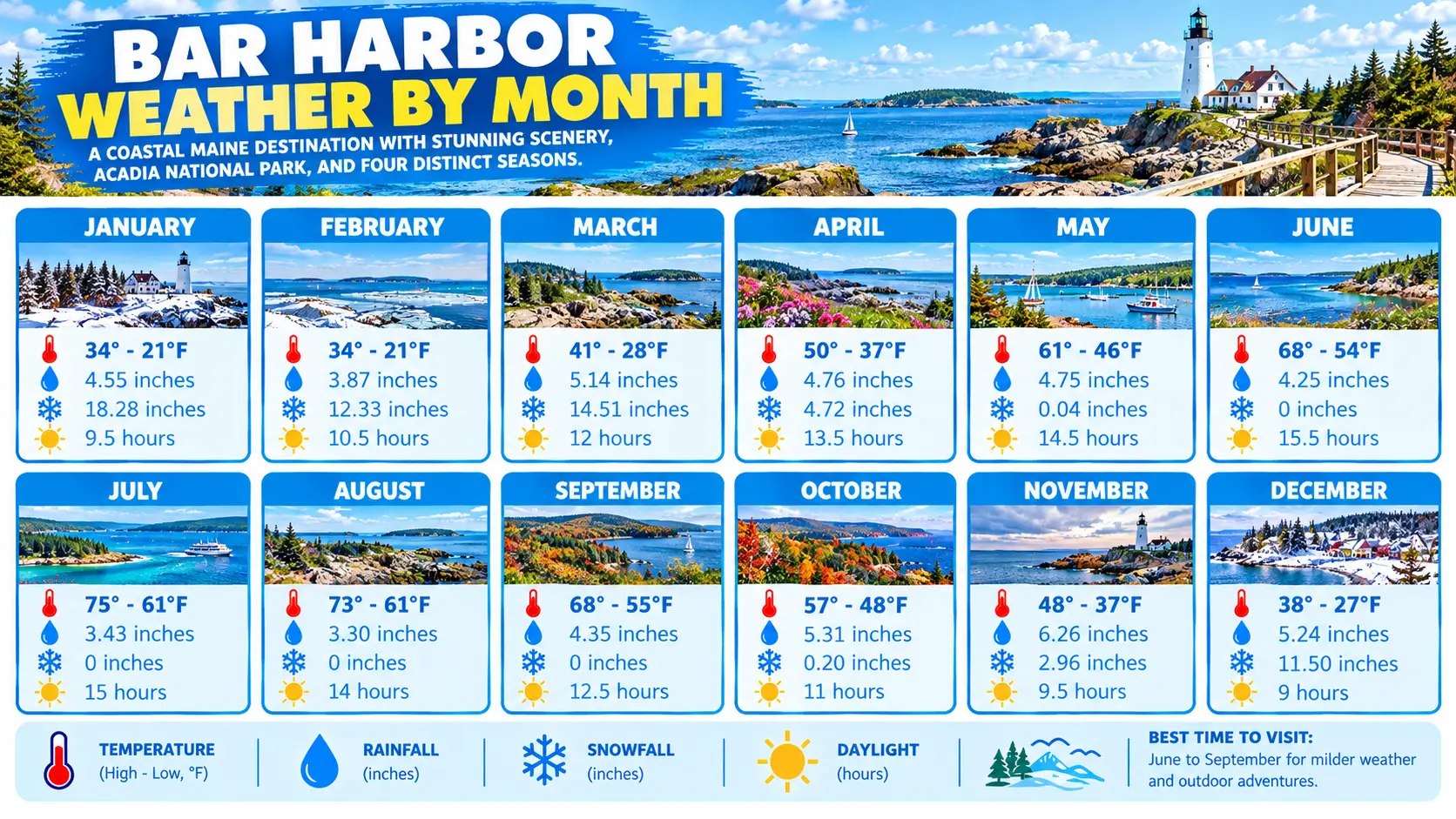
You can click the image below to view the full-size weather chart for Bar Harbor.
January – Cold, Snowy and Short Days
- Average high: 30°F (-1°C)
- Average low: 21°F (-6°C)
- Rainfall: 4.55 inches (115.5 mm)
- Snowfall: 18.28 inches (464.2 mm)
- Daylight: 9.5 hours
January is one of the coldest months in Bar Harbor. Average daytime temperatures reach around 30°F (-1°C), while nighttime temperatures drop to approximately 21°F (-6°C). Freezing conditions are common, and snow frequently covers the surrounding landscapes.
Rainfall averages 4.55 inches (115.5 mm), while snowfall reaches approximately 18.28 inches (464.2 mm), making winter weather an important consideration for visitors. With only 9.5 hours of daylight, outdoor activities need careful planning, particularly when exploring Acadia National Park.
Best for:
- Experiencing peaceful winter scenery
- Photographing snow-covered coastal landscapes
- Enjoying a quiet winter getaway
- Exploring the area when visitor numbers are low
February – Freezing Temperatures and Heavy Snow
- Average high: 33°F (1°C)
- Average low: 21°F (-6°C)
- Rainfall: 3.87 inches (98.4 mm)
- Snowfall: 12.33 inches (313.1 mm)
- Daylight: 10.5 hours
February remains firmly within Bar Harbor’s winter season. Average high temperatures reach around 33°F (1°C), while lows remain near 21°F (-6°C). Snow, icy roads, and cold coastal winds can make outdoor exploration challenging.
Rainfall averages 3.87 inches (98.4 mm), and snowfall totals approximately 12.33 inches (313.1 mm). Although snow remains common, daylight increases to 10.5 hours, providing slightly more time for outdoor activities when weather conditions permit.
Best for:
- Enjoying a peaceful winter escape
- Photographing snowy coastal scenery
- Exploring local cafés and indoor attractions
- Experiencing Maine’s winter atmosphere
March – Cold, Windy and Gradually Warming
- Average high: 41°F (5°C)
- Average low: 28°F (-2°C)
- Rainfall: 5.14 inches (130.6 mm)
- Snowfall: 14.51 inches (368.6 mm)
- Daylight: 12 hours
March brings the first signs of spring, but winter conditions often persist throughout the month. Average daytime temperatures rise to approximately 41°F (5°C), while nighttime temperatures fall to around 28°F (-2°C). Snow and freezing weather remain possible, especially during colder periods.
Rainfall averages 5.14 inches (130.6 mm), and snowfall reaches approximately 14.51 inches (368.6 mm). March is also one of the wetter months in terms of precipitation. With 12 hours of daylight, visitors have more time to enjoy the changing coastal scenery, although muddy trails and unpredictable weather can limit outdoor plans.
Best for:
- Seeing the transition from winter to spring
- Enjoying quiet coastal towns
- Taking scenic drives when roads are clear
- Photographing dramatic skies and rugged shorelines
April – Cool Spring Weather and Melting Snow
- Average high: 50°F (10°C)
- Average low: 37°F (3°C)
- Rainfall: 4.76 inches (120.9 mm)
- Snowfall: 4.72 inches (120 mm)
- Daylight: 13.5 hours
April brings milder temperatures and longer days to Bar Harbor. Average highs reach approximately 50°F (10°C), while lows remain near 37°F (3°C). Spring begins to take hold, although chilly mornings and occasional late-season snowfall are still possible.
Rainfall averages 4.76 inches (120.9 mm), while snowfall drops considerably to around 4.72 inches (120 mm). The landscape gradually becomes greener, but some hiking trails and seasonal attractions may not yet be fully accessible. With 13.5 hours of daylight, visitors can enjoy longer sightseeing trips.
Best for:
- Enjoying early spring scenery
- Taking coastal walks on milder days
- Exploring Bar Harbor before the summer crowds
- Photographing the changing landscape
May – Mild, Fresh and Increasingly Green
- Average high: 61°F (16°C)
- Average low: 46°F (8°C)
- Rainfall: 4.75 inches (120.6 mm)
- Snowfall: 0.04 inches (0.9 mm)
- Daylight: 14.5 hours
May is a pleasant spring month in Bar Harbor, with average daytime temperatures reaching around 61°F (16°C) and nighttime temperatures staying near 46°F (8°C). The weather becomes more comfortable for outdoor activities, and trees and plants begin to flourish across the region.
Rainfall averages 4.75 inches (120.6 mm), while snowfall is almost nonexistent at just 0.04 inches (0.9 mm). With 14.5 hours of daylight, there is plenty of time to explore coastal trails, enjoy scenic viewpoints, and visit nearby Acadia National Park. However, the ocean remains cold, and occasional rainy days are common.
Best for:
- Hiking on suitable trails
- Exploring Acadia National Park in spring
- Enjoying coastal scenery before peak season
- Taking photographs of fresh greenery and wildflowers
June – Pleasant, Mild and Ideal for Outdoor Activities
- Average high: 68°F (20°C)
- Average low: 54°F (12°C)
- Rainfall: 4.25 inches (107.9 mm)
- Snowfall: 0 inches (0 mm)
- Daylight: 15.5 hours
June marks the beginning of summer in Bar Harbor. Average highs reach approximately 68°F (20°C), while nighttime temperatures remain around 54°F (12°C). Conditions are generally comfortable for hiking, cycling, sightseeing, and exploring the rocky coastline.
Rainfall averages 4.25 inches (107.9 mm), and snowfall is absent. June offers approximately 15.5 hours of daylight, giving visitors plenty of time to explore Acadia National Park and enjoy the area’s scenic coastal roads. Although the weather is milder, ocean temperatures can still feel chilly for swimming.
Best for:
- Hiking and exploring Acadia National Park
- Taking boat tours and whale-watching trips
- Enjoying long days outdoors
- Discovering coastal viewpoints and local harbors
July – Warm, Comfortable and Peak Tourist Season
- Average high: 75°F (24°C)
- Average low: 61°F (16°C)
- Rainfall: 3.43 inches (87.1 mm)
- Snowfall: 0 inches (0 mm)
- Daylight: 15 hours
July is one of the warmest and most popular months in Bar Harbor. Average daytime temperatures reach approximately 75°F (24°C), while nighttime temperatures fall to around 61°F (16°C). The comfortable summer weather is ideal for outdoor adventures without the extreme heat found in many other U.S. destinations.
Rainfall averages 3.43 inches (87.1 mm), making July relatively dry compared with several other months. Snowfall is nonexistent, and approximately 15 hours of daylight allow visitors to make the most of each day. However, accommodations, restaurants, and popular attractions can become busy during the summer vacation season.
Best for:
- Hiking in Acadia National Park
- Kayaking and exploring the coastline
- Whale watching and boat excursions
- Enjoying warm summer weather and long days
August – Warm, Pleasant and Relatively Dry
- Average high: 73°F (23°C)
- Average low: 61°F (16°C)
- Rainfall: 3.30 inches (83.8 mm)
- Snowfall: 0 inches (0 mm)
- Daylight: 14 hours
August continues Bar Harbor’s warm summer weather. Average highs reach around 73°F (23°C), while lows remain near 61°F (16°C). Temperatures are comfortable for hiking, boating, sightseeing, and spending time along the coast.
Rainfall averages 3.30 inches (83.8 mm), making August the driest month in the supplied rainfall data. Snowfall is absent, and 14 hours of daylight provide ample time for outdoor adventures. August is still a busy travel month, so booking accommodations and popular tours in advance is recommended.
Best for:
- Hiking and scenic drives
- Kayaking, sailing, and boat tours
- Exploring Acadia National Park
- Enjoying comfortable summer temperatures
September – Cool, Comfortable and Beginning to Change
- Average high: 68°F (20°C)
- Average low: 55°F (13°C)
- Rainfall: 4.35 inches (110.6 mm)
- Snowfall: 0 inches (0 mm)
- Daylight: 12.5 hours
September brings the transition from summer to autumn. Average daytime temperatures reach around 68°F (20°C), while nighttime temperatures fall to approximately 55°F (13°C). The weather remains comfortable for outdoor activities, although evenings gradually become cooler.
Rainfall averages 4.35 inches (110.6 mm), and snowfall is generally absent. With 12.5 hours of daylight, September offers plenty of time for hiking and sightseeing. Visitor numbers often begin to decrease after the summer peak, while early autumn colors may start appearing later in the month.
Best for:
- Hiking in cooler weather
- Exploring Acadia National Park with fewer summer crowds
- Enjoying scenic coastal drives
- Photographing early autumn landscapes
October – Cool Autumn Weather and Colorful Foliage
- Average high: 57°F (14°C)
- Average low: 48°F (9°C)
- Rainfall: 5.31 inches (134.8 mm)
- Snowfall: 0.20 inches (5.2 mm)
- Daylight: 11 hours
October is one of the most attractive months to visit Bar Harbor, especially for travelers interested in fall foliage. Average daytime temperatures reach approximately 57°F (14°C), while nighttime temperatures drop to around 48°F (9°C). The crisp air and colorful forests create excellent conditions for scenic drives and photography.
Rainfall averages 5.31 inches (134.8 mm), making October one of the wetter months in the supplied data. A small amount of snowfall may occur, although substantial snow is not typical for most of the month. With 11 hours of daylight, visitors should plan outdoor excursions carefully, particularly when exploring trails and viewpoints.
Best for:
- Viewing colorful fall foliage
- Photographing autumn landscapes
- Taking scenic drives around Mount Desert Island
- Hiking in cool weather
November – Cold, Wet and Increasingly Wintry
- Average high: 48°F (9°C)
- Average low: 37°F (3°C)
- Rainfall: 6.26 inches (159 mm)
- Snowfall: 2.96 inches (75.1 mm)
- Daylight: 9.5 hours
November brings colder temperatures and increasingly unsettled weather to Bar Harbor. Average highs reach around 48°F (9°C), while lows fall to approximately 37°F (3°C). Cold winds, cloudy skies, and damp conditions become more common as winter approaches.
Rainfall averages 6.26 inches (159 mm), the highest monthly rainfall in the supplied data. Snowfall increases to approximately 2.96 inches (75.1 mm), although rain remains an important part of the month’s precipitation. With just 9.5 hours of daylight, visitors have less time for outdoor exploration, and some seasonal businesses and attractions may operate on reduced schedules.
Best for:
- Enjoying a quieter coastal getaway
- Exploring local shops and restaurants
- Photographing moody autumn and winter scenery
- Taking short outdoor walks when conditions are favorable
December – Cold, Snowy and Festive
- Average high: 38°F (4°C)
- Average low: 27°F (-3°C)
- Rainfall: 5.24 inches (133.2 mm)
- Snowfall: 11.50 inches (292.2 mm)
- Daylight: 9 hours
December brings winter weather back to Bar Harbor, with average daytime temperatures around 38°F (4°C) and nighttime temperatures near 27°F (-3°C). Freezing conditions become more frequent, and snow can transform the coastal landscape into a winter scene.
Rainfall averages 5.24 inches (133.2 mm), while snowfall reaches approximately 11.50 inches (292.2 mm). With only 9 hours of daylight, December has the shortest days of the year. Visitors should prepare for cold temperatures, potentially slippery roads, and limited seasonal services, while enjoying the peaceful atmosphere of the quieter town.
Best for:
- Experiencing a peaceful winter coastal town
- Photographing snowy landscapes
- Enjoying a festive seasonal getaway
- Exploring local indoor attractions and restaurants
Bar Harbor Weather by Month
| Month | Avg High °F (°C) | Avg Low °F (°C) | Rainfall (inches) | Snowfall (inches) | Daylight (hours) |
|---|---|---|---|---|---|
| January | 34°F (1°C) | 21°F (-6°C) | 4.55 | 18.28 | 9.5 |
| February | 34°F (1°C) | 21°F (-6°C) | 3.87 | 12.33 | 10.5 |
| March | 41°F (5°C) | 28°F (-2°C) | 5.14 | 14.51 | 12 |
| April | 50°F (10°C) | 37°F (3°C) | 4.76 | 4.72 | 13.5 |
| May | 61°F (16°C) | 46°F (8°C) | 4.75 | 0.04 | 14.5 |
| June | 68°F (20°C) | 54°F (12°C) | 4.25 | 0.00 | 15.5 |
| July | 75°F (24°C) | 61°F (16°C) | 3.43 | 0.00 | 15 |
| August | 73°F (23°C) | 61°F (16°C) | 3.30 | 0.00 | 14 |
| September | 68°F (20°C) | 55°F (13°C) | 4.35 | 0.00 | 12.5 |
| October | 57°F (14°C) | 48°F (9°C) | 5.31 | 0.20 | 11 |
| November | 48°F (9°C) | 37°F (3°C) | 6.26 | 2.96 | 9.5 |
| December | 38°F (4°C) | 27°F (-3°C) | 5.24 | 11.50 | 9 |
20 FAQs About Bar Harbor Weather
1. What is the best month to visit Bar Harbor, Maine?
July and August are among the best months to visit Bar Harbor because of their warm temperatures, relatively low rainfall, and comfortable conditions for outdoor activities. September is also a great choice for cooler weather and fewer summer crowds.
2. What is the weather like in Bar Harbor throughout the year?
Bar Harbor has cold, snowy winters, cool springs, mild to warm summers, and crisp autumns. Summer temperatures typically reach the low to mid-70s°F, while winter temperatures often remain near or below freezing.
3. What is the hottest month in Bar Harbor?
July is typically the hottest month, with an average high of around 75°F (24°C) and an average low of 61°F (16°C).
4. What is the coldest month in Bar Harbor?
January is one of the coldest months in Bar Harbor, with average highs around 34°F (1°C) and lows near 21°F (-6°C).
5. Does it snow in Bar Harbor, Maine?
Yes. Bar Harbor receives substantial snowfall during winter. Based on the supplied data, January averages approximately 18.28 inches (464.2 mm) of snow, while December averages around 11.50 inches (292.2 mm).
6. How much snow does Bar Harbor get each year?
Adding the monthly snowfall figures provided, Bar Harbor receives approximately 64.54 inches (1,639 mm) of snow annually. Actual snowfall varies from year to year.
7. What is the rainiest month in Bar Harbor?
November is the wettest month in the supplied data, with approximately 6.26 inches (159 mm) of rainfall. October and December are also relatively wet.
8. What is the driest month in Bar Harbor?
August has the lowest average rainfall in the supplied data, at approximately 3.30 inches (83.8 mm). July is another relatively dry month.
9. Is Bar Harbor cold in the winter?
Yes. Winter in Bar Harbor is cold, with average highs ranging from about 34°F (1°C) in January and February to 38°F (4°C) in December. Temperatures can fall below freezing, so warm clothing and winter footwear are recommended.
10. When does spring begin in Bar Harbor?
Spring typically begins in March, although winter conditions can continue into April. May is generally more comfortable, with average highs around 61°F (16°C) and lows near 46°F (8°C).
11. Is Bar Harbor warm in the summer?
Yes, but summers are generally mild rather than extremely hot. July averages 75°F (24°C), and August averages 73°F (23°C), making both months pleasant for hiking, sightseeing, and boating.
12. What is the best time to visit Bar Harbor for fall foliage?
Late September and October are popular times to see fall foliage around Bar Harbor and Acadia National Park. October offers cool temperatures and colorful autumn scenery, although rainfall can be relatively high.
13. Is October a good time to visit Bar Harbor?
Yes. October is an excellent month for autumn scenery, photography, and scenic drives. Average highs are around 57°F (14°C), but rain is common, and some seasonal businesses may reduce their hours after the summer season.
14. How much rainfall does Bar Harbor receive annually?
Based on the monthly rainfall figures supplied, Bar Harbor receives approximately 55.21 inches (1,402 mm) of rainfall per year. Precipitation is spread throughout the year, with November receiving the most rainfall in this dataset.
15. How many hours of daylight does Bar Harbor get in summer?
Bar Harbor enjoys long summer days. The supplied data shows approximately 15.5 hours of daylight in June and 15 hours in July, providing plenty of time for outdoor adventures.
16. How short are the days in Bar Harbor during winter?
Winter days are relatively short. The supplied data shows approximately 9 hours of daylight in December and 9.5 hours in January and November.
17. What should I wear when visiting Bar Harbor in summer?
Pack lightweight clothing for daytime activities, along with a light jacket or fleece for cool mornings and evenings. Comfortable hiking shoes, rain gear, and layers are useful because coastal weather can change quickly.
18. What should I wear when visiting Bar Harbor in winter?
Bring a warm insulated coat, thermal layers, gloves, a hat, and waterproof winter boots with good traction. Snow, ice, and cold coastal winds can make outdoor conditions feel particularly harsh.
19. Is Bar Harbor a good destination for outdoor activities?
Yes. Bar Harbor is an excellent base for exploring Acadia National Park, hiking, cycling, kayaking, boating, and enjoying coastal scenery. June through September generally offers favorable conditions for many outdoor activities.
20. What is the best month to visit Bar Harbor for comfortable weather and fewer crowds?
September is a strong choice for comfortable weather and fewer crowds than the peak summer months. Average highs are around 68°F (20°C), and the weather is often suitable for hiking and sightseeing. Early June is another good option for visitors who prefer longer days and milder temperatures.
Read more: