How to Explore Egypt’s Ancient Sites
Egypt holds some of the oldest and most studied monuments on earth, yet many travelers arrive with only a vague idea of how the major sites fit together. The pyramids sit on the edge of Cairo, the great temples of ancient Thebes line the Nile around Luxor, and the southern monuments stretch from Aswan almost to the Sudanese border. Understanding that geography, and how much time each area deserves, is the difference between a rushed checklist and a trip that actually lets the history sink in.
Many first-time Egypt Holiday Makers try to see everything in a single week and end up spending more time in transit than at the monuments themselves. The essentials, though, are simple enough to plan well. This guide walks through the four main clusters of ancient sites, what to expect at each, and a few practical habits that make visits easier and more rewarding.
Start With the Geography
Most of Egypt’s famous monuments sit along a narrow green strip of the Nile Valley. Cairo and Giza are in the north, close to where the river fans out into the Delta. Luxor lies roughly 650 kilometers to the south, and Aswan another 200 kilometers beyond that. Abu Simbel is further still, on the shore of Lake Nasser near the border with Sudan.
Because of these distances, most itineraries combine a few days in Cairo with a longer stretch in Upper Egypt. Travelers move south by domestic flight, overnight sleeper train, or a combination of road and river travel. Planning the order of your stops matters far more than planning every hour of every day.
Giza and Saqqara: The Pyramid Fields
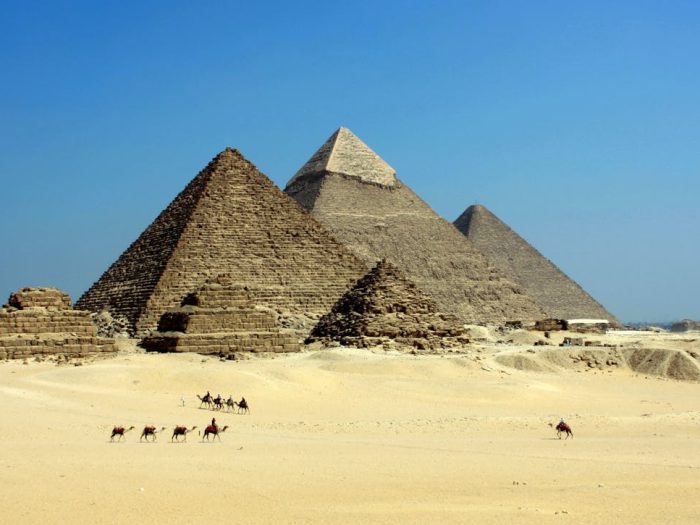
The Giza Plateau is the obvious starting point. The Great Pyramid, built for the pharaoh Khufu around 4,500 years ago, was the tallest human-made structure in the world for thousands of years. Alongside it stand the pyramids of Khafre and Menkaure, a group of smaller queens’ pyramids, and the Great Sphinx, carved directly from the limestone bedrock.
A few practical points help here:
- Arrive at opening time. Mornings are cooler, and the plateau is noticeably quieter before the large tour groups arrive.
- Decide in advance whether you want to go inside a pyramid. Interior access requires a separate ticket, and the passages are narrow, steep and warm.
- Head to the panoramic viewpoint on the western side of the plateau for a view that takes in all three main pyramids at once.
Saqqara, around 30 kilometers to the south, is often overlooked but deserves at least half a day. The Step Pyramid of Djoser is considered one of the earliest large-scale stone buildings in the world, and the surrounding necropolis includes decorated tombs with some of the finest relief carving of the Old Kingdom. Nearby Dahshur is home to the Bent Pyramid and the Red Pyramid, which usually see a fraction of Giza’s visitors.
Back near Giza, the Grand Egyptian Museum now houses a large share of the country’s collection, including the complete Tutankhamun treasure displayed together. Allow at least half a day; the scale of the building makes a short visit feel rushed.
Luxor: The Heart of Ancient Thebes
If Giza shows the Old Kingdom at its most monumental, Luxor shows the New Kingdom at its most elaborate. The city is divided by the Nile, and that division is a useful way to plan your time.
The East Bank
The east bank holds the temples of the living. Karnak is a vast complex that was built, extended and rebuilt over roughly 2,000 years, and its Hypostyle Hall, with 134 enormous columns, is one of the most memorable interiors in Egypt. Luxor Temple, in the center of town, is linked to Karnak by the restored Avenue of Sphinxes and is especially atmospheric in the evening, when it is lit after dark.
The West Bank
The west bank was the domain of the dead. The Valley of the Kings contains the rock-cut tombs of New Kingdom pharaohs, many with painted walls that still hold remarkable color. A standard ticket covers a limited number of tombs, while exceptional tombs such as those of Tutankhamun and Seti I require additional tickets.
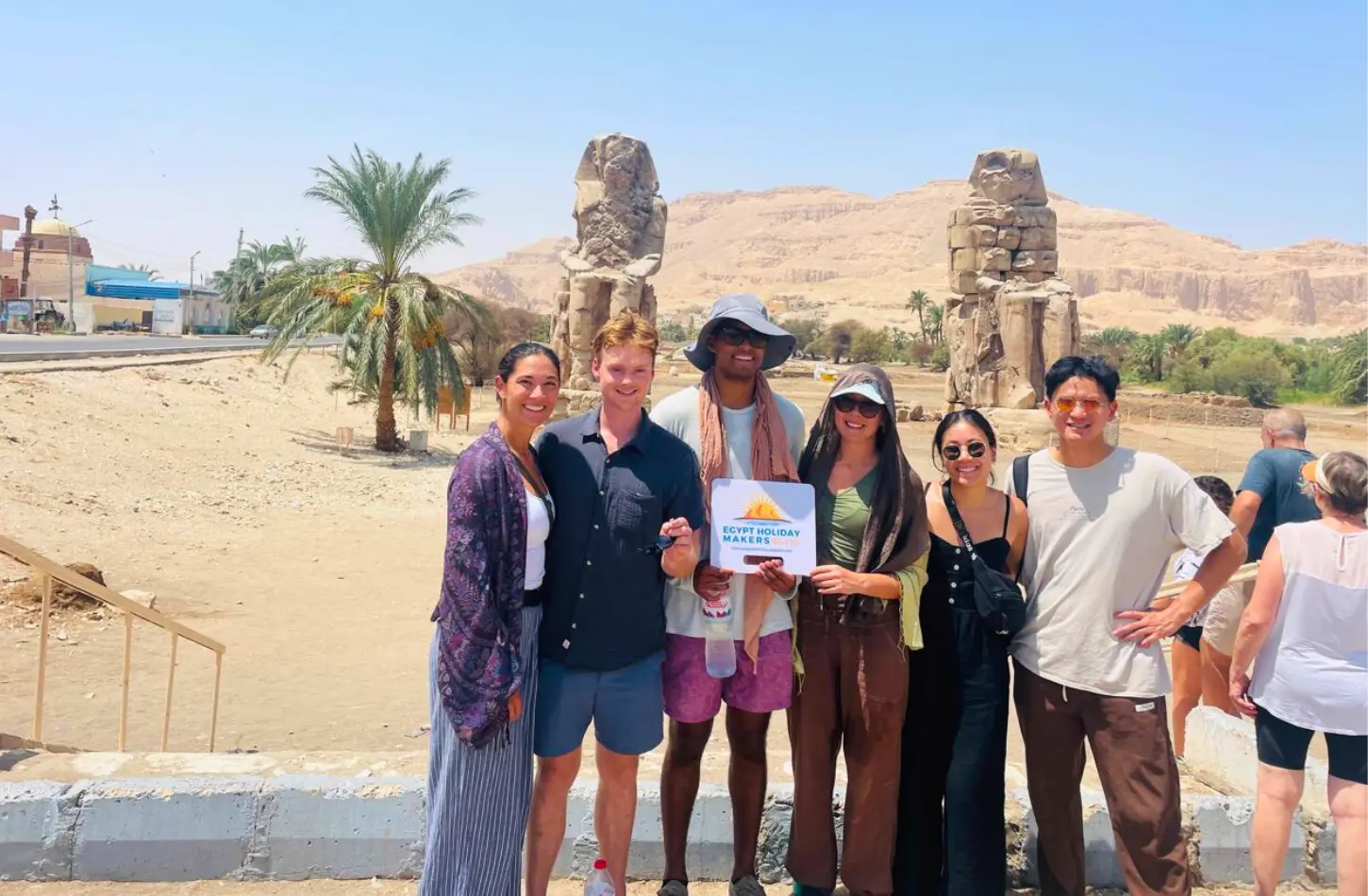
Other west bank sites include the terraced mortuary temple of Hatshepsut at Deir el-Bahari, the Colossi of Memnon, the Valley of the Queens and Medinet Habu. Many visitors find Medinet Habu one of the most rewarding stops in Luxor, as its carved and painted reliefs are unusually well preserved and it tends to be far less crowded.
Two full days in Luxor is a sensible minimum. Three days allows a slower pace, time for the compact Luxor Museum, and perhaps an early-morning hot air balloon flight over the west bank as the sun rises over the temples.
Aswan: Temples, Granite and the Nubian South
Aswan feels different from Luxor. The river narrows between granite boulders and small islands, the pace of life is slower, and Nubian culture is much more visible in the architecture, food and music.
Key sites include:
- Philae Temple, dedicated to the goddess Isis and reached by a short boat ride. The temple was moved to its current island during the international salvage campaign that followed construction of the High Dam.
- The Unfinished Obelisk, a huge granite obelisk abandoned in the quarry after it cracked, offers a rare look at how ancient stoneworkers operated.
- The Nubian Museum, which provides essential background on the region’s history and the communities displaced when Lake Nasser was created.
- Elephantine Island, with archaeological remains, Nubian villages and a glimpse of daily life on the river.
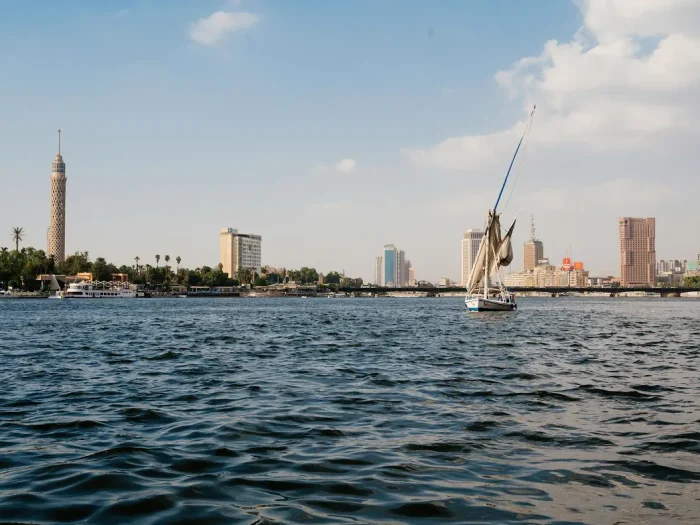
Aswan is also where many travelers take their first felucca ride, a short sail on a traditional wooden boat and one of the quietest ways to see the river and its islands.
Abu Simbel: The Southern Frontier
The twin temples of Abu Simbel were carved into a sandstone cliff during the reign of Ramses II. In the 1960s, both temples were cut into large blocks and reassembled on higher ground to save them from the rising waters of Lake Nasser, an engineering project that remains one of the great stories of modern archaeology.
Abu Simbel is roughly 280 kilometers from Aswan. Most visitors travel by road in an early-morning convoy, which takes around three and a half hours each way, or take a short domestic flight. Twice a year, around 22 February and 22 October, the rising sun reaches deep into the main temple and lights up statues in the inner sanctuary. These dates draw large crowds, so plan well ahead if you hope to be there.
Practical Habits That Make Site Visits Easier
- Start early. Most sites open in the early morning, and the first two hours are usually the most comfortable and the least crowded.
- Carry water, sun protection and a hat. Even in winter, the midday sun in Upper Egypt can be strong.
- Keep small bills for restroom fees, tips and incidental costs.
- Check photography rules. Some tombs and museum galleries restrict photography or charge a separate fee.
- Consider a qualified Egyptologist guide for complex sites like Karnak and Saqqara, where historical context transforms the experience.
- Pace yourself. Two major sites in a day is plenty for most people, especially in warmer months.
When to Go
The cooler months from October to April are the most popular time to visit, with pleasant daytime temperatures in Luxor and Aswan and cool evenings in Cairo. Summer brings far fewer visitors, but daytime heat in the south often climbs above 40°C, which makes very early starts essential. Shoulder months such as October and April can offer a good balance of manageable weather and smaller crowds.
Beyond the Main Four: Sites Worth a Detour
Once the major highlights are covered, several quieter sites add real depth to a trip. North of Luxor, the Temple of Hathor at Dendera has a striking astronomical ceiling and restored painted colors, while Abydos holds the Temple of Seti I, whose reliefs are often described as among the most refined in Egypt. Both can be combined in a long day trip from Luxor.
Between Luxor and Aswan, the temples of Edfu and Kom Ombo are usually visited from the river, and Esna’s temple has undergone restoration that revealed vivid ceiling paintings. On the Mediterranean coast, Alexandria offers a very different layer of history, from the Catacombs of Kom el-Shoqafa to the modern Bibliotheca Alexandrina.
How Many Days Do You Need?
For the four main areas covered here, eight to ten days is a comfortable minimum: three days around Cairo, three in Luxor, two in Aswan and one for Abu Simbel. With less time, it is usually better to drop a destination entirely than to rush through all of them.
Final Thoughts
Egypt’s ancient sites reward preparation. Knowing the rough layout of the Nile Valley, allowing enough days in Luxor, and making room for quieter places like Saqqara, Medinet Habu and Philae will give you a much richer sense of how this civilization developed over three thousand years. Plan the route first, leave some space in the schedule, and let the monuments set the pace.