Charleston Weather by Month
Charleston, South Carolina, has a humid subtropical climate with mild winters, hot and humid summers, and rainfall throughout the year. Summer is the warmest and wettest season, while winter brings cooler temperatures and generally more comfortable conditions for exploring the city.
Charleston Weather by Month
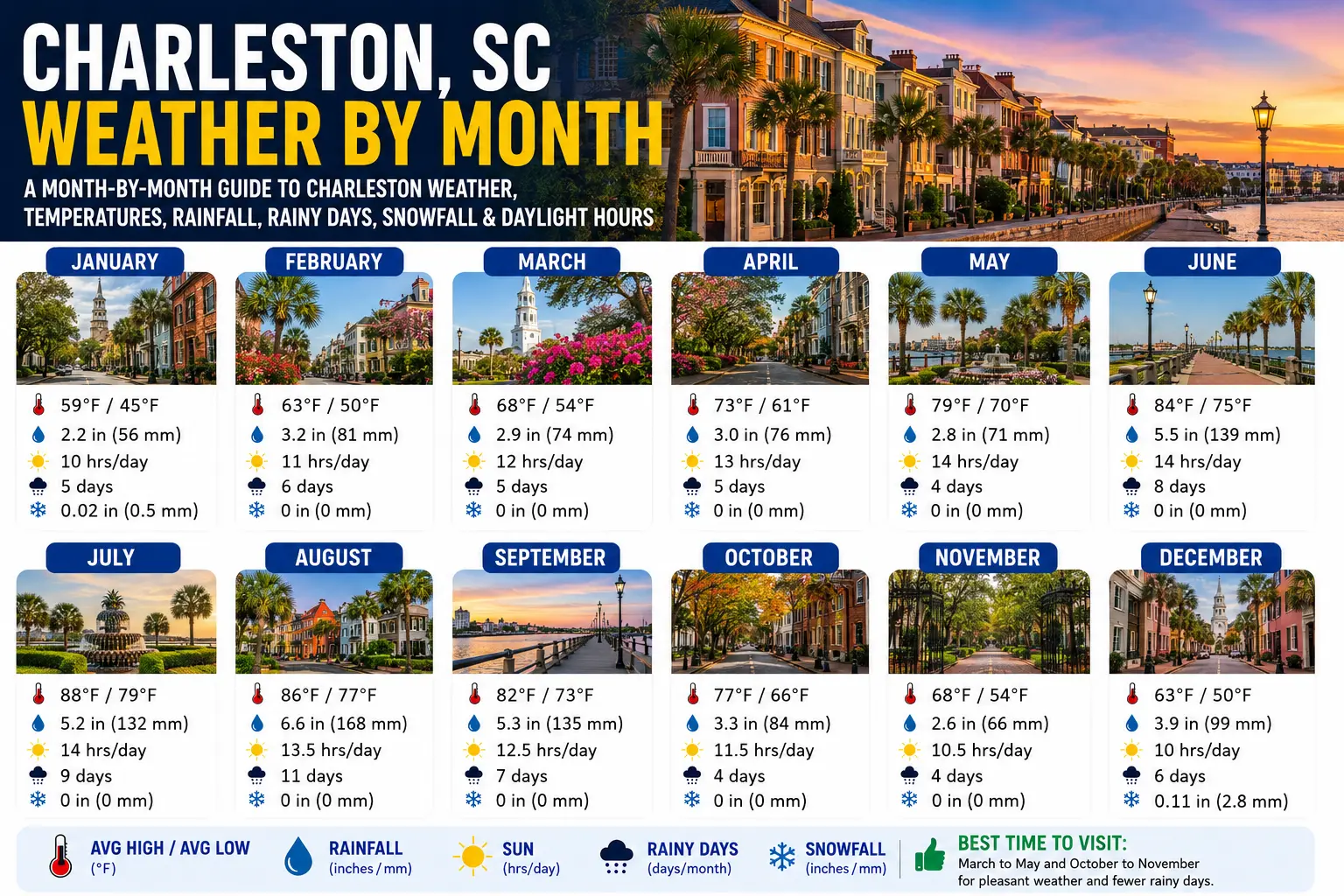
You can click the image below to view the full-size weather chart for Charleston.
January – Mild Winter Days and Moderate Rainfall
Average high: 59°F (15°C)
Average low: 45°F (7°C)
Rainfall: 2.2 inches
Rainy days: 5
Snowfall: 0.02 inches
Daylight: 10 hours
January is one of the coolest months in Charleston, but winter temperatures remain relatively mild. Daytime temperatures typically reach around 59°F, while nighttime lows average about 45°F.
Rainfall averages 2.2 inches across approximately 5 rainy days. Snowfall is extremely rare, with only about 0.02 inches recorded in the averages. The city receives around 10 hours of daylight, making sunny winter afternoons pleasant for sightseeing.
Best for:
- Historic downtown sightseeing
- Walking tours
- Museums and indoor attractions
- Quiet city breaks
- Exploring Charleston’s restaurants
February – Mild Temperatures and Increasing Daylight
Average high: 63°F (17°C)
Average low: 50°F (10°C)
Rainfall: 3.2 inches
Rainy days: 6
Snowfall: 0 inches
Daylight: 11 hours
February brings slightly warmer temperatures and longer days to Charleston. Afternoon highs average 63°F, while overnight temperatures generally fall to around 50°F.
Rainfall increases to about 3.2 inches over 6 rainy days. Snow is essentially nonexistent, while daylight increases to approximately 11 hours.
Best for:
- Historic district walks
- Architecture tours
- Romantic getaways
- Restaurants and cafés
- Early spring sightseeing
March – Comfortable Spring Weather and Moderate Rainfall
Average high: 68°F (20°C)
Average low: 54°F (12°C)
Rainfall: 2.9 inches
Rainy days: 5
Snowfall: 0 inches
Daylight: 12 hours
March marks the beginning of a more comfortable spring season in Charleston. Average highs reach 68°F, with lows around 54°F, making outdoor activities especially enjoyable.
Rainfall averages 2.9 inches across about 5 rainy days. With approximately 12 hours of daylight, visitors have plenty of time to explore Charleston’s historic streets, gardens, and waterfront.
Best for:
- Walking tours
- Historic homes and gardens
- Waterfront sightseeing
- Outdoor dining
- Spring city breaks
April – Warm Spring Days and Pleasant Outdoor Weather
Average high: 73°F (23°C)
Average low: 61°F (16°C)
Rainfall: 3.0 inches
Rainy days: 5
Snowfall: 0 inches
Daylight: 13 hours
April is one of the most pleasant months to visit Charleston. Temperatures rise to an average high of 73°F, while lows remain comfortable at around 61°F.
Rainfall is about 3.0 inches over 5 rainy days. With roughly 13 hours of daylight, April provides excellent conditions for sightseeing, outdoor dining, and exploring Charleston’s historic neighborhoods.
Best for:
- Historic Charleston tours
- Gardens and plantations
- Outdoor dining
- Walking and photography
- Weekend getaways
May – Warm Days and Increasing Humidity
Average high: 79°F (26°C)
Average low: 70°F (21°C)
Rainfall: 2.8 inches
Rainy days: 4
Snowfall: 0 inches
Daylight: 14 hours
May brings noticeably warmer weather to Charleston. Average daytime temperatures reach 79°F, while nighttime lows stay around 70°F.
Rainfall remains relatively moderate at about 2.8 inches spread across 4 rainy days. The city enjoys around 14 hours of daylight, providing plenty of time for beaches, sightseeing, and outdoor activities.
Best for:
- Beach trips
- Outdoor dining
- Harbor cruises
- Walking tours
- Exploring nearby islands
June – Hot, Humid Weather and Heavy Rainfall
Average high: 84°F (29°C)
Average low: 75°F (24°C)
Rainfall: 5.5 inches
Rainy days: 8
Snowfall: 0 inches
Daylight: 14 hours
June marks the beginning of Charleston’s hot and humid summer season. Average highs reach 84°F, while nighttime temperatures remain warm at around 75°F.
Rainfall increases significantly to approximately 5.5 inches over 8 rainy days. Afternoon showers and thunderstorms become more common, but there are still around 14 hours of daylight for outdoor activities.
Best for:
- Beach vacations
- Swimming
- Harbor cruises
- Early-morning sightseeing
- Summer festivals and events
July – Hot and Humid with Heavy Rainfall
Average high: 88°F (31°C)
Average low: 79°F (26°C)
Rainfall: 5.2 inches
Rainy days: 9
Snowfall: 0 inches
Daylight: 14 hours
July is one of the hottest months in Charleston. Afternoon temperatures average around 88°F, while nighttime lows remain near 79°F. High humidity can make conditions feel even hotter.
Rainfall averages about 5.2 inches across approximately 9 rainy days. Summer thunderstorms are common, often arriving during the afternoon or evening. Daylight remains long at around 14 hours.
Best for:
- Beach days
- Swimming and water activities
- Early-morning sightseeing
- Evening waterfront walks
- Summer vacations
August – Hottest Weather and the Wettest Month
Average high: 86°F (30°C)
Average low: 77°F (25°C)
Rainfall: 6.6 inches
Rainy days: 11
Snowfall: 0 inches
Daylight: 13.5 hours
August is Charleston’s wettest month and remains very hot and humid. Average highs reach 86°F, while lows stay around 77°F.
The city receives approximately 6.6 inches of rainfall over 11 rainy days, making afternoon showers and thunderstorms a regular part of the weather pattern. With about 13.5 hours of daylight, visitors can still enjoy outdoor activities by planning around the hottest and wettest periods.
Best for:
- Beach vacations
- Swimming
- Water activities
- Indoor attractions during afternoon storms
- Early-morning and evening sightseeing
September – Hot Weather and Gradually Easing Temperatures
Average high: 82°F (28°C)
Average low: 73°F (23°C)
Rainfall: 5.3 inches
Rainy days: 7
Snowfall: 0 inches
Daylight: 12.5 hours
September brings a gradual transition away from Charleston’s hottest summer weather. Average highs fall to around 82°F, while lows average 73°F.
Rainfall remains relatively high at approximately 5.3 inches across 7 rainy days. Although the weather is still warm and humid, the shorter days and slightly cooler temperatures make late September increasingly comfortable for exploring the city.
Best for:
- Beach trips
- Harbor cruises
- Outdoor dining
- Historic sightseeing
- Late-summer getaways
October – Warm Days and Lower Rainfall
Average high: 77°F (25°C)
Average low: 66°F (19°C)
Rainfall: 3.3 inches
Rainy days: 4
Snowfall: 0 inches
Daylight: 11.5 hours
October is one of the most comfortable months in Charleston. Average highs drop to around 77°F, while lows reach about 66°F.
Rainfall decreases considerably to around 3.3 inches across only 4 rainy days. With comfortable temperatures and less frequent rain, October is an excellent month for walking tours and outdoor sightseeing.
Best for:
- Historic district tours
- Outdoor dining
- Gardens and plantations
- Photography
- Comfortable city sightseeing
November – Mild Fall Weather and Lower Rainfall
Average high: 68°F (20°C)
Average low: 54°F (12°C)
Rainfall: 2.6 inches
Rainy days: 4
Snowfall: 0 inches
Daylight: 10.5 hours
November brings cooler but still mild weather to Charleston. Average highs reach 68°F, while nighttime temperatures fall to around 54°F.
Rainfall averages only 2.6 inches over approximately 4 rainy days, making November one of the drier months. With around 10.5 hours of daylight, conditions are generally comfortable for exploring the city’s historic areas.
Best for:
- Walking tours
- Historic attractions
- Food-focused trips
- Photography
- Quiet fall vacations
December – Cool Winter Weather and Moderate Rainfall
Average high: 63°F (17°C)
Average low: 50°F (10°C)
Rainfall: 3.9 inches
Rainy days: 6
Snowfall: 0.11 inches
Daylight: 10 hours
December brings cooler winter conditions to Charleston, although temperatures remain mild compared with many parts of the United States. Average highs are around 63°F, while lows fall to about 50°F.
Rainfall averages approximately 3.9 inches across 6 rainy days. Snowfall is extremely rare, with only about 0.11 inches in the monthly averages. Charleston receives around 10 hours of daylight, creating shorter but generally comfortable winter days.
Best for:
- Holiday events
- Historic sightseeing
- Restaurants and cafés
- Winter weekend trips
- Exploring decorated downtown Charleston
Charleston Weather by Month at a Glance
| Month | Avg High | Avg Low | Rainfall | Rainy Days | Snowfall | Daylight |
|---|---|---|---|---|---|---|
| January | 59°F (15°C) | 45°F (7°C) | 2.2 in | 5 | 0.02 in | 10 hrs |
| February | 63°F (17°C) | 50°F (10°C) | 3.2 in | 6 | 0 in | 11 hrs |
| March | 68°F (20°C) | 54°F (12°C) | 2.9 in | 5 | 0 in | 12 hrs |
| April | 73°F (23°C) | 61°F (16°C) | 3.0 in | 5 | 0 in | 13 hrs |
| May | 79°F (26°C) | 70°F (21°C) | 2.8 in | 4 | 0 in | 14 hrs |
| June | 84°F (29°C) | 75°F (24°C) | 5.5 in | 8 | 0 in | 14 hrs |
| July | 88°F (31°C) | 79°F (26°C) | 5.2 in | 9 | 0 in | 14 hrs |
| August | 86°F (30°C) | 77°F (25°C) | 6.6 in | 11 | 0 in | 13.5 hrs |
| September | 82°F (28°C) | 73°F (23°C) | 5.3 in | 7 | 0 in | 12.5 hrs |
| October | 77°F (25°C) | 66°F (19°C) | 3.3 in | 4 | 0 in | 11.5 hrs |
| November | 68°F (20°C) | 54°F (12°C) | 2.6 in | 4 | 0 in | 10.5 hrs |
| December | 63°F (17°C) | 50°F (10°C) | 3.9 in | 6 | 0.11 in | 10 hrs |
Best Time to Visit Charleston
For comfortable temperatures and outdoor sightseeing, March through May and October through November are among the best periods to visit Charleston. Spring brings warm temperatures and increasing daylight, while fall offers pleasant conditions and lower rainfall.
June through August is the hottest and wettest period. These months are ideal for beach trips and water activities, but visitors should be prepared for high humidity, heat, and frequent afternoon thunderstorms.
December through February offers the coolest conditions of the year. Winter is generally mild, making it a good choice for travelers who prefer fewer crowds and comfortable temperatures for historic sightseeing.
20 FAQs About Charleston Weather
1. What is the weather like in Charleston, South Carolina?
Charleston has a humid subtropical climate with mild winters, hot and humid summers, and rainfall throughout the year. Summers are generally the hottest and wettest period, while spring and fall offer more comfortable temperatures.
2. What is the best month to visit Charleston for good weather?
October is one of the best months for comfortable weather. Temperatures are generally warm without the intense summer heat, and rainfall is lower than during the summer months.
3. What is the hottest month in Charleston?
July is typically the hottest month, with an average high of about 88°F (31°C) and an average low near 79°F (26°C).
4. What is the coldest month in Charleston?
January is generally the coldest month, with an average high around 59°F (15°C) and an average low of approximately 45°F (7°C).
5. Does it snow in Charleston?
Snow is extremely rare in Charleston. Average snowfall is essentially zero during most months, with only trace amounts possible during occasional winter cold spells.
6. What month gets the most rain in Charleston?
August is the wettest month, receiving approximately 6.6 inches of rainfall and around 11 rainy days on average.
7. What is the rainy season in Charleston?
The wetter period is generally concentrated from June through September, when warm, humid conditions can produce frequent showers and thunderstorms.
8. How much does it rain in Charleston in summer?
Summer rainfall can be substantial. June averages about 5.5 inches, July about 5.2 inches, and August about 6.6 inches. September remains relatively wet at around 5.3 inches.
9. Is Charleston humid in the summer?
Yes. Charleston is typically hot and humid during summer, particularly from June through August. High humidity can make temperatures feel considerably warmer than the actual readings.
10. What is Charleston weather like in January?
January is mild compared with winter in many northern U.S. cities. Average temperatures range from about 45°F (7°C) at night to 59°F (15°C) during the day, with approximately 2.2 inches of rainfall.
11. What is Charleston weather like in April?
April generally brings pleasant spring conditions, with average highs around 73°F (23°C) and lows near 61°F (16°C). Rainfall averages about 3.0 inches.
12. What is Charleston weather like in May?
May is warm and increasingly humid. Average highs reach about 79°F (26°C), while lows average around 70°F (21°C). It is a popular month for outdoor activities and beach trips.
13. What is Charleston weather like in June?
June is hot and humid, with an average high of approximately 84°F (29°C). Rainfall increases to around 5.5 inches, and afternoon thunderstorms become more common.
14. What is Charleston weather like in October?
October is typically warm and comfortable, with an average high of 77°F (25°C) and a low around 66°F (19°C). Rainfall falls to approximately 3.3 inches, making it a favorable month for sightseeing.
15. Does Charleston get hurricanes?
Yes. Charleston can be affected by Atlantic tropical storms and hurricanes, particularly during the Atlantic hurricane season from June through November. The greatest potential for tropical activity is generally during late summer and early fall.
16. When is hurricane season in Charleston?
The official Atlantic hurricane season runs from June 1 through November 30. Charleston’s coastal location means tropical weather can occasionally affect travel plans during this period.
17. What is the best time to visit Charleston for outdoor activities?
Spring and fall are generally excellent for outdoor activities. March through May and October through November typically provide more comfortable temperatures than the hot and humid summer months.
18. What is the best month to visit Charleston for the beach?
May through September are generally the best months for warm beach weather. July and August are especially hot, although visitors should expect higher humidity and frequent thunderstorms.
19. How many hours of daylight does Charleston get?
Charleston receives approximately 10 hours of daylight in winter and around 14 hours during late spring and summer. June and July have some of the longest daylight periods of the year.
20. What is the best time of year to visit Charleston?
For a balance of comfortable temperatures, outdoor activities, and relatively manageable rainfall, spring and fall are among the best times to visit Charleston. October is particularly appealing because temperatures are pleasant and rainfall is considerably lower than during the summer.
Read more: