Lassen Volcanic National Park Weather by Month
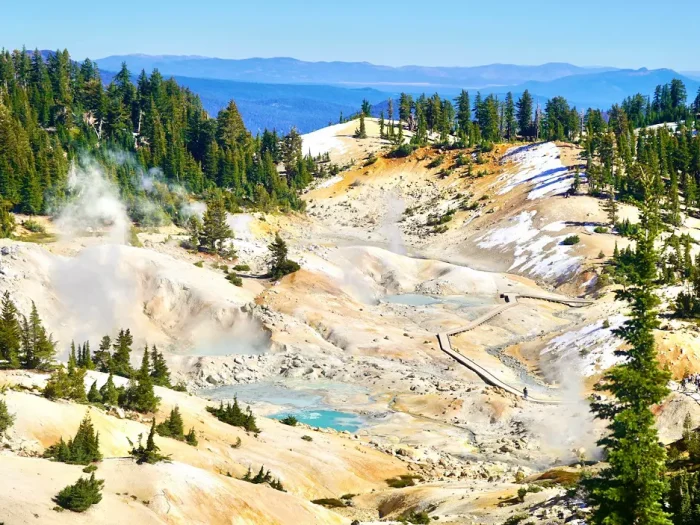
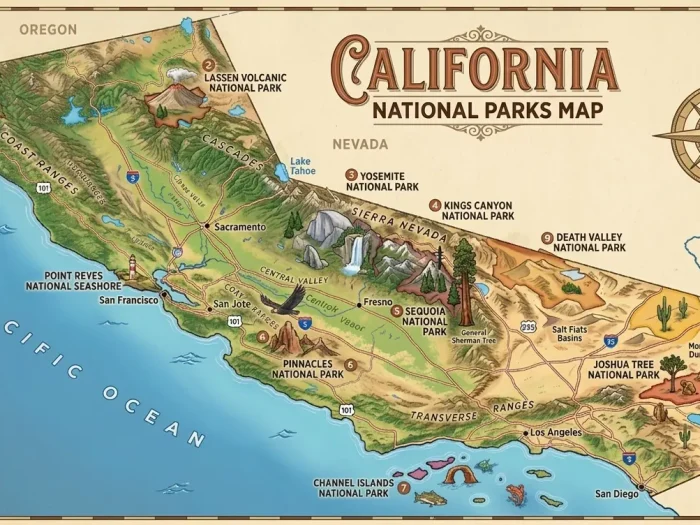
Located in northern California, Lassen Volcanic National Park experiences dramatic seasonal changes thanks to its high elevation and mountainous terrain. Weather can vary significantly between the park’s lower valleys and its volcanic peaks, making it important to plan your visit carefully.
This month-by-month guide covers temperatures, snowfall, rainfall, road conditions, and the best activities throughout the year.
Quick Overview of Lassen Volcanic National Park Climate
- Summer (July–September): Warm days, cool nights, best hiking season
- Fall (October–November): Crisp temperatures and fewer crowds
- Winter (December–March): Heavy snowfall and limited road access
- Spring (April–June): Snowmelt, waterfalls, and wildflowers
Because the park sits at elevations ranging from about 5,000 to over 10,000 feet, temperatures can change quickly even during summer.
Lassen Volcanic National Park Temperatures by Month
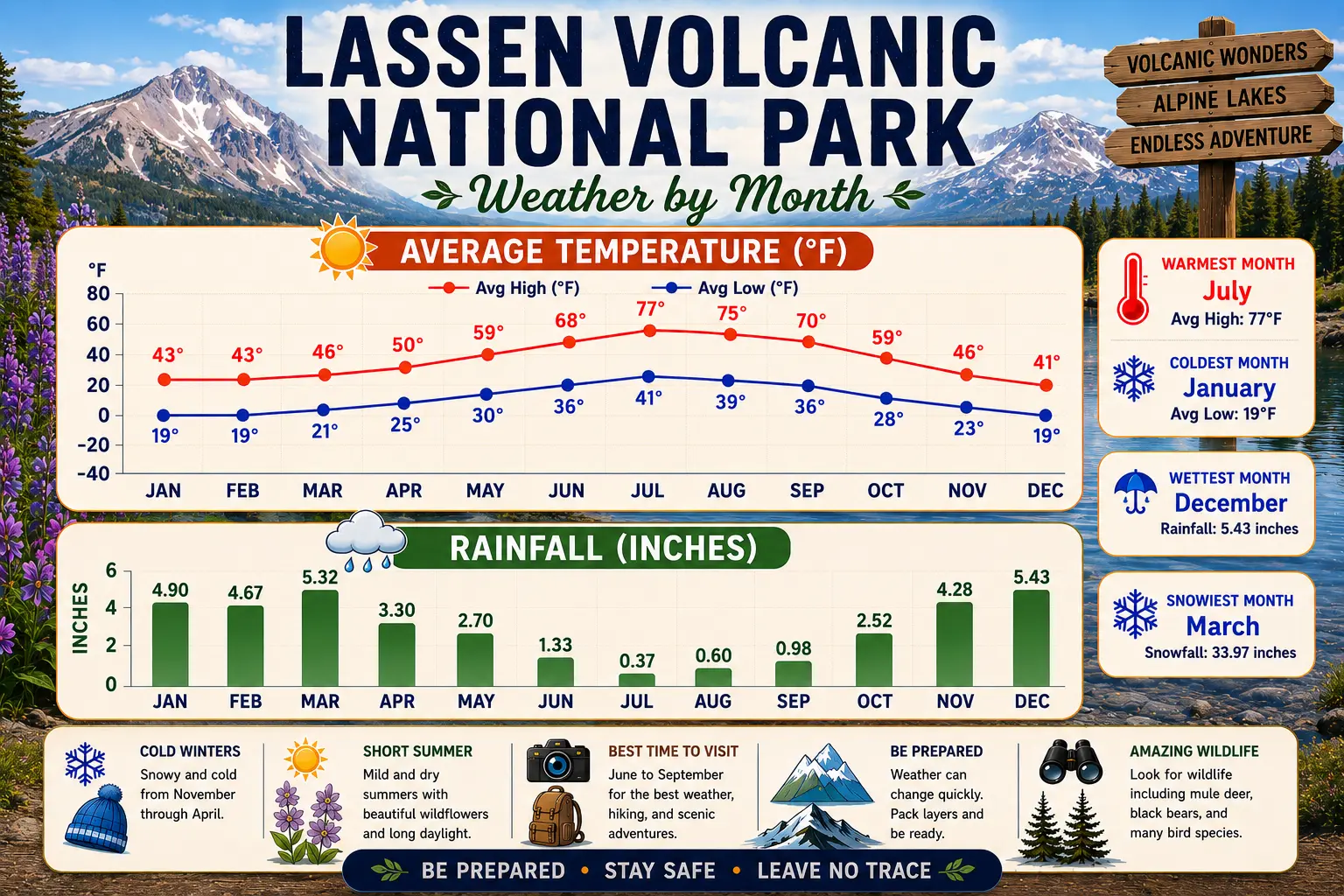
You can click the image below to view the full-size weather chart for Lassen Volcanic NP.
Lassen Volcanic National Park Weather by Month
January Weather
January is one of the coldest and snowiest months in the park. Most of the main park road is closed due to deep snow accumulation.
What to Expect
- Heavy snowfall across higher elevations
- Daytime temperatures often remain below freezing
- Excellent snowshoeing and cross-country skiing
Best Activities
- Winter photography
- Snow camping
- Ranger-led snowshoe walks
February Weather
February continues the deep winter season with frequent storms and thick snowpack.
Conditions
- Snow depths can exceed several feet
- Limited vehicle access
- Cold nights common
Visitors looking for solitude often enjoy this quiet winter month.
March Weather
Winter conditions persist well into March, especially at higher elevations.
Highlights
- Longer daylight hours
- Occasional sunny periods between storms
- Snow remains dominant across most trails
Travelers should still prepare for full winter conditions.
April Weather
April marks the beginning of spring transition, though snow remains common.
Typical Conditions
- Lower elevations begin thawing
- Waterfalls become stronger from snowmelt
- Mixed rain and snow possible
Some hiking areas may begin reopening depending on snow conditions.
May Weather
May is one of the most scenic months in the park as melting snow feeds creeks and waterfalls.
Weather Features
- Cool but improving temperatures
- Expanding access to trails
- Wildflowers begin blooming at lower elevations
Road closures may still exist at higher elevations.
June Weather
June brings major seasonal improvements, although snow can linger near mountain passes.
Why Visit in June
- Comfortable daytime temperatures
- Waterfalls at peak flow
- Fewer crowds than midsummer
Mosquitoes can become active near lakes and wet meadows.
July Weather
July is typically the warmest and driest month of the year.
Summer Conditions
- Sunny days and cool evenings
- Most park facilities fully open
- Excellent hiking and camping weather
Popular trails and campgrounds become busier during this peak season.
August Weather
August offers reliable weather for outdoor activities and volcanic exploration.
Best For
- Hiking
- Stargazing
- Scenic drives
- Backpacking
Afternoon thunderstorms occasionally develop but are usually brief.
September Weather
September is considered one of the best months to visit Lassen Volcanic National Park.
Advantages
- Mild temperatures
- Smaller crowds after Labor Day
- Clear skies and stable weather
Nights become noticeably colder by late September.
October Weather
October brings colorful autumn scenery and rapidly changing conditions.
Seasonal Changes
- Cooler temperatures
- First snowfall possible at higher elevations
- Reduced visitor traffic
Some facilities begin closing for winter preparation.
November Weather
Winter starts returning aggressively in November.
Conditions
- Frequent snowstorms
- Increasing road closures
- Cold daytime temperatures
Visitors should monitor weather forecasts closely before traveling.
December Weather
December transforms the park into a winter landscape dominated by snow and ice.
Winter Experience
- Deep snowpack
- Quiet wilderness scenery
- Excellent opportunities for snow recreation
Most visitors during this month come specifically for winter activities.
| Month | Avg High (°F) | Avg Low (°F) | Rainfall (inches) | Sun (hrs/day) | Snowfall (inches) |
|---|---|---|---|---|---|
| January | 43 | 19 | 4.90 | 9.5 | 27.92 |
| February | 43 | 19 | 4.67 | 10.5 | 30.61 |
| March | 46 | 21 | 5.32 | 12.0 | 33.97 |
| April | 50 | 25 | 3.30 | 13.0 | 19.56 |
| May | 59 | 30 | 2.70 | 14.5 | 6.09 |
| June | 68 | 36 | 1.33 | 15.0 | 1.00 |
| July | 77 | 41 | 0.37 | 15.0 | 0.02 |
| August | 75 | 39 | 0.60 | 14.0 | 0.00 |
| September | 70 | 36 | 0.98 | 12.5 | 0.15 |
| October | 59 | 28 | 2.52 | 11.0 | 3.08 |
| November | 46 | 23 | 4.28 | 10.0 | 15.13 |
| December | 41 | 19 | 5.43 | 9.5 | 28.65 |
Best Time to Visit Lassen Volcanic National Park
The best time depends on your interests:
| Activity | Best Months |
|---|---|
| Hiking | July–September |
| Wildflowers | May–July |
| Waterfalls | May–June |
| Snow Activities | January–March |
| Scenic Drives | July–October |
| Avoiding Crowds | June and September |
What to Pack by Season
Summer
- Lightweight layers
- Sun protection
- Plenty of water
- Hiking boots
Winter
- Snow gear
- Insulated clothing
- Tire chains
- Waterproof boots
Spring & Fall
- Warm layers
- Rain jacket
- Waterproof footwear
Weather conditions can change rapidly at high elevations, even during summer.
20 FAQs About Lassen Volcanic National Park Weather
1. What is the best time to visit Lassen Volcanic National Park for good weather?
The best weather is typically from July through September, when temperatures are mild, skies are clearer, and most park roads and trails are open.
2. Does Lassen Volcanic National Park get a lot of snow?
Yes. The park receives heavy snowfall each winter, especially at higher elevations near Lassen Peak.
3. What is the warmest month in Lassen Volcanic National Park?
July is usually the warmest month, with daytime highs averaging around 77°F.
4. What is the coldest month in Lassen Volcanic National Park?
January is generally the coldest month, with nighttime temperatures often dropping below 20°F.
5. Can you visit Lassen Volcanic National Park in winter?
Yes, but winter access is limited due to snow. Popular activities include snowshoeing, skiing, and winter photography.
6. When does snow start falling in Lassen Volcanic National Park?
Snow can begin falling as early as October at higher elevations and becomes common by November.
7. How much snowfall does Lassen Volcanic National Park receive annually?
Higher elevations can receive several hundred inches of snow each year, making it one of the snowiest national parks in California.
8. Is Lassen Volcanic National Park open year-round?
The park itself is open year-round, but many roads and facilities close seasonally because of snow.
9. When does the main park road usually open?
The main road often fully opens between late June and early July, depending on snow conditions.
10. Does it rain much in Lassen Volcanic National Park?
Rainfall is highest from late fall through early spring. Summers are generally dry.
11. What is the wettest month in Lassen Volcanic National Park?
December is usually the wettest month, averaging over 5 inches of rainfall.
12. How hot does Lassen Volcanic National Park get in summer?
Summer daytime temperatures are typically comfortable, ranging from the upper 60s to upper 70s °F.
13. Are summer nights cold in Lassen Volcanic National Park?
Yes. Even during summer, nighttime temperatures can fall into the 30s and 40s °F.
14. What should I wear when visiting Lassen Volcanic National Park?
Layered clothing is recommended year-round because mountain weather changes quickly.
15. Is there wildfire smoke in Lassen Volcanic National Park during summer?
Occasionally. Wildfires in Northern California can impact air quality and visibility during late summer.
16. Are thunderstorms common in Lassen Volcanic National Park?
Afternoon thunderstorms can occasionally develop during summer, especially in July and August.
17. What is the sunniest time of year in Lassen Volcanic National Park?
June through August usually provides the most sunshine and longest daylight hours.
18. Does weather vary by elevation in Lassen Volcanic National Park?
Yes. Higher elevations are significantly colder and snowier than lower areas.
19. Is spring a good time to visit Lassen Volcanic National Park?
Spring offers beautiful waterfalls and fewer crowds, but many trails may still be snow-covered.
20. How quickly can weather change in Lassen Volcanic National Park?
Weather can change very rapidly due to the park’s mountain environment, so visitors should always prepare for sudden cold, wind, or storms.
Final Thoughts
Lassen Volcanic National Park offers a dramatically different experience in every season. Summer provides ideal hiking conditions and open roads, while winter creates a peaceful snow-covered wilderness perfect for snowshoeing and cross-country skiing.
For most travelers, July through September offers the easiest access and best overall weather. However, visitors seeking waterfalls, wildflowers, or winter scenery may prefer spring or snowy months instead.