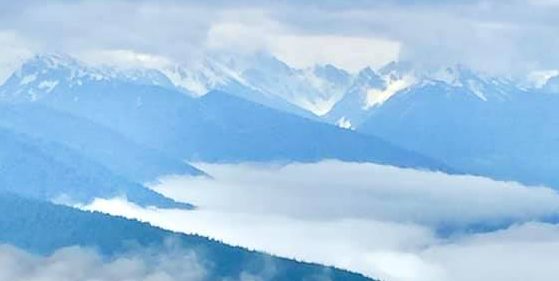
Lake Clark National Park Weather by Month
Lake Clark National Park and Preserve is one of Alaska’s most remote and wild national parks, known for its glaciers, volcanoes, salmon-filled rivers, and brown bears. Because the park sits between coastal and interior Alaska, weather conditions can change rapidly throughout the year. Travelers should expect cool temperatures, rain, wind, and sudden weather shifts no matter the season.
This month-by-month guide covers average temperatures, precipitation patterns, daylight conditions, and what to expect when visiting Lake Clark National Park.
Overview of Lake Clark National Park Climate
Lake Clark National Park has a subarctic climate with maritime influences from the nearby Gulf of Alaska. Summers are mild and relatively wet, while winters are long, snowy, and cold. Weather varies significantly depending on elevation and location within the park.
What Makes the Weather Unique?
- Rapid weather changes are common
- Coastal areas are wetter than inland regions
- Summer temperatures stay cool compared to most U.S. parks
- Snow can fall during any month at higher elevations
- Strong winds and fog frequently affect flight access
The most popular time to visit is from June through September when temperatures are milder and daylight is extensive.
Lake Clark National Park Temperatures by Month
You can click the image below to view the full-size weather chart for Lake Clark NP.
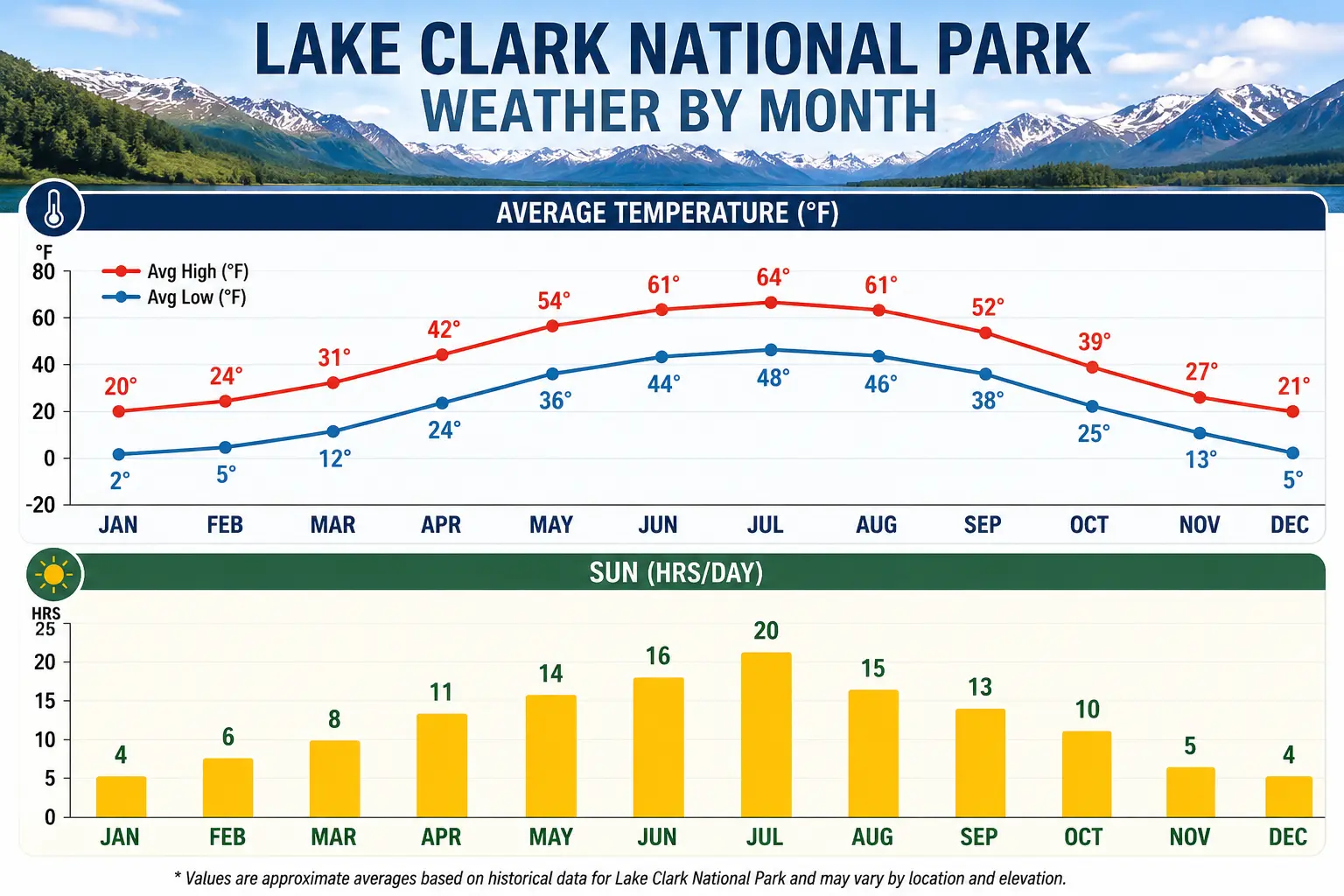
January
January is one of the coldest and snowiest months in the park.
- Average High: 20°F (-7°C)
- Average Low: 2°F (-17°C)
- Conditions: Heavy snow, frozen lakes, short daylight hours
Winter activities like backcountry skiing and snowmobiling are possible, but access is extremely limited due to weather and remote conditions.
February
February remains very cold, though daylight slowly increases.
- Average High: 24°F (-4°C)
- Average Low: 5°F (-15°C)
- Conditions: Snow-covered landscapes and icy rivers
This is a quiet month with excellent opportunities for winter photography and wilderness solitude.
March
March begins the transition toward spring.
- Average High: 31°F (-1°C)
- Average Low: 12°F (-11°C)
- Conditions: Deep snow remains, but days become noticeably longer
Late winter adventures are still possible, and clearer skies become more common.
April
Spring arrives slowly in Lake Clark National Park.
- Average High: 42°F (6°C)
- Average Low: 24°F (-4°C)
- Conditions: Snowmelt begins at lower elevations
Trails can become muddy, and river ice starts breaking up. Wildlife becomes more active as temperatures rise.
May
May marks the beginning of the main travel season.
- Average High: 54°F (12°C)
- Average Low: 36°F (2°C)
- Conditions: Longer days, thawed lakes, emerging greenery
Bear viewing begins improving as salmon runs approach later in the season.
June
June offers mild temperatures and nearly endless daylight.
- Average High: 61°F (16°C)
- Average Low: 44°F (7°C)
- Conditions: Green landscapes, active wildlife, moderate rainfall
This is one of the best months for hiking, kayaking, fishing, and scenic flights.
July
July is typically the warmest month of the year.
- Average High: 64°F (18°C)
- Average Low: 48°F (9°C)
- Conditions: Frequent rain showers and peak bear activity
Visitors should still pack waterproof layers because rain is common even during summer.
August
August remains mild but wetter than early summer.
- Average High: 61°F (16°C)
- Average Low: 46°F (8°C)
- Conditions: Rainy periods, lush scenery, active salmon runs
This is a prime month for bear viewing as salmon gather in rivers and streams.
September
September brings cooler temperatures and beautiful fall colors.
- Average High: 52°F (11°C)
- Average Low: 38°F (3°C)
- Conditions: Crisp air, fewer insects, increasing rain
Early snow is possible in higher elevations by late September.
October
Winter begins returning to the park.
- Average High: 39°F (4°C)
- Average Low: 25°F (-4°C)
- Conditions: Snowfall becomes more frequent
Visitor services and air taxi operations may become limited due to changing weather.
November
November is cold, dark, and snowy.
- Average High: 27°F (-3°C)
- Average Low: 13°F (-11°C)
- Conditions: Frozen ground and growing snowpack
Travel becomes challenging, especially in remote backcountry areas.
December
December brings deep winter conditions.
- Average High: 21°F (-6°C)
- Average Low: 5°F (-15°C)
- Conditions: Very short days and frequent snowstorms
The park becomes a true Arctic wilderness during this time.
| Month | Avg High (°F) | Avg Low (°F) | Rainfall (inches) | Sun (hrs/day) | Snowfall (inches) |
|---|---|---|---|---|---|
| January | 20 | 2 | 2.8 | 4 | 18 |
| February | 24 | 5 | 2.3 | 6 | 15 |
| March | 31 | 12 | 2.1 | 8 | 12 |
| April | 42 | 24 | 1.8 | 11 | 6 |
| May | 54 | 36 | 2.0 | 14 | 2 |
| June | 61 | 44 | 3.1 | 16 | 0 |
| July | 64 | 48 | 4.2 | 15 | 0 |
| August | 61 | 46 | 5.0 | 13 | 0 |
| September | 52 | 38 | 4.1 | 10 | 2 |
| October | 39 | 25 | 3.5 | 7 | 10 |
| November | 27 | 13 | 3.0 | 5 | 16 |
| December | 21 | 5 | 2.9 | 4 | 19 |
Notes
- Rainfall and snowfall averages vary significantly across different parts of Lake Clark National Park and Preserve due to its large size and varied terrain.
- Summer months are wetter but much milder, while winter brings heavy snowfall and limited daylight.
- Sun hours refer to approximate average daylight sunshine exposure per day.
Best Time to Visit Lake Clark National Park
The ideal time to visit depends on your activities and interests.
| Activity | Best Months |
|---|---|
| Bear Viewing | July – September |
| Hiking | June – August |
| Fishing | June – September |
| Kayaking | June – August |
| Fall Colors | September |
| Winter Adventures | February – March |
Rainfall and Snowfall Patterns
Lake Clark National Park receives substantial precipitation throughout the year.
- Summer rainfall is frequent but usually moderate
- Coastal areas receive more rain than inland sections
- Snowfall dominates from October through April
- Mountain regions may retain snow year-round
Because weather conditions shift quickly, visitors should always carry layered clothing and waterproof gear.
Daylight Hours Throughout the Year
One of the biggest seasonal differences in Alaska is daylight variation.
- June and July can have nearly 20 hours of daylight
- Winter months may only receive 5–6 hours of daylight
- Extended summer daylight allows longer hiking and wildlife viewing opportunities
What to Pack for Lake Clark National Park Weather
No matter when you visit, preparation is essential.
Summer Packing List
- Waterproof jacket
- Insulated layers
- Hiking boots
- Bug spray
- Quick-dry clothing
Winter Packing List
- Heavy insulated coat
- Snow boots
- Thermal base layers
- Gloves and face protection
- Emergency survival gear
20 FAQs About Lake Clark National Park Weather
1. What is the best month to visit Lake Clark National Park and Preserve?
July is often considered the best month because temperatures are mild, wildlife is active, and daylight hours are long.
2. Does Lake Clark National Park get a lot of rain?
Yes. Rain is common throughout the year, especially during July, August, and September.
3. What is the warmest month in Lake Clark National Park?
July is typically the warmest month, with average highs around 64°F.
4. How cold does Lake Clark National Park get in winter?
Winter temperatures can drop below 0°F, especially during December through February.
5. Does it snow in Lake Clark National Park?
Yes. Snowfall is common from October through April, and higher elevations may see snow year-round.
6. Can you visit Lake Clark National Park in winter?
Yes, but winter visits are challenging due to heavy snow, limited daylight, and difficult access.
7. What is the weather like in summer at Lake Clark National Park?
Summer is cool and wet, with temperatures generally ranging from the mid-40s to mid-60s °F.
8. Is Lake Clark National Park humid?
The park can feel damp because of frequent rain and nearby coastal influences, but humidity is usually moderate.
9. When does snow start falling in Lake Clark National Park?
Snow can begin as early as September in higher elevations and becomes common by October.
10. What should I wear in Lake Clark National Park?
Layered clothing and waterproof gear are essential because weather conditions change quickly.
11. Does Lake Clark National Park experience extreme weather changes?
Yes. Conditions can shift rapidly from sunshine to rain, wind, or fog within hours.
12. Are summers sunny in Lake Clark National Park?
Summer offers long daylight hours, but cloudy skies and rain showers are still frequent.
13. How many daylight hours does Lake Clark National Park get in summer?
June and July can receive nearly 20 hours of daylight per day.
14. Is May a good time to visit Lake Clark National Park?
Yes. May offers milder temperatures, fewer crowds, and increasing wildlife activity.
15. What is the rainiest month in Lake Clark National Park?
August is often the wettest month of the year.
16. Can weather affect flights into Lake Clark National Park?
Absolutely. Fog, wind, and storms frequently delay or cancel small aircraft flights into the park.
17. Are mosquitoes bad in Lake Clark National Park?
Mosquitoes can be very active during June and July, especially near wetlands and lakes.
18. What is fall weather like in Lake Clark National Park?
Fall brings cooler temperatures, colorful tundra landscapes, and increasing chances of snow.
19. Does Lake Clark National Park have storms?
Yes. Coastal storm systems can bring strong winds, rain, and rough weather conditions.
20. What is the best weather for bear viewing in Lake Clark National Park?
July through September usually provides the best combination of mild weather and active salmon runs for bear viewing.
Final Thoughts
Weather in Lake Clark National Park and Preserve plays a major role in shaping every visitor experience. Summers are cool and full of wildlife activity, while winters create a harsh but beautiful wilderness environment. Because conditions can change rapidly, flexibility and proper gear are critical for safe travel in this remote Alaska national park.
For most travelers, June through September offers the best balance of accessible weather, wildlife viewing, and outdoor recreation opportunities.