Yosemite National Park Weather by Month
Yosemite National Park is famous for its towering granite cliffs, waterfalls, and giant sequoias—but its weather changes dramatically throughout the year. Located in the Sierra Nevada mountains of California, the park experiences everything from snowy winters to hot, dry summers. Understanding the weather month by month can help you plan the perfect visit.
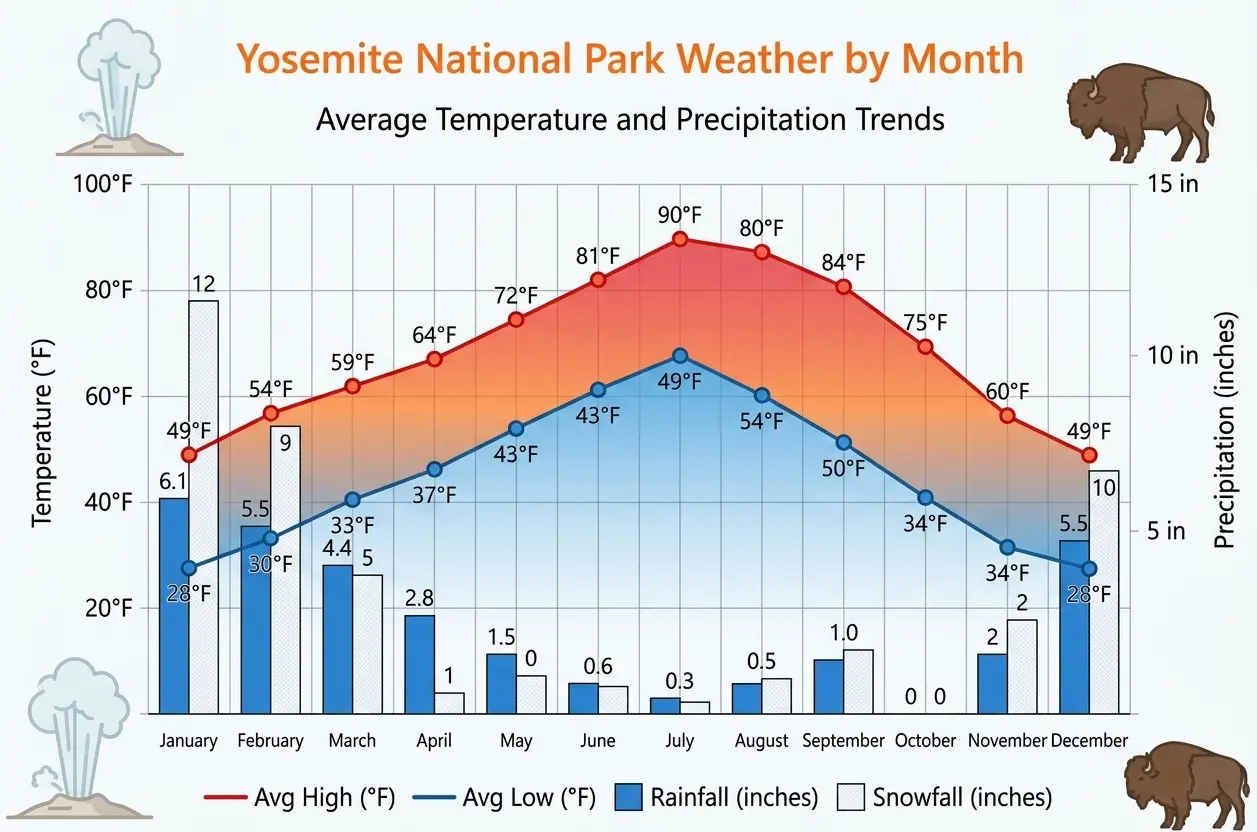
Yosemite National Park Weather by Month
| Month | Avg High (°F / °C) | Avg Low (°F / °C) | Rainfall (inches) | Snowfall (inches) |
|---|---|---|---|---|
| January | 49°F / 9°C | 28°F / -2°C | 6.1 | 12 |
| February | 54°F / 12°C | 30°F / -1°C | 5.5 | 9 |
| March | 59°F / 15°C | 33°F / 1°C | 4.4 | 5 |
| April | 64°F / 18°C | 37°F / 3°C | 2.8 | 1 |
| May | 72°F / 22°C | 43°F / 6°C | 1.5 | 0 |
| June | 81°F / 27°C | 49°F / 9°C | 0.6 | 0 |
| July | 90°F / 32°C | 55°F / 13°C | 0.3 | 0 |
| August | 88°F / 31°C | 54°F / 12°C | 0.5 | 0 |
| September | 84°F / 29°C | 50°F / 10°C | 1.0 | 0 |
| October | 75°F / 24°C | 42°F / 6°C | 2.0 | 0 |
| November | 60°F / 16°C | 34°F / 1°C | 4.0 | 2 |
| December | 49°F / 9°C | 28°F / -2°C | 5.5 | 10 |
January
January is the heart of winter in Yosemite. Snow blankets much of the park, especially at higher elevations.
- Temperature: 1°C to 10°C (34°F to 50°F) in Yosemite Valley
- Conditions: Snowy, icy, and cold
- Highlights: Snowshoeing, skiing, and frozen waterfalls
Many roads, including Tioga Pass, are closed. However, Yosemite Valley remains open and offers a peaceful, less crowded experience.
February
Winter continues, but days slowly get longer.
- Temperature: 2°C to 12°C (36°F to 54°F)
- Conditions: Snow, occasional sunshine
- Highlights: Horsetail Fall “firefall” phenomenon (late February)
This is a magical time for photographers, especially during sunset when the waterfall glows orange under the right conditions.
March
March marks the transition from winter to spring.
- Temperature: 4°C to 15°C (39°F to 59°F)
- Conditions: Melting snow, rising water levels
- Highlights: Early waterfall activity
Snow begins to melt, and rivers start swelling, setting the stage for peak waterfall season.
April
Spring is in full swing.
- Temperature: 7°C to 18°C (45°F to 64°F)
- Conditions: Mild, occasional rain
- Highlights: Flowing waterfalls, blooming wildflowers
Waterfalls become more powerful as snowmelt increases. Crowds begin to grow.
May
One of the best months to visit Yosemite.
- Temperature: 10°C to 22°C (50°F to 72°F)
- Conditions: Pleasant and green
- Highlights: Peak waterfall season
Most waterfalls are at their strongest, and many hiking trails reopen.
June
Early summer brings warm weather and accessibility.
- Temperature: 13°C to 27°C (55°F to 81°F)
- Conditions: Warm, mostly dry
- Highlights: Open roads, including Tioga Pass (usually)
This is a great time for hiking, though crowds increase significantly.
July
July is hot and busy.
- Temperature: 16°C to 32°C (61°F to 90°F)
- Conditions: Hot, dry, sunny
- Highlights: High-elevation hiking
Waterfalls begin to diminish, but alpine areas are fully accessible.
August
Similar to July but slightly calmer toward the end.
- Temperature: 16°C to 31°C (61°F to 88°F)
- Conditions: Dry, occasional thunderstorms
- Highlights: Stargazing, backpacking
Afternoon thunderstorms can occur, especially in higher elevations.
September
A quieter, more relaxed time to visit.
- Temperature: 13°C to 29°C (55°F to 84°F)
- Conditions: Warm days, cool nights
- Highlights: Fewer crowds, great hiking conditions
Waterfalls are minimal, but the weather is ideal for outdoor activities.
October
Fall colors begin to appear.
- Temperature: 8°C to 24°C (46°F to 75°F)
- Conditions: Crisp, dry air
- Highlights: Autumn foliage
Crowds thin out, making it a peaceful time to explore.
November
Late fall transitions into winter.
- Temperature: 3°C to 17°C (37°F to 63°F)
- Conditions: Cooler, possible early snow
- Highlights: Quiet landscapes
Some higher roads begin to close depending on snowfall.
December
Winter returns with snow and festive scenery.
- Temperature: 1°C to 10°C (34°F to 50°F)
- Conditions: Snowy, cold
- Highlights: Holiday atmosphere, snow-covered views
Yosemite becomes a winter wonderland, perfect for those who enjoy snow activities.
20 helpful FAQs about the weather in Yosemite National Park
1. What is the best time to visit Yosemite for good weather?
Late spring (May–June) and early fall (September–October) offer the most pleasant temperatures and fewer crowds.
2. Does Yosemite have snow year-round?
No, snow mainly falls from November through April, especially at higher elevations.
3. How cold does Yosemite get in winter?
Winter temperatures in Yosemite Valley can drop below freezing, often ranging from -2°C to 10°C (28°F to 50°F).
4. Is summer too hot in Yosemite?
Summer can be hot, especially in July and August, with highs reaching around 32°C (90°F) in Yosemite Valley.
5. When is the rainy season in Yosemite?
Most rainfall occurs from November through March.
6. Does it rain a lot in Yosemite during summer?
No, summers are typically dry with very little rainfall.
7. What is the best month for waterfalls?
May is usually the best month, as snowmelt peaks and waterfalls are at their strongest.
8. Does Yosemite weather vary by elevation?
Yes, higher elevations like Tuolumne Meadows are significantly cooler and snowier than Yosemite Valley.
9. Can I visit Yosemite in winter?
Yes, but some roads and areas may be closed due to snow.
10. Are there thunderstorms in Yosemite?
Yes, thunderstorms can occur in summer, especially in higher elevations.
11. What should I wear in Yosemite?
Layered clothing is best, as temperatures can change quickly throughout the day.
12. Is Yosemite crowded during good weather?
Yes, especially in summer when weather conditions are ideal for travel.
13. Does Yosemite get foggy?
Fog is not very common but can occur in cooler months or early mornings.
14. What is the warmest month in Yosemite?
July is typically the warmest month.
15. What is the coldest month in Yosemite?
January is usually the coldest month.
16. Are roads affected by weather in Yosemite?
Yes, snow can cause road closures, especially Tioga Pass and Glacier Point Road.
17. How unpredictable is Yosemite weather?
Weather can change quickly, particularly in spring and fall.
18. Is fall a good time to visit Yosemite?
Yes, fall offers mild weather, fewer crowds, and beautiful scenery.
19. Does Yosemite experience extreme weather?
Extreme weather is rare, but heavy snowstorms and heat waves can occur.
20. How can I check Yosemite weather before visiting?
You can check forecasts through official park updates or weather apps before your trip.
Final Thoughts
Yosemite’s weather varies widely depending on the season and elevation.
- Best for waterfalls: April–June
- Best for hiking: May–October
- Best for snow: December–February
Each month offers a unique experience, so the best time to visit depends on what you want to see and do.