Great Sand Dunes National Park Weather by Month
Planning a trip to Great Sand Dunes National Park in Colorado? The park’s weather varies dramatically throughout the year due to its high elevation and desert-like dune system. Understanding the month-by-month conditions can help you choose the best time for hiking, sandboarding, stargazing, or simply enjoying the unique landscape.
Great Sand Dunes National Park Temperatures by Month
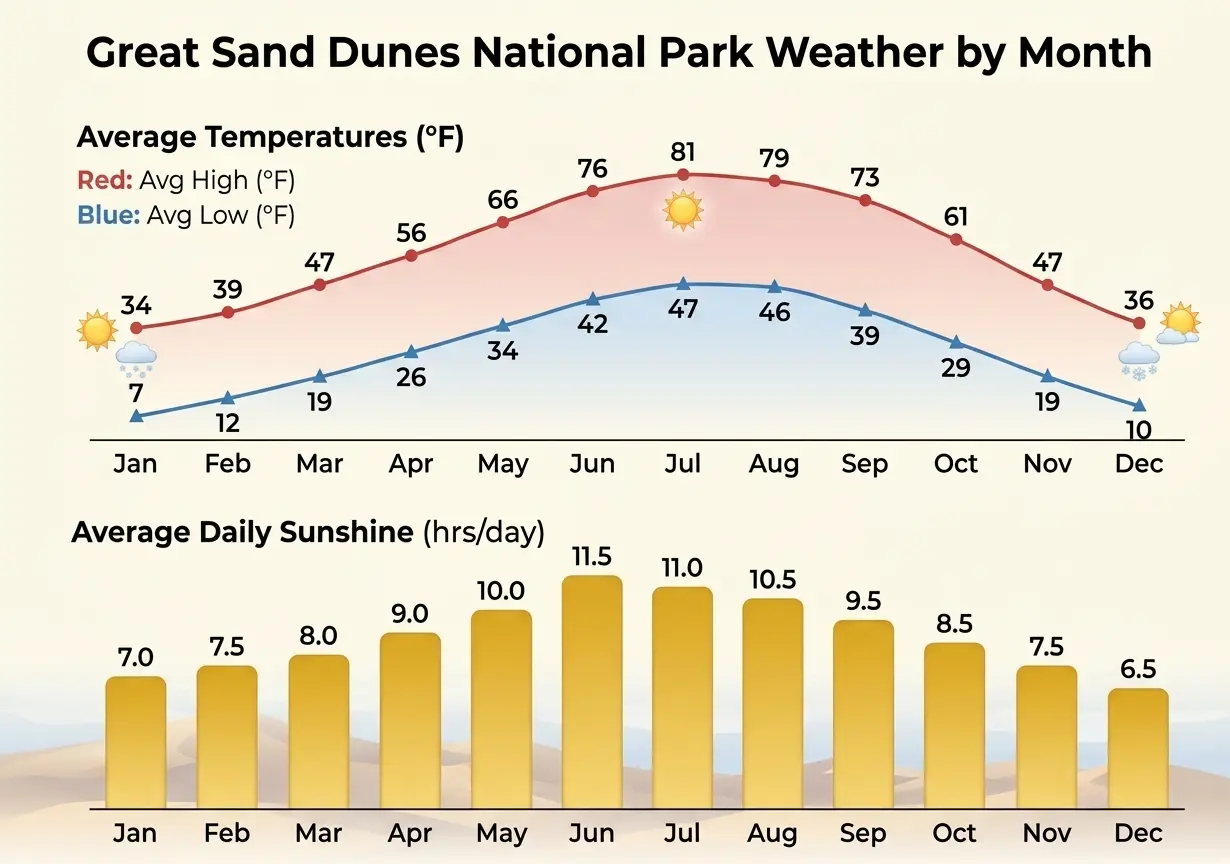
You can click the image below to view the full-size weather chart for Great Sand Dunes National Park.
🌨️ Winter (December – February)
Overview: Cold, quiet, and often snowy
- December:
Temperatures range from about 5°F to 35°F (-15°C to 2°C). Snow begins to accumulate, especially in the surrounding mountains. The dunes may be partially snow-covered, creating a striking contrast. - January:
The coldest month of the year. Expect lows near 0°F (-18°C). Days are sunny but chilly. Wind can make it feel even colder. - February:
Slightly warmer, with highs reaching around 40°F (4°C). Snow is still common, but longer daylight hours make exploring more pleasant.
👉 Best for: solitude, winter photography, and peaceful landscapes
⚠️ Watch out for: freezing temperatures and icy conditions
🌱 Spring (March – May)
Overview: Unpredictable weather and strong winds
- March:
Temperatures begin to rise (20°F to 50°F / -6°C to 10°C), but snowstorms are still possible. Winds start picking up. - April:
Windy season intensifies. Highs reach around 60°F (15°C), but gusts can make sand movement intense. - May:
One of the most dynamic months. Warm days (up to 70°F / 21°C), but strong winds and occasional thunderstorms. Snowmelt creates Medano Creek, a seasonal highlight.
👉 Best for: seeing Medano Creek flow and fewer crowds
⚠️ Watch out for: high winds and sandstorms
☀️ Summer (June – August)
Overview: Hot days, cool nights, and afternoon storms
- June:
Peak early summer conditions. Daytime highs around 80°F (27°C). Sand can reach 150°F (65°C)—very hot on bare feet. - July:
Warmest month, often reaching 85°F (29°C). Afternoon thunderstorms are common due to the North American Monsoon. - August:
Similar to July, with frequent afternoon rain showers and occasional lightning storms.
👉 Best for: sandboarding, creek play (early summer), family visits
⚠️ Watch out for: hot sand, sudden storms, lightning risk
🍂 Fall (September – November)
Overview: Mild temperatures and stable weather
- September:
One of the best months to visit. Highs around 75°F (24°C), with fewer storms and cooler sand. - October:
Crisp air and beautiful scenery. Temperatures range from 30°F to 65°F (-1°C to 18°C). Minimal crowds. - November:
Cooler and quieter. Early snowfall is possible, with highs around 50°F (10°C).
👉 Best for: hiking, photography, and comfortable exploration
⚠️ Watch out for: rapidly dropping temperatures at night
Great Sand Dunes National Park Weather by Month
| Month | Avg High (°F) | Avg Low (°F) | Sun (hrs/day) | Snowfall (inches) |
|---|---|---|---|---|
| January | 34 | 7 | 7.0 | 7.0 |
| February | 39 | 12 | 7.5 | 6.5 |
| March | 47 | 19 | 8.0 | 5.5 |
| April | 56 | 26 | 9.0 | 2.5 |
| May | 66 | 34 | 10.0 | 0.8 |
| June | 76 | 42 | 11.5 | 0.1 |
| July | 81 | 47 | 11.0 | 0.0 |
| August | 79 | 46 | 10.5 | 0.0 |
| September | 73 | 39 | 9.5 | 0.2 |
| October | 61 | 29 | 8.5 | 1.5 |
| November | 47 | 19 | 7.5 | 4.5 |
| December | 36 | 10 | 6.5 | 6.8 |
Key Takeaways
- Sunniest period: Late spring to mid-summer (May–July)
- Shortest daylight & sunshine: December–January
- Snow mainly concentrated: Winter months, tapering off by late spring
Best Time to Visit
- For ideal weather: September and early October
- For water features: Late May to early June (Medano Creek)
- For fewer crowds: Winter months
- For adventure activities: Summer mornings and evenings
Key Weather Tips
- The park sits at about 8,000 feet elevation, so temperatures drop quickly at night.
- Sand surface temperatures can be extreme—bring proper footwear.
- Afternoon storms in summer can develop quickly—plan hikes early in the day.
- Wind is strongest in spring, especially April and May.
20 FAQs about weather at Great Sand Dunes National Park:
🌤️ General Weather Questions
- What is the climate like at Great Sand Dunes National Park?
It’s a high-desert climate with hot summers, cold winters, and large temperature swings between day and night. - What is the best time of year to visit for good weather?
September and early October offer the most comfortable temperatures and stable conditions. - How hot does it get in summer?
Air temperatures can reach the mid-80s°F (around 29°C), but sand surface temperatures can exceed 150°F (65°C). - How cold does it get in winter?
Winter lows can drop below 0°F (-18°C), especially in January. - Does the park experience large temperature swings?
Yes, due to its elevation, day-to-night temperature differences can exceed 30°F (17°C).
🌧️ Rain & Storms
- When is the rainy season?
July and August bring the most rainfall due to the North American monsoon. - Are thunderstorms common?
Yes, especially on summer afternoons. - Is lightning a concern?
Absolutely—lightning is a real hazard on exposed dunes during storms. - Does it rain often in spring?
Spring tends to be windy rather than rainy, with occasional showers.
❄️ Snow & Winter Conditions
- Does it snow at Great Sand Dunes National Park?
Yes, snowfall is common from late fall through early spring. - When does the park get the most snow?
December through February typically see the highest snowfall. - Do the sand dunes get covered in snow?
Sometimes, creating a unique and beautiful contrast. - Can you visit in winter?
Yes, but you should be prepared for cold temperatures and limited access in some areas.
💨 Wind & Sand Conditions
- Is it windy at the park?
Yes—spring (especially April and May) is known for strong winds. - When is the windiest time of year?
April is usually the peak windy month. - Can windstorms affect visibility?
Yes, strong winds can blow sand and reduce visibility significantly.
🌊 Seasonal Highlights
- When does Medano Creek flow?
Typically from late May through early June due to snowmelt. - What’s the best time to avoid crowds and extreme weather?
Fall (September–October) offers a great balance of mild weather and fewer visitors.
🏕️ Travel Planning
- Is summer too hot to visit?
Midday can be very hot, but mornings and evenings are still enjoyable. - What should I pack for changing weather?
Bring layers, sun protection, sturdy footwear, and plenty of water—conditions can change quickly.
Bottom line:
Great Sand Dunes National Park offers a completely different experience each season—from snow-covered dunes in winter to flowing creeks in spring and sun-baked sands in summer. Choosing the right month depends on whether you want adventure, comfort, or solitude.