Grand Canyon Weather by Month: A Complete Guide for Travelers
The Grand Canyon is a year-round destination, but its weather can vary dramatically depending on the month, elevation, and location (South Rim, North Rim, or inner canyon). Understanding the monthly weather patterns will help you choose the best time for hiking, sightseeing, rafting, or simply enjoying the views.
This complete month-by-month guide breaks down temperatures, conditions, and travel tips so you can plan your trip with confidence.
Understanding Grand Canyon Weather Basics
Before diving into each month, keep these key facts in mind:
- Elevation matters:
- South Rim: ~7,000 ft (cooler, snowy winters)
- North Rim: ~8,000 ft (coldest, closed in winter)
- Inner Canyon (Phantom Ranch): ~2,500 ft (much hotter)
- Temperature swings are common: A single day can have a 30–40°F difference between morning and afternoon.
- Weather changes quickly: Storms, wind, and sudden temperature drops can happen any time of year.
Grand Canyon Weather by Month
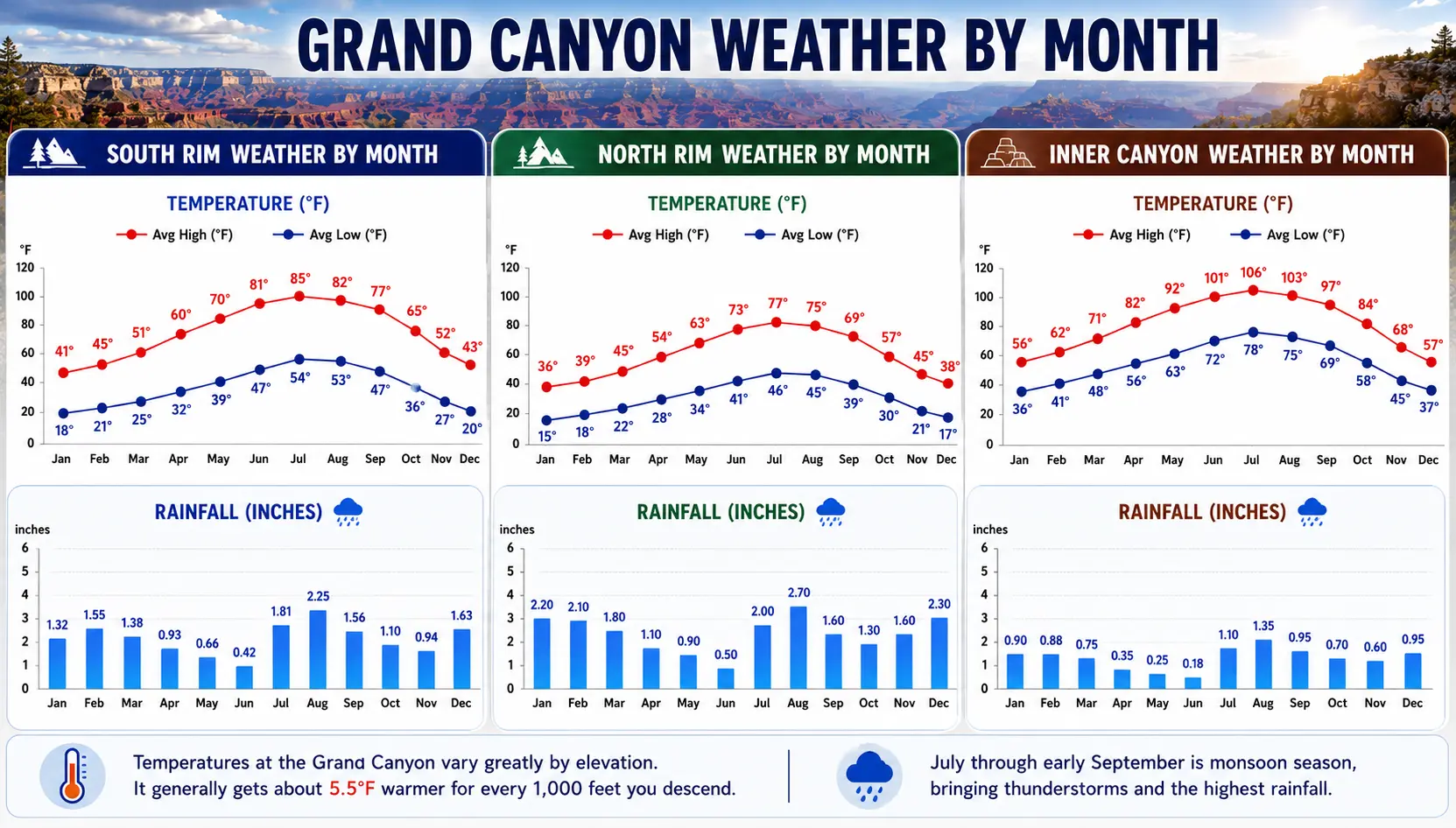
You can click the image below to view the full-size weather chart for Grand Canyon.
Grand Canyon Weather in January
- South Rim: Highs 41°F (5°C), Lows 18°F (–8°C), Rainfall 1.32 inches
- North Rim: Highs 36°F (2°C), Lows 15°F (–9°C), Rainfall 2.20 inches
- Inner Canyon: Highs 56°F (13°C), Lows 36°F (2°C), Rainfall 0.90 inches
January is one of the coldest months at the Grand Canyon. The South Rim often sees snow and icy mornings, while the North Rim experiences deeper snow accumulation and colder temperatures. Meanwhile, the Inner Canyon remains much warmer, making it more comfortable for hiking below the rim.
Best For: Snow photography, peaceful viewpoints, winter hiking in the Inner Canyon
Travel Tip: Bring traction devices for icy trails and dress in warm layers.
Grand Canyon Weather in February
- South Rim: Highs 45°F (7°C), Lows 21°F (–6°C), Rainfall 1.55 inches
- North Rim: Highs 39°F (4°C), Lows 18°F (–8°C), Rainfall 2.10 inches
- Inner Canyon: Highs 62°F (17°C), Lows 41°F (5°C), Rainfall 0.88 inches
February remains chilly, especially on the rims, but daylight hours begin increasing. Snowstorms are still possible at higher elevations, while the Inner Canyon offers mild daytime hiking conditions.
Best For: Quiet winter travel, scenic snowy overlooks, budget-friendly trips
Travel Tip: Check road conditions before visiting because winter storms can temporarily close routes.
Grand Canyon Weather in March
- South Rim: Highs 51°F (11°C), Lows 25°F (–4°C), Rainfall 1.38 inches
- North Rim: Highs 45°F (7°C), Lows 22°F (–6°C), Rainfall 1.80 inches
- Inner Canyon: Highs 71°F (22°C), Lows 48°F (9°C), Rainfall 0.75 inches
March brings early spring weather to the Grand Canyon. Conditions can still change rapidly, with occasional snowstorms on the rims and warm afternoons in the canyon below.
Best For: Spring hiking, photography, fewer crowds than summer
Travel Tip: Pack layers because temperatures vary greatly between morning and afternoon.
Grand Canyon Weather in April
- South Rim: Highs 60°F (16°C), Lows 32°F (0°C), Rainfall 0.93 inches
- North Rim: Highs 54°F (12°C), Lows 28°F (–2°C), Rainfall 1.10 inches
- Inner Canyon: Highs 82°F (28°C), Lows 56°F (13°C), Rainfall 0.35 inches
April is one of the best times to visit the Grand Canyon. The weather is mild at the South Rim, while the Inner Canyon starts becoming noticeably warm during the afternoon.
Best For: Hiking, camping, scenic drives, wildflowers
Travel Tip: Start hikes early if descending below the rim to avoid afternoon heat.
Grand Canyon Weather in May
- South Rim: Highs 70°F (21°C), Lows 39°F (4°C), Rainfall 0.66 inches
- North Rim: Highs 63°F (17°C), Lows 34°F (1°C), Rainfall 0.90 inches
- Inner Canyon: Highs 92°F (33°C), Lows 63°F (17°C), Rainfall 0.25 inches
May offers warm days and cool nights across the park. The North Rim usually opens in mid-May, and hiking conditions are excellent before summer heat intensifies.
Best For: Rim-to-rim hiking, backpacking, visiting the North Rim
Travel Tip: Reserve lodging early because visitor numbers increase significantly in May.
Grand Canyon Weather in June
- South Rim: Highs 81°F (27°C), Lows 47°F (8°C), Rainfall 0.42 inches
- North Rim: Highs 73°F (23°C), Lows 41°F (5°C), Rainfall 0.50 inches
- Inner Canyon: Highs 101°F (38°C), Lows 72°F (22°C), Rainfall 0.18 inches
June is hot and extremely dry, especially inside the canyon. Temperatures at Phantom Ranch frequently exceed 100°F, making midday hiking dangerous.
Best For: Sunrise photography, scenic viewpoints, rafting trips
Travel Tip: Carry plenty of water and avoid hiking during midday heat.
Grand Canyon Weather in July
- South Rim: Highs 85°F (29°C), Lows 54°F (12°C), Rainfall 1.81 inches
- North Rim: Highs 77°F (25°C), Lows 46°F (8°C), Rainfall 2.00 inches
- Inner Canyon: Highs 106°F (41°C), Lows 78°F (26°C), Rainfall 1.10 inches
July marks the beginning of monsoon season. Afternoon thunderstorms become common, bringing lightning, flash floods, and sudden heavy rain.
Best For: Storm photography, river rafting, experienced hikers
Travel Tip: Finish hikes early in the day to avoid dangerous afternoon thunderstorms.
Grand Canyon Weather in August
- South Rim: Highs 82°F (28°C), Lows 53°F (12°C), Rainfall 2.25 inches
- North Rim: Highs 75°F (24°C), Lows 45°F (7°C), Rainfall 2.70 inches
- Inner Canyon: Highs 103°F (39°C), Lows 75°F (24°C), Rainfall 1.35 inches
August is typically the wettest month at the Grand Canyon. Mornings are usually sunny, while storms often develop during the afternoon.
Best For: Dramatic cloud photography, cooler mornings, scenic summer views
Travel Tip: Watch for flash flood warnings in narrow canyon areas.
Grand Canyon Weather in September
- South Rim: Highs 77°F (25°C), Lows 47°F (8°C), Rainfall 1.56 inches
- North Rim: Highs 69°F (21°C), Lows 39°F (4°C), Rainfall 1.60 inches
- Inner Canyon: Highs 97°F (36°C), Lows 69°F (21°C), Rainfall 0.95 inches
September brings cooler temperatures and fewer thunderstorms. Many hikers consider this one of the best months for visiting the canyon.
Best For: Hiking, backpacking, comfortable sightseeing
Travel Tip: Book accommodations early because fall is a popular travel season.
Grand Canyon Weather in October
- South Rim: Highs 65°F (18°C), Lows 36°F (2°C), Rainfall 1.10 inches
- North Rim: Highs 57°F (14°C), Lows 30°F (–1°C), Rainfall 1.30 inches
- Inner Canyon: Highs 84°F (29°C), Lows 58°F (14°C), Rainfall 0.70 inches
October features crisp mornings, comfortable afternoons, and beautiful fall scenery along the rims.
Best For: Fall colors, hiking, scenic drives, photography
Travel Tip: Bring warm clothing for chilly mornings and evenings.
Grand Canyon Weather in November
- South Rim: Highs 52°F (11°C), Lows 27°F (–3°C), Rainfall 0.94 inches
- North Rim: Highs 45°F (7°C), Lows 21°F (–6°C), Rainfall 1.60 inches
- Inner Canyon: Highs 68°F (20°C), Lows 45°F (7°C), Rainfall 0.60 inches
November brings colder nights and occasional early winter storms. Visitor crowds begin dropping significantly.
Best For: Quiet vacations, cool-weather hiking, scenic overlooks
Travel Tip: Some North Rim facilities may close for the winter season.
Grand Canyon Weather in December
- South Rim: Highs 43°F (6°C), Lows 20°F (–7°C), Rainfall 1.63 inches
- North Rim: Highs 38°F (3°C), Lows 17°F (–8°C), Rainfall 2.30 inches
- Inner Canyon: Highs 57°F (14°C), Lows 37°F (3°C), Rainfall 0.95 inches
December transforms the canyon into a winter landscape. Snow-covered viewpoints create spectacular scenery, especially along the South Rim.
Best For: Winter photography, peaceful sightseeing, snowy landscapes
Travel Tip: Expect icy roads and cold overnight temperatures during winter visits.
Grand Canyon Weather by Month Table
| Month | South Rim Avg Temp | North Rim Avg Temp | Inner Canyon Avg Temp |
|---|---|---|---|
| January | 18–41°F (–8–5°C) | 15–36°F (–9–2°C) | 36–56°F (2–13°C) |
| February | 21–45°F (–6–7°C) | 18–39°F (–8–4°C) | 41–62°F (5–17°C) |
| March | 25–51°F (–4–11°C) | 22–45°F (–6–7°C) | 48–71°F (9–22°C) |
| April | 32–60°F (0–16°C) | 28–54°F (–2–12°C) | 56–82°F (13–28°C) |
| May | 39–70°F (4–21°C) | 34–63°F (1–17°C) | 63–92°F (17–33°C) |
| June | 47–81°F (8–27°C) | 41–73°F (5–23°C) | 72–101°F (22–38°C) |
| July | 54–85°F (12–29°C) | 46–77°F (8–25°C) | 78–106°F (26–41°C) |
| August | 53–82°F (12–28°C) | 45–75°F (7–24°C) | 75–103°F (24–39°C) |
| September | 47–77°F (8–25°C) | 39–69°F (4–21°C) | 69–97°F (21–36°C) |
| October | 36–65°F (2–18°C) | 30–57°F (–1–14°C) | 58–84°F (14–29°C) |
| November | 27–52°F (–3–11°C) | 21–45°F (–6–7°C) | 45–68°F (7–20°C) |
| December | 20–43°F (–7–6°C) | 17–38°F (–8–3°C) | 37–57°F (3–14°C) |
Best Time to Visit the Grand Canyon
- Best overall weather: April, May, September, October
- Fewest crowds: January, February, November
- Best for hiking: Spring and fall
- Best for snow views: December–February
Frequently Asked Questions (FAQs) about Grand Canyon National Park Weather
- What is the best month to visit the Grand Canyon for good weather?
April, May, September, and October offer the most comfortable temperatures and stable weather. - What is the hottest month at the Grand Canyon?
July is typically the hottest month, especially in the inner canyon where temperatures can exceed 110°F (43°C). - What is the coldest month at the Grand Canyon National Park?
January is the coldest month, with frequent snow and freezing temperatures on the South Rim. - Does it snow at the Grand Canyon?
Yes, snow is common on the South Rim from December through February. - Is the Grand Canyon open year-round?
The South Rim is open year-round, but the North Rim usually closes from mid-October to mid-May due to snow. - How different is the weather between the rim and the canyon floor?
The inner canyon can be 20–30°F (11–17°C) hotter than the rim on the same day. - Is summer a good time to hike the Grand Canyon?
Summer hiking is dangerous in the inner canyon due to extreme heat and should be limited to early mornings. - What month has the fewest crowds at the Grand Canyon?
January and February typically have the fewest visitors. - When is monsoon season at the Grand Canyon?
Monsoon season usually runs from July through early September. - Are thunderstorms dangerous at the Grand Canyon?
Yes, thunderstorms can cause lightning strikes and flash floods, especially in narrow canyons. - What is the best month for hiking the Grand Canyon?
October and April are ideal for hiking due to cooler temperatures and lower risk of heat exhaustion. - Is fall a good time to visit the Grand Canyon?
Yes, fall offers cooler weather, fewer crowds, and excellent hiking conditions. - Can you visit the Grand Canyon in winter?
Yes, winter visits are possible and offer scenic snow views, but icy conditions require extra caution. - What should I pack for a Grand Canyon trip?
Pack layers, sturdy hiking shoes, sun protection, water, and weather-appropriate gear. - Is the Grand Canyon windy?
Yes, strong winds are common year-round, especially during spring and fall. - What is the best time of day to avoid heat at the Grand Canyon?
Early morning and late afternoon are the coolest and safest times. - Does rain affect visibility at the Grand Canyon?
Rain can temporarily reduce visibility, but storms often create dramatic views and rainbows. - Is May too hot to visit the Grand Canyon?
May is comfortable on the rims, but the inner canyon can become very hot by late May. - Which rim has the best weather year-round?
The South Rim is the most accessible year-round, but weather varies by season. - Can weather change suddenly at the Grand Canyon?
Yes, sudden temperature drops, storms, and strong winds can occur at any time.
Final Thoughts
The Grand Canyon offers a unique experience every month of the year. Whether you prefer snowy solitude, mild hiking weather, or dramatic summer storms, understanding the monthly weather patterns will help you make the most of your trip.
Plan ahead, pack smart, and respect the canyon’s extreme conditions—and your visit will be unforgettable.