Glacier National Park Weather by Month: A Complete Guide
Glacier National Park is one of the most breathtaking destinations in the United States, known for its rugged mountains, alpine lakes, and diverse wildlife. However, its weather can vary dramatically throughout the year due to elevation and northern latitude. Understanding the monthly climate is essential for planning your trip.
Here’s a detailed breakdown of Glacier National Park weather by month
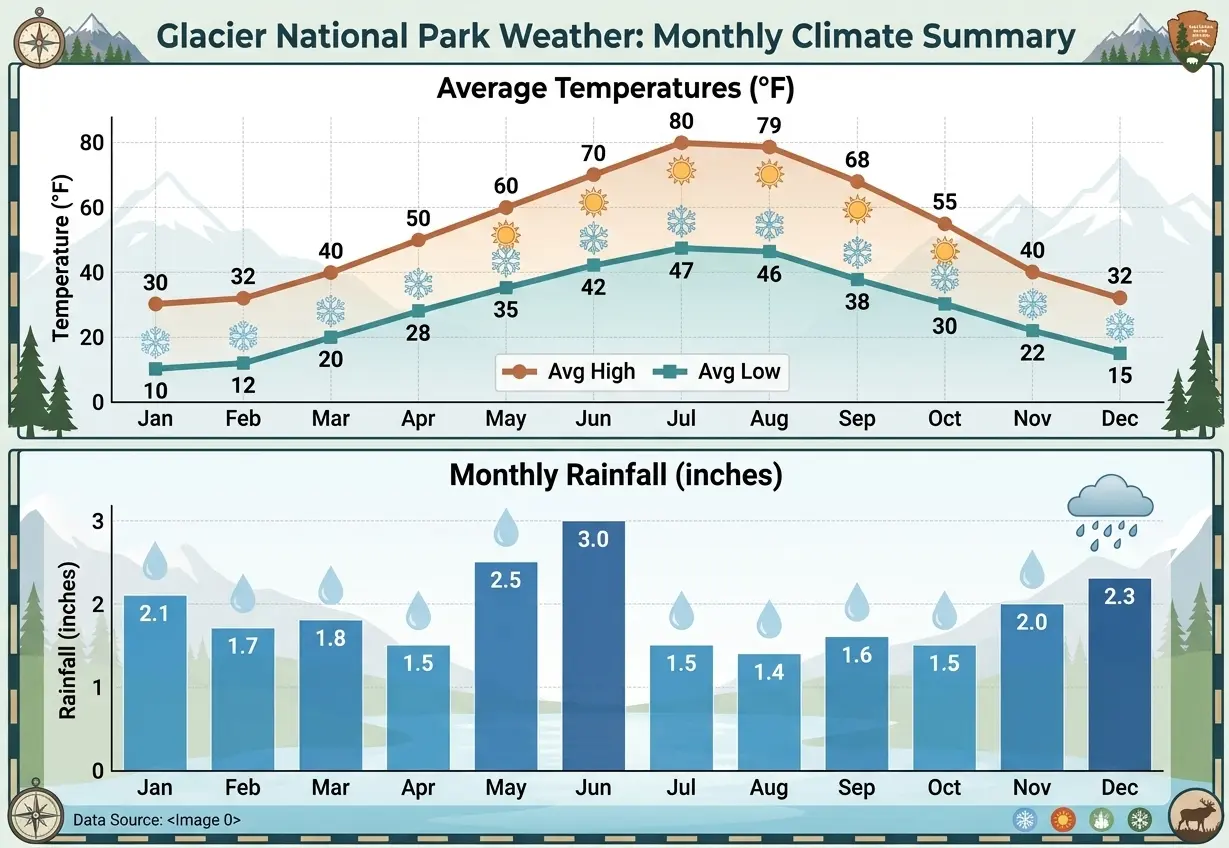
You can click the image below to view the full-size weather chart for Glacier National Park.
January – Deep Winter
January is the coldest month in Glacier National Park.
- Average highs: -5°C to 0°C (23–32°F)
- Average lows: -15°C to -10°C (5–14°F)
- Heavy snowfall blankets the park, making most roads—including the famous Going-to-the-Sun Road—closed.
- Ideal for snowshoeing and cross-country skiing.
February – Cold and Snowy
Conditions remain similar to January.
- Frequent snowstorms
- Increasing daylight
- Wildlife sightings (like wolves) are possible
This is still a quiet, off-season month with limited access.
March – Transition Begins
Winter slowly loosens its grip.
- Temps: -8°C to 5°C (18–41°F)
- Snow still dominates, but lower elevations begin melting
- Slushy trails and unpredictable conditions
April – Early Spring
Spring arrives unevenly.
- Temps: 0°C to 10°C (32–50°F)
- Snow persists at higher elevations
- Waterfalls become more active due to snowmelt
Many park services remain closed.
May – Shoulder Season
A beautiful but unpredictable month.
- Temps: 5°C to 15°C (41–59°F)
- Wildflowers begin blooming
- Roads start reopening, but Going-to-the-Sun Road is often still partially closed
Great for fewer crowds, but expect mixed weather.
June – Early Summer
The park starts coming alive.
- Temps: 10°C to 20°C (50–68°F)
- Snow may linger on higher trails
- Waterfalls are at peak flow
Some higher routes may still be inaccessible.
July – Peak Summer
One of the best months to visit.
- Temps: 15°C to 27°C (59–81°F)
- Most roads and trails open
- Long daylight hours
This is peak tourist season—expect crowds.
August – Warm and Busy
Similar to July, with slightly drier conditions.
- Occasional wildfire smoke can affect visibility
- Ideal for hiking, camping, and scenic drives
September – Early Fall
A favorite month for many visitors.
- Temps: 10°C to 20°C (50–68°F)
- Fewer crowds
- Fall colors begin appearing
Weather is generally stable, making it great for photography.
October – Late Fall
Conditions begin to cool quickly.
- Temps: 0°C to 10°C (32–50°F)
- Snow may return at higher elevations
- Many facilities close for the season
November – Winter Returns
The park transitions back to winter.
- Temps: -5°C to 5°C (23–41°F)
- Snowfall increases
- Limited accessibility
December – Snowy and Quiet
A serene winter landscape.
- Temps: -10°C to 0°C (14–32°F)
- Snow-covered scenery
- Ideal for solitude and winter sports
Glacier National Park Temperatures by Month
| Month | Avg High (°F) | Avg Low (°F) | Rainfall (inches) | Snowfall (inches) |
|---|---|---|---|---|
| January | 30 | 10 | 2.1 | 20.0 |
| February | 32 | 12 | 1.7 | 15.5 |
| March | 40 | 20 | 1.8 | 12.0 |
| April | 50 | 28 | 1.5 | 5.0 |
| May | 60 | 35 | 2.5 | 1.5 |
| June | 70 | 42 | 3.0 | 0.2 |
| July | 80 | 47 | 1.5 | 0.0 |
| August | 79 | 46 | 1.4 | 0.0 |
| September | 68 | 38 | 1.6 | 0.5 |
| October | 55 | 30 | 1.5 | 3.5 |
| November | 40 | 22 | 2.0 | 10.0 |
| December | 32 | 15 | 2.3 | 18.0 |
Notes:
- Conditions vary significantly by elevation (valleys vs alpine areas).
- Snowfall can be much higher in mountainous zones.
- Summer rainfall often comes from short afternoon thunderstorms.
Best Time to Visit
- Best overall: July–September (full access, warm weather)
- Best for fewer crowds: May, June, September
- Best for winter sports: December–March
20 FAQs about weather in Glacier National Park
1. What is the best month to visit Glacier National Park for good weather?
July and August offer the warmest temperatures and full access to roads and trails.
2. When does it snow in Glacier National Park?
Snow can occur from October through May, with peak snowfall between December and February.
3. How cold does Glacier National Park get in winter?
Winter temperatures often drop below 0°F (-18°C), especially at higher elevations.
4. Does Glacier National Park have unpredictable weather?
Yes, weather can change rapidly due to elevation differences and mountain conditions.
5. What is the hottest month in Glacier National Park?
July is typically the warmest month, with highs reaching around 80°F (27°C).
6. What is the coldest month in Glacier National Park?
January is usually the coldest month.
7. Does it rain a lot in Glacier National Park?
Rainfall is moderate, with June being the wettest month.
8. When is the driest time to visit?
July and August are generally the driest months.
9. Is Glacier National Park crowded during good weather?
Yes, peak weather months (July–August) also bring the largest crowds.
10. Can you visit Glacier National Park in winter?
Yes, but access is limited, and most roads—including Going-to-the-Sun Road—are closed.
11. When does Going-to-the-Sun Road open?
Typically late June to early July, depending on snow conditions.
12. Is September a good time to visit for weather?
Yes, September offers mild temperatures and fewer crowds.
13. Does Glacier National Park get thunderstorms?
Yes, summer afternoons often bring short thunderstorms.
14. How windy is Glacier National Park?
Wind can be strong, especially at higher elevations and exposed areas.
15. What should I wear in Glacier National Park?
Layered clothing is essential due to fluctuating temperatures.
16. Is May a good time to visit Glacier National Park?
It’s a shoulder season—beautiful but with limited access and variable weather.
17. Are wildfires common in summer?
Wildfires can occur in late summer, sometimes causing smoky conditions.
18. How does elevation affect weather in the park?
Higher elevations are significantly colder and snowier than valleys.
19. What is spring like in Glacier National Park?
Spring is cool and wet, with melting snow and active waterfalls.
20. Can it snow in summer in Glacier National Park?
Yes, light snow is possible at higher elevations even in July or August.
Final Thoughts
Weather in Glacier varies widely by season, so timing your visit is key. Summer offers accessibility and warmth, while winter brings solitude and snow-covered beauty. Each month provides a unique experience—just be prepared for changing conditions, especially in the mountains.