Glacier Bay National Park Weather by Month
Glacier Bay National Park is one of the most breathtaking wilderness areas in North America, known for its dramatic glaciers, rugged mountains, and abundant wildlife. However, its weather can be unpredictable and varies significantly throughout the year due to its coastal Alaskan location. Understanding the month-by-month climate is essential for planning a successful visit.
Below is a detailed guide to Glacier Bay National Park weather by month.
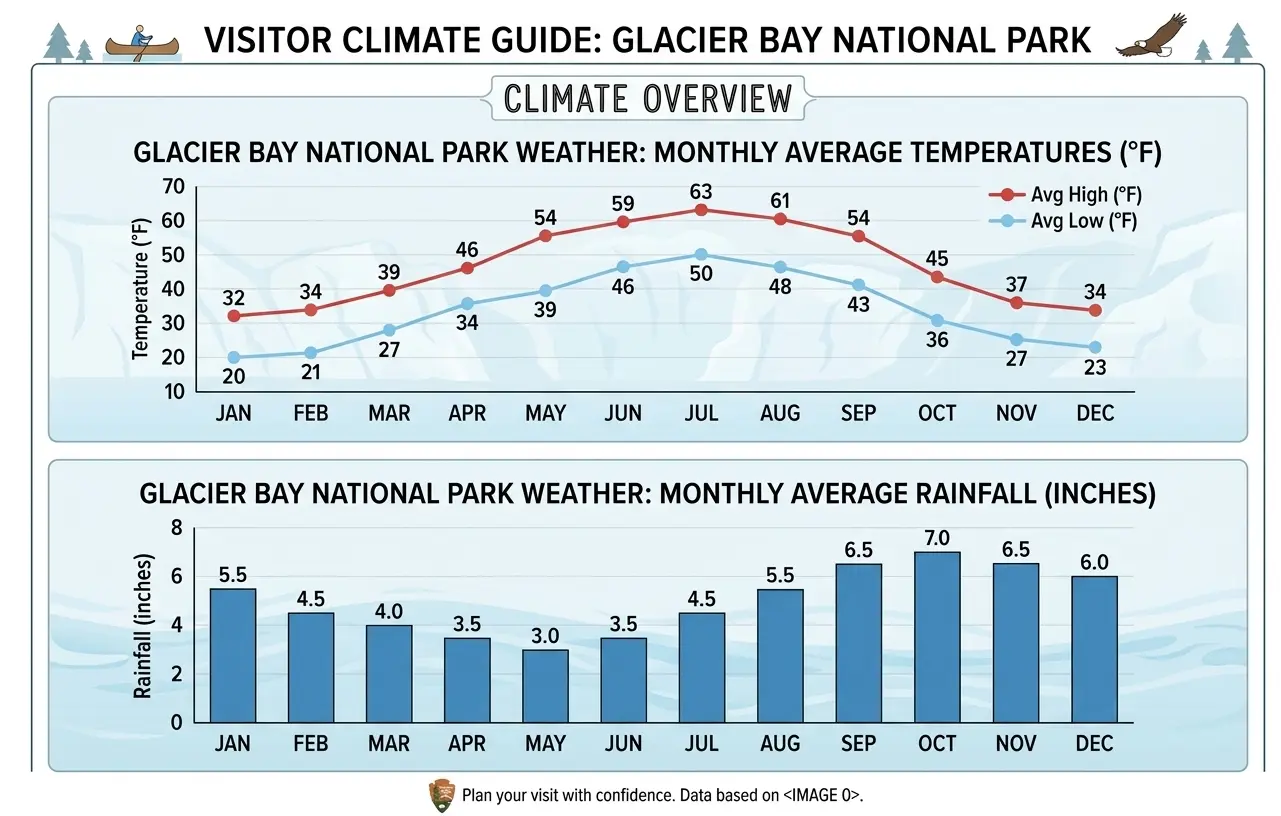
You can click the image below to view the full-size weather chart for Glacier Bay National Park.
January
Midwinter brings extreme cold and limited daylight.
- Average temperature: -7°C to 0°C (20°F to 32°F)
- Conditions: Snow, ice, and strong winds
- Daylight: ~6 hours
This is not a typical tourist season. Access is limited, and most services are closed.
February
Still deep winter, but slightly more daylight.
- Average temperature: -6°C to 1°C (21°F to 34°F)
- Conditions: Snowstorms and freezing conditions
Wildlife is harder to spot, but the landscape is serene and untouched.
March
Late winter begins transitioning toward spring.
- Average temperature: -3°C to 4°C (27°F to 39°F)
- Conditions: Snow remains, but days get longer
Outdoor exploration becomes slightly more feasible, though still challenging.
April
Spring slowly arrives.
- Average temperature: 1°C to 8°C (34°F to 46°F)
- Conditions: Snow melting, mixed rain and snow
Wildlife starts becoming more active, making this a transitional but interesting time to visit.
May
One of the best months to visit.
- Average temperature: 4°C to 12°C (39°F to 54°F)
- Conditions: Drier than summer, longer daylight
Cruise ships begin arriving, and wildlife viewing improves dramatically.
June
Early summer offers ideal conditions.
- Average temperature: 8°C to 15°C (46°F to 59°F)
- Conditions: Mild weather, occasional rain
- Daylight: Up to 18 hours
This is peak season for kayaking, hiking, and glacier viewing.
July
The warmest month of the year.
- Average temperature: 10°C to 17°C (50°F to 63°F)
- Conditions: Rain is common, but still very popular
Expect lush landscapes and excellent wildlife sightings, including whales and bears.
August
Similar to July but wetter.
- Average temperature: 9°C to 16°C (48°F to 61°F)
- Conditions: Frequent rain and cloudy skies
Despite the rain, this is still a prime month for visitors.
September
Fall begins to set in.
- Average temperature: 6°C to 12°C (43°F to 54°F)
- Conditions: Cooler, rain increases
Fewer crowds and beautiful autumn colors make this a hidden gem month.
October
Tourist season ends.
- Average temperature: 2°C to 7°C (36°F to 45°F)
- Conditions: Rain, possible early snow
Facilities begin to close, and access becomes limited.
November
Winter returns quickly.
- Average temperature: -3°C to 3°C (27°F to 37°F)
- Conditions: Snowfall increases, very limited daylight
Not suitable for most travelers.
December
Cold, dark, and quiet.
- Average temperature: -6°C to 1°C (21°F to 34°F)
- Conditions: Heavy snow, minimal daylight
The park becomes a remote, frozen wilderness.
Glacier Bay National Park Weather by Month
| Month | Avg High (°F) | Avg Low (°F) | Rainfall (inches) | Snowfall (inches) |
|---|---|---|---|---|
| January | 32 | 20 | 5.5 | 35 |
| February | 34 | 21 | 4.5 | 28 |
| March | 39 | 27 | 4.0 | 20 |
| April | 46 | 34 | 3.5 | 10 |
| May | 54 | 39 | 3.0 | 2 |
| June | 59 | 46 | 3.5 | 0 |
| July | 63 | 50 | 4.5 | 0 |
| August | 61 | 48 | 5.5 | 0 |
| September | 54 | 43 | 6.5 | 1 |
| October | 45 | 36 | 7.0 | 8 |
| November | 37 | 27 | 6.5 | 20 |
| December | 34 | 23 | 6.0 | 30 |
Notes:
- Rainfall peaks in late summer and fall.
- Snowfall is heaviest in winter months, especially January and December.
- Even in summer, precipitation is common—this is a temperate rainforest climate.
Best Time to Visit
The ideal time to visit Glacier Bay is May through September, when:
- Weather is milder
- Wildlife is most active
- Tours and services are fully operational
20 FAQs about weather in Glacier Bay National Park:
1. What is the weather like in Glacier Bay National Park year-round?
The park has a cool, maritime climate with mild summers, cold winters, and significant precipitation throughout the year.
2. What is the best month to visit for good weather?
June and July typically offer the warmest temperatures and longest daylight hours.
3. Does it rain a lot in Glacier Bay National Park?
Yes, it’s part of a temperate rainforest, so rain is common—especially from August to October.
4. How cold does it get in winter?
Winter temperatures often drop to around 20°F (-6°C) or lower, with frequent snow and icy conditions.
5. Is summer warm in Glacier Bay?
Summers are mild, with average highs around 60–65°F (15–18°C)—rarely hot.
6. When does it snow in Glacier Bay?
Snowfall typically occurs from October through April, with peak snowfall in winter months.
7. What is the driest month in Glacier Bay National Park?
May and June are generally the driest months of the year.
8. What is the wettest month in Glacier Bay National Park?
September and October usually receive the most rainfall.
9. How much daylight is there in summer?
In June, the park can get up to 18 hours of daylight, giving visitors extended time for activities.
10. How much daylight is there in winter?
Winter days are short, with only about 6–7 hours of daylight in December and January.
11. Is fog common in Glacier Bay?
Yes, fog is very common, especially in summer mornings due to the coastal climate.
12. Can weather change quickly in the park?
Absolutely. Weather can shift rapidly from sunny to rainy within hours.
13. What should I wear when visiting?
Layered clothing, waterproof jackets, and sturdy footwear are essential in all seasons.
14. Is Glacier Bay windy?
Yes, coastal winds can be strong, especially near glaciers and open water.
15. Does weather affect wildlife viewing?
Yes. Clear days improve visibility, but some animals (like whales) are still active in light rain.
16. Is May a good time to visit?
Yes, May offers cool temperatures, less rain, and fewer crowds—a great balance.
17. Is September too rainy to visit?
Not necessarily. While wetter, it offers beautiful fall scenery and fewer tourists.
18. Are cruises affected by weather?
Sometimes. Heavy fog or storms can cause delays or route adjustments.
19. Is it possible to see glaciers in all weather?
Yes, but clear days provide the best views and photography opportunities.
20. Does climate change affect Glacier Bay weather?
Yes, warming trends are impacting glacier retreat and may gradually influence weather patterns.
Final Thoughts
Glacier Bay’s weather is shaped by its coastal geography, meaning rain is always a possibility—even in summer. Packing layers and waterproof gear is essential regardless of when you visit.
If you’re aiming for the perfect balance of good weather and fewer crowds, late May or early September are often the smartest choices.