Fundy National Park: A Complete Guide to New Brunswick’s Coastal Wilderness
Fundy National Park is one of Canada’s most beautiful national parks, located along the Bay of Fundy in southern New Brunswick. Famous for having some of the highest tides in the world, the park offers a remarkable combination of rugged coastlines, lush forests, waterfalls, freshwater lakes, and scenic hiking trails.
Visitors can explore the ocean floor at low tide, watch the powerful Atlantic waters transform the coastline, hike through the Acadian forest, or relax beside peaceful waterfalls. Whether you enjoy outdoor adventures, wildlife watching, camping, or photography, Fundy National Park offers an unforgettable experience in Atlantic Canada.
Where Is Fundy National Park?
Fundy National Park is located near the village of Alma, in southeastern New Brunswick, Canada. It stretches along approximately 20 kilometers (12 miles) of the Bay of Fundy coastline and protects a diverse landscape of coastal habitats, river valleys, forests, and upland plateaus.
The park is approximately:
- 80 km (50 miles) from Moncton, New Brunswick
- 110 km (68 miles) from Saint John, New Brunswick
- 160 km (99 miles) from Fredericton, New Brunswick
- 300 km (186 miles) from Halifax, Nova Scotia
The closest community is Alma, a small coastal village where visitors can find restaurants, accommodations, shops, and other services.
Fundy National Park is accessible by car, making it a popular destination for road trips through New Brunswick and Atlantic Canada.
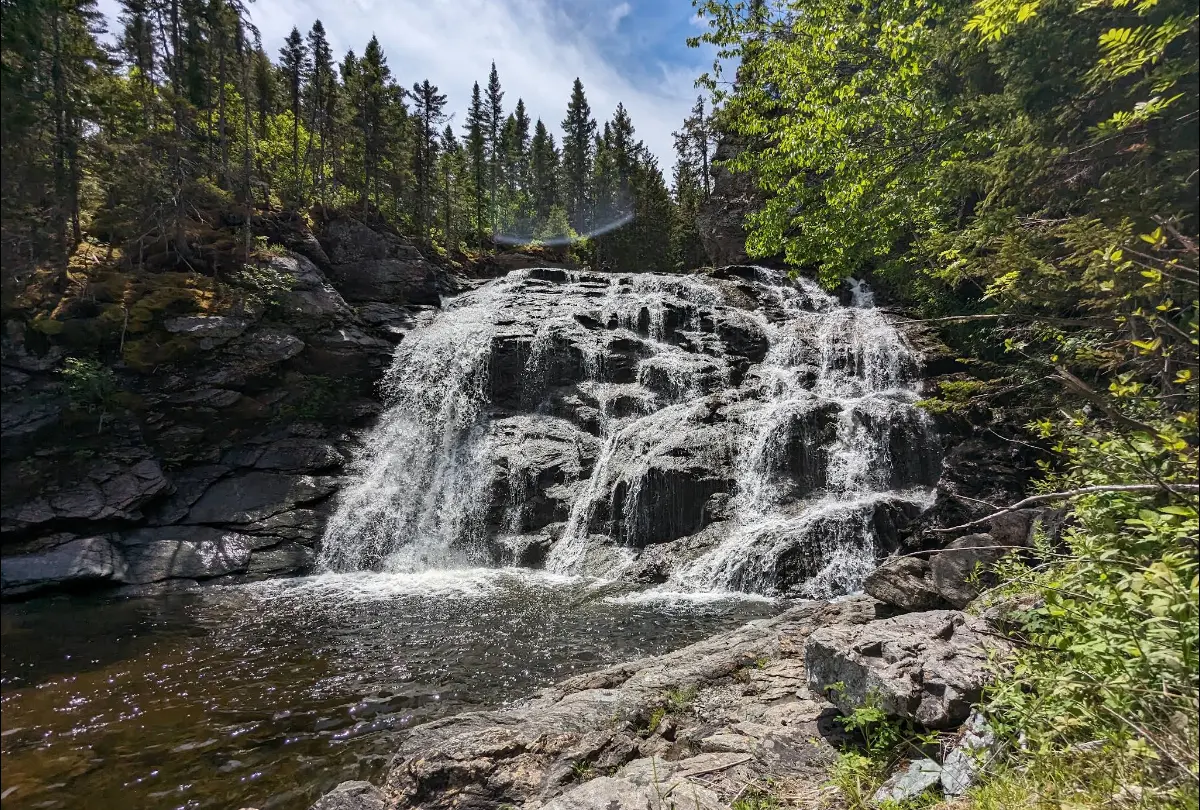
Photo by Steve
Why Is Fundy National Park Famous?
Fundy National Park is best known for its dramatic tides, which are influenced by the unique shape and natural resonance of the Bay of Fundy.
The Bay of Fundy experiences some of the highest tidal ranges on Earth, with water levels changing dramatically between high and low tide. In some areas of the bay, the difference can reach approximately 16 meters (52 feet).
At low tide, visitors can explore sections of the rocky shoreline and discover tidal pools, exposed seabed, and interesting coastal formations. When the tide returns, the same areas become covered by seawater.
Beyond its tides, the park is also famous for:
- Beautiful waterfalls: Dickson Falls and other cascades offer picturesque forest scenery.
- Scenic hiking trails: More than 100 kilometers of trails provide opportunities to explore the park.
- Acadian forest: The park protects a rich ecosystem of native trees, plants, and wildlife.
- Coastal landscapes: Rugged cliffs, rocky beaches, and ocean viewpoints create spectacular scenery.
- Outdoor recreation: Visitors can enjoy kayaking, cycling, camping, swimming, and wildlife watching.
Best Things to Do in Fundy National Park
There are plenty of activities to enjoy in Fundy National Park throughout the year. Here are some of the best experiences to include in your itinerary.
1. Explore the Bay of Fundy Tides
Experiencing the tides is one of the main reasons people visit Fundy National Park.
At low tide, the shoreline reveals rocky beaches, tidal pools, and sections of the ocean floor that are normally underwater. Visitors can walk along designated coastal areas and observe small marine creatures in their natural habitats.
As the tide rises, the landscape changes dramatically. Water gradually covers the exposed shoreline, creating a fascinating natural spectacle.
Before exploring the coast, check the local tide schedule and follow park safety instructions. The incoming tide can move quickly, and visitors should never enter areas where they risk becoming trapped by rising water.
2. Hike the Dickson Falls Trail
Dickson Falls is one of the most popular natural attractions in Fundy National Park. Surrounded by a beautiful Acadian forest, this waterfall is particularly attractive to photographers and nature enthusiasts.
The Dickson Falls Trail is a relatively short loop that takes visitors through a lush forest environment. Along the way, you will encounter wooden stairways, bridges, moss-covered rocks, and flowing streams.
The waterfall is especially beautiful after rainfall when the water flows strongly over the rocky landscape.
It is an excellent choice for families and visitors looking for a relatively easy nature walk.
3. Visit Point Wolfe
Point Wolfe is one of the most picturesque areas in Fundy National Park. It features a scenic river valley, rugged coastal landscapes, and a historic covered bridge.
The Point Wolfe area is a wonderful place to enjoy peaceful surroundings, take photographs, and explore the coastline.
Visitors can also access nearby hiking trails and enjoy views of the Point Wolfe River as it flows toward the Bay of Fundy.
The combination of forest, river, bridge, and ocean scenery makes this area one of the park’s most memorable stops.
4. Discover Bennett Lake
Bennett Lake is a beautiful freshwater lake surrounded by forest and rolling hills.
It is a popular destination for visitors who want to relax and enjoy outdoor recreation away from the coastline.
During the warmer months, visitors can enjoy swimming in designated areas, picnicking, and taking in the peaceful scenery. The surrounding environment also provides opportunities for photography and wildlife observation.
Bennett Lake is an excellent place to spend a relaxing afternoon during a summer visit.
5. Explore the Caribou Plain Trail
The Caribou Plain Trail offers a different perspective on the natural environment of Fundy National Park.
This trail passes through a bog ecosystem, where visitors can observe unique plants, mosses, and other vegetation adapted to wet conditions.
Boardwalk sections make it easier to explore this fragile environment while helping protect the surrounding habitat.
The trail is particularly interesting for nature lovers who want to learn more about the park’s ecological diversity.
6. Go Kayaking Along the Coast
Kayaking is a fantastic way to experience the coastal scenery around Fundy National Park.
From the water, visitors can admire rugged cliffs, rocky shorelines, and secluded coastal areas. Depending on weather and tidal conditions, kayaking can provide a unique perspective on the Bay of Fundy.
Because the bay has exceptionally strong tidal currents and rapidly changing water levels, kayaking should only be undertaken with appropriate experience, equipment, and local guidance.
7. Enjoy Mountain Biking
Fundy National Park offers opportunities for mountain biking through forested landscapes and scenic terrain.
The park has designated cycling routes and trails suitable for different skill levels. Mountain biking is a great way to explore more of the park while enjoying its natural surroundings.
Visitors should check current trail conditions and cycling regulations before setting out.
8. Watch Wildlife
Fundy National Park protects a variety of wildlife species, making it an interesting destination for nature enthusiasts.
Animals that may be found in the park include:
- Moose
- White-tailed deer
- Black bears
- Red foxes
- Beavers
- Porcupines
- Snowshoe hares
- Numerous bird species
Early morning and evening are often good times to look for wildlife. However, animal sightings are never guaranteed.
Visitors should observe wildlife from a safe distance, never feed animals, and follow Parks Canada guidelines, particularly when encountering bears or moose.
9. Visit the Fundy National Park Visitor Centre
The visitor centre is a useful starting point for exploring the park.
Visitors can obtain maps, learn about trail conditions, check tide information, and find out about seasonal activities and interpretive programs.
It is also a good place to ask park staff for recommendations based on the weather, available time, and hiking experience.
10. Enjoy Stargazing
Fundy National Park is a wonderful place to enjoy the night sky.
Away from major urban centers, the park offers opportunities to observe stars and other celestial objects when skies are clear.
On a cloudless night, visitors may be able to see the Milky Way, constellations, and meteor activity.
Bring warm clothing, a flashlight with a red-light setting, and a camera if you want to photograph the night sky.
Best Hiking Trails in Fundy National Park
Hiking is one of the best ways to discover the natural beauty of Fundy National Park. The park has more than 100 kilometers (62 miles) of hiking trails, ranging from short, easy walks to challenging multi-day adventures.
Here are some popular trails worth considering:
| Hiking Trail | Distance | Difficulty | Highlights |
|---|---|---|---|
| Dickson Falls | 1 km loop | Easy | Waterfall and forest scenery |
| Caribou Plain | 2.1 km loop | Easy | Bogs and pitcher plants |
| Third Vault Falls | 7.4 km return | Difficult | 16-meter waterfall |
| MacLaren Pond Medicine Trail | 1 km return | Easy | Pond and wildlife |
| Coastal East | 3 km one way | Moderate | Forest and coastal views |
| Goose River | 11.4 km one way | Difficult | Remote coastal scenery |
Trail distances and difficulty may change depending on official trail updates and seasonal conditions.
Dickson Falls Trail: This is an excellent option for first-time visitors. The short loop takes you through a beautiful forest environment with wooden stairs and a picturesque waterfall.
Caribou Plain Trail: A good choice for visitors interested in wetlands and unusual plant life. The boardwalk sections provide access to a fascinating bog ecosystem.
Third Vault Falls Trail: This more challenging hike leads to one of the park’s most impressive waterfalls. The 16-meter cascade is particularly attractive after periods of rainfall.
Goose River Trail: Experienced hikers can explore this longer route for spectacular coastal scenery and opportunities for backcountry camping.
Before hiking, check the official trail conditions and pay attention to warnings about river crossings, wildlife, and weather.
Camping in Fundy National Park
Camping is one of the most popular ways to experience Fundy National Park. Staying overnight allows visitors to enjoy the peaceful forest atmosphere, explore hiking trails early in the morning, and experience the changing coastal scenery.
Parks Canada offers several accommodation options, including:
- Tent camping: Traditional campsites for visitors who enjoy sleeping outdoors.
- RV camping: Campsites suitable for recreational vehicles and trailers.
- oTENTik: Equipped accommodations combining features of a tent and a rustic cabin.
- Yurts: Comfortable circular structures for a unique overnight experience.
- Ôasis: A distinctive ready-to-camp accommodation option.
- Backcountry camping: An opportunity to spend the night in more remote natural surroundings.
The park has several campgrounds, with facilities and services varying by location and season. Reservations are recommended, particularly during the summer months.
Visitors who prefer hotels, inns, and vacation rentals can also find accommodation in nearby Alma.
Wildlife and Nature in Fundy National Park
Fundy National Park protects approximately 207 square kilometers (80 square miles) of natural landscapes, including coastal environments, river valleys, wetlands, and Acadian forests.
Its location within the Maritime Acadian Highlands creates a diverse range of habitats for plants and animals.
The park is home to several mammal species, including moose, white-tailed deer, black bears, red foxes, beavers, and snowshoe hares. Birdwatchers may also encounter a variety of forest and coastal bird species.
One important conservation priority is the recovery of the endangered Inner Bay of Fundy Atlantic Salmon. Parks Canada works with conservation partners to protect aquatic habitats and support the recovery of this threatened fish population.
The park’s plant life is equally interesting. Visitors can discover moss-covered forests, ferns, wildflowers, bog vegetation, and native trees.
To protect the ecosystem, visitors should stay on designated trails, avoid disturbing wildlife, and never remove plants or natural objects.
Best Time to Visit Fundy National Park
Fundy National Park is open throughout the year, but the best time to visit depends on the activities you want to enjoy.
Summer (June to August)
Summer is generally the most popular season. Warmer temperatures make it ideal for hiking, camping, kayaking, swimming, cycling, and exploring the coastline.
Most visitor services and seasonal facilities are available during this period. However, popular campgrounds and accommodations can fill up quickly.
Fall (September to October)
Autumn is an excellent time to experience the park’s colorful foliage. The Acadian forest becomes particularly attractive as trees change to shades of yellow, orange, and red.
Cooler temperatures also make hiking more comfortable, although visitors should prepare for changing weather and shorter daylight hours.
Winter (November to March)
Winter transforms Fundy National Park into a peaceful landscape of snow-covered forests and frozen streams.
Visitors can enjoy snowshoeing, cross-country skiing, fat biking, winter hiking, and tobogganing when conditions permit.
Some roads, trails, facilities, and accommodations may have seasonal closures.
Spring (April to May)
Spring brings warmer temperatures, flowing streams, and fresh greenery. Waterfalls can be particularly impressive during periods of snowmelt and rainfall.
However, some trails may be muddy or affected by changing weather conditions.
Overall, June through September is the best period for most first-time visitors, especially those interested in hiking, camping, kayaking, and coastal activities.
How to Get to Fundy National Park
Fundy National Park is easiest to reach by car. The main entrance is located near Alma, New Brunswick, along Route 114.
Approximate driving distances from nearby cities include:
| Starting City | Approximate Distance | Driving Time |
|---|---|---|
| Moncton, NB | 80 km | 1 hour |
| Saint John, NB | 110 km | 1.5 hours |
| Fredericton, NB | 160 km | 2 hours |
| Halifax, NS | 300 km | 3.5–4 hours |
Driving times are approximate and depend on traffic, weather, and the route taken.
By Car: From Moncton, take Route 114 southwest toward Alma. From Saint John, travel east on Highway 1 and follow the signs for Route 114. Visitors coming from Fredericton can use the Trans-Canada Highway and connect to the regional roads leading toward Sussex and Alma.
By Air: The nearest commercial airports include Greater Moncton Roméo LeBlanc International Airport, Saint John Airport, and Fredericton International Airport. Renting a car is a convenient option for reaching the park from these airports.
By Bus: There is no direct public transportation service to Fundy National Park. The nearest bus terminals are in Moncton and Sussex, so visitors should arrange additional transportation to reach the park.
Places to Visit Near Fundy National Park
If you have extra time, consider exploring other attractions around southern New Brunswick. The region offers beautiful coastal landscapes, charming villages, and several interesting natural destinations.
1. Hopewell Rocks
Hopewell Rocks is one of the most famous attractions along the Bay of Fundy.
The site is known for its enormous flowerpot-shaped rock formations, which have been shaped by thousands of years of tidal erosion.
Visitors can walk along the ocean floor at low tide and admire the towering formations from a completely different perspective. At high tide, the same area becomes a popular destination for kayaking.
2. Alma
Alma is a small seaside village located beside the entrance to Fundy National Park.
It is a convenient place to find restaurants, seafood, accommodation, and local shops.
The village is particularly attractive to visitors who want to enjoy fresh seafood while experiencing the traditional atmosphere of a coastal community.
3. Cape Enrage
Cape Enrage is a spectacular coastal destination featuring dramatic cliffs, a historic lighthouse, and panoramic views of the Bay of Fundy.
Visitors can enjoy photography, explore the coastline, and learn about the area’s maritime history.
4. Fundy Trail Parkway
Fundy Trail Parkway is a scenic coastal drive offering beautiful ocean viewpoints, forest landscapes, waterfalls, and access to hiking trails.
It is an excellent destination for road-trip enthusiasts who want to discover more of New Brunswick’s coastline.
5. St. Martins
St. Martins is a charming fishing village famous for its red sandstone sea caves, covered bridges, and picturesque harbor.
The sea caves are especially interesting at low tide, when visitors can explore the exposed coastal formations.
Where to Stay Near Fundy National Park
Visitors can choose from several accommodation options in and around the park, depending on their budget and travel preferences.
Alma: The closest village to the park, offering small inns, bed-and-breakfast properties, vacation rentals, and restaurants.
Park campgrounds: Ideal for visitors who want to stay close to hiking trails, lakes, and natural attractions.
Moncton: A larger city with a wider selection of hotels, restaurants, and shopping facilities. It is approximately an hour’s drive from the park.
Sussex: A convenient alternative for visitors looking for hotels and other accommodation options while exploring southern New Brunswick.
For summer travel, booking accommodation in advance is recommended.
Practical Travel Tips for Visiting Fundy National Park
Before visiting Fundy National Park, keep these tips in mind:
- Check the tide schedule: Tide times are essential when planning coastal walks and exploring the ocean floor.
- Wear suitable footwear: Waterproof hiking shoes or rubber boots are useful for muddy and rocky coastal areas.
- Bring warm clothing: Coastal weather can change quickly, even during summer.
- Book campsites early: Popular camping areas may become fully reserved during peak travel periods.
- Carry drinking water and snacks: Some hiking routes are long and have limited facilities.
- Respect wildlife: Keep a safe distance from animals and never feed them.
- Check trail conditions: Rain, snow, and seasonal maintenance can affect trail accessibility.
- Plan your transportation: A rental car provides the greatest flexibility when exploring the park and surrounding attractions.
Important visitor notice: Check the official Parks Canada website for current road, bridge, trail, and facility closures before visiting, as maintenance and seasonal conditions can affect access to certain areas.
Fundy National Park: Essential Information
| Information | Details |
|---|---|
| Park Name | Fundy National Park |
| Location | New Brunswick, Canada |
| Established | 1948 |
| Area | Approximately 207 km² |
| Nearest Community | Alma |
| Famous For | Bay of Fundy tides, waterfalls, forests, and hiking |
| Coastline | Approximately 20 km |
| Hiking Trails | More than 100 km |
| Highest Waterfall | Third Vault Falls (16 m) |
| Main Activities | Hiking, camping, kayaking, cycling, swimming, and wildlife watching |
| Best Time to Visit | June to September |
| Entrance | Route 114, near Alma |
| Phone | +1 506-887-6000 |
| Official Website | Parks Canada – Fundy National Park |
Frequently Asked Questions About Fundy National Park
1. Where is Fundy National Park located?
Fundy National Park is located in southeastern New Brunswick, Canada, along the Bay of Fundy. Its main entrance is near the coastal village of Alma.
2. What is Fundy National Park famous for?
The park is famous for the exceptionally high tides of the Bay of Fundy, beautiful waterfalls, Acadian forests, scenic coastlines, and extensive hiking trails.
3. When was Fundy National Park established?
Fundy National Park was established in 1948 to protect the natural landscapes and ecosystems along the Bay of Fundy.
4. How big is Fundy National Park?
Fundy National Park covers approximately 207 square kilometers (80 square miles).
5. How many days do you need in Fundy National Park?
One day is enough to visit several popular attractions, but two or three days are recommended for hiking, exploring waterfalls, experiencing the tides, and enjoying outdoor activities.
6. What is the best time to visit Fundy National Park?
June through September is generally the best time to visit because of warmer weather, longer daylight hours, and greater availability of seasonal facilities and activities.
7. Does Fundy National Park have the highest tides in the world?
The Bay of Fundy is famous for having the world’s highest tides. Tidal ranges can reach approximately 12 meters or more in some locations.
8. Can you walk on the ocean floor at Fundy National Park?
Yes. Visitors can explore designated coastal areas at low tide, walking across exposed mudflats and rocky shorelines. Always check tide times and follow safety guidelines.
9. Are there waterfalls in Fundy National Park?
Yes. The park has more than 25 waterfalls. Dickson Falls and Third Vault Falls are among its best-known waterfalls.
10. What is the highest waterfall in Fundy National Park?
Third Vault Falls is the park’s highest waterfall, with a drop of approximately 16 meters.
11. How many hiking trails are in Fundy National Park?
The park has more than 100 kilometers of hiking trails, ranging from short nature walks to challenging multi-day hiking routes.
12. Can you camp in Fundy National Park?
Yes. The park offers tent camping, RV camping, backcountry camping, oTENTik accommodations, yurts, and other overnight options.
13. Are there bears in Fundy National Park?
Yes. Black bears live in the park. Visitors should follow wildlife safety guidelines, store food properly, and maintain a safe distance from animals.
14. Can you swim in Fundy National Park?
Yes. Visitors can swim in designated freshwater lakes, including Bennett Lake and Wolfe Lake. The park also has a heated saltwater swimming pool. Lake swimming is unsupervised.
15. Is Fundy National Park worth visiting?
Absolutely. The park offers a unique combination of dramatic tidal landscapes, waterfalls, forests, wildlife, and outdoor recreation, making it one of the most interesting national parks in Atlantic Canada.
16. How far is Fundy National Park from Moncton?
Fundy National Park is approximately 80 kilometers from Moncton, with a driving time of around one hour.
17. How far is Fundy National Park from Saint John?
The park is approximately 110 kilometers from Saint John, and the drive generally takes around 1.5 hours.
18. Is Fundy National Park open year-round?
Yes. The park is accessible throughout the year, although visitor services, campgrounds, roads, and recreational facilities may have seasonal operating schedules.
19. Can you visit Fundy National Park in winter?
Yes. Winter visitors can enjoy snowshoeing, cross-country skiing, winter hiking, fat biking, and tobogganing, depending on weather and trail conditions.
20. What other attractions are near Fundy National Park?
Popular nearby attractions include Hopewell Rocks, Alma, Cape Enrage, Fundy Trail Parkway, and St. Martins.
Final Thoughts
Fundy National Park is a remarkable destination for anyone interested in Canada’s natural beauty. From the extraordinary tidal changes of the Bay of Fundy to the peaceful forests, impressive waterfalls, and scenic hiking trails, the park offers something for almost every type of traveler.
Whether you spend a single day exploring the coastline or several nights camping beneath the stars, Fundy National Park provides an excellent opportunity to experience the natural wonders of New Brunswick.
For travelers exploring Atlantic Canada, this national park deserves a place on the itinerary.
Official Resources
Read more: