Big Bend National Park Map Guide: How to Read the Park Map and Plan Your Visit
Where is Big Bend National Park
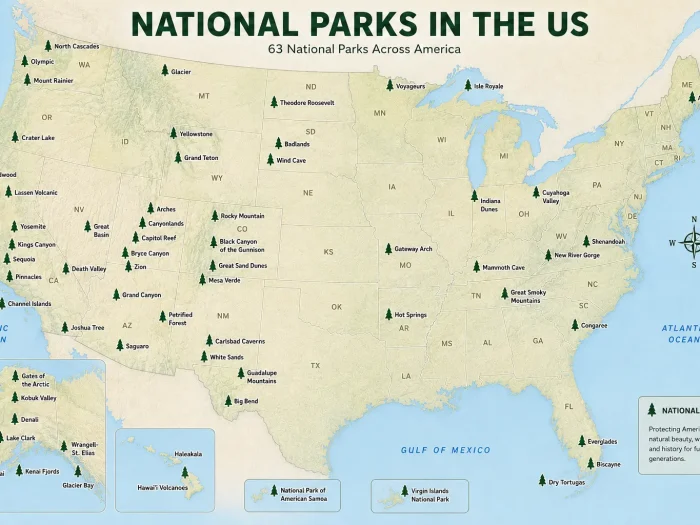
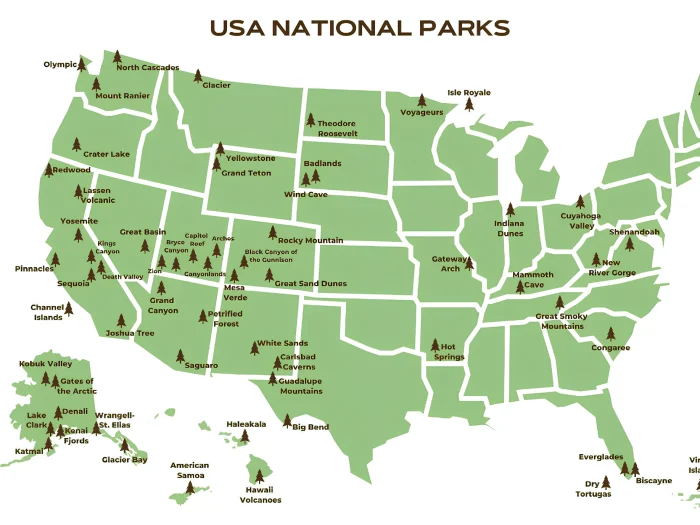
Big Bend National Park is located in far southwestern Texas, along the Rio Grande, which forms the international border between the United States and Mexico. It is one of the most remote national parks in the U.S., covering more than 800,000 acres (324,000 hectares) of desert, mountains, and river canyons.
Location at a Glance
- State: Texas
- Region: West Texas (Trans-Pecos)
- Nearest Town: Terlingua
- County: Brewster County
- Border: Shares approximately 118 miles (190 km) with Mexico along the Rio Grande
- National Park Coordinates: Approximately 29.25° N, 103.25° W
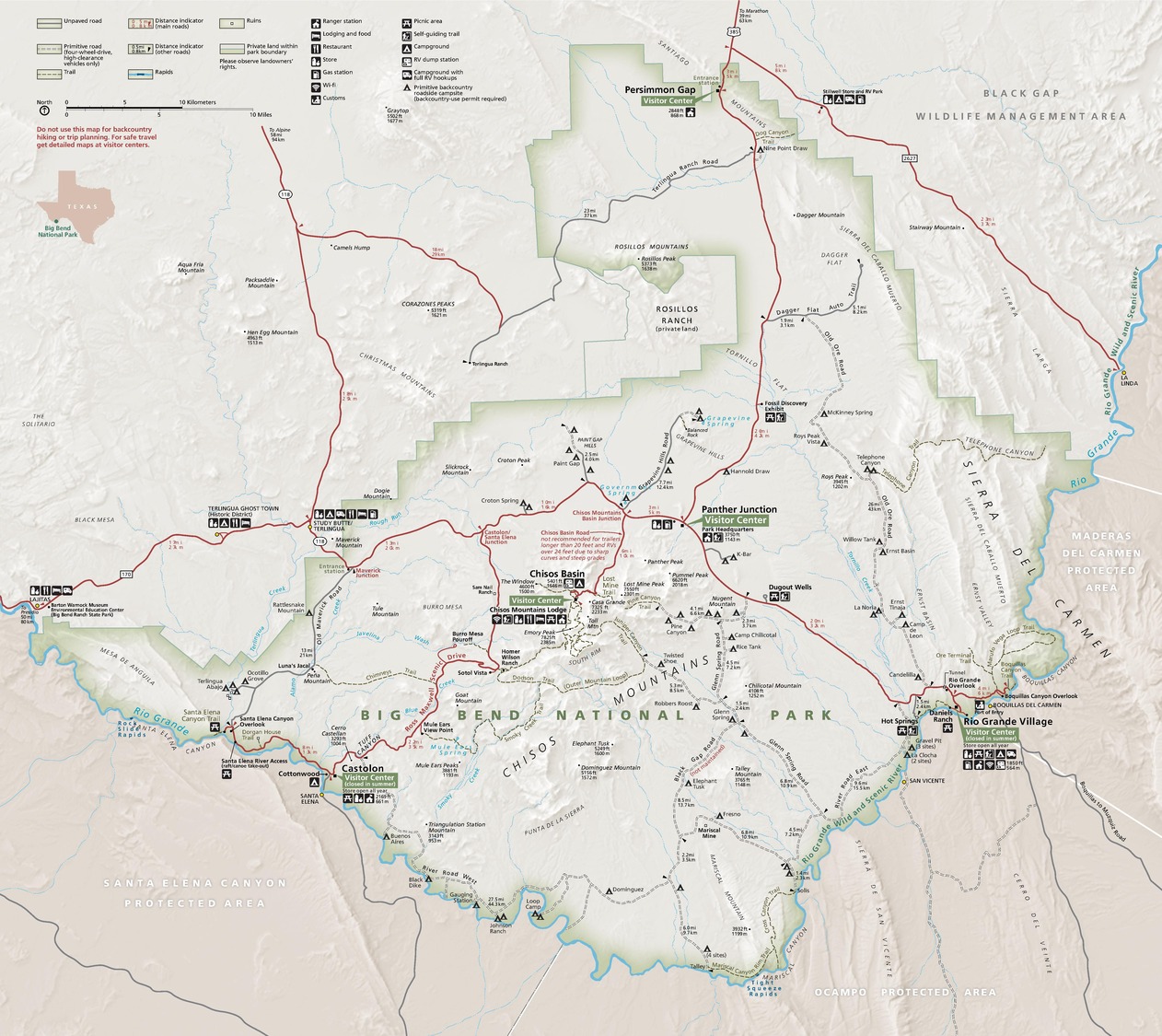
Big Bend National Park Map
Click the image below to view map of Big Bend National Park in full size.
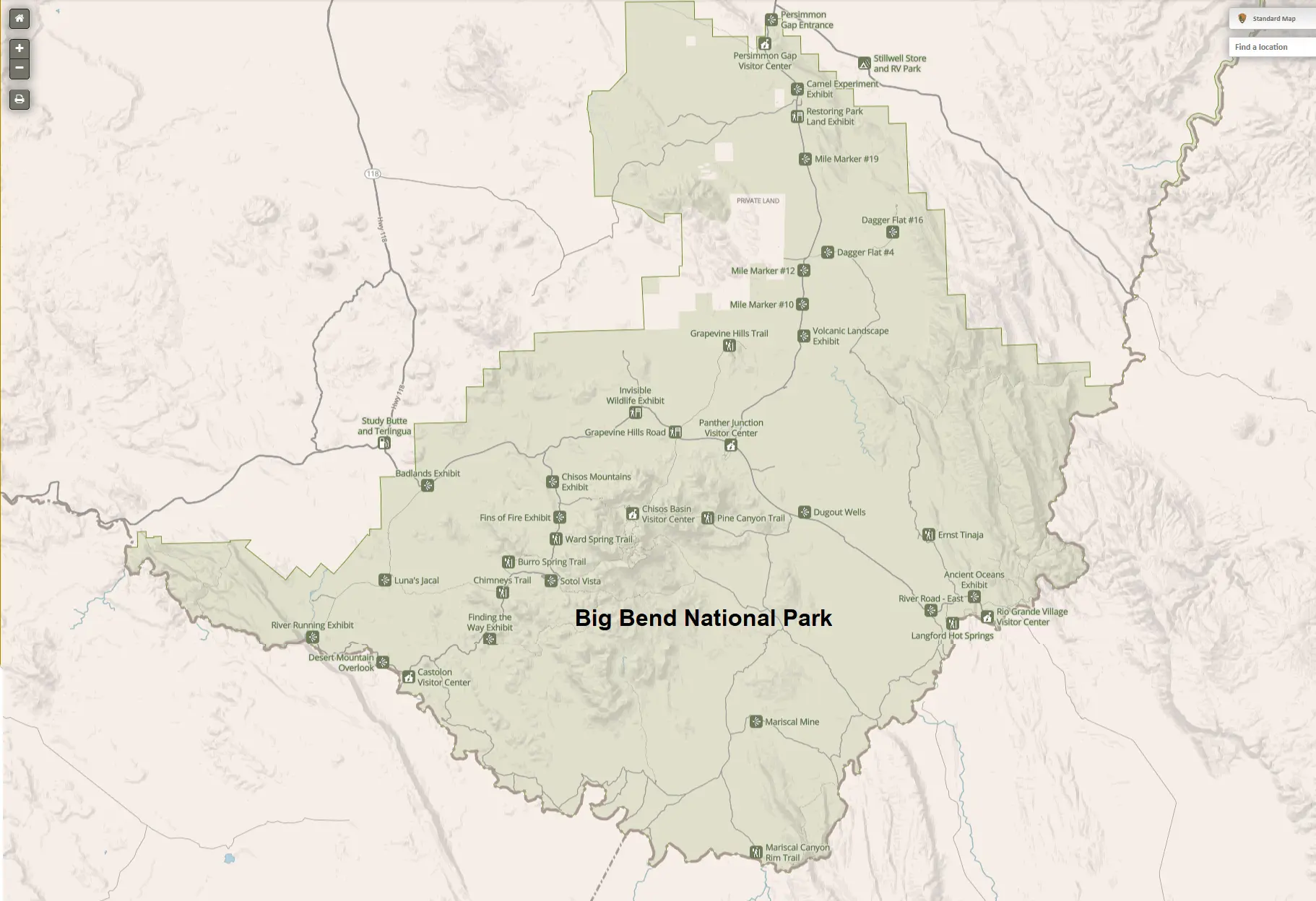
If you want to download Big Bend National Park pdf file you can click here
Where Is Big Bend Relative to Major Texas Cities?
| City | Approximate Driving Distance | Driving Time |
|---|---|---|
| El Paso | 330 miles (530 km) | 4.5–5 hours |
| Midland | 250 miles (400 km) | 4–4.5 hours |
| San Antonio | 430 miles (690 km) | 7–8 hours |
| Austin | 440 miles (710 km) | 7–8 hours |
| Dallas | 530 miles (850 km) | 8.5–9 hours |
| Houston | 600 miles (965 km) | 9–10 hours |
Understanding the Big Bend National Park Map
The map divides Big Bend into several major regions connected by paved highways and smaller park roads. Unlike many national parks, attractions are located far apart, so driving between destinations often takes much longer than visitors expect.
From the map, you can easily identify:
- Park boundaries
- Main entrance roads
- Visitor centers
- Scenic viewpoints
- Campgrounds
- Hiking trailheads
- Historic sites
- Rio Grande access points
- Desert, mountain, and river regions
The park can generally be divided into four main areas.
Northern Big Bend
The northern section contains the park’s primary entrance and much of its desert scenery.
Persimmon Gap Entrance
Located at the northeast corner of the park, Persimmon Gap Entrance is the main gateway for visitors arriving from Marathon, Texas.
Nearby facilities include:
- Persimmon Gap Visitor Center
- Stillwell Store (outside the park)
- Camel Experiment Exhibit
- Restoring Park Land Exhibit
This area serves as the starting point for many first-time visitors.
Dagger Flat
Farther south lies Dagger Flat, one of the few places in Texas where visitors can see giant dagger yucca plants.
The map shows:
- Dagger Flat #4
- Dagger Flat #16
This quiet desert area offers excellent sunrise photography and spring wildflower viewing.
Grapevine Hills
The Grapevine Hills Road branches west from the main park road.
Highlights include:
- Grapevine Hills Trail
- Balanced Rock hike
- Volcanic Landscape Exhibit
- Invisible Wildlife Exhibit
The unpaved road requires slow driving but rewards visitors with one of Big Bend’s most iconic rock formations.
Central Big Bend
The center of the park is where most visitors spend the majority of their time.
Panther Junction
Located almost in the middle of the park, Panther Junction Visitor Center serves as Big Bend’s transportation hub.
The map shows roads leading toward:
- Chisos Basin
- Rio Grande Village
- Persimmon Gap
- Study Butte
- Castolon
Visitors can obtain:
- Park maps
- Trail information
- Weather updates
- Camping permits
- Current road conditions
Chisos Mountains
The Chisos Mountains form the heart of Big Bend National Park.
Unlike the surrounding desert, this region offers:
- Cooler temperatures
- Forested slopes
- Mountain wildlife
- Spectacular hiking
The map highlights several important locations:
- Chisos Basin Visitor Center
- Chisos Mountains Exhibit
- Ward Spring Trail
- Burro Spring Trail
- Pine Canyon Trail
- Dugout Wells
This area is also home to the park’s lodge, campground, restaurant, and some of its most popular hiking trails.
Western Big Bend
The western side of the park follows the Rio Grande and contains numerous historic sites.
Study Butte
Although located just outside the park boundary, Study Butte serves as the primary gateway for visitors staying in nearby hotels.
The map also marks:
- Badlands Exhibit
- Luna’s Jacal
Many visitors enter through this western approach after staying in Terlingua.
Castolon Historic District
Near the southwest corner of the park lies Castolon Visitor Center, one of the park’s oldest historic settlements.
Nearby attractions include:
- Desert Mountain Overlook
- River Running Exhibit
- Finding the Way Exhibit
This peaceful section of the park receives fewer visitors than Chisos Basin, making it an excellent destination for those seeking solitude.
Eastern Big Bend
The eastern side of the park showcases the Rio Grande and several fascinating geological features.
Rio Grande Village
One of the park’s busiest developed areas, Rio Grande Village Visitor Center offers:
- Campgrounds
- Store
- Fuel
- Picnic areas
- River access
It also serves as the starting point for several nearby hikes.
Hot Springs Historic District
Just northwest of Rio Grande Village, the map identifies:
- Langford Hot Springs
- River Road East
- Ancient Oceans Exhibit
The historic hot springs remain one of the park’s most popular attractions.
Ernst Tinaja
Located off Old Ore Road, Ernst Tinaja features colorful rock formations and natural pools carved by water over thousands of years.
Because access requires driving an unpaved road, visitors should verify current road conditions before attempting the trip.
Southern Big Bend
The southern boundary of the park follows the Rio Grande, which separates the United States from Mexico.
Several remote attractions appear on the map, including:
- Mariscal Mine
- Mariscal Canyon Rim Trail
These areas receive relatively few visitors but offer exceptional scenery and a glimpse into the region’s mining history.
Main Roads Shown on the Map
The map clearly illustrates the park’s limited road network.
Major paved roads include:
| Road | Connects |
|---|---|
| Main Park Road | Persimmon Gap to Panther Junction |
| Chisos Basin Road | Panther Junction to Chisos Basin |
| Ross Maxwell Scenic Drive | Panther Junction to Castolon |
| Rio Grande Village Road | Panther Junction to Rio Grande Village |
Several unpaved roads also appear on the map, including:
- Old Ore Road
- Grapevine Hills Road
- River Road
- Black Gap Road
Some require high-clearance or four-wheel-drive vehicles.
Visitor Centers on the Map
The map identifies four primary visitor centers.
| Visitor Center | Location |
|---|---|
| Persimmon Gap Visitor Center | North Entrance |
| Panther Junction Visitor Center | Central Park |
| Chisos Basin Visitor Center | Chisos Mountains |
| Rio Grande Village Visitor Center | Eastern Park |
| Castolon Visitor Center | Southwest Corner |
Each provides maps, exhibits, restrooms, and park information.
Hiking Areas
The map includes many hiking destinations throughout the park.
Popular areas include:
- Chisos Basin
- Grapevine Hills
- Pine Canyon
- Burro Spring
- Ward Spring
- Mariscal Canyon Rim
- Ernst Tinaja
- Desert Mountain Overlook
Trail lengths range from short nature walks to strenuous all-day mountain hikes.
Tips for Using the Big Bend National Park Map
Before your visit, keep these travel tips in mind:
- Download offline maps since cell service is very limited.
- Distances may appear short, but drive times can be much longer due to winding roads and speed limits.
- Fill your gas tank whenever possible, as fuel stations are limited.
- Carry plenty of water, especially when hiking in the desert.
- Check road conditions before driving on unpaved routes.
- Plan your itinerary around the park’s major regions to reduce unnecessary driving.
Sample One-Day Route Using the Map
If you have only one day in Big Bend National Park, a practical route is:
- Enter through Persimmon Gap Entrance.
- Stop at Panther Junction Visitor Center.
- Drive to Chisos Basin for hiking and lunch.
- Continue east to Rio Grande Village.
- Visit Langford Hot Springs if time allows.
- Return before sunset.
This route covers many of the park’s most famous highlights while following the main paved roads shown on the map.
Final Thoughts
A Big Bend National Park map is much more than a navigation tool—it is the key to understanding the park’s immense size and diverse landscapes. From the towering Chisos Mountains and the vast Chihuahuan Desert to the winding Rio Grande, each region offers a unique experience.
By familiarizing yourself with the map before your trip, you’ll be able to estimate travel times, locate visitor services, choose the best hiking areas, and create an itinerary that matches your interests. Whether you’re visiting for a single day or exploring for a week, a good map will help you make the most of your adventure in one of America’s most remarkable national parks.