Badlands National Park Map Guide: Everything You Need to Know Before You Go
A good Badlands National Park map is one of the most valuable tools for planning your visit. Although the park covers more than 240,000 acres of dramatic rock formations, prairie grasslands, and fossil beds, most visitors explore only a small portion along the scenic Badlands Loop Road. Understanding the park’s layout helps you find the best viewpoints, hiking trails, visitor centers, campgrounds, and wildlife viewing areas while making the most of your time.
Where Is Badlands National Park?
Badlands National Park is located in southwestern South Dakota, about 75 miles (120 km) east of Rapid City. The park stretches along Interstate 90 and is easily accessible via South Dakota Highway 240, also known as the Badlands Loop Road.
Location at a Glance
- State: South Dakota
- Country: United States
- Nearest major city: Rapid City (about 1 hour by car)
- Region: Great Plains of western South Dakota
The map above provides a clear overview of the park’s three main units, major roads, overlooks, visitor facilities, and surrounding attractions.
Badlands National Park Map
Click the image below to view map of Badlands National Park in full size.
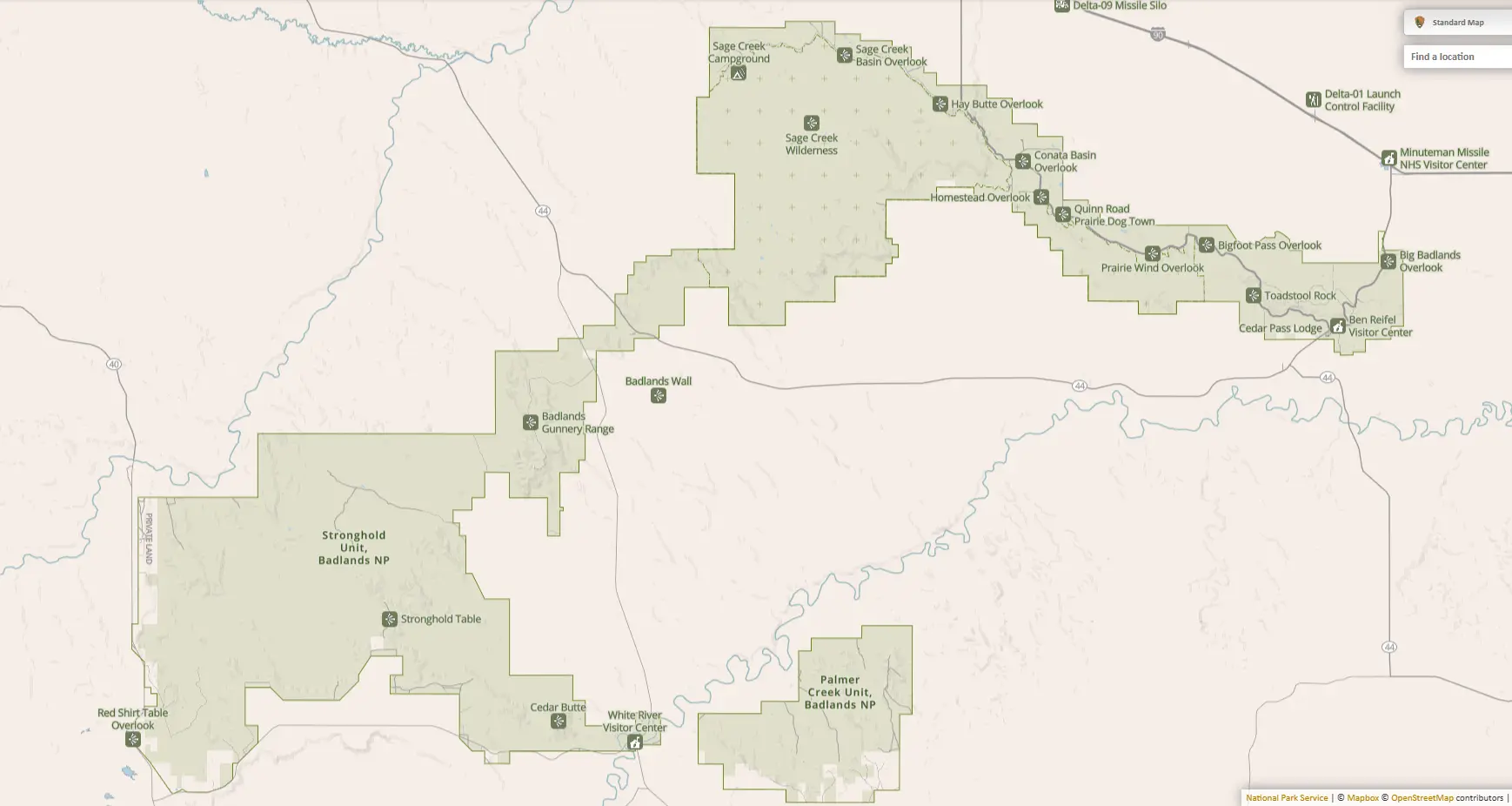
If you want to download Badlands National Park Map PDF file you can click here
Understanding the Park Layout
Badlands National Park is divided into three separate units that are spread across southwestern South Dakota.
1. North Unit (Main Visitor Area)
The North Unit is where nearly every first-time visitor spends most of their day. This long, narrow section stretches from the northeast entrance near Ben Reifel Visitor Center westward through dozens of overlooks before ending near Sage Creek.
This area includes:
- Badlands Loop Road (Highway 240)
- Most scenic overlooks
- Popular hiking trails
- Cedar Pass
- Campgrounds
- Ben Reifel Visitor Center
- Prairie dog colonies
- Wildlife viewing
If you only have one day in Badlands National Park, this is the area you’ll explore.
2. Stronghold Unit
Located southwest of the North Unit, the Stronghold Unit sits within the Pine Ridge Reservation.
This area is:
- Much less visited
- Rich in Lakota history
- Home to rugged wilderness
- Accessible only through limited roads and guided access in some areas
The map shows:
- Stronghold Table
- Red Shirt Table Overlook
- Badlands Gunnery Range
Because access can change, visitors should check current conditions before planning a trip into this section.
3. Palmer Creek Unit
The Palmer Creek Unit is the smallest and most isolated section of the park.
Located southeast of the Stronghold Unit, it consists mostly of mixed-grass prairie and undeveloped backcountry. There are very few visitor services here, making it ideal for experienced hikers and those seeking solitude.
Main Scenic Drive
The heart of the park is Badlands Loop Road (SD Highway 240), which runs roughly east to west through the North Unit.
This scenic highway connects nearly every major attraction shown on the map.
Highlights include:
- Ben Reifel Visitor Center
- Cedar Pass
- Big Badlands Overlook
- Yellow Mounds area
- Numerous panoramic overlooks
- Prairie dog viewing areas
- Hiking trailheads
Driving the entire route with stops usually takes 2–4 hours, depending on how many overlooks and hikes you choose.
Visitor Centers
Ben Reifel Visitor Center
Located near the park’s northeast entrance, this is the primary information hub.
Facilities include:
- Park maps
- Ranger information
- Fossil exhibits
- Educational displays
- Restrooms
- Bookstore
- Water filling stations
It is the best place to begin your visit.
White River Visitor Center
Situated near the Stronghold Unit, the White River Visitor Center primarily serves visitors exploring the southern portion of the park.
Major Overlooks on the Map
One of the best features of the map is the series of overlooks lining the Badlands Loop Road.
Big Badlands Overlook
Located near the eastern entrance, this overlook offers one of the park’s classic panoramic views of colorful rock formations.
Conata Basin Overlook
A favorite photography stop overlooking rolling prairie and layered buttes.
Hay Butte Overlook
Provides sweeping views across the northern grasslands.
Homestead Overlook
Excellent location for sunrise photography.
Prairie Wind Overlook
Known for expansive prairie scenery and frequent wildlife sightings.
Bigfoot Pass Overlook
Named after the famous Lakota leader, this overlook provides elevated views across the Badlands formations.
Sage Creek Basin Overlook
Located on the western end of the scenic drive, this overlook offers a quieter experience with excellent opportunities to spot bison.
Red Shirt Table Overlook
Situated in the Stronghold Unit, this overlook showcases the rugged southern landscape and is one of the park’s lesser-known viewpoints.
Campgrounds
The map identifies two primary camping areas.
Cedar Pass Campground
Located near Cedar Pass Lodge, this campground offers:
- RV sites
- Tent camping
- Restrooms
- Easy access to hiking trails
- Nearby food and lodging
It is the most popular campground in the park.
Sage Creek Campground
Located in the western section of the North Unit.
This free, primitive campground offers:
- Vault toilets
- No hookups
- Frequent bison sightings
- Excellent stargazing
- Quiet atmosphere
Hiking Areas
Many of the park’s trailheads are located close to the scenic road shown on the map.
Popular hiking destinations include:
| Trail | Difficulty | Distance |
|---|---|---|
| Door Trail | Easy | 0.8 miles round trip |
| Window Trail | Easy | 0.3 miles |
| Notch Trail | Moderate | 1.5 miles |
| Castle Trail | Moderate | 10 miles round trip |
| Saddle Pass Trail | Strenuous | 0.7 miles |
| Medicine Root Loop | Moderate | 4 miles |
Most trailheads are clustered around Cedar Pass and the eastern overlooks.
Wildlife Viewing Areas
The map highlights several excellent wildlife locations.
Common animals include:
- American bison
- Bighorn sheep
- Prairie dogs
- Mule deer
- Coyotes
- Golden eagles
- Pronghorn
The Sage Creek area is especially famous for free-roaming bison herds, while prairie dog towns can be found near Prairie Dog Town along the scenic drive.
Nearby Attractions
Several attractions appear just outside the park boundary.
These include:
- Minuteman Missile National Historic Site Visitor Center
- Delta-01 Launch Control Facility
- Delta-09 Missile Silo
Many visitors combine these Cold War historic sites with a Badlands National Park trip since they are located only minutes from the northeast entrance.
Best Route for First-Time Visitors
If you’re visiting for the first time, a simple route is:
- Start at Ben Reifel Visitor Center.
- Drive Badlands Loop Road westward.
- Stop at the major overlooks.
- Hike the Door, Window, or Notch Trail.
- Visit Cedar Pass Lodge for lunch.
- Continue toward Sage Creek.
- Watch for bison near Sage Creek Campground.
- Exit the park via the western roads or return along Highway 240.
This itinerary allows you to experience the park’s most iconic scenery in a single day.
Tips for Using the Map
- Download an offline map before arriving, as cell service is limited in many areas.
- Fill your gas tank before entering the park since fuel is not available inside.
- Carry plenty of water, especially if hiking during summer.
- Sunrise and sunset provide the best lighting for photography at the overlooks.
- Allow extra driving time for wildlife crossings, particularly near Sage Creek.
Final Thoughts
A Badlands National Park map is more than just a navigation tool—it is the key to understanding one of America’s most striking landscapes. From the scenic overlooks of the North Unit to the remote Stronghold and Palmer Creek Units, the map reveals how the park’s diverse terrain, historic sites, and wildlife habitats are connected. Whether you’re planning a quick scenic drive or several days of hiking and camping, using the map will help you discover the park’s most memorable destinations while exploring safely and efficiently.