Arches National Park Map: Your Complete Guide to Utah’s Iconic Red Rock Landscape
Nestled in eastern Utah near the town of Moab, Arches National Park is home to more than 2,000 natural sandstone arches, towering fins, balanced rocks, and breathtaking desert scenery. Whether you’re planning your first visit or returning to explore new trails, understanding the Arches National Park map is the best way to maximize your time inside the park.
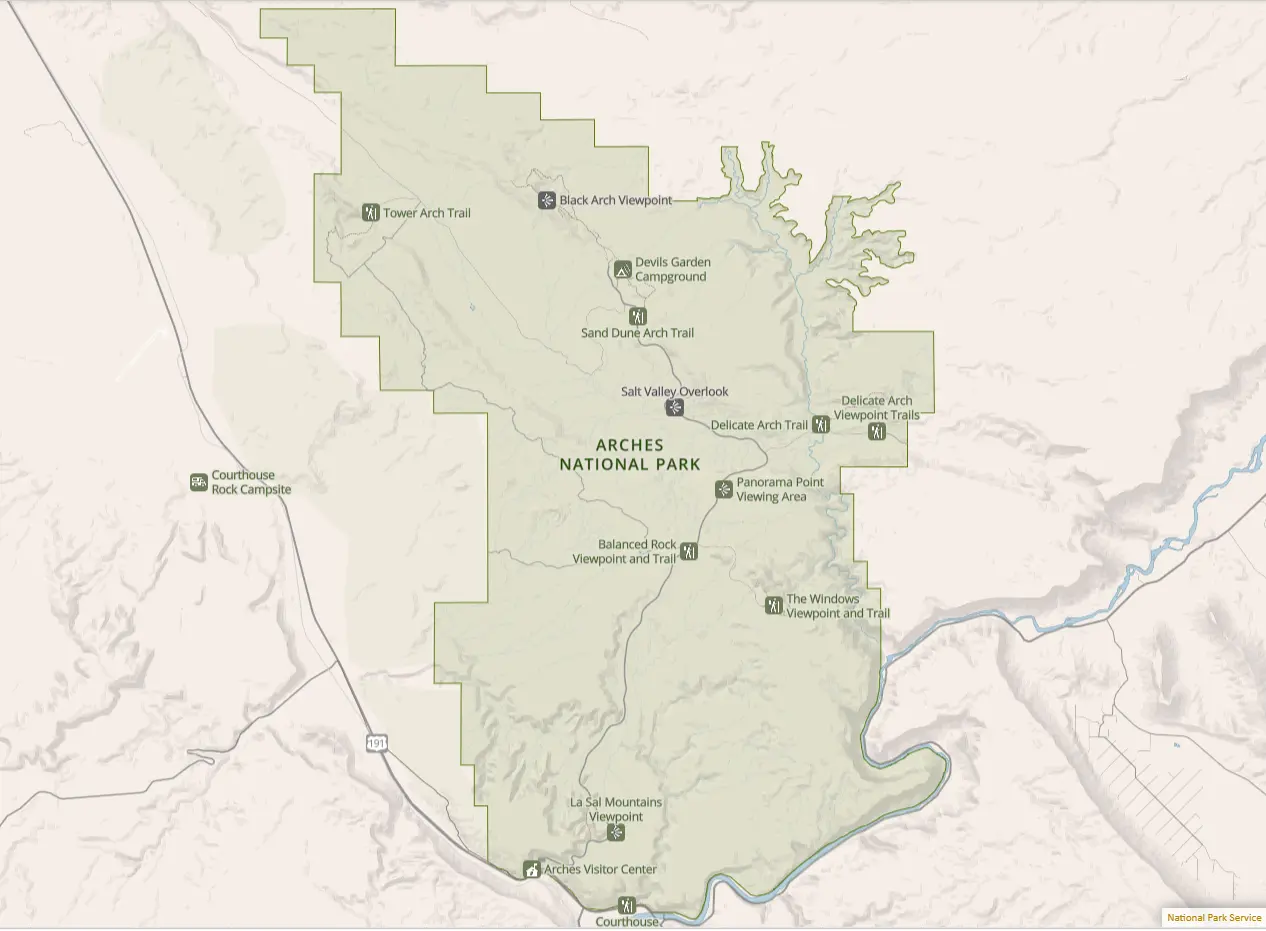
Based on the park layout shown on the map, Arches is organized around a single scenic road that stretches from the Visitor Center in the south to Devils Garden in the north. Most of the park’s famous attractions are located along this route, making navigation relatively straightforward.
Arches National Park Map
Click the image below to view the full-size map of Arches National Park
You can download the Arches National Park map PDF here
Overview of the Arches National Park Map
The map highlights the entire boundary of Arches National Park, showing its unique elongated shape stretching from southwest to northeast. The park is accessed primarily through US Highway 191, with one main entrance leading directly to the Arches Visitor Center.
A single paved road—the Arches Scenic Drive—serves as the backbone of the park. Nearly every major viewpoint, trailhead, campground, and geological landmark branches from this road.
The map also illustrates:
- Park boundaries
- Main entrance
- Scenic drive
- Hiking trailheads
- Campground
- Major viewpoints
- Rivers and surrounding terrain
- Nearby highways
Main Areas of the Park
1. Visitor Center & Entrance
Located at the southern entrance, the Arches Visitor Center is the ideal place to begin your trip.
Here you can:
- Pick up official park maps
- Check current trail conditions
- Learn about ranger programs
- Refill water bottles
- Use restrooms
- Purchase souvenirs and guidebooks
Just beyond the entrance lies the dramatic red rock landscape that makes Arches famous.
2. Courthouse Towers Area
Shortly after entering the park, visitors reach the Courthouse Towers section.
Highlights include:
- Courthouse Towers
- Park Avenue viewpoint
- Easy roadside overlooks
- Excellent sunrise photography
This area offers impressive vertical sandstone formations before the road climbs toward the heart of the park.
3. Balanced Rock
One of the most recognizable landmarks on the map is Balanced Rock, located near the center of the park.
Features include:
- Short loop trail
- Large parking area
- Excellent photo opportunities
- Suitable for most visitors
Its central location makes it a convenient stop before exploring other sections.
4. The Windows Section
The eastern side of the park features one of the busiest destinations shown on the map—The Windows area.
Major attractions include:
- North Window
- South Window
- Turret Arch
- Double Arch
The area offers several short, relatively easy walks and is especially popular for families.
5. Delicate Arch Area
Perhaps the park’s most famous destination is Delicate Arch.
The map shows:
- Delicate Arch Trail
- Delicate Arch Viewpoint Trails
- Nearby parking
Visitors can choose between:
- A strenuous hike to the arch
- Lower viewpoint
- Upper viewpoint
Sunset is the most popular time to visit, although crowds are often heavy.
6. Panorama Point
Located along the main scenic drive, Panorama Point provides sweeping views across the colorful desert landscape.
This overlook is an excellent stop for visitors who prefer scenic drives rather than long hikes.
7. Salt Valley Overlook
The map identifies Salt Valley Overlook, where visitors can observe one of the geological features responsible for the park’s unique landscape.
Underground salt deposits slowly shifted the sandstone layers over millions of years, creating the fractures that eventually formed today’s arches.
8. Devils Garden
At the northern end of the park lies Devils Garden, the largest hiking area in Arches National Park.
The map shows:
- Devils Garden Campground
- Trailheads
- Black Arch Viewpoint
- Sand Dune Arch Trail
- Tower Arch Trail
Many of the park’s longest hikes begin here.
Popular destinations include:
- Landscape Arch
- Navajo Arch
- Double O Arch
- Primitive Loop Trail
Major Trails Shown on the Map
Several well-known hiking routes are clearly marked.
| Trail | Difficulty | Highlights |
|---|---|---|
| Delicate Arch Trail | Moderate to Strenuous | Utah’s most famous arch |
| The Windows Trails | Easy | Multiple arches close together |
| Balanced Rock Trail | Easy | Famous balanced sandstone formation |
| Sand Dune Arch Trail | Easy | Hidden arch between sandstone fins |
| Tower Arch Trail | Moderate | Less crowded destination |
| Devils Garden Trail | Moderate to Difficult | Multiple arches and scenic landscapes |
Scenic Viewpoints
The map includes several scenic overlooks that require little walking.
These include:
- Panorama Point
- Salt Valley Overlook
- La Sal Mountains Viewpoint
- Delicate Arch Viewpoints
- Balanced Rock Viewpoint
These locations are excellent for visitors with limited time or mobility.
Camping
The only campground inside the park is Devils Garden Campground, located near the northern end of the scenic drive.
Its location allows easy early morning access to several popular hiking trails before crowds arrive.
Reservations are strongly recommended during the busy season.
Driving Through the Park
The map demonstrates how easy Arches is to explore by car.
Typical driving route:
- Enter through the Visitor Center.
- Stop at Courthouse Towers.
- Visit Balanced Rock.
- Explore The Windows.
- Hike to Delicate Arch.
- Stop at Panorama Point.
- Continue to Salt Valley Overlook.
- Finish at Devils Garden.
Most visitors can drive the full scenic road in about one hour without stops, while a full day allows time for hiking and sightseeing.
Understanding the Park Layout
One helpful aspect of the map is its clear organization.
- South: Entrance, Visitor Center, Courthouse Towers
- Central: Balanced Rock, Panorama Point
- East: The Windows, Delicate Arch
- North: Devils Garden, Tower Arch, Sand Dune Arch
- West: Salt Valley and expansive desert landscapes
Because there is only one main road, navigation is simple and visitors rarely need to backtrack unless returning from a hike.
Tips for Using the Arches National Park Map
Before your visit, keep these recommendations in mind:
- Download an offline map, as cell service is limited.
- Start early to avoid traffic and secure parking at popular trailheads.
- Carry plenty of water, especially during warmer months.
- Check trail closures and weather conditions before hiking.
- Plan stops based on your available time rather than trying to see everything in one day.
Map of Arches National Park
Frequently Asked Questions
Is Arches National Park easy to navigate?
Yes. The park has one primary scenic road connecting nearly all major attractions, making navigation simple even for first-time visitors.
Where should I start my visit?
Begin at the Arches Visitor Center to collect maps, check trail conditions, and receive the latest park information.
Which area is best for first-time visitors?
Most first-time visitors prioritize Balanced Rock, The Windows, Delicate Arch, and Devils Garden, as these locations showcase the park’s most iconic landscapes.
How long does it take to drive through the park?
Driving from the entrance to Devils Garden takes about one hour without stops. Most visitors spend 4–8 hours exploring viewpoints and hiking.
Do I need a paper map?
While GPS works in some areas, downloading an offline map or carrying a printed map is highly recommended because cellular coverage is limited.
Final Thoughts
An Arches National Park map is much more than a navigation tool—it provides a clear overview of one of America’s most spectacular desert landscapes. From the Visitor Center at the southern entrance to the rugged trails of Devils Garden in the north, the park’s simple layout allows visitors to experience world-famous arches, panoramic overlooks, scenic drives, and unforgettable hiking adventures with ease. Whether you have a few hours or several days, understanding the map before your visit will help you plan an efficient itinerary and make the most of your time among Utah’s extraordinary red rock formations.