Popocatépetl Weather by Month
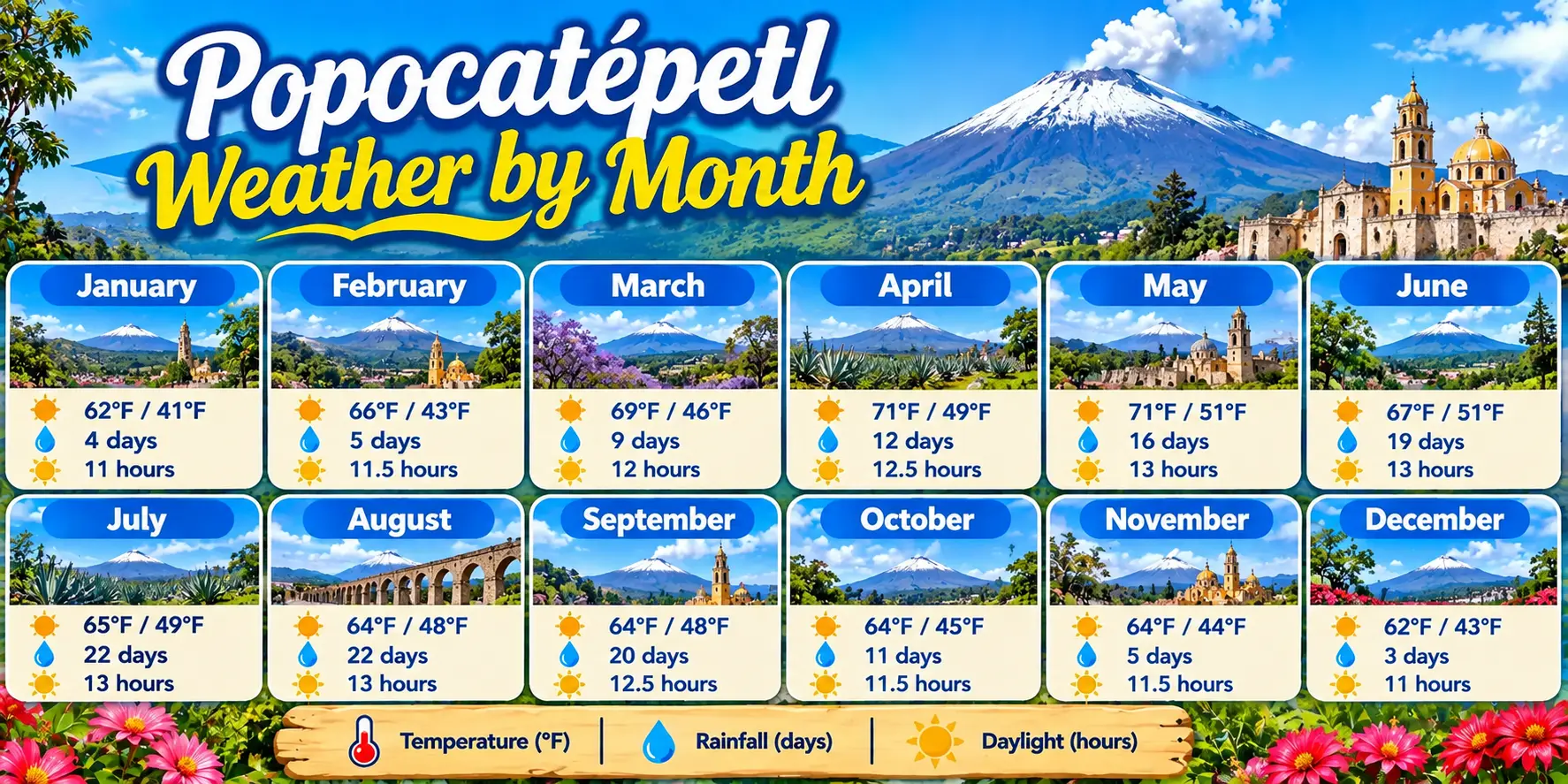
Popocatépetl, one of Mexico’s most famous active volcanoes, experiences a relatively mild climate throughout the year, with cool nights and comfortable daytime temperatures. The warmest months are generally April and May, when average daytime temperatures reach 71°F (22°C). January and December are among the coolest months, with daytime highs around 62°F (17°C).
Rainfall varies considerably throughout the year. November through February are relatively dry, while June through September bring frequent rain, with July and August experiencing approximately 22 rainy days each. Daylight ranges from around 11 hours in winter to 13 hours during summer.
The surrounding region offers opportunities for sightseeing, photography, and exploring traditional Mexican towns. However, weather conditions can change significantly with elevation, and temperatures near the volcano’s summit are considerably colder than those in the surrounding areas.
Popocatépetl Weather by Month
You can click the image below to view the full-size weather chart for Popocatépetl.
January – Cool and Relatively Dry
- Average Day (High): 62°F (17°C)
- Average Night (Low): 41°F (5°C)
- Average temperature: 51°F (10°C)
- Rain days: 4 days
- Daylight: 11 hours
January is one of the coolest months around Popocatépetl. Average daytime temperatures reach approximately 62°F (17°C), while nighttime temperatures drop to around 41°F (5°C). The afternoons are generally comfortable for sightseeing, but early mornings and evenings can feel quite chilly.
Rain is relatively uncommon, with approximately 4 rainy days throughout the month. The region receives around 11 hours of daylight per day, providing reasonable opportunities to explore nearby towns and enjoy scenic views of the volcanic landscape. Visitors should bring warm clothing, particularly when visiting higher elevations.
Best for:
- Exploring nearby towns and villages
- Enjoying volcano viewpoints on clear days
- Photography and outdoor sightseeing
- Experiencing the quieter winter season
February – Mild and Mostly Dry
- Average Day (High): 66°F (19°C)
- Average Night (Low): 43°F (6°C)
- Average temperature: 54°F (12°C)
- Rain days: 5 days
- Daylight: 11.5 hours
February brings slightly warmer weather to the Popocatépetl region. Average daytime temperatures reach approximately 66°F (19°C), while nighttime temperatures fall to around 43°F (6°C). Afternoons are generally pleasant for outdoor activities, although mornings remain cool.
Rain is still relatively limited, with approximately 5 rainy days during the month. Daylight increases to around 11.5 hours per day, providing more time to explore the surrounding countryside and nearby communities. February is a good month for visitors who prefer mild temperatures and relatively dry conditions.
Best for:
- Visiting nearby cultural attractions
- Scenic drives through the countryside
- Photography and sightseeing
- Enjoying relatively dry weather
March – Mild, Pleasant and Increasingly Warm
- Average Day (High): 69°F (21°C)
- Average Night (Low): 46°F (8°C)
- Average temperature: 57°F (14°C)
- Rain days: 9 days
- Daylight: 12 hours
March marks the transition toward warmer spring weather around Popocatépetl. Average daytime temperatures rise to approximately 69°F (21°C), while nighttime temperatures reach around 46°F (8°C). The afternoons are comfortable for exploring nearby towns and enjoying the surrounding mountain scenery.
Rain becomes somewhat more frequent, with approximately 9 rainy days throughout the month. Daylight increases to around 12 hours per day, giving visitors more time for sightseeing and photography. Mornings can still be chilly, particularly in elevated areas.
Best for:
- Exploring the surrounding countryside
- Visiting traditional Mexican villages
- Scenic photography
- Enjoying longer daylight hours
April – Warm and Moderately Wet
- Average Day (High): 71°F (22°C)
- Average Night (Low): 49°F (9°C)
- Average temperature: 59°F (15°C)
- Rain days: 12 days
- Daylight: 12.5 hours
April is one of the warmest months around Popocatépetl. Average daytime temperatures reach approximately 71°F (22°C), while nighttime temperatures remain relatively mild at around 49°F (9°C). The comfortable afternoons are ideal for sightseeing, exploring nearby communities, and enjoying scenic mountain landscapes.
Rainfall begins to increase, with approximately 12 rainy days during the month. Despite the growing possibility of showers, April offers around 12.5 hours of daylight per day. Visitors can generally enjoy pleasant mornings and afternoons, although carrying a light rain jacket is advisable.
Best for:
- Exploring nearby towns and villages
- Scenic drives through mountain landscapes
- Photography during clear mornings
- Outdoor sightseeing and cultural visits
May – Warm, Mild and Increasingly Wet
- Average Day (High): 71°F (22°C)
- Average Night (Low): 51°F (10°C)
- Average temperature: 61°F (16°C)
- Rain days: 16 days
- Daylight: 13 hours
May is generally the warmest month around Popocatépetl, with average daytime highs of approximately 71°F (22°C) and nighttime lows of 51°F (10°C). Temperatures are pleasant during the day, while evenings remain relatively comfortable compared with the winter months.
However, rainfall becomes more frequent, averaging approximately 16 rainy days. Afternoon showers and cloudy periods become increasingly common as the wet season approaches. With around 13 hours of daylight, May still provides plenty of time for sightseeing, especially during the morning when conditions are often more favorable.
Best for:
- Visiting nearby cultural attractions
- Exploring the countryside during the morning
- Enjoying mild daytime temperatures
- Photography when skies are clear
June – Mild, Cool and Wet
- Average Day (High): 67°F (19°C)
- Average Night (Low): 51°F (10°C)
- Average temperature: 58°F (15°C)
- Rain days: 19 days
- Daylight: 13 hours
June marks the beginning of the wetter period around Popocatépetl. Average daytime temperatures reach approximately 67°F (19°C), while nighttime lows remain around 51°F (10°C). The climate is generally mild, although cloudy skies and rainfall can make outdoor conditions feel cooler.
Rain becomes considerably more frequent, with approximately 19 rainy days throughout the month. Afternoon showers are common, and low clouds can sometimes reduce visibility around the volcano. Daylight averages around 13 hours per day, but visitors should plan outdoor activities earlier whenever possible.
Best for:
- Exploring nearby towns between showers
- Visiting cultural and historical attractions
- Enjoying the green countryside
- Taking photographs during clear weather
July – Cool, Cloudy and Very Wet
- Average Day (High): 65°F (18°C)
- Average Night (Low): 49°F (9°C)
- Average temperature: 57°F (14°C)
- Rain days: 22 days
- Daylight: 13 hours
July is one of the wettest months around Popocatépetl, with approximately 22 rainy days. Average daytime temperatures reach around 65°F (18°C), while nighttime temperatures fall to approximately 49°F (9°C). The weather is relatively cool, particularly during rainy and cloudy periods.
Frequent showers can make hiking and outdoor sightseeing less convenient. Cloud cover may also obscure views of the volcano for extended periods. Nevertheless, the surrounding countryside becomes particularly green and lush during this time of year. Visitors should bring waterproof clothing and remain flexible with their travel plans.
Best for:
- Exploring nearby towns and cultural sites
- Enjoying lush green landscapes
- Photography during breaks in the clouds
- Indoor cultural activities
August – Cool and Very Wet
- Average Day (High): 64°F (18°C)
- Average Night (Low): 48°F (9°C)
- Average temperature: 57°F (14°C)
- Rain days: 22 days
- Daylight: 13 hours
August continues the rainy season around Popocatépetl. Average daytime temperatures reach approximately 64°F (18°C), while nighttime lows fall to around 48°F (9°C). Conditions are generally cool and comfortable, although persistent rain and cloud cover can make some days feel chilly.
The month experiences approximately 22 rainy days, making it one of the wettest periods of the year. Afternoon showers are particularly common, and visibility around the volcano can be unpredictable. With approximately 13 hours of daylight, visitors still have opportunities for sightseeing, especially during occasional dry mornings.
Best for:
- Enjoying the green mountain scenery
- Visiting nearby villages
- Exploring cultural attractions
- Taking photographs during clear weather
September – Cool and Wet
- Average Day (High): 64°F (18°C)
- Average Night (Low): 48°F (9°C)
- Average temperature: 57°F (14°C)
- Rain days: 20 days
- Daylight: 12.5 hours
September remains a relatively cool and rainy month around Popocatépetl. Average daytime temperatures reach approximately 64°F (18°C), while nighttime temperatures drop to around 48°F (9°C). The climate is mild, but frequent rainfall and cloudy skies can affect outdoor activities.
There are approximately 20 rainy days during the month, although rainfall gradually begins to decrease toward the end of September. Daylight averages around 12.5 hours per day. Visitors should prepare for changing weather conditions and avoid planning activities that depend entirely on clear mountain views.
Best for:
- Exploring nearby historical towns
- Enjoying the green countryside
- Cultural sightseeing
- Photography during occasional clear periods
October – Mild, Cool and Moderately Wet
- Average Day (High): 64°F (18°C)
- Average Night (Low): 45°F (7°C)
- Average temperature: 55°F (13°C)
- Rain days: 11 days
- Daylight: 11.5 hours
October brings a gradual return to drier conditions around Popocatépetl. Average daytime temperatures reach approximately 64°F (18°C), while nighttime lows fall to around 45°F (7°C). The afternoons remain relatively comfortable, although mornings and evenings become noticeably cooler.
Rainfall decreases considerably compared with the summer months, with approximately 11 rainy days. This improvement makes October a more convenient month for exploring nearby communities and enjoying the surrounding scenery. Daylight averages around 11.5 hours per day, and clearer weather may provide better opportunities for volcano photography.
Best for:
- Exploring nearby towns and villages
- Scenic photography
- Outdoor sightseeing
- Enjoying fewer rainy days
November – Mild, Cool and Mostly Dry
- Average Day (High): 64°F (18°C)
- Average Night (Low): 44°F (6°C)
- Average temperature: 53°F (11°C)
- Rain days: 5 days
- Daylight: 11.5 hours
November is one of the drier months around Popocatépetl. Average daytime temperatures reach approximately 64°F (18°C), while nighttime temperatures fall to around 44°F (6°C). Days are generally mild and pleasant, although cooler mornings and evenings make warm clothing useful.
Rainfall is relatively limited, with approximately 5 rainy days throughout the month. The reduction in precipitation often creates better opportunities for outdoor sightseeing and enjoying mountain views. With around 11.5 hours of daylight, visitors have sufficient time to explore the surrounding region.
Best for:
- Visiting nearby towns and villages
- Enjoying scenic mountain viewpoints
- Photography and sightseeing
- Exploring the region in relatively dry weather
December – Cool and Relatively Dry
- Average Day (High): 62°F (17°C)
- Average Night (Low): 43°F (6°C)
- Average temperature: 50°F (10°C)
- Rain days: 3 days
- Daylight: 11 hours
December brings cooler temperatures and relatively dry conditions to the Popocatépetl region. Average daytime highs reach approximately 62°F (17°C), while nighttime temperatures drop to around 43°F (6°C). The afternoons are generally comfortable for sightseeing, but mornings and evenings can be quite chilly.
Rain is uncommon, with approximately 3 rainy days during the month, making December the driest month of the year according to the supplied data. Daylight averages around 11 hours per day. Visitors can enjoy exploring nearby communities and scenic viewpoints, although temperatures at higher elevations can be significantly colder.
Best for:
- Exploring nearby towns during the holiday season
- Enjoying relatively dry weather
- Scenic photography and sightseeing
- Visiting cultural and historical attractions
Best Time to Visit Popocatépetl
The best time to visit the Popocatépetl region is generally from November through April, when rainfall is relatively limited and outdoor sightseeing is more convenient.
- November to February: These months are suitable for visitors who prefer cooler temperatures, fewer rainy days, and relatively dry conditions.
- March to April: Warmer daytime temperatures and increasing daylight make this period pleasant for sightseeing and exploring nearby communities.
- May to September: The rainy season brings frequent showers, cloudy skies, and potentially limited visibility around the volcano.
- October: A transitional month when rainfall decreases and conditions gradually become more favorable.
Important safety consideration: Popocatépetl is an active volcano. Access restrictions and exclusion zones may be imposed because of volcanic activity, ash emissions, and other hazards. Visitors should follow official guidance from Mexican civil protection authorities and avoid entering restricted areas.
20 FAQs About Popocatépetl Weather
1. What is the weather like in Popocatépetl throughout the year?
Popocatépetl generally experiences mild daytime temperatures and cool nights in the surrounding region. Average daytime highs range from 62°F (17°C) to 71°F (22°C), while nighttime lows range from 41°F (5°C) to 51°F (10°C). Summers are considerably wetter than winters.
2. What is the best month to visit Popocatépetl?
March and April are among the better months for sightseeing around the Popocatépetl region. Temperatures are comfortable, daylight hours are increasing, and rainfall is generally lower than during the summer rainy season.
3. What is the hottest month in Popocatépetl?
May is generally the warmest month according to the supplied monthly averages, with daytime highs of approximately 71°F (22°C) and nighttime lows of 51°F (10°C).
4. What is the coldest month in Popocatépetl?
January is one of the coldest months, with average daytime highs of 62°F (17°C) and nighttime lows of 41°F (5°C). December is similarly cool.
5. Does it snow in Popocatépetl?
Yes. Snow can occur at the higher elevations of Popocatépetl, particularly near the summit. The upper slopes experience much colder conditions than the surrounding towns and valleys, where snow is considerably less common.
6. When is the rainy season in Popocatépetl?
The rainy season generally begins in May or June and continues through September or October. July, August, and September are particularly wet months, with frequent afternoon showers and cloudy conditions.
7. What is the driest month in Popocatépetl?
December is the driest month according to the supplied data, with approximately 3 rainy days. January and November are also relatively dry, with 4 and 5 rainy days, respectively.
8. What is the wettest month in Popocatépetl?
July and August are the wettest months in the supplied monthly data, each experiencing approximately 22 rainy days. September is also very wet, with around 20 rainy days.
9. Is Popocatépetl warm in summer?
The surrounding region is generally mild rather than hot during summer. Average daytime temperatures range from 64°F (18°C) to 67°F (19°C) between June and August. Frequent rainfall and cloudy skies can make conditions feel cooler.
10. Is Popocatépetl cold in winter?
Winter is relatively cool, particularly at night. January nighttime temperatures average around 41°F (5°C), while daytime highs reach approximately 62°F (17°C). Higher elevations around the volcano are significantly colder.
11. How much daylight does Popocatépetl receive?
Daylight ranges from approximately 11 hours per day in December and January to around 13 hours per day from May through August. Longer summer days provide more opportunities for sightseeing when weather conditions permit.
12. Is April a good time to visit Popocatépetl?
April is generally a pleasant month for exploring the surrounding region. Daytime temperatures average 71°F (22°C), nighttime temperatures are around 49°F (9°C), and there are approximately 12 rainy days.
13. Is May a good time to visit Popocatépetl?
May offers warm daytime temperatures, averaging 71°F (22°C), but rainfall increases to approximately 16 rainy days. It can still be a good month for sightseeing, especially during the morning before afternoon showers develop.
14. Is July a good time to visit Popocatépetl?
July is not the best month for visitors seeking clear skies and predictable outdoor conditions. The month experiences approximately 22 rainy days, and clouds can frequently obscure views of the volcano.
15. Is October a good time to visit Popocatépetl?
Yes, October can be a good month for sightseeing around the volcano. Rainfall decreases to approximately 11 rainy days, while daytime temperatures remain comfortable at around 64°F (18°C).
16. What should I wear when visiting Popocatépetl?
Pack layers because temperatures can change considerably between daytime and nighttime. A light jacket or fleece is useful for cooler mornings, while waterproof clothing and comfortable footwear are recommended during the rainy season. Warmer clothing is necessary at higher elevations.
17. Is Popocatépetl humid?
Humidity and moisture levels vary throughout the year. The rainy season, particularly June through September, generally brings cloudier and wetter conditions. The drier months from November through April tend to offer more comfortable conditions for outdoor sightseeing.
18. Can you visit Popocatépetl during the rainy season?
You can explore some surrounding towns and attractions during the rainy season, but frequent showers and poor visibility may affect sightseeing. More importantly, access to the volcano is restricted because it is active. Visitors must follow official safety instructions and stay outside prohibited areas.
19. Is Popocatépetl an active volcano?
Yes. Popocatépetl is one of Mexico’s most active volcanoes, with ongoing volcanic activity that can include gas emissions, ash plumes, and explosions. Visitors should monitor official updates from CENAPRED and respect the established exclusion zone. Popocatépetl+1
20. What is the best season for photography around Popocatépetl?
The dry season, particularly November through April, is generally preferable for photography because there are fewer rainy days and potentially better visibility. Early mornings can offer beautiful views of the surrounding mountains, although visibility is never guaranteed. Always check volcanic activity and access restrictions before planning a visit.
Read more: