Mount Rushmore National Memorial Weather by Month
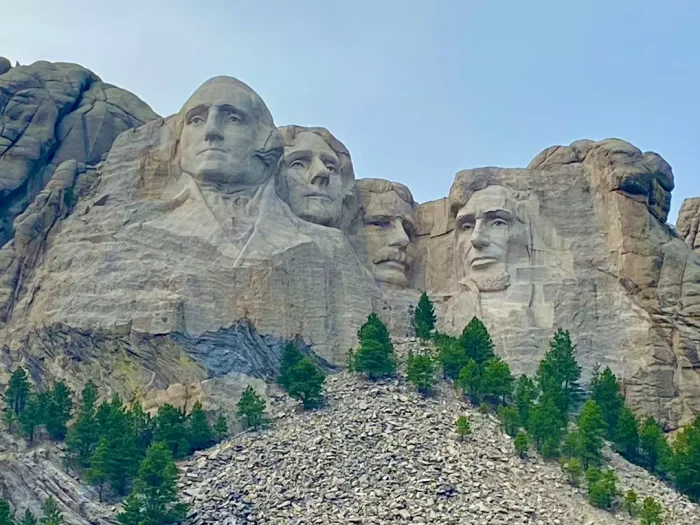
Mount Rushmore National Memorial experiences a four-season continental climate, with warm summers, colorful autumns, cold snowy winters, and cool, unpredictable springs. Located in the Black Hills of South Dakota, the memorial sits at an elevation of about 5,725 feet (1,745 meters), resulting in cooler temperatures than many surrounding areas and rapidly changing weather throughout the year.
Mount Rushmore National Memorial Weather by Month
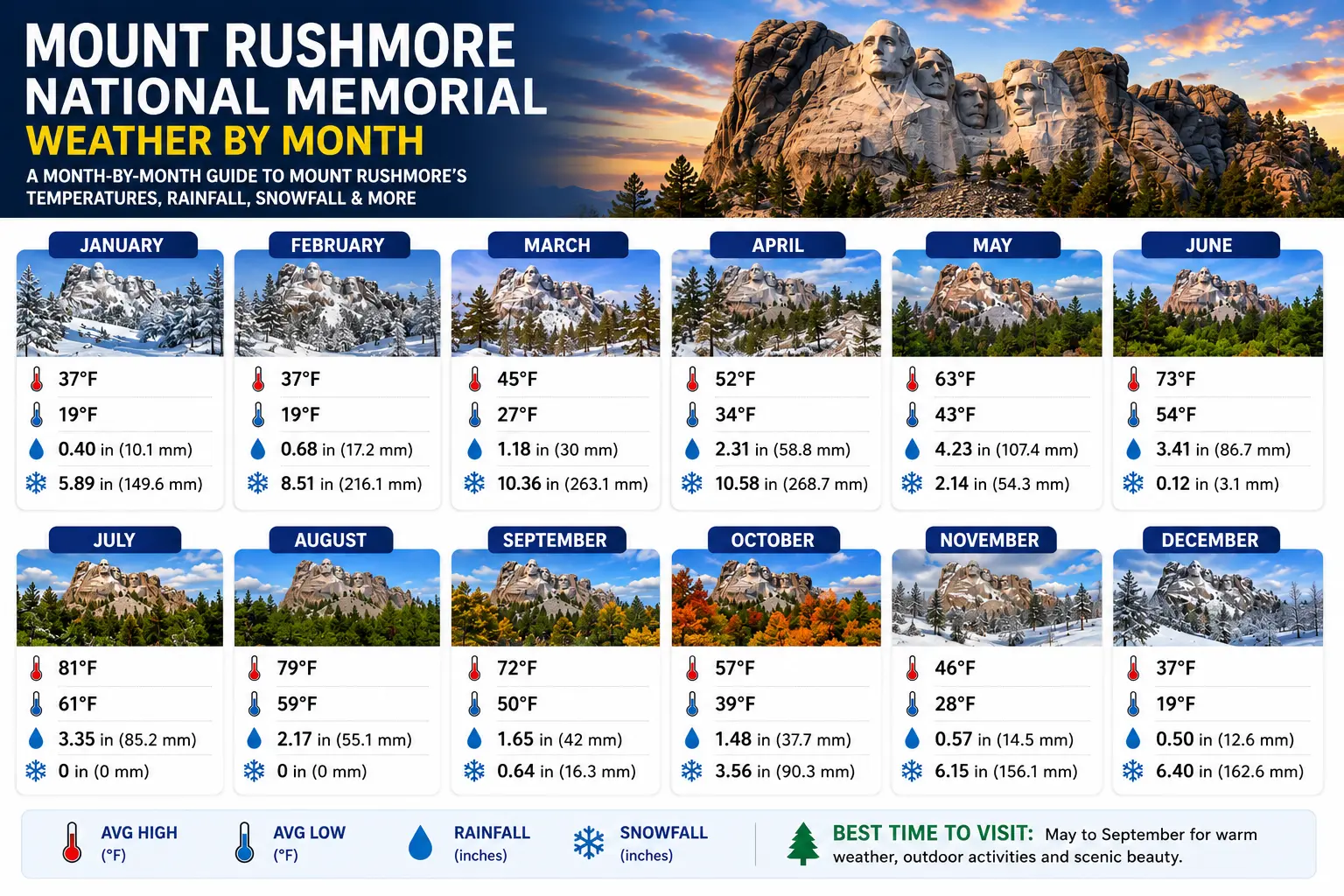
You can click the image below to view the full-size weather chart for Mount Rushmore National Memorial.
January – Cold, Snowy, and Peaceful
- Average high: 3°C (37°F)
- Average low: -7°C (19°F)
- Rainfall: 10.1 mm (0.40 inches)
- Rainy days: 2 days
- Snowfall: 149.6 mm (5.89 inches)
January is one of the coldest months at Mount Rushmore National Memorial. Daytime temperatures remain just above freezing, while nights are often well below 0°C (32°F). Although rainfall is minimal, snowfall is frequent enough to blanket the surrounding Black Hills in white.
The peaceful winter scenery offers a completely different perspective of the memorial. Visitor numbers are low, making it an excellent month for travelers who enjoy quiet landscapes, winter photography, and scenic drives through the snow-covered forests.
Best for:
- Winter photography
- Peaceful sightseeing
- Snow-covered landscapes
- Scenic drives
February – Crisp Winter Days with Deep Snow
- Average high: 3°C (37°F)
- Average low: -7°C (19°F)
- Rainfall: 17.2 mm (0.68 inches)
- Rainy days: 3 days
- Snowfall: 216.1 mm (8.51 inches)
February remains firmly in winter, with cold temperatures and some of the heaviest snowfall of the year. Despite slightly higher precipitation than January, most of it falls as snow, creating beautiful alpine scenery throughout the Black Hills.
Although outdoor activities require warm clothing, the snow-covered forests and granite cliffs create spectacular photo opportunities. Visitors looking for a tranquil experience will appreciate the uncrowded viewpoints and peaceful atmosphere.
Best for:
- Winter landscapes
- Photography
- Scenic road trips
- Quiet visits
March – Winter Begins to Ease
- Average high: 7°C (45°F)
- Average low: -3°C (27°F)
- Rainfall: 30 mm (1.18 inches)
- Rainy days: 4 days
- Snowfall: 263.1 mm (10.36 inches)
March brings the first signs of spring, but winter still has a strong presence at Mount Rushmore. Daytime temperatures become milder, although freezing nights remain common. Surprisingly, March is among the snowiest months of the year.
Visitors should prepare for changing weather conditions, as sunny afternoons can quickly give way to snow showers. The combination of fresh snow and increasing daylight creates stunning views around the memorial.
Best for:
- Late-winter photography
- Scenic viewpoints
- Nature lovers
- Flexible travelers
April – Unpredictable Spring Weather
- Average high: 11°C (52°F)
- Average low: 1°C (34°F)
- Rainfall: 58.8 mm (2.31 inches)
- Rainy days: 6 days
- Snowfall: 268.7 mm (10.58 inches)
April is a transitional month with highly variable weather. Mild afternoons are becoming more common, but significant snowfall is still possible, making it one of the snowiest months despite the arrival of spring.
The changing conditions bring a unique mix of snowy forests, budding trees, and greener landscapes. Travelers should dress in layers and be prepared for rapidly changing temperatures throughout the day.
Best for:
- Spring photography
- Scenic drives
- Wildlife watching
- Mixed winter and spring scenery
May – Pleasant Temperatures and Blooming Landscapes
- Average high: 17°C (63°F)
- Average low: 6°C (43°F)
- Rainfall: 107.4 mm (4.23 inches)
- Rainy days: 10 days
- Snowfall: 54.3 mm (2.14 inches)
May marks the arrival of true spring at Mount Rushmore. Temperatures become comfortable for outdoor activities, while the surrounding forests and meadows burst into vibrant shades of green. Rainfall increases considerably, helping nourish the landscape.
Although a small amount of snow is still possible early in the month, most visitors can expect pleasant hiking and sightseeing conditions.
Best for:
- Hiking
- Wildlife viewing
- Spring scenery
- Family vacations
June – Warm Days and Lush Scenery
- Average high: 23°C (73°F)
- Average low: 12°C (54°F)
- Rainfall: 86.7 mm (3.41 inches)
- Rainy days: 9 days
- Snowfall: 3.1 mm (0.12 inches)
June offers warm temperatures and long days, making it one of the best months to visit Mount Rushmore. Snow has virtually disappeared, while comfortable weather encourages hiking, sightseeing, and exploring nearby attractions such as Custer State Park.
Afternoon showers are possible, but they are often brief and followed by sunshine. The surrounding Black Hills are at their greenest during early summer.
Best for:
- Hiking
- Family trips
- Scenic drives
- Outdoor sightseeing
July – Warmest Month of the Year
- Average high: 27°C (81°F)
- Average low: 16°C (61°F)
- Rainfall: 85.2 mm (3.35 inches)
- Rainy days: 9 days
- Snowfall: 0 mm (0 inches)
July is the warmest month at Mount Rushmore National Memorial. Comfortable daytime temperatures make it ideal for exploring the memorial, nearby hiking trails, and the scenic Black Hills region.
As this is peak tourist season, expect larger crowds, especially around Independence Day celebrations. Occasional afternoon thunderstorms help cool the air without significantly affecting travel plans.
Best for:
- Summer vacations
- Hiking
- Family sightseeing
- Outdoor events
August – Sunny and Ideal for Outdoor Adventures
- Average high: 26°C (79°F)
- Average low: 15°C (59°F)
- Rainfall: 55.1 mm (2.17 inches)
- Rainy days: 7 days
- Snowfall: 0 mm (0 inches)
August continues the pleasant summer weather with warm days and slightly lower rainfall than previous months. Comfortable temperatures make it easy to spend an entire day exploring Mount Rushmore and nearby attractions.
The combination of sunshine, green forests, and mild evenings creates excellent conditions for camping, hiking, and scenic drives throughout the Black Hills.
Best for:
- Camping
- Hiking
- Scenic drives
- Outdoor photography
September – Cooler Days and Early Fall Colors
- Average high: 22°C (72°F)
- Average low: 10°C (50°F)
- Rainfall: 42 mm (1.65 inches)
- Rainy days: 5 days
- Snowfall: 16.3 mm (0.64 inches)
September brings cooler temperatures and fewer rainy days, making it one of the most comfortable months to visit. Early autumn colors begin appearing across the forests, while visitor numbers gradually decline after the busy summer season.
The pleasant weather is ideal for hiking and enjoying clear views of the memorial without the summer crowds.
Best for:
- Fall hiking
- Photography
- Scenic drives
- Comfortable sightseeing
October – Beautiful Autumn Scenery
- Average high: 14°C (57°F)
- Average low: 4°C (39°F)
- Rainfall: 37.7 mm (1.48 inches)
- Rainy days: 4 days
- Snowfall: 90.3 mm (3.56 inches)
October showcases vibrant autumn colors throughout the Black Hills. Daytime temperatures remain comfortable, although mornings and evenings become noticeably cooler. Light snowfall may begin returning later in the month.
This is one of the most scenic times of year for photography thanks to the colorful foliage and crisp mountain air.
Best for:
- Fall foliage
- Scenic photography
- Hiking
- Road trips
November – Quiet and Chilly
- Average high: 8°C (46°F)
- Average low: -2°C (28°F)
- Rainfall: 14.5 mm (0.57 inches)
- Rainy days: 2 days
- Snowfall: 156.1 mm (6.15 inches)
November marks the return of winter conditions. Temperatures fall quickly, and snowfall becomes much more common across the Black Hills. Visitor numbers decrease significantly, creating a peaceful atmosphere around the memorial.
Although some days can be cold, clear skies often provide spectacular visibility and excellent photography opportunities.
Best for:
- Quiet sightseeing
- Winter photography
- Scenic drives
- Peaceful vacations
December – A Snowy Winter Wonderland
- Average high: 3°C (37°F)
- Average low: -7°C (19°F)
- Rainfall: 12.6 mm (0.50 inches)
- Rainy days: 2 days
- Snowfall: 162.6 mm (6.40 inches)
December transforms Mount Rushmore National Memorial into a winter wonderland. Snow-covered pine forests and crisp mountain air create a magical atmosphere that contrasts beautifully with the massive granite sculpture.
While temperatures remain cold, visitors willing to bundle up are rewarded with peaceful surroundings and some of the most picturesque winter scenery of the year.
Best for:
- Winter vacations
- Snow photography
- Peaceful sightseeing
- Scenic winter drives
Mount Rushmore National Memorial Weather by Month Table
| Month | Avg High °F (°C) | Avg Low °F (°C) | Rainfall (inches) | Snowfall (inches) |
|---|---|---|---|---|
| January | 37°F (3°C) | 19°F (-7°C) | 0.40 | 5.89 |
| February | 37°F (3°C) | 19°F (-7°C) | 0.68 | 8.51 |
| March | 45°F (7°C) | 27°F (-3°C) | 1.18 | 10.36 |
| April | 52°F (11°C) | 34°F (1°C) | 2.31 | 10.58 |
| May | 63°F (17°C) | 43°F (6°C) | 4.23 | 2.14 |
| June | 73°F (23°C) | 54°F (12°C) | 3.41 | 0.12 |
| July | 81°F (27°C) | 61°F (16°C) | 3.35 | 0.00 |
| August | 79°F (26°C) | 59°F (15°C) | 2.17 | 0.00 |
| September | 72°F (22°C) | 50°F (10°C) | 1.65 | 0.64 |
| October | 57°F (14°C) | 39°F (4°C) | 1.48 | 3.56 |
| November | 46°F (8°C) | 28°F (-2°C) | 0.57 | 6.15 |
| December | 37°F (3°C) | 19°F (-7°C) | 0.50 | 6.40 |
20 FAQs About Mount Rushmore National Memorial Weather
1. What is the best month to visit Mount Rushmore National Memorial?
September is often considered the best month to visit because of its mild temperatures, lower rainfall, and smaller crowds. June and August are also excellent choices for outdoor activities.
2. What is the warmest month at Mount Rushmore National Memorial?
July is typically the warmest month, with average highs around 81°F (27°C) and comfortable evenings.
3. What is the coldest month at Mount Rushmore National Memorial?
January and February are the coldest months, with average highs of 37°F (3°C) and lows around 19°F (-7°C).
4. Does it snow at Mount Rushmore National Memorial?
Yes. Snow is common from late fall through early spring, with the heaviest snowfall usually occurring between February and April.
5. Which month receives the most snowfall?
Based on the climate averages, April receives the highest average snowfall, followed closely by March and February.
6. Does Mount Rushmore get snow in summer?
Snow is extremely rare during summer. July and August typically receive no measurable snowfall, while June averages only a trace amount.
7. What is the rainiest month at Mount Rushmore National Memorial?
May is generally the wettest month, averaging about 4.23 inches (107.4 mm) of rainfall.
8. When is the driest month to visit Mount Rushmore?
January is the driest month, with only about 0.40 inches (10.1 mm) of rainfall on average.
9. Is Mount Rushmore crowded during summer?
Yes. June through August is the busiest travel season due to warm weather, school vacations, and extended daylight hours.
10. What should I wear when visiting Mount Rushmore?
Dress according to the season. Lightweight clothing is suitable for summer, while spring and fall require layers. In winter, insulated clothing, gloves, and waterproof boots are recommended.
11. Can I visit Mount Rushmore during winter?
Yes. The memorial remains open year-round, and winter offers peaceful scenery with fewer visitors, although snowy roads are possible.
12. Is spring a good time to visit Mount Rushmore?
Spring offers blooming landscapes and fewer crowds than summer, but weather can be unpredictable with rain and occasional snow.
13. What is fall weather like at Mount Rushmore?
Fall brings cool, comfortable temperatures and colorful foliage, making September and October popular months for photography and scenic drives.
14. Are thunderstorms common in summer?
Yes. Afternoon thunderstorms occasionally develop during June, July, and August, but they are usually brief.
15. Does weather affect visibility of Mount Rushmore?
Occasionally. Heavy fog, rain, or snow can reduce visibility, but most days offer clear views of the monument.
16. How much does the temperature change between day and night?
The Black Hills often experience noticeable temperature swings, especially during spring and fall, so evenings can be much cooler than afternoons.
17. Is May a good month for hiking near Mount Rushmore?
Yes. May offers pleasant daytime temperatures and lush scenery, although hikers should be prepared for occasional rain showers.
18. What is the best season for photography?
Autumn is considered one of the best seasons thanks to colorful foliage, while winter provides dramatic snow-covered landscapes and fewer crowds.
19. Can I drive to Mount Rushmore in winter?
Yes, but travelers should monitor road conditions, as snow and ice can affect driving in the Black Hills during winter storms.
20. How can I prepare for Mount Rushmore’s changing weather?
Check the latest forecast before your trip, wear layered clothing, carry a waterproof jacket, and be prepared for rapid weather changes, especially during spring and fall.