Biscayne National Park Map Guide: Everything You Need to Know Before You Go
Unlike most U.S. national parks, Biscayne National Park is almost entirely underwater. More than 95% of the park consists of Biscayne Bay, coral reefs, mangrove forests, and islands, making a reliable map essential for planning your visit. Whether you’re taking a boat tour, kayaking through mangroves, snorkeling over coral reefs, or simply exploring the visitor center, understanding the park’s layout will help you make the most of your trip.
This guide explains how to read a Biscayne National Park map, highlights the park’s major areas, and helps you decide which map you need before your adventure.
Biscayne National Park Map
Click the image below to view map of Biscayne National Park in full size.
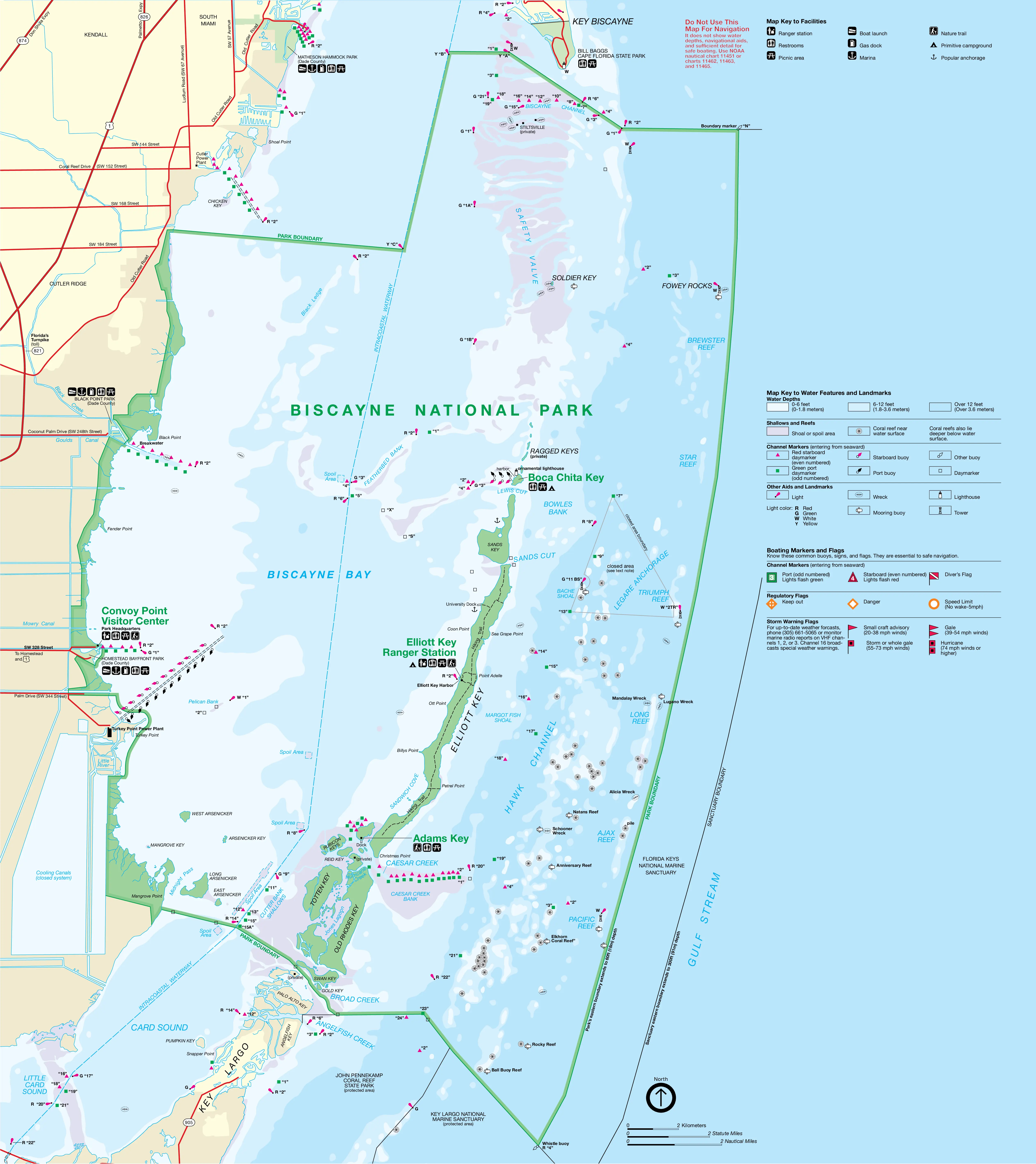
If you want to download Biscayne National Park PDF file you can click here
Why You Need a Biscayne National Park Map
Biscayne National Park is very different from parks like Yellowstone or Yosemite. There are:
- No scenic drives through the park
- Very few hiking trails
- No road access to most attractions
- Most destinations require a boat
A map helps visitors understand:
- Where the islands are located
- Boat routes and navigation channels
- Visitor facilities
- Snorkeling and diving sites
- Canoe and kayak launch areas
- Protected marine zones
- Distances between destinations
Since the majority of the park can only be reached by water, planning ahead is much more important than at traditional national parks.
Overview of Biscayne National Park
The park is located just south of Miami in Florida and covers approximately 173,000 acres.
The four major ecosystems protected within the park include:
- Biscayne Bay
- Mangrove shoreline
- Florida Keys islands
- Coral reef tract
These ecosystems stretch from the mainland to the Atlantic Ocean, creating one of America’s most unique marine national parks.
Main Areas You’ll See on the Map
Dante Fascell Visitor Center
Nearly every visitor begins here.
Located in Homestead, Florida, the visitor center includes:
- Park information
- Exhibits
- Ranger programs
- Boat tour departures
- Gift shop
- Restrooms
- Parking
It is also the only part of the park that is easily accessible by car.
Biscayne Bay
The large shallow bay occupies much of the western side of the park.
On most maps you’ll notice:
- Extensive seagrass beds
- Mangrove shorelines
- Canoe routes
- Wildlife viewing areas
The bay is popular for:
- Kayaking
- Paddleboarding
- Birdwatching
- Fishing (following park regulations)
Boca Chita Key
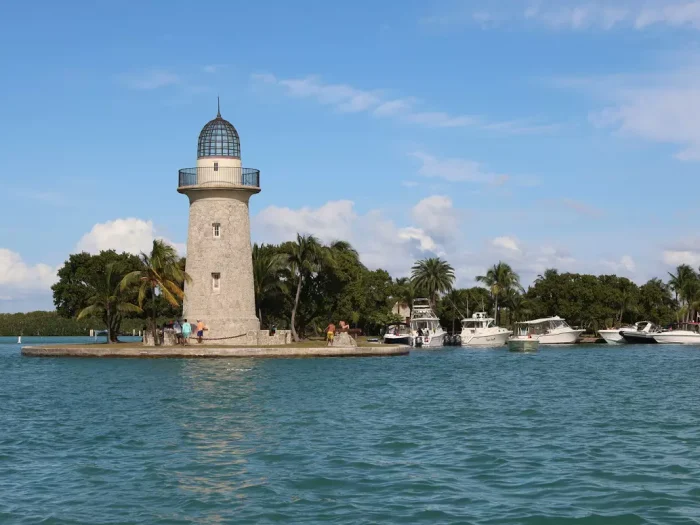
Boca Chita Key is the park’s most visited island.
Map highlights include:
- Historic lighthouse
- Picnic areas
- Harbor
- Walking paths
- Camping area
Most guided boat tours stop here, making it the easiest island for first-time visitors.
Elliott Key
The largest island in Biscayne National Park.
Your map will show:
- Campgrounds
- Picnic shelters
- Walking trails
- Docks
- Historic Spite Highway trail
Unlike Boca Chita Key, Elliott Key has more space to explore and offers overnight camping opportunities.
Coral Reef Area
East of the islands lies the Florida Reef, the only living coral reef system in the continental United States.
Maps often mark:
- Snorkeling locations
- Scuba diving sites
- Mooring buoys
- Reef protection zones
- Navigation markers
Because reefs are environmentally sensitive, boats are encouraged to use designated mooring buoys instead of anchors.
Understanding the Official Park Map
The official National Park Service map contains much more than island locations.
Key features include:
Water Depths
Many boating routes show approximate depths to help boaters navigate safely.
Navigation Channels
Since Biscayne Bay contains numerous shallow areas, channels are clearly marked.
These channels help larger boats avoid running aground.
Mooring Buoys
The map identifies public mooring buoys where visitors can safely secure boats without damaging coral reefs.
Boat Launches
Nearby launch ramps are identified for visitors bringing their own boats.
Park Boundaries
Marine park boundaries are clearly marked, especially near fishing and reef protection areas.
Best Maps for Different Activities
First-Time Visitors
Use the official park brochure map.
It includes:
- Visitor center
- Main islands
- Boat routes
- Major attractions
Boating
Boaters should carry:
- Official park map
- NOAA nautical charts
- GPS navigation
Because water depths change quickly throughout Biscayne Bay, navigation charts are essential.
Kayaking
Kayakers benefit from maps showing:
- Mangrove trails
- Launch points
- Protected waters
- Distance estimates
Snorkeling and Diving
Divers should use maps highlighting:
- Coral reefs
- Shipwreck locations
- Mooring buoys
- Reef names
- Dive sites
Camping
Campers should use maps showing:
- Boca Chita campsites
- Elliott Key campground
- Restrooms
- Picnic shelters
- Dock locations
Major Attractions Marked on the Map
Some of the most popular destinations include:
| Attraction | Why Visit |
|---|---|
| Dante Fascell Visitor Center | Visitor information and exhibits |
| Boca Chita Key | Lighthouse and harbor |
| Elliott Key | Camping and hiking |
| Jones Lagoon | Kayaking and wildlife |
| Adams Key | Historic island |
| Coral Reef | Snorkeling and diving |
| Maritime Heritage Trail | Underwater shipwreck exploration |
Distances Inside the Park
One surprise for first-time visitors is how spread out the park is.
Approximate distances include:
- Visitor Center to Boca Chita Key: about 10 miles by boat
- Visitor Center to Elliott Key: around 8–10 miles
- Visitor Center to outer reef: roughly 10–15 miles
Travel times depend on weather and boat speed.
Tips for Using the Map
Before leaving shore:
- Download a digital copy of the map.
- Bring a waterproof printed map if traveling by boat.
- Check weather and marine forecasts.
- Understand tide conditions.
- Know where fuel is available.
- Identify emergency return routes.
Cell service may become unreliable farther from the mainland.
Can You Explore Without a Boat?
Yes—but only partially.
Without a boat, visitors can explore:
- Dante Fascell Visitor Center
- Convoy Point
- Jetty Trail
- Shoreline views
To reach the islands, reefs, and most of the park, you’ll need:
- A guided boat tour
- Private boat
- Kayak or canoe (for nearby waters)
This is why most visitors spend at least part of their day on the water.
Final Thoughts
A Biscayne National Park map is much more than a navigation tool—it’s the key to understanding one of America’s most unique national parks. Since nearly all of Biscayne lies beneath the water or on offshore islands, knowing where visitor facilities, reefs, keys, and navigation channels are located can dramatically improve your trip.
Whether you’re planning a relaxing boat tour to Boca Chita Key, kayaking through tranquil mangrove forests, camping on Elliott Key, or snorkeling over vibrant coral reefs, studying the map before your visit will help you travel safely, maximize your time, and discover the remarkable marine landscapes that make Biscayne National Park unlike any other destination in the U.S.
Source: https://maps.lib.utexas.edu/maps/national_parks/biscayne_park97.pdf