Biscayne National Park Weather by Month: A Complete Guide for Travelers
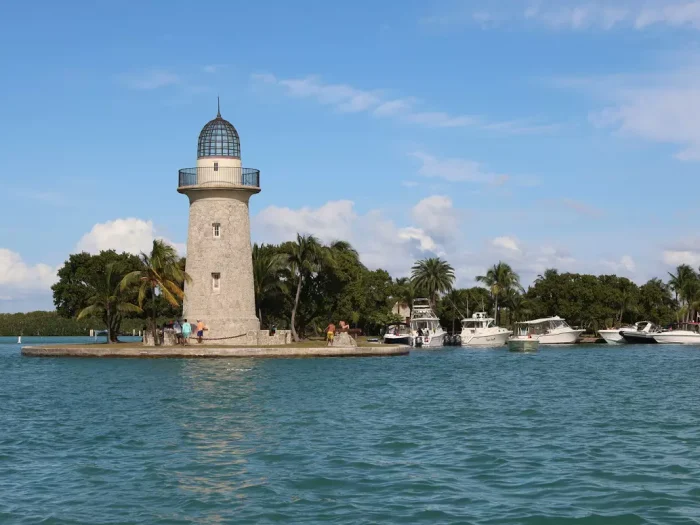
Biscayne National Park, located just south of Miami, Florida, is known for its turquoise waters, coral reefs, mangrove forests, and warm subtropical climate. Because over 95% of the park is water, weather plays a major role in determining the best time for boating, snorkeling, diving, and wildlife viewing. Understanding Biscayne National Park weather by month can help you plan the perfect visit.
Below is a month-by-month breakdown of temperatures, rainfall, and seasonal conditions.
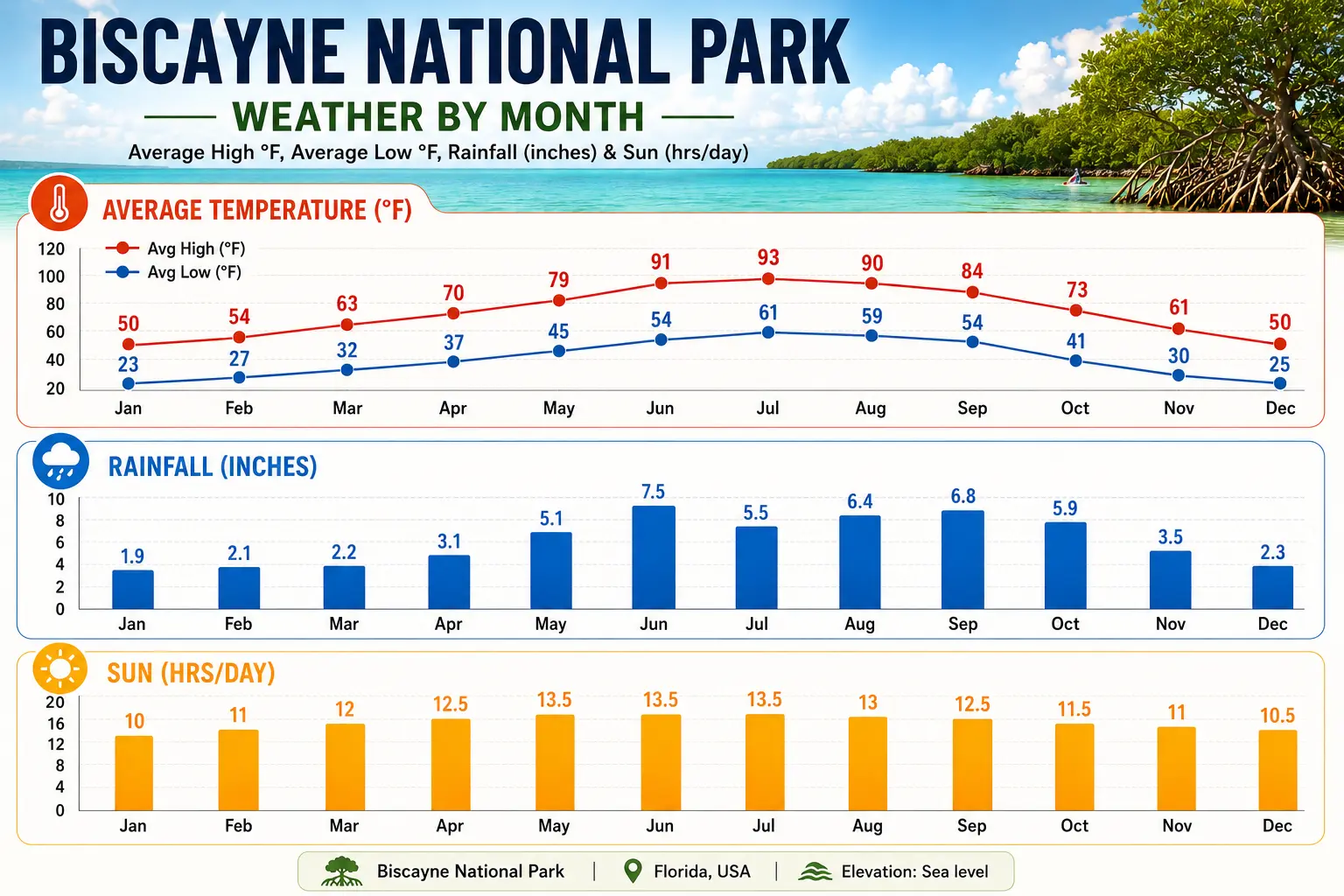
Biscayne National Park Weather by Month
You can click the image below to view the full-size weather chart for Biscayne NP.
January
- Average high: 19°C (66°F)
- Average low: 15°C (59°F)
- Rainfall: 48.8 mm
- Rainy days: 4
- Daylight: 10.5 hours
January is one of the coolest and driest months in Biscayne National Park. The weather is pleasant with low humidity, making it ideal for outdoor adventures and boat tours.
Best for: Snorkeling, kayaking, camping, wildlife watching
Travel tips: Bring a light jacket for early mornings and evenings on the water.
February
- Average high: 20°C (68°F)
- Average low: 16°C (61°F)
- Rainfall: 53.1 mm
- Rainy days: 4
- Daylight: 11.5 hours
February offers mild temperatures and comfortable conditions across the park. Calm seas and sunny days create excellent visibility for marine activities.
Best for: Diving, fishing, scenic cruises
Travel tips: Reserve tours early since winter is a popular travel season in South Florida.
March
- Average high: 22°C (72°F)
- Average low: 19°C (66°F)
- Rainfall: 57.1 mm
- Rainy days: 4
- Daylight: 12 hours
March marks the beginning of warmer spring weather in Biscayne National Park. The combination of sunshine and low rainfall makes it one of the best months to visit.
Best for: Paddleboarding, boating, family trips
Travel tips: Use sunscreen and stay hydrated during midday activities.
April
- Average high: 24°C (75°F)
- Average low: 21°C (70°F)
- Rainfall: 79.8 mm
- Rainy days: 4
- Daylight: 12.5 hours
April brings warmer temperatures and longer daylight hours. Conditions remain relatively dry, making it an excellent month for exploring both land and water.
Best for: Snorkeling, island hopping, photography
Travel tips: Mosquitoes may appear near mangroves, so insect repellent is recommended.
May
- Average high: 26°C (79°F)
- Average low: 23°C (73°F)
- Rainfall: 129 mm
- Rainy days: 7
- Daylight: 13.5 hours
May signals the transition into the wet season. Temperatures rise noticeably, and short tropical showers become more common.
Best for: Water sports, coral reef exploration
Travel tips: Plan outdoor activities in the morning to avoid afternoon rain.
June
- Average high: 28°C (82°F)
- Average low: 25°C (77°F)
- Rainfall: 189.5 mm
- Rainy days: 11
- Daylight: 13.5 hours
June is hot, humid, and rainy in Biscayne National Park. Frequent thunderstorms occur, especially during the afternoon and evening.
Best for: Warm-water snorkeling and diving
Travel tips: Keep rain gear handy and monitor weather updates before boating.
July
- Average high: 29°C (84°F)
- Average low: 26°C (79°F)
- Rainfall: 139.2 mm
- Rainy days: 10
- Daylight: 13.5 hours
July is one of the hottest months of the year. Water temperatures are excellent for swimming, though humidity levels are very high.
Best for: Beach activities, swimming, boating
Travel tips: Thunderstorms can develop quickly, so prepare flexible travel plans.
August
- Average high: 30°C (86°F)
- Average low: 26°C (79°F)
- Rainfall: 161.9 mm
- Rainy days: 11
- Daylight: 13 hours
August is the warmest month in Biscayne NP. Tropical weather dominates, with heavy rain showers and occasional storms.
Best for: Scuba diving, marine wildlife encounters
Travel tips: Hurricane season peaks during late summer, so check forecasts regularly.
September
- Average high: 28°C (82°F)
- Average low: 26°C (79°F)
- Rainfall: 173.2 mm
- Rainy days: 12
- Daylight: 12.5 hours
September remains very warm and wet. Rainfall is among the highest of the year, but visitor numbers are generally lower.
Best for: Quiet nature experiences, fishing
Travel tips: Expect sudden rainstorms and possible tropical systems.
October
- Average high: 27°C (81°F)
- Average low: 24°C (75°F)
- Rainfall: 149.7 mm
- Rainy days: 9
- Daylight: 11.5 hours
October brings slightly cooler temperatures and gradually decreasing rainfall. The weather becomes more comfortable for outdoor exploration.
Best for: Kayaking, wildlife photography, eco tours
Travel tips: Early October may still experience tropical storms.
November
- Average high: 23°C (73°F)
- Average low: 20°C (68°F)
- Rainfall: 88.7 mm
- Rainy days: 5
- Daylight: 11 hours
November marks the return of the dry season in Biscayne National Park. Pleasant temperatures and lower humidity attract more visitors.
Best for: Camping, boating, hiking nearby trails
Travel tips: Book accommodations early for the upcoming holiday season.
December
- Average high: 21°C (70°F)
- Average low: 18°C (64°F)
- Rainfall: 59.5 mm
- Rainy days: 4
- Daylight: 10.5 hours
December offers mild temperatures, sunny skies, and low rainfall. It is one of the most comfortable months to visit the park.
Best for: Winter escapes, snorkeling, sightseeing
Travel tips: Expect higher tourist crowds during Christmas and New Year holidays.
Biscayne National Park Weather by Month Table
| Month | Avg High (°F/°C) | Avg Low (°F/°C) | Rainfall (inches) | Sun (hrs/day) |
|---|---|---|---|---|
| January | 66°F / 19°C | 59°F / 15°C | 1.9 | 10.5 |
| February | 68°F / 20°C | 61°F / 16°C | 2.1 | 11.5 |
| March | 72°F / 22°C | 66°F / 19°C | 2.2 | 12.0 |
| April | 75°F / 24°C | 70°F / 21°C | 3.1 | 12.5 |
| May | 79°F / 26°C | 73°F / 23°C | 5.1 | 13.5 |
| June | 82°F / 28°C | 77°F / 25°C | 7.5 | 13.5 |
| July | 84°F / 29°C | 79°F / 26°C | 5.5 | 13.5 |
| August | 86°F / 30°C | 79°F / 26°C | 6.4 | 13.0 |
| September | 82°F / 28°C | 79°F / 26°C | 6.8 | 12.5 |
| October | 81°F / 27°C | 75°F / 24°C | 5.9 | 11.5 |
| November | 73°F / 23°C | 68°F / 20°C | 3.5 | 11.0 |
| December | 70°F / 21°C | 64°F / 18°C | 2.3 | 10.5 |
Best Time to Visit Biscayne National Park
- Best Weather: December through April
- Best for Snorkeling & Diving: March through August (weather permitting)
- Fewer Crowds: May, October, and November
- Lowest Prices: August and September (with weather risks)
Biscayne National Park Weather FAQs
- What is the best month to visit Biscayne National Park?
The best months to visit are from December to April, when the weather is dry, mild, and comfortable. - What is the coldest month in Biscayne National Park?
January is typically the coldest month, with average lows around 60°F (16°C). - What is the hottest month in Biscayne National Park?
July and August are the hottest months, with highs around 91°F (33°C) and high humidity. - Does Biscayne National Park have a rainy season?
Yes, the rainy season usually runs from May through October, with frequent afternoon thunderstorms. - What months have the least rainfall in Biscayne National Park?
December, January, and February typically have the lowest rainfall. - Is Biscayne National Park humid year-round?
Humidity is highest in summer but much lower during the winter and early spring months. - When is hurricane season in Biscayne National Park?
Hurricane season lasts from June 1 to November 30, with peak activity in August and September. - Is it safe to visit Biscayne National Park during hurricane season?
Yes, but visitors should monitor forecasts closely and remain flexible with travel plans. - What is the best month for snorkeling in Biscayne National Park?
March through August offers warm water and good visibility, weather permitting. - What is the water temperature in Biscayne National Park by month?
Water temperatures range from about 70°F (21°C) in winter to 85°F (29°C) in summer. - Can you swim in Biscayne National Park in winter?
Yes, but winter water temperatures may feel cool without a wetsuit. - Which month has the calmest seas in Biscayne National Park?
April and May often have calmer seas, ideal for boating and kayaking. - Does Biscayne National Park get cold at night?
Winter nights can feel cool, but temperatures rarely drop below 55°F (13°C). - What should I pack for Biscayne National Park in summer?
Light clothing, sun protection, rain gear, insect repellent, and plenty of water. - What should I pack for Biscayne National Park in winter?
Light layers, a windbreaker, sunscreen, and comfortable outdoor clothing. - Is Biscayne National Park crowded year-round?
The busiest months are December through March, while summer is much quieter. - Does rain usually last all day in Biscayne National Park?
No, rain is often brief and occurs as afternoon thunderstorms. - What month has the best visibility for diving?
Late winter to early spring typically offers the clearest water. - Is summer a good time for wildlife viewing in Biscayne National Park?
Yes, marine life is abundant in summer despite the heat and rain. - What month is best for budget travelers visiting Biscayne National Park?
August and September often have lower prices, though weather risks are higher.
Final Thoughts
Understanding Biscayne National Park weather by month helps visitors plan activities around Florida’s distinct dry and wet seasons. For the most comfortable experience, the winter and early spring months are ideal. However, adventurous travelers who can handle heat and rain may enjoy the park’s quieter summer months and warm waters.