The Complete Pre-Trip Checklist for a National Park Adventure
A great national park trip starts before you reach the entrance sign. Whether you are planning a day hike, a camping weekend, a family road trip or a longer outdoor adventure, preparation can make the experience smoother and safer.
National parks are full of beauty, but they can also bring unpredictable weather, limited cell service, crowded roads, remote trailheads and changing conditions. A simple checklist helps you handle the basics ahead of time so you can focus on the scenery, wildlife and experience once you arrive.
Confirm park entry rules, permits and reservations
Before leaving home, check the park’s entry rules and reservation requirements. Some parks require timed-entry reservations during busy seasons, while others may require permits for popular hikes, backcountry camping or shuttle access.
Look into entrance fees, annual passes, campground reservations, lodging confirmations and any seasonal restrictions. If you plan to camp, check whether your site is first-come, first-served or reservation-only. If you are visiting during peak season, do this early.
A little research can prevent the frustration of arriving at a park only to learn that a reservation or permit was required.
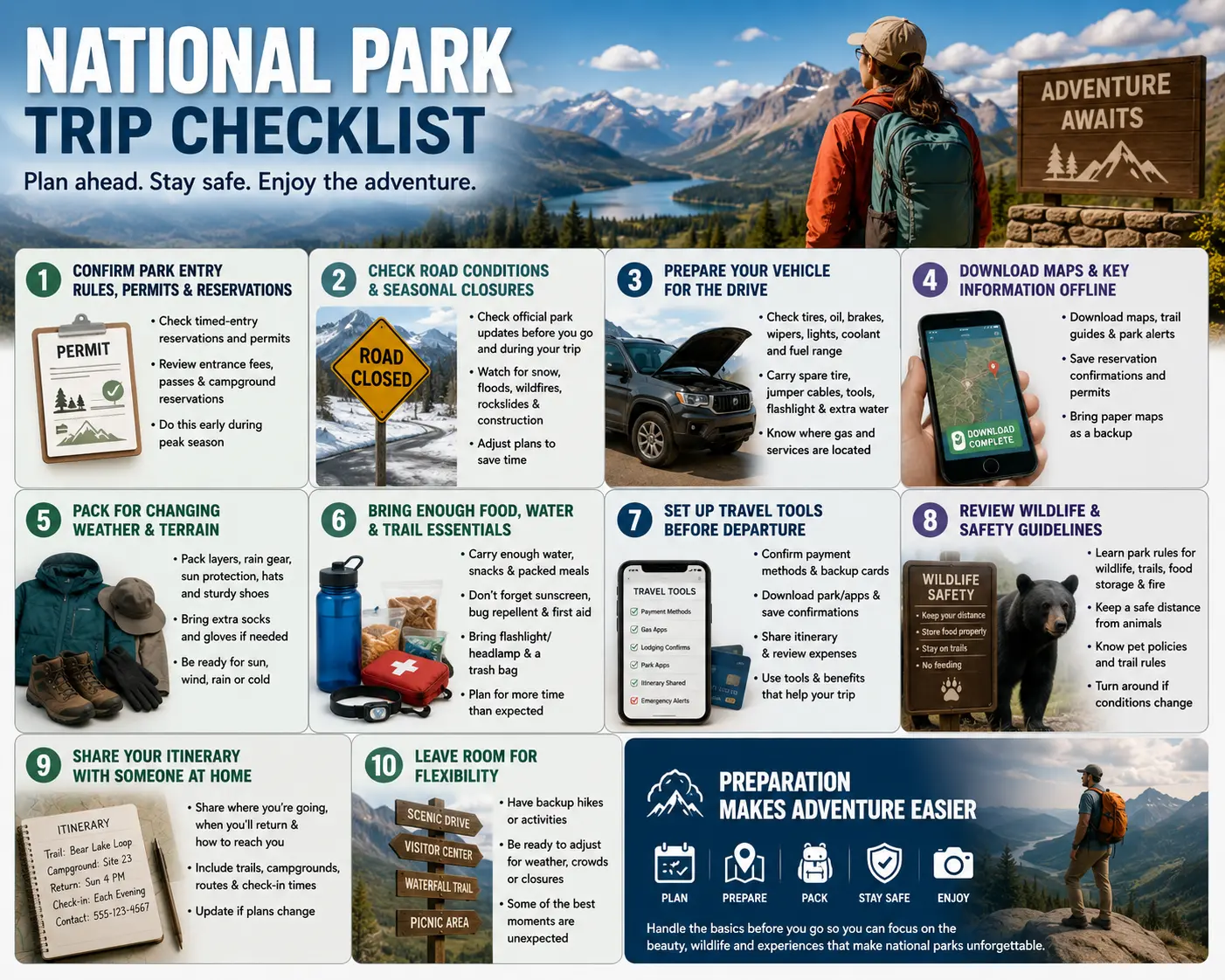
Check road conditions and seasonal closures
National park roads and services can change quickly. Snow, flooding, wildfires, rockslides, construction and seasonal weather can affect scenic drives, trailheads, campgrounds and visitor centers.
Check official park updates before leaving and again during the trip. This is especially important in mountain parks, desert parks and areas with limited access roads. A route that looks open on a map may be closed in real life.
Knowing conditions ahead of time helps you adjust plans before you lose time on the road.
Prepare your vehicle for the drive
Many national park trips involve long drives, remote roads or areas with limited services. Before setting out, check your tires, oil, brakes, wipers, lights, coolant and fuel range.
For more remote parks, carry a spare tire, jumper cables, basic tools, a flashlight and extra water. Know where the nearest gas stations are, especially if you are driving through desert, mountain or rural areas.
Do not assume there will be fuel or repair services near every entrance. A well-prepared vehicle can make the difference between a small inconvenience and a major travel problem.
Download maps and key information offline
Cell service can be weak or nonexistent inside national parks. Download important information before you arrive.
This may include offline maps, trail guides, campground details, reservation confirmations, shuttle schedules, park alerts and emergency contacts. Save screenshots of permits or booking confirmations in case apps do not load.
Paper maps are still useful too. Pick one up at the visitor center or print a basic route map before leaving. When technology fails, having another option can keep the day on track.
Pack for changing weather and terrain
Weather in national parks can change quickly, even within the same day. A sunny morning can turn into a stormy afternoon, and temperatures may shift dramatically between valleys, overlooks and higher elevations.
Pack layers, rain gear, sun protection, sturdy shoes, hats, gloves if needed and extra socks. Desert parks may require sun shirts and more water, while mountain parks may require warm layers even in summer.
The goal is not to overpack, but to prepare for the conditions you are likely to encounter. Comfort and safety often depend on having the right clothing at the right time.
Bring enough food, water and trail essentials
Even short outings can take longer than expected. Crowds, heat, trail conditions, wrong turns or extra photo stops can add time to the day.
Bring refillable water bottles or a hydration pack, snacks, packed lunches, electrolytes, sunscreen, insect repellent and a small first-aid kit. A flashlight or headlamp is useful if you may be out near sunset. A small trash bag helps you pack out wrappers and other waste.
Plan as if you may be away from services longer than expected. It is better to return with extra snacks than to run short on the trail.
Set up travel tools before departure
Before the trip begins, organize the tools that will make travel days easier. Confirm payment methods, backup cards, gas apps, lodging confirmations, park apps, shared itineraries and emergency alerts.
This is also a good time to review planned expenses like fuel, lodging, campground fees, groceries and gear. Some travelers use travel-friendly accounts, cards or member benefits to track spending or collect reward points on purchases already in the plan.
The goal is not to spend more. It is to make the trip smoother by setting up useful tools before you are on the road.
Review wildlife and safety guidelines
Every park has its own safety concerns. Before visiting, learn the basic rules for wildlife, trails, food storage and weather.
Keep a safe distance from animals, even if they appear calm. Store food properly, especially in bear country. Stay on marked trails, follow fire restrictions and check whether pets are allowed on the routes you plan to use.
If trail or weather conditions change, be willing to turn around. A good national park trip is not about pushing through every plan. It is about making safe choices while enjoying the landscape.
Share your itinerary with someone at home
If you are hiking, camping or visiting a remote area, let someone know your plans. Share where you are going, when you expect to return and how to reach you.
This is especially important for solo travelers, backcountry campers and visitors exploring less crowded areas. Include trail names, campground details, route plans and expected check-in times.
Even if your plans change, having someone aware of your general route adds an extra layer of safety.
Leave room for flexibility
National park trips rarely go exactly as planned. Weather may shift, parking lots may fill, trails may close or tired legs may change the day’s priorities.
Have backup options ready. Choose a second hike, a scenic drive, a visitor center, a picnic area or a shorter viewpoint trail. Flexibility keeps the trip enjoyable when conditions change.
Some of the best park memories happen when plans adjust. A quiet overlook, unexpected wildlife sighting or slower afternoon can become the highlight of the trip.
Preparation makes adventure easier
A national park checklist is not about overplanning. It is about handling the essentials so you can enjoy the park with more confidence and attention.
When reservations, maps, gear, food, safety plans and travel tools are ready before you leave, the trip feels less stressful. With the basics covered, you can spend more time looking up at the cliffs, trails, forests and open skies that made you want to visit in the first place.