Mount Rainier National Park Weather by Month
Mount Rainier National Park experiences a mountain climate with long snowy winters, cool summers, and frequent precipitation throughout the year. Weather conditions can vary significantly depending on elevation, but overall the park is known for heavy snowfall and rapidly changing mountain weather.
Based on the temperature data provided and average NOAA climate patterns, here is a month-by-month guide to Mount Rainier National Park weather, including rainfall and snowfall information.
Mount Rainier National Park Weather by Month
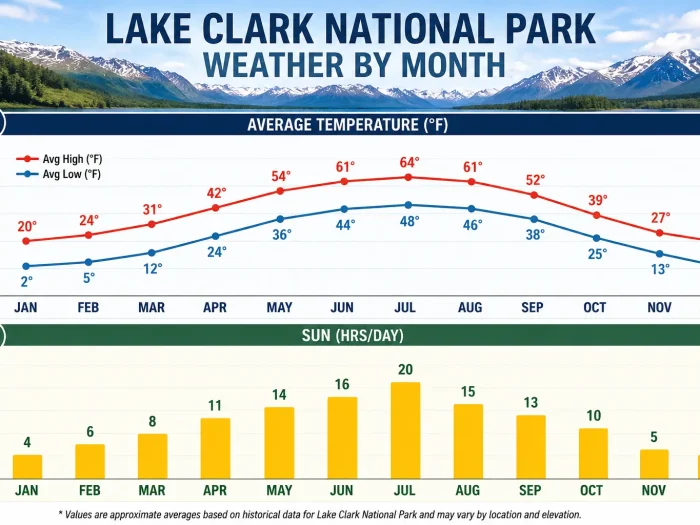
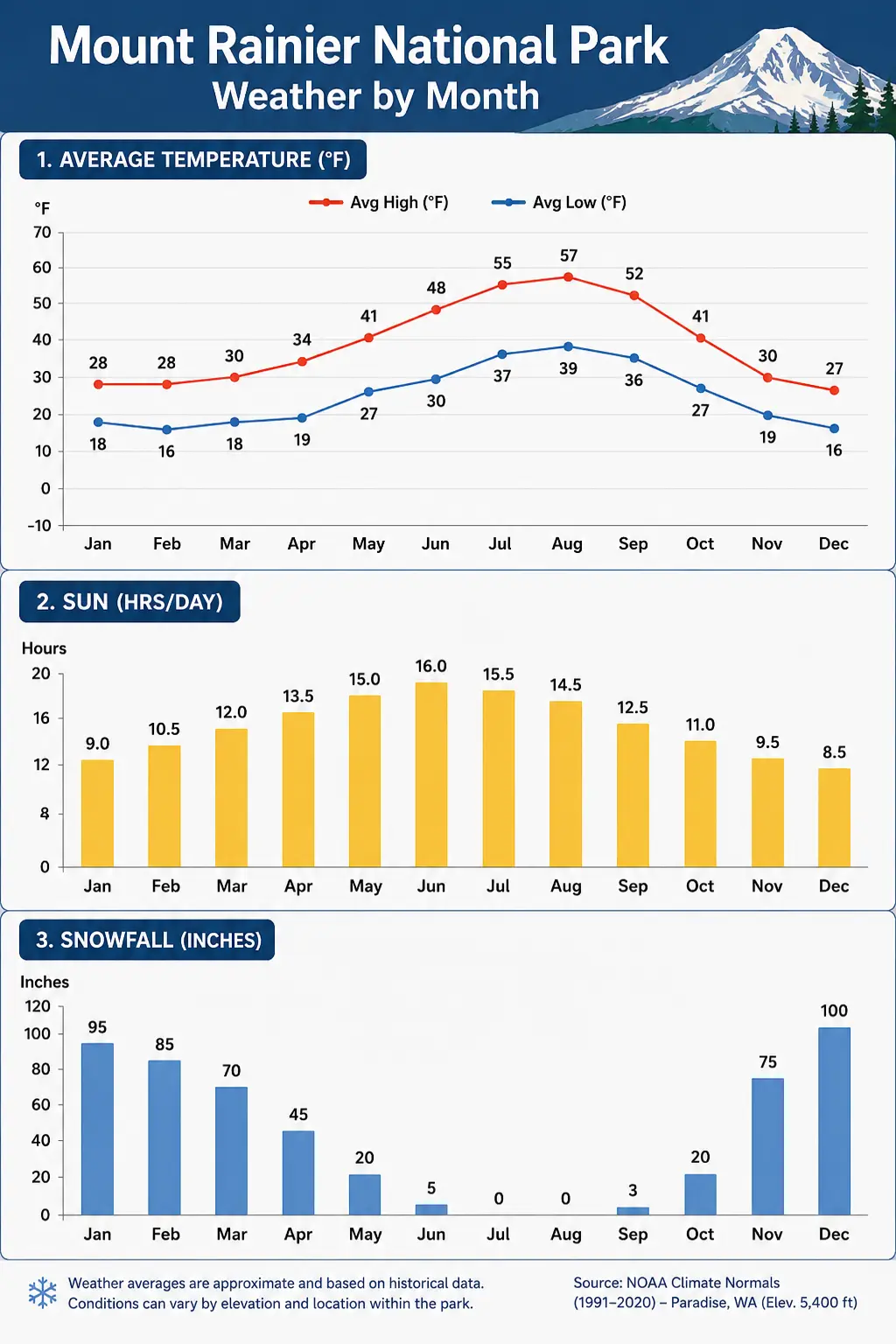
You can click the image below to view the full-size weather chart for Mount Rainier NP.
January
- Average high: -2°C (28°F)
- Average low: -8°C (18°F)
- Daylight: 9 hours
- Average precipitation: 270–300 mm
- Snowfall: Extremely heavy
January is one of the coldest and snowiest months in the park. Areas such as Paradise are usually covered in deep snow, making this a popular time for snowshoeing and winter recreation.
February
- Average high: -2°C (28°F)
- Average low: -9°C (16°F)
- Daylight: 10.5 hours
- Average precipitation: 220–260 mm
- Snowfall: Very heavy
Winter conditions continue through February with freezing temperatures and regular snowstorms. Visibility can change quickly, but clear days offer spectacular mountain views.
March
- Average high: -1°C (30°F)
- Average low: -8°C (18°F)
- Daylight: 12 hours
- Average precipitation: 180–220 mm
- Snowfall: Still significant
March marks the transition toward spring, although higher elevations remain deeply snow-covered. Lower areas may begin to see gradual snowmelt.
April
- Average high: 1°C (34°F)
- Average low: -7°C (19°F)
- Daylight: 13.5 hours
- Average precipitation: 140–180 mm
- Snowfall: Common at higher elevations
Spring slowly arrives in April, but winter conditions can still persist in much of the park. Many hiking trails remain inaccessible due to snow.
May
- Average high: 5°C (41°F)
- Average low: -3°C (27°F)
- Daylight: 15 hours
- Average precipitation: 100–140 mm
- Snowfall: Decreasing
May brings milder temperatures and longer daylight hours. Snow begins melting more rapidly, creating strong waterfalls and greener landscapes.
June
- Average high: 9°C (48°F)
- Average low: -1°C (30°F)
- Daylight: 16 hours
- Average precipitation: 70–100 mm
- Snowfall: Possible in higher areas
June is the beginning of the summer season. Wildflowers start blooming, and hiking conditions gradually improve as trails reopen.
July
- Average high: 13°C (55°F)
- Average low: 3°C (37°F)
- Daylight: 15.5 hours
- Average precipitation: 40–60 mm
- Snowfall: Minimal
July is considered one of the best months to visit Mount Rainier National Park. The weather is relatively dry, skies are often clear, and alpine wildflowers reach peak bloom.
August
- Average high: 14°C (57°F)
- Average low: 4°C (39°F)
- Daylight: 14.5 hours
- Average precipitation: 40–50 mm
- Snowfall: Rare
August usually offers the warmest and most stable weather of the year. Most hiking trails and scenic roads are fully open.
September
- Average high: 11°C (52°F)
- Average low: 2°C (36°F)
- Daylight: 12.5 hours
- Average precipitation: 70–100 mm
- Snowfall: Possible late in the month
September brings cooler temperatures and early autumn colors. Crowds begin to decrease, making it a quieter time to explore the park.
October
- Average high: 5°C (41°F)
- Average low: -3°C (27°F)
- Daylight: 11 hours
- Average precipitation: 140–180 mm
- Snowfall: Increasing
Rain and snowfall become more frequent in October. Higher roads and trails may begin closing for the winter season.
November
- Average high: -1°C (30°F)
- Average low: -7°C (19°F)
- Daylight: 9.5 hours
- Average precipitation: 250–300 mm
- Snowfall: Heavy
Winter returns fully in November, especially at higher elevations. Snow accumulation increases rapidly across the park.
December
- Average high: -3°C (27°F)
- Average low: -9°C (16°F)
- Daylight: 8.5 hours
- Average precipitation: 250–320 mm
- Snowfall: Extremely heavy
December is dominated by cold temperatures, deep snow, and short daylight hours. The park transforms into a winter wonderland ideal for snow activities and photography.
Mount Rainier National Park Weather by Month
| Month | Avg High (°F) | Avg Low (°F) | Rainfall (inches) | Sun (hrs/day) | Snowfall (inches) |
|---|---|---|---|---|---|
| January | 28 | 18 | 11.0 | 9.0 | 95 |
| February | 28 | 16 | 9.5 | 10.5 | 85 |
| March | 30 | 18 | 8.0 | 12.0 | 70 |
| April | 34 | 19 | 6.0 | 13.5 | 45 |
| May | 41 | 27 | 4.5 | 15.0 | 20 |
| June | 48 | 30 | 3.0 | 16.0 | 5 |
| July | 55 | 37 | 2.0 | 15.5 | 0 |
| August | 57 | 39 | 1.8 | 14.5 | 0 |
| September | 52 | 36 | 3.5 | 12.5 | 3 |
| October | 41 | 27 | 6.5 | 11.0 | 20 |
| November | 30 | 19 | 10.5 | 9.5 | 75 |
| December | 27 | 16 | 12.0 | 8.5 | 100 |
Best Time to Visit Mount Rainier National Park
- July to August: Best overall weather, minimal rainfall, and peak wildflower season.
- September: Great for fewer crowds and beautiful fall scenery.
- December to February: Ideal for winter sports and snowy landscapes.
20 FAQs About Mount Rainier National Park Weather
1. What is the best time to visit Mount Rainier National Park?
The best time to visit is usually from July through September when the weather is warmest, trails are open, and wildflowers are in bloom.
2. Does Mount Rainier National Park get snow year-round?
Yes. Higher elevations on Mount Rainier can receive snow during any month of the year, even in summer.
3. What is the warmest month at Mount Rainier National Park?
August is typically the warmest month, with average highs around 57°F (14°C).
4. What is the coldest month in the park?
December and February are usually the coldest months, with average lows near 16°F (-9°C).
5. How much snow does Mount Rainier receive annually?
Some areas of the park receive more than 600 inches of snow per year, making it one of the snowiest places in the United States.
6. Does it rain a lot at Mount Rainier National Park?
Yes. The park experiences significant rainfall, especially from October through May.
7. What is the driest month in Mount Rainier National Park?
August is generally the driest month with less than 2 inches of rainfall on average.
8. Can you hike Mount Rainier in winter?
Yes, but winter hiking requires specialized gear, avalanche awareness, and experience with snow travel.
9. Is summer weather reliable at Mount Rainier?
Summer usually offers the most stable weather, but mountain conditions can still change rapidly with sudden rain, fog, or temperature drops.
10. What should I wear when visiting Mount Rainier?
Layered clothing is recommended year-round. Waterproof jackets, warm layers, and sturdy hiking shoes are essential.
11. Are roads closed during winter?
Yes. Several roads and facilities close seasonally due to heavy snowfall and dangerous conditions.
12. When do wildflowers bloom at Mount Rainier?
Wildflower season usually peaks between mid-July and early August.
13. What are daytime temperatures like in summer?
Summer daytime temperatures generally range from 48°F to 57°F (9°C to 14°C) at higher elevations.
14. Does Mount Rainier National Park experience thunderstorms?
Thunderstorms are possible during summer afternoons, especially at higher elevations.
15. Is fog common in the park?
Yes. Fog and low clouds are common, especially during spring, fall, and rainy periods.
16. What month has the longest daylight hours?
June typically has the longest days with around 16 hours of daylight.
17. Can snow affect summer hiking trails?
Yes. Some high-elevation trails may remain snow-covered until July or even August.
18. Is Mount Rainier colder than Seattle?
Yes. Due to its elevation, Mount Rainier National Park is much colder than nearby cities like Seattle.
19. What is the weather like in September?
September is cool and comfortable with fewer crowds, early fall colors, and a chance of early snowfall later in the month.
20. How quickly can weather change at Mount Rainier?
Weather can change very quickly in mountain environments. Sunny mornings may turn into cold, rainy, or snowy conditions within hours.
Mount Rainier NP has a cool alpine climate year-round, and weather can change quickly even during summer. Visitors should always prepare for rain, cold temperatures, and sudden mountain weather conditions.