Lake Tahoe Weather by Month: A Complete Guide for Travelers
Located in the Sierra Nevada mountains on the border of California and Nevada, Lake Tahoe is known for its crystal-clear water, alpine scenery, and year-round outdoor activities. Because the lake sits at an elevation of about 6,225 ft (1,897 m), the weather changes significantly throughout the year.
Understanding Lake Tahoe weather by month can help travelers decide the best time to visit for skiing, hiking, swimming, or sightseeing.
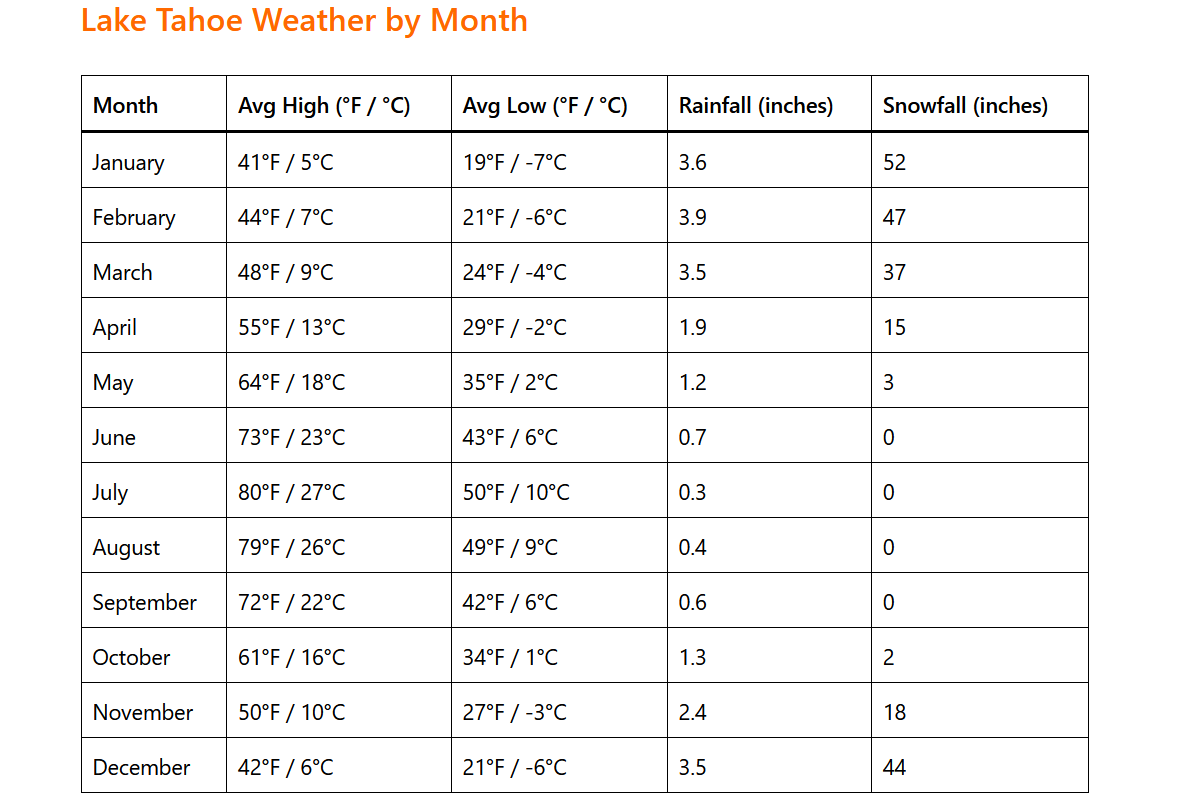
Lake Tahoe Weather by Month
| Month | Avg High (°F / °C) | Avg Low (°F / °C) | Rainfall (inches) | Snowfall (inches) |
|---|---|---|---|---|
| January | 41°F / 5°C | 19°F / -7°C | 3.6 | 52 |
| February | 44°F / 7°C | 21°F / -6°C | 3.9 | 47 |
| March | 48°F / 9°C | 24°F / -4°C | 3.5 | 37 |
| April | 55°F / 13°C | 29°F / -2°C | 1.9 | 15 |
| May | 64°F / 18°C | 35°F / 2°C | 1.2 | 3 |
| June | 73°F / 23°C | 43°F / 6°C | 0.7 | 0 |
| July | 80°F / 27°C | 50°F / 10°C | 0.3 | 0 |
| August | 79°F / 26°C | 49°F / 9°C | 0.4 | 0 |
| September | 72°F / 22°C | 42°F / 6°C | 0.6 | 0 |
| October | 61°F / 16°C | 34°F / 1°C | 1.3 | 2 |
| November | 50°F / 10°C | 27°F / -3°C | 2.4 | 18 |
| December | 42°F / 6°C | 21°F / -6°C | 3.5 | 44 |
January – Peak Winter
Average temperatures
- High: 41°F (5°C)
- Low: 19°F (-7°C)
January is typically one of the coldest and snowiest months in Lake Tahoe. Snowstorms are common, and nearby ski resorts operate at full capacity.
What to expect
- Heavy snowfall in the surrounding mountains
- Frozen mornings and chilly evenings
- Excellent snowpack for winter sports
Best activities
- Skiing and snowboarding
- Snowshoeing
- Winter photography
February – Snow Continues
Average temperatures
- High: 44°F (7°C)
- Low: 21°F (-6°C)
February remains firmly in winter, with frequent snowfall and excellent ski conditions.
Highlights
- Reliable powder for skiing
- Romantic winter scenery
- Busy ski resorts during holiday weekends
March – Winter Meets Spring
Average temperatures
- High: 48°F (9°C)
- Low: 24°F (-4°C)
March often brings sunny days while snow remains deep in the mountains.
Why visitors enjoy March
- Warmer temperatures than mid-winter
- Great spring skiing conditions
- Slightly fewer crowds
April – Early Spring Transition
Average temperatures
- High: 55°F (13°C)
- Low: 29°F (-2°C)
April is unpredictable. Some days feel like spring, while others still bring snowfall.
Typical conditions
- Snow melting at lower elevations
- Quieter tourist season
- Some ski resorts still open
May – True Spring Arrives
Average temperatures
- High: 64°F (18°C)
- Low: 35°F (2°C)
Spring becomes more noticeable in May as temperatures rise and snow begins melting rapidly.
What visitors enjoy
- Hiking trails gradually reopening
- Wildflowers beginning to bloom
- Scenic mountain views with lingering snow on peaks
Note that lake water remains very cold during this time.
June – Start of Summer
Average temperatures
- High: 73°F (23°C)
- Low: 43°F (6°C)
June marks the beginning of the summer travel season.
Perfect for
- Hiking and biking
- Kayaking and paddleboarding
- Scenic boat tours
Snow can still be visible on the surrounding Sierra Nevada peaks.
July – Warmest Month
Average temperatures
- High: 80°F (27°C)
- Low: 50°F (10°C)
July is usually the warmest and sunniest month of the year.
Conditions
- Clear skies and dry weather
- Warm afternoons
- Cool evenings due to mountain elevation
Best activities
- Swimming
- Beach visits
- Boating and water sports
August – Perfect Lake Weather
Average temperatures
- High: 79°F (26°C)
- Low: 49°F (9°C)
August offers similar weather to July, though crowds may start decreasing later in the month.
Highlights
- Comfortable temperatures
- Great camping weather
- Ideal conditions for outdoor recreation
September – Early Fall Beauty
Average temperatures
- High: 72°F (22°C)
- Low: 42°F (6°C)
September is one of the best months to visit Lake Tahoe.
Why travelers love September
- Fewer tourists than summer
- Pleasant temperatures
- Excellent hiking and biking conditions
October – Fall Colors
Average temperatures
- High: 61°F (16°C)
- Low: 34°F (1°C)
Autumn colors appear around the lake and surrounding forests.
Typical weather
- Crisp mornings
- Cooler evenings
- Occasional early snowfall at higher elevations
November – Quiet Shoulder Season
Average temperatures
- High: 50°F (10°C)
- Low: 27°F (-3°C)
November is a transitional period between fall and winter.
Expect
- First snowfalls of the season
- Cooler temperatures
- Fewer tourists
December – Winter Returns
Average temperatures
- High: 42°F (6°C)
- Low: 21°F (-6°C)
December marks the return of winter conditions and the start of the ski season.
Why people visit
- Holiday atmosphere
- Ski resorts reopening
- Beautiful snowy landscapes
Quick Summary
| Season | Best Months | Why Visit |
|---|---|---|
| Winter | December – March | Skiing and snow sports |
| Spring | April – May | Quiet nature and melting snow scenery |
| Summer | June – August | Beaches, boating, hiking |
| Fall | September – October | Mild weather and fall foliage |
Best Time to Visit Lake Tahoe
- For skiing: January to March
- For swimming and boating: July to August
- For hiking and scenic views: September
20 FAQs about Lake Tahoe weather
1. What is the weather like at Lake Tahoe year-round?
Lake Tahoe has a four-season alpine climate with snowy winters, mild springs, warm sunny summers, and cool colorful autumns.
2. What is the coldest month in Lake Tahoe?
January is usually the coldest month, with average lows around 19°F (-7°C) and frequent snowfall.
3. What is the warmest month in Lake Tahoe?
July is typically the warmest month, with average highs around 80°F (27°C) and plenty of sunshine.
4. Does Lake Tahoe get a lot of snow?
Yes. Lake Tahoe receives over 300 inches of snow annually in the surrounding mountains, making it one of the best ski destinations in the western United States.
5. When does it start snowing in Lake Tahoe?
Snow can begin as early as October or November, but heavy snowfall usually starts in December.
6. What months have the most snowfall in Lake Tahoe?
The heaviest snowfall generally occurs between December and March, with January and February being peak snow months.
7. Does it snow in Lake Tahoe in April?
Yes, snow is still possible in April, especially at higher elevations, though spring weather becomes more common.
8. Is Lake Tahoe hot in the summer?
Not extremely. Summer temperatures are usually pleasant and comfortable, with highs between 75°F and 80°F (24–27°C).
9. Can you swim in Lake Tahoe in summer?
Yes, but the water remains cold year-round, typically between 63°F and 68°F (17–20°C) during peak summer.
10. What is the rainiest month in Lake Tahoe?
Most precipitation falls in winter as snow, but February and January usually have the highest precipitation levels.
11. Is Lake Tahoe sunny?
Yes. Lake Tahoe enjoys about 250–300 sunny days per year, especially during summer.
12. Does Lake Tahoe get thunderstorms?
Thunderstorms can occasionally occur in summer afternoons, but they are usually brief.
13. What is the best time to visit Lake Tahoe for good weather?
The best weather is typically from June through September, when temperatures are warm and skies are mostly clear.
14. What is the best time to visit Lake Tahoe for snow?
The best snow conditions are usually from January through March.
15. How cold does Lake Tahoe get at night?
Even in summer, nighttime temperatures can drop to around 40–50°F (4–10°C) because of the high elevation.
16. Does Lake Tahoe experience fog?
Fog is rare due to the mountain environment, but it can occasionally form near the lake early in the morning.
17. Is fall a good time to visit Lake Tahoe?
Yes. September and October offer cooler temperatures, fewer crowds, and beautiful fall foliage.
18. Does Lake Tahoe have humidity?
No. The region has low humidity, making both summer and winter weather feel comfortable.
19. How windy is Lake Tahoe?
Wind conditions vary, but strong winds can occur during winter storms or seasonal weather changes.
20. Does Lake Tahoe freeze in winter?
The lake itself rarely freezes due to its massive size and depth, although small shallow areas near the shore may ice over.
Read more: