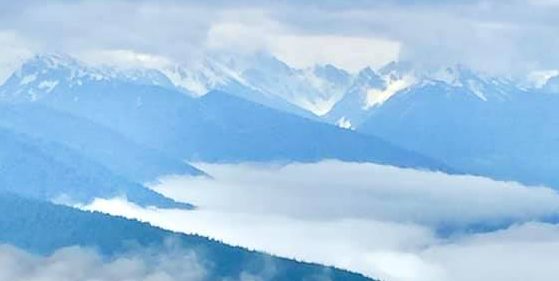
Grand Teton National Park Weather by Month
Planning a trip to Grand Teton means understanding how dramatically the weather shifts throughout the year. Located in northwestern Wyoming, the park experiences a classic mountain climate—long, cold winters and short, mild summers. Here’s a detailed month-by-month breakdown to help you choose the best time to visit.
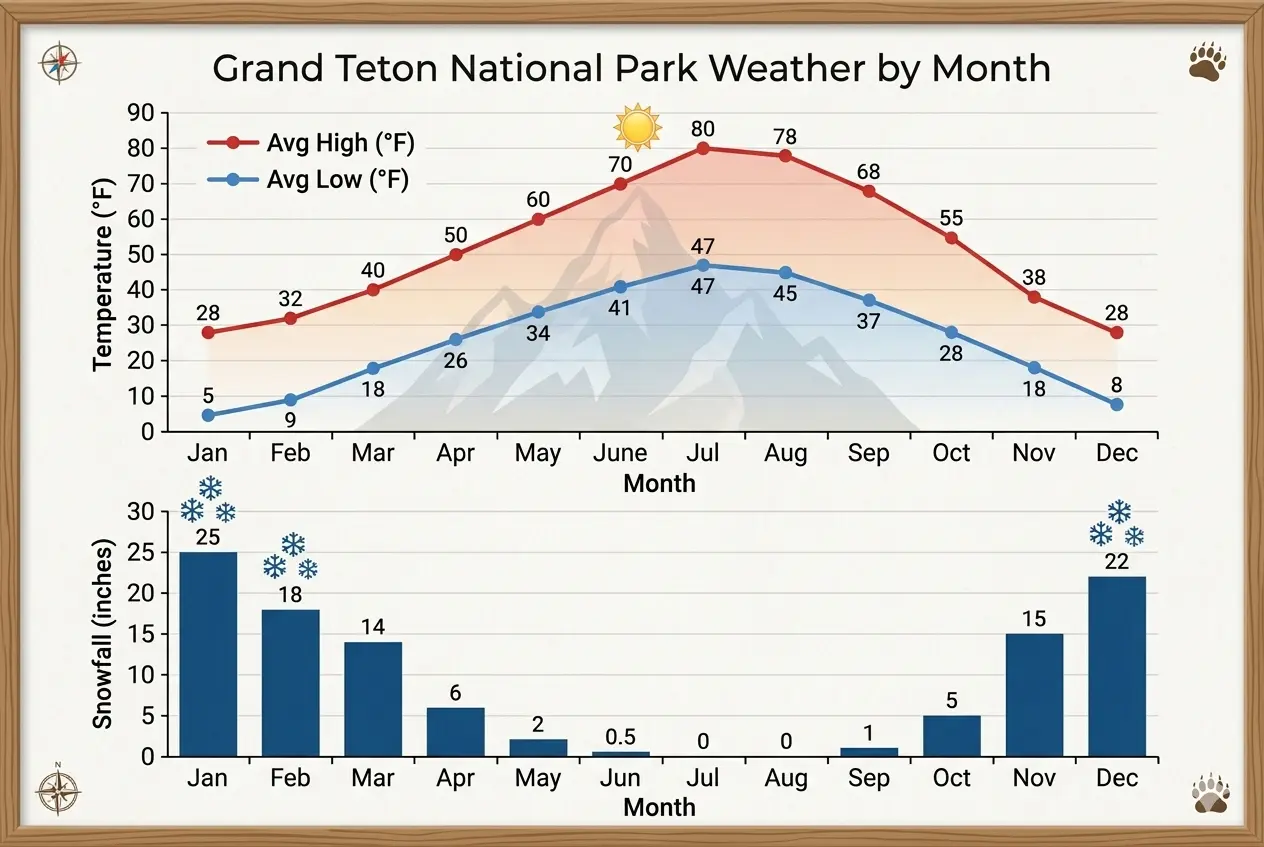
You can click the image below to view the full-size weather chart for Grand Teton National Park.
Grand Teton National Park Temperatures by Month
January
Midwinter is at its peak. Temperatures often range from -18°C to -5°C (0°F to 23°F). Snow blankets the entire park, making it ideal for cross-country skiing and snowshoeing. Roads are limited, and access is restricted, but the scenery is pristine.
February
Very similar to January, though slightly longer daylight hours. Expect heavy snowfall and freezing temperatures. Wildlife like elk and bison are easier to spot against the snow.
March
Winter slowly begins to loosen its grip. Temperatures climb to around -12°C to 2°C (10°F to 36°F). Snow is still dominant, but occasional thawing begins at lower elevations.
April
A transitional month—often unpredictable. You might see snowstorms one day and sunshine the next. Temperatures range from -5°C to 10°C (23°F to 50°F). Many facilities remain closed.
May
Spring arrives, though cautiously. Daytime highs reach 15°C (59°F), but nights can still freeze. Snow melts rapidly, rivers swell, and wildlife becomes more active—especially bears emerging from hibernation.
June
Early summer brings mild and pleasant weather, typically 5°C to 22°C (41°F to 72°F). Wildflowers bloom, but higher elevations may still have snow. Afternoon thunderstorms become more common.
July
The warmest and most popular month. Expect 10°C to 27°C (50°F to 81°F). Days are sunny, perfect for hiking, boating, and camping. However, it’s also the busiest time, so expect crowds.
August
Similar to July but slightly cooler toward the end of the month. Afternoon thunderstorms are frequent. Temperatures range from 9°C to 26°C (48°F to 79°F). Great for outdoor activities.
September
Early fall is one of the best times to visit. Temperatures cool to 3°C to 21°C (37°F to 70°F). Crowds thin out, and fall colors begin to appear. Nights can be chilly.
October
A dramatic shift toward winter. Expect -3°C to 15°C (27°F to 59°F). Snow can start falling again, especially late in the month. Many services begin to close.
November
Cold and quiet. Temperatures drop to -10°C to 5°C (14°F to 41°F). Snow becomes more consistent, and the park enters its off-season.
December
Winter returns fully. Expect heavy snow and temperatures from -15°C to -4°C (5°F to 25°F). A peaceful, snowy landscape dominates, ideal for winter photography and solitude.
Grand Teton National Park Weather by Month
| Month | Avg High (°F) | Avg Low (°F) | Rainfall (inches) | Snowfall (inches) |
|---|---|---|---|---|
| January | 28 | 5 | 1.5 | 25 |
| February | 32 | 9 | 1.2 | 18 |
| March | 40 | 18 | 1.4 | 14 |
| April | 50 | 26 | 1.3 | 6 |
| May | 60 | 34 | 1.6 | 2 |
| June | 70 | 41 | 1.3 | 0.5 |
| July | 80 | 47 | 1.1 | 0 |
| August | 78 | 45 | 1.2 | 0 |
| September | 68 | 37 | 1.1 | 1 |
| October | 55 | 28 | 1.0 | 5 |
| November | 38 | 18 | 1.2 | 15 |
| December | 28 | 8 | 1.4 | 22 |
Best Time to Visit
- For warm weather & hiking: July–September
- For fewer crowds & fall colors: September
- For winter sports & solitude: December–March
Grand Teton’s weather is as dynamic as its landscape. Whether you’re chasing wildflowers, fall foliage, or snowy peaks, each month offers a completely different experience.
20 FAQs about weather in Grand Teton National Park
1. What is the best time to visit Grand Teton for good weather?
July through September offers the warmest temperatures and most stable conditions.
2. How cold does it get in winter?
Winter temperatures often drop below 0°F (-18°C), especially at night.
3. Does it snow year-round in Grand Teton?
Snow can fall any month at higher elevations, but heavy snowfall is most common from November through April.
4. What is the hottest month in the Grand Teton National Park?
July is typically the warmest month, with highs around 80°F (27°C).
5. Are summers humid?
No, summers are generally dry with low humidity.
6. Does it rain a lot in summer?
Rainfall is moderate, but afternoon thunderstorms are common, especially in July and August.
7. When does snow start to melt?
Snow begins melting in April and May, though higher elevations stay snow-covered longer.
8. Can I visit in spring (April–May)?
Yes, but expect unpredictable weather, muddy trails, and some road closures.
9. What is fall weather like?
Cool and crisp, with daytime highs between 50–70°F and chilly nights.
10. When do fall colors peak in Grand Teton National Park?
Typically late September to early October.
11. How windy is the park?
It can be quite windy year-round, especially in open valleys and during seasonal transitions.
12. Do I need to worry about altitude and weather?
Yes, higher elevations are cooler and weather can change rapidly.
13. Are thunderstorms dangerous?
They can be, especially due to lightning—avoid exposed ridges during storms.
14. What should I pack for summer?
Layers, a rain jacket, sunscreen, and warm clothing for cool evenings.
15. What should I pack for winter?
Heavy winter gear, insulated boots, gloves, and thermal layers.
16. Is the park accessible in winter?
Yes, but many roads are closed to cars and open only for snow travel.
17. How quickly can weather change?
Very quickly—conditions can shift from sunny to stormy within hours.
18. Are mornings colder than afternoons?
Yes, mornings are usually much colder, even in summer.
19. Is June a good time to visit?
Yes, but expect some lingering snow and occasional rain.
20. Does climate vary across the park?
Yes, valleys are warmer while mountains remain significantly colder year-round.