Grand Canyon Weather by Month: A Complete Guide for Travelers
The Grand Canyon is a year-round destination, but its weather can vary dramatically depending on the month, elevation, and location (South Rim, North Rim, or inner canyon). Understanding the monthly weather patterns will help you choose the best time for hiking, sightseeing, rafting, or simply enjoying the views.
This complete month-by-month guide breaks down temperatures, conditions, and travel tips so you can plan your trip with confidence.
Understanding Grand Canyon Weather Basics
Before diving into each month, keep these key facts in mind:
- Elevation matters:
- South Rim: ~7,000 ft (cooler, snowy winters)
- North Rim: ~8,000 ft (coldest, closed in winter)
- Inner Canyon (Phantom Ranch): ~2,500 ft (much hotter)
- Temperature swings are common: A single day can have a 30–40°F difference between morning and afternoon.
- Weather changes quickly: Storms, wind, and sudden temperature drops can happen any time of year.
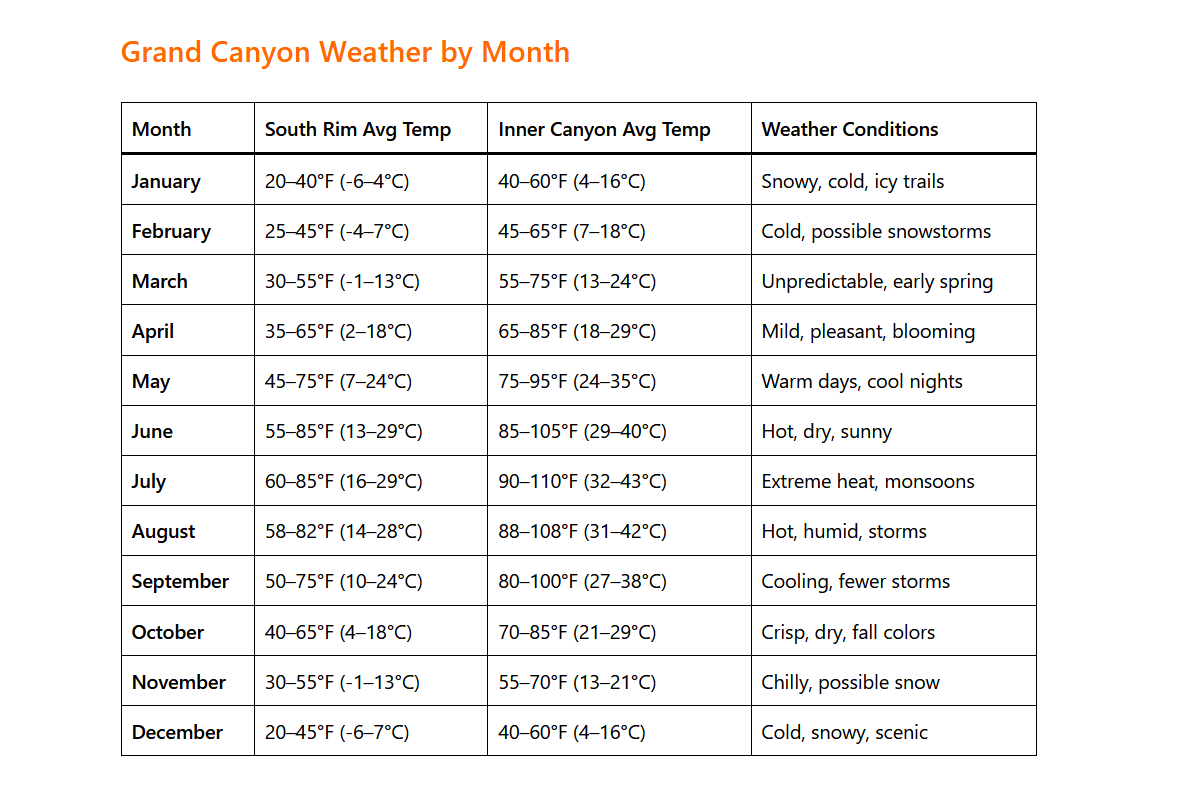
Grand Canyon Weather by Month
| Month | South Rim Avg Temp | Inner Canyon Avg Temp | Weather Conditions |
|---|---|---|---|
| January | 20–40°F (-6–4°C) | 40–60°F (4–16°C) | Snowy, cold, icy trails |
| February | 25–45°F (-4–7°C) | 45–65°F (7–18°C) | Cold, possible snowstorms |
| March | 30–55°F (-1–13°C) | 55–75°F (13–24°C) | Unpredictable, early spring |
| April | 35–65°F (2–18°C) | 65–85°F (18–29°C) | Mild, pleasant, blooming |
| May | 45–75°F (7–24°C) | 75–95°F (24–35°C) | Warm days, cool nights |
| June | 55–85°F (13–29°C) | 85–105°F (29–40°C) | Hot, dry, sunny |
| July | 60–85°F (16–29°C) | 90–110°F (32–43°C) | Extreme heat, monsoons |
| August | 58–82°F (14–28°C) | 88–108°F (31–42°C) | Hot, humid, storms |
| September | 50–75°F (10–24°C) | 80–100°F (27–38°C) | Cooling, fewer storms |
| October | 40–65°F (4–18°C) | 70–85°F (21–29°C) | Crisp, dry, fall colors |
| November | 30–55°F (-1–13°C) | 55–70°F (13–21°C) | Chilly, possible snow |
| December | 20–45°F (-6–7°C) | 40–60°F (4–16°C) | Cold, snowy, scenic |
January
Overview: Cold and quiet
- South Rim: 20–40°F (-6 to 4°C)
- North Rim: Often below freezing (closed to vehicles)
- Inner Canyon: 40–60°F (4–16°C)
What to Expect:
Snow is common on the rims, creating stunning winter landscapes. Trails may be icy, and some services are limited.
Best For:
- Fewer crowds
- Snow photography
- Peaceful sightseeing
Travel Tip:
Bring traction devices for hiking and dress in layers.
February
Overview: Cold with fewer visitors
- South Rim: 25–45°F (-4 to 7°C)
- Inner Canyon: 45–65°F (7–18°C)
What to Expect:
Snowstorms are still possible, but days start getting slightly longer.
Best For:
- Winter hiking (with caution)
- Photography without crowds
Travel Tip:
Check road and trail conditions before arriving.
March
Overview: Transition from winter to spring
- South Rim: 30–55°F (-1 to 13°C)
- Inner Canyon: 55–75°F (13–24°C)
What to Expect:
Snow melts gradually, but storms can still occur. Weather is unpredictable.
Best For:
- Early spring hiking
- Scenic views with fewer people
Travel Tip:
Pack for both winter and spring conditions.
April
Overview: Mild and popular
- South Rim: 35–65°F (2–18°C)
- Inner Canyon: 65–85°F (18–29°C)
What to Expect:
Comfortable daytime temperatures and blooming desert plants. Crowds begin to increase.
Best For:
- Hiking
- Sightseeing
- Photography
Travel Tip:
Reserve lodging early—this is the start of peak season.
May
Overview: Warm days, cool nights
- South Rim: 45–75°F (7–24°C)
- Inner Canyon: 75–95°F (24–35°C)
What to Expect:
Excellent weather on the rims, but inner canyon heat becomes noticeable.
Best For:
- Rim hikes
- Backpacking (with preparation)
Travel Tip:
Start hikes early in the morning to avoid midday heat.
June
Overview: Hot and dry
- South Rim: 55–85°F (13–29°C)
- Inner Canyon: 85–105°F (29–40°C)
What to Expect:
Summer heat arrives, especially below the rim. Crowds increase due to school vacations.
Best For:
- Scenic viewpoints
- Short hikes at higher elevations
Travel Tip:
Carry plenty of water and avoid strenuous hikes in the inner canyon.
July
Overview: Very hot with monsoon storms
- South Rim: 60–85°F (16–29°C)
- Inner Canyon: 90–110°F (32–43°C)
What to Expect:
Extreme heat below the rim and afternoon thunderstorms during the monsoon season.
Best For:
- Early-morning activities
- River rafting (with caution)
Travel Tip:
Watch for flash floods and lightning during storms.
August
Overview: Hot, humid, and stormy
- South Rim: 58–82°F (14–28°C)
- Inner Canyon: 88–108°F (31–42°C)
What to Expect:
Similar to July, with frequent afternoon storms and high humidity.
Best For:
- Short hikes
- Photography after storms
Travel Tip:
Plan activities early in the day and monitor weather alerts.
September
Overview: Cooling down and less crowded
- South Rim: 50–75°F (10–24°C)
- Inner Canyon: 80–100°F (27–38°C)
What to Expect:
Monsoon season fades, temperatures drop, and crowds thin.
Best For:
- Hiking
- Backpacking
- Scenic drives
Travel Tip:
One of the best months overall—book early for popular trails.
October
Overview: Crisp and colorful
- South Rim: 40–65°F (4–18°C)
- Inner Canyon: 70–85°F (21–29°C)
What to Expect:
Cool mornings, pleasant days, and fall colors on the North Rim (until it closes mid-October).
Best For:
- Long hikes
- Photography
- Comfortable sightseeing
Travel Tip:
Pack warm layers for early mornings and evenings.
November
Overview: Quiet and chilly
- South Rim: 30–55°F (-1 to 13°C)
- Inner Canyon: 55–70°F (13–21°C)
What to Expect:
Snow may return to the rims. Crowds drop significantly.
Best For:
- Peaceful visits
- Cool-weather hiking
Travel Tip:
Be prepared for winter conditions, especially later in the month.
December
Overview: Cold and scenic
- South Rim: 20–45°F (-6 to 7°C)
- Inner Canyon: 40–60°F (4–16°C)
What to Expect:
Snow-covered views, festive atmosphere, and minimal crowds.
Best For:
- Winter photography
- Quiet sightseeing
Travel Tip:
Road closures are possible—check forecasts and park updates.
Best Time to Visit the Grand Canyon
- Best overall weather: April, May, September, October
- Fewest crowds: January, February, November
- Best for hiking: Spring and fall
- Best for snow views: December–February
Frequently Asked Questions (FAQs) about Grand Canyon National Park Weather
- What is the best month to visit the Grand Canyon for good weather?
April, May, September, and October offer the most comfortable temperatures and stable weather. - What is the hottest month at the Grand Canyon?
July is typically the hottest month, especially in the inner canyon where temperatures can exceed 110°F (43°C). - What is the coldest month at the Grand Canyon?
January is the coldest month, with frequent snow and freezing temperatures on the South Rim. - Does it snow at the Grand Canyon?
Yes, snow is common on the South Rim from December through February. - Is the Grand Canyon open year-round?
The South Rim is open year-round, but the North Rim usually closes from mid-October to mid-May due to snow. - How different is the weather between the rim and the canyon floor?
The inner canyon can be 20–30°F (11–17°C) hotter than the rim on the same day. - Is summer a good time to hike the Grand Canyon?
Summer hiking is dangerous in the inner canyon due to extreme heat and should be limited to early mornings. - What month has the fewest crowds at the Grand Canyon?
January and February typically have the fewest visitors. - When is monsoon season at the Grand Canyon?
Monsoon season usually runs from July through early September. - Are thunderstorms dangerous at the Grand Canyon?
Yes, thunderstorms can cause lightning strikes and flash floods, especially in narrow canyons. - What is the best month for hiking the Grand Canyon?
October and April are ideal for hiking due to cooler temperatures and lower risk of heat exhaustion. - Is fall a good time to visit the Grand Canyon?
Yes, fall offers cooler weather, fewer crowds, and excellent hiking conditions. - Can you visit the Grand Canyon in winter?
Yes, winter visits are possible and offer scenic snow views, but icy conditions require extra caution. - What should I pack for a Grand Canyon trip?
Pack layers, sturdy hiking shoes, sun protection, water, and weather-appropriate gear. - Is the Grand Canyon windy?
Yes, strong winds are common year-round, especially during spring and fall. - What is the best time of day to avoid heat at the Grand Canyon?
Early morning and late afternoon are the coolest and safest times. - Does rain affect visibility at the Grand Canyon?
Rain can temporarily reduce visibility, but storms often create dramatic views and rainbows. - Is May too hot to visit the Grand Canyon?
May is comfortable on the rims, but the inner canyon can become very hot by late May. - Which rim has the best weather year-round?
The South Rim is the most accessible year-round, but weather varies by season. - Can weather change suddenly at the Grand Canyon?
Yes, sudden temperature drops, storms, and strong winds can occur at any time.
Final Thoughts
The Grand Canyon offers a unique experience every month of the year. Whether you prefer snowy solitude, mild hiking weather, or dramatic summer storms, understanding the monthly weather patterns will help you make the most of your trip.
Plan ahead, pack smart, and respect the canyon’s extreme conditions—and your visit will be unforgettable.